

Breaking Down the Unifoil Evolution Setup | Is It Worth the Price?
It's been a minute since Tucker has done a Unifoil review. But lately he's been out ripping on the new Evolution front wing, so now's the perfect opportunity to correct that and bring an update on what's one of his favorite brands to ride. Of course, that endorsement has to be tempered with the fact that this is a high-end foil with a price tag to match, so the question, as always, is whether the added performance justifies the cost.

What's a Good Setup with the Unifoil Evolution Wing?
Obviously, that depends on a lot of factors like riding style, conditions, and rider weight, but in short, if you want a do-it-all setup, try the Evolution 155 front wing, Afterburner 14.5 tail, small or medium fuselage, and the 80cm Torque mast. (If you're a lighter rider, you can swap in a Race mast and save a little weight.)
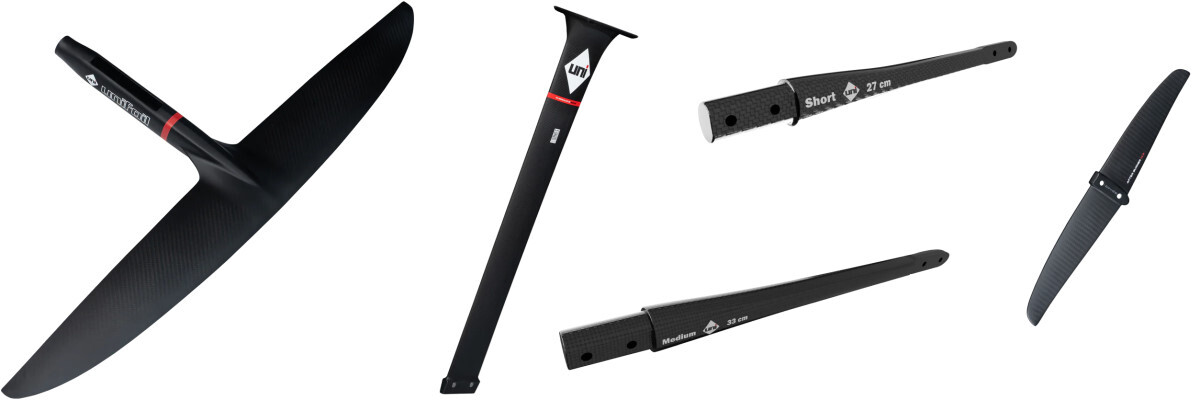
With this setup, you can wing, parawing, prone, wake, and even downwind SUP foil. You can also do all that with Unifoil's Progression wings, but the Evolution is the next step up in performance. You'll get a wider speed range, better glide, and more efficiency through the water.
How Does the Evolution Compare to the Progression Front Wing?
If you're familiar with Progression wings, the first thing you'll notice on the Evolution is that it's a faster, more slippery foil. It's got better glide efficiency and doesn't decelerate as quickly. However, you'll need more speed for liftoff when comparing similar sizes.
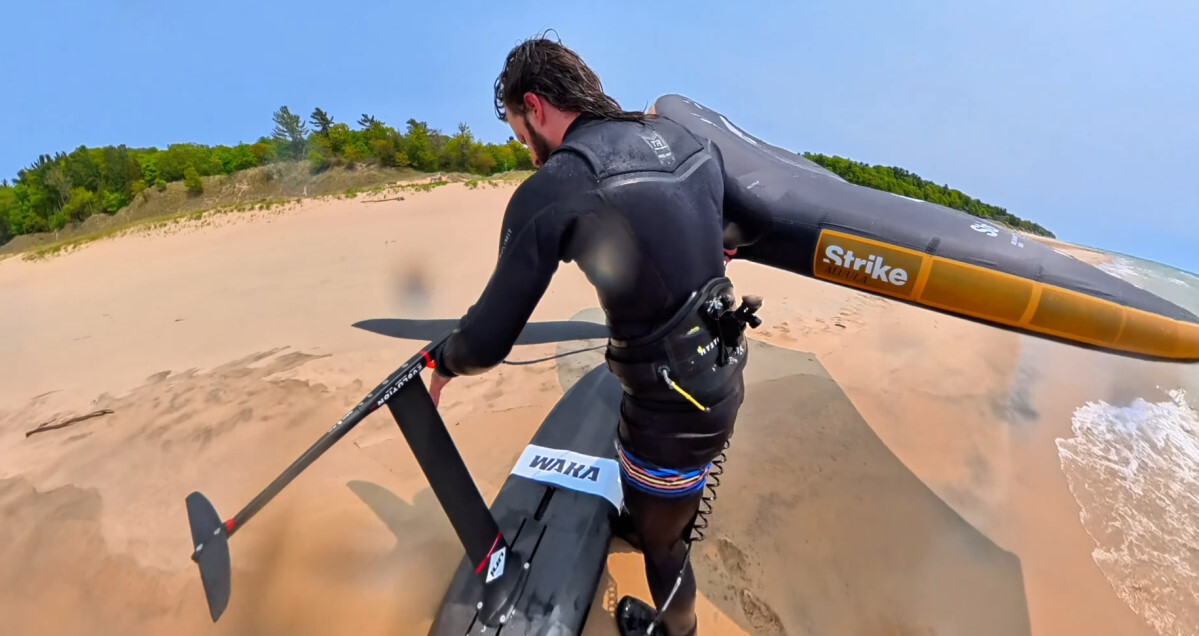
You can size down a bit on the Evolution and still be in the same speed range while maximizing your top speed, efficiency and maneuverability. For Tucker, that balance falls on the 155, with its surface area of about 1,000 cm2. It's fast, but not too fast, and it works in both light and higher wind. It's happy in all but the biggest fall and winter waves on the Great Lakes.

The Evolution wings have a higher aspect ratio than the Progression wings, but Tucker didn't feel like he was making much of a compromise. It's user-friendly and fun. The profile has a slight kink, so you can have quite a bit of the wingtip out without ventilating and losing lift. There's some dihedral in the middle to help you roll in and out of turns, but it still has the overall anhedral to bounce you through them as well.
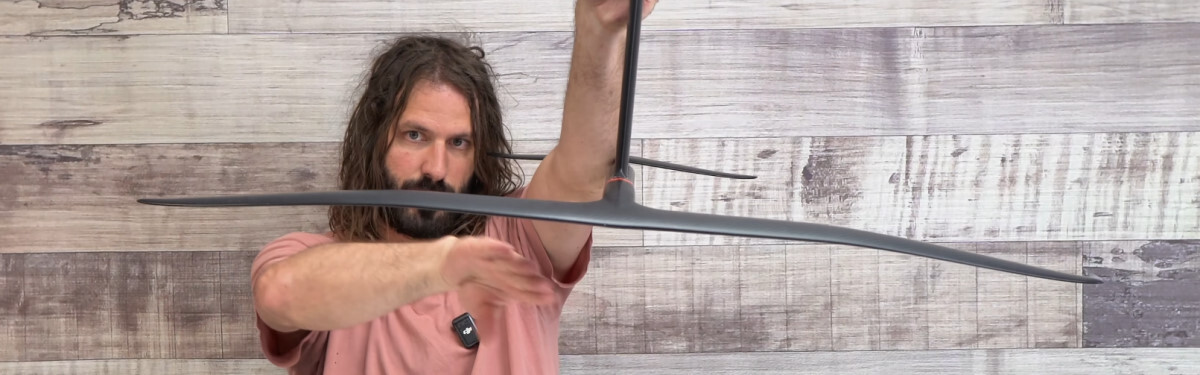
The wing is stiff, and the monocoque integration with the mast connection adds to the overall rigidity. If you've ridden the Hyper series, the Evolution picks up where that left off, with an updated profile that's more surfy and fun.
Which Fuselage Should I Use with the Afterburner Tail?
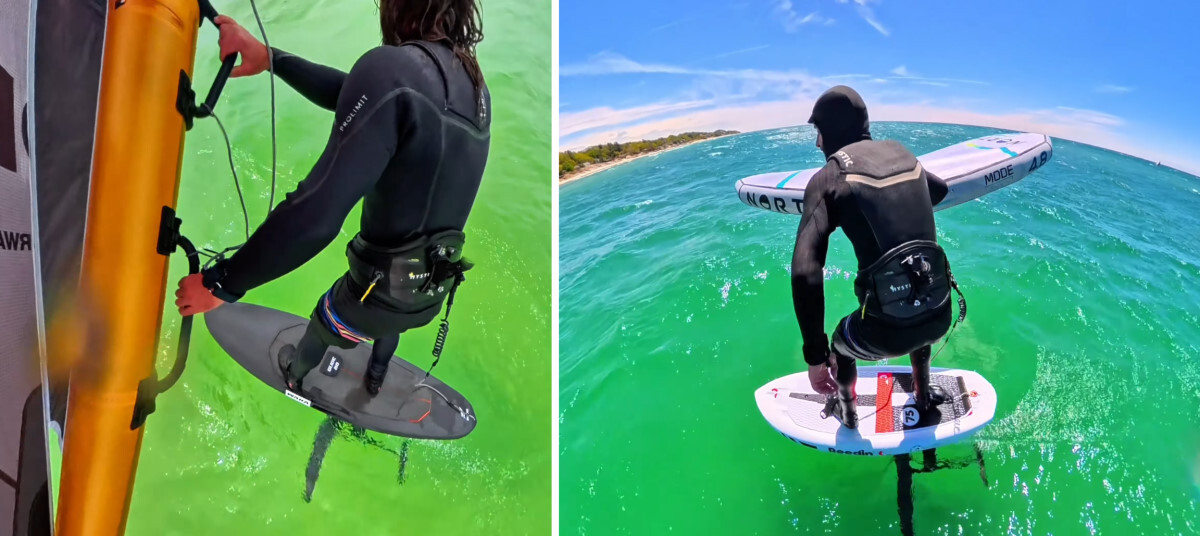
The latest Afterburner Tail is the 14.5, and with a small or medium fuselage it pairs really well with the efficiency and higher aspect design of the Evolution. You'd use the small fuselage with shorter boards, and the medium with longer boards to match the board's natural swing. You can push on them hard in a fast turn and carry a lot of speed and projection through the turn. The peaked anhedral on the Afterburner gives you nice drive and direction out of the turns for a lively and skaty feel, making this an incredible combo. It's one of the most fun that Tucker has ridden.
How Should I Shim the Afterburner Tail?
The Unifoil hardware kit comes with different shims, and there isn't any guidance as to which is the "default", so it can be confusing to know where to start. Tucker finds that the #1 shim is his sweet spot for most of the lineup. It's lively in the turn, but it also glides well. Any flatter, and the turns lose their magic. Any more aggressive, and you lose efficiency and the foil becomes more pitchy. So if you're not sure where to start, put on the #1 shim and see how you like it. You can always readjust if you feel like you need more glide or more pitchy turns.

Should I Get the Torque or the Race Mast?
Both masts share the same profile. They're sleek and fast. The Torque uses a high modulus construction, which weighs more but is stiffer. If you're a heavier rider or you like to rip hard turns, then the tradeoff in weight may well be worth it for you to choose the Torque mast. If you are going for a lightweight setup and don't need the extra stiffness, then the Race would be a better choice for you.
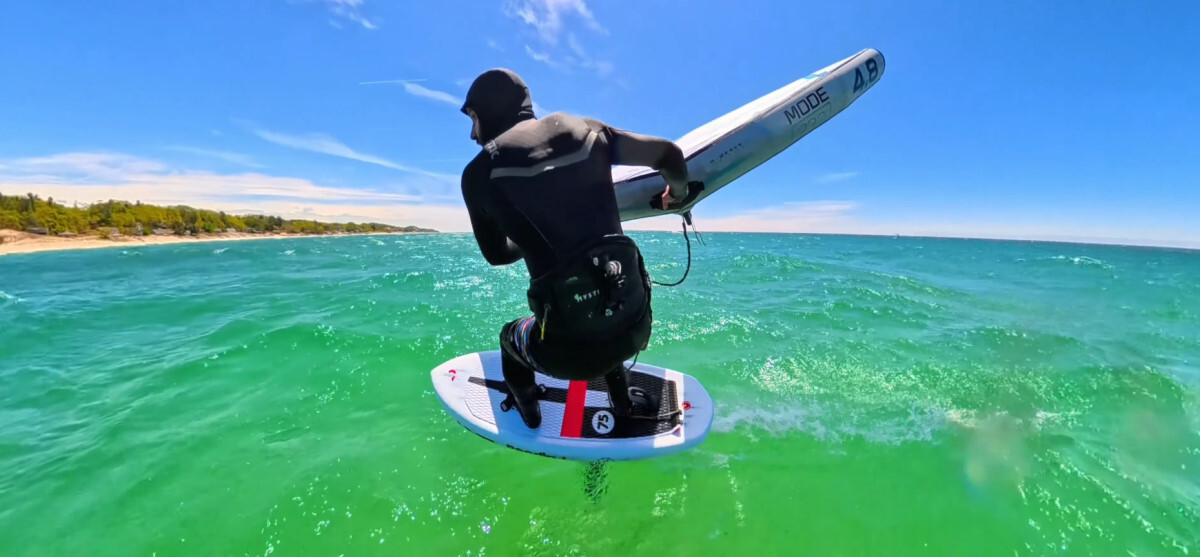
Tucker's been riding the 80cm Torque, which is a bit shorter than he's used to. However, it's livened up the turns a bit and has turned out to be a good do-it-all size. With tighter turns, you do need to be careful about how hard you lean over on a mast this short, especially with a wider wingspan. Thankfully, the Evolution wings don't ventilate as much and they'll just drive right though, making them pretty forgiving compared to most other wings. In fact, Tucker didn't even realize he had a good eight inches of wingtip out on some turns until he reviewed his video!
Is Unifoil Worth the Cost?
If you've been following Tucker's reviews for any amount of time, you know that he likes to find something to nitpick about every product. Everyone's got different things they care about, and what's minor to him might be important to someone else. However, he really can't find any downside except the cost when it comes to Unifoil setups. You're paying for a high-performance foil, and you're getting exactly that. Covers are even included to protect your investment when you're not on the water.
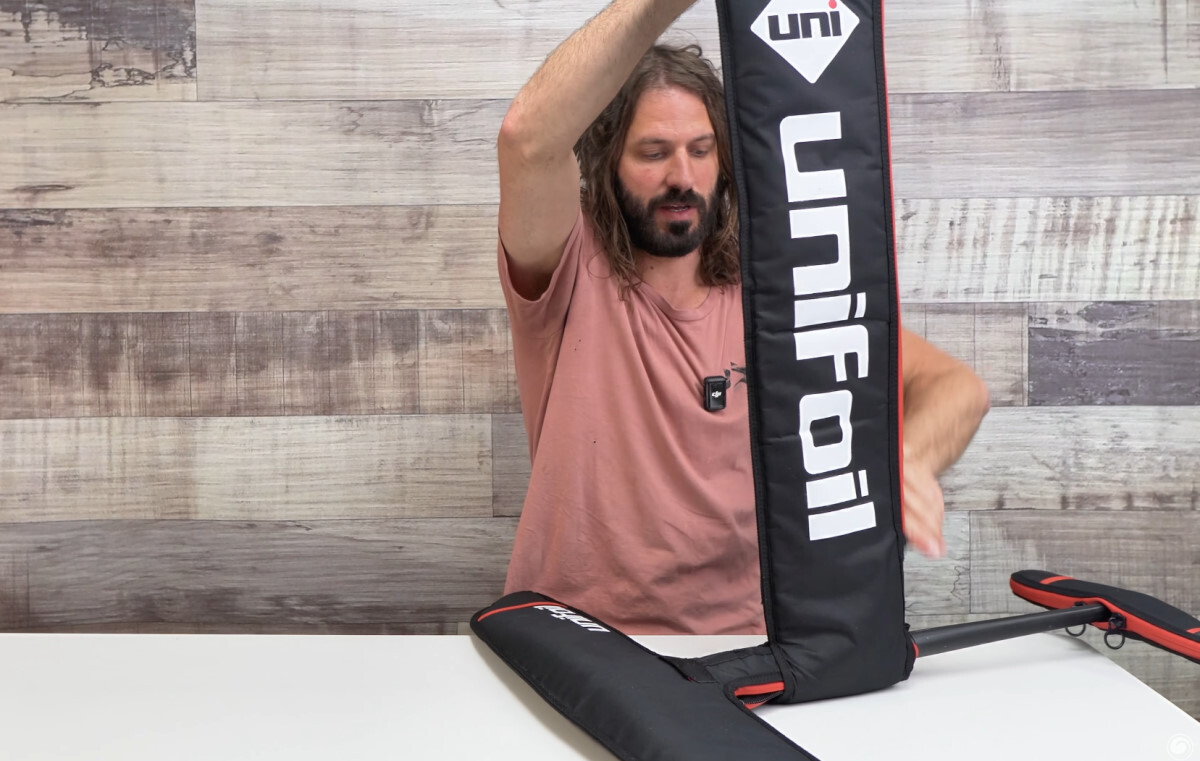
Of course, you need to decide if it's in your budget and whether you can get out often enough to justify the per-session cost. If so, then this is a solid choice that'll leave you stoked and thinking about the next session before you're even off the beach.
MACkite Subscription Links:
YouTube | Instagram | Spotify Oddcasts
Contact MACkite Below:
800.622.4655 | Kiteboarder@MACkite.com | LIVE Chat Messenger

Recent Posts
-

2026 Duotone Rebel D/LAB Review: 30-Knot Test
The Brazilian Brothers are ready to provide honest feedback on the 2026 Rebel D/LAB by Duotone. Th …13th Oct 2026 -

2026 Duotone Jaime SLS Kiteboard Review
The Brazilian Brothers are back to bring you another product review. Today, their focus is on the …13th Oct 2026 -

Manera Pocket Wing Belt Overview
Jeff met up with Billy Ackerman from F-One on the beach at the KoGL Test Fest to take a look at th …9th Oct 2026