

Light Wind Wing Foiling Part 1: Choosing the Right Board
Jeff and Tucker are kicking off a three-part video series dedicated to light wind riding. If you live somewhere in North America — or anywhere else — where there isn't always a lot of wind, you still want to get out on the water, enjoy the sunshine, and make the most of those light breezes. This first discussion is all about the boards that make light wind wing foiling possible.
The Evolution of Light Wind Wing Boards
When wing foiling first came out, light wind riding wasn't really part of the conversation. Getting out in less than 15 knots was considered a cool party trick, and you had to be one heck of a winger to make it happen. Early boards were shaped like tables — big, wide, with a massive anchor underneath — and you were just trying to get up and ride.
Over time, the industry learned that narrower, longer boards naturally generate more board speed. Efficiency is what you're looking for. Glide efficiency opens up the speed range and breaks the surface tension on the water, letting you ride more efficient, faster, less draggy foils. Wings have also come a long way in giving us the power we need for light wind days.
About three or four years ago, the move was to use downwind paddle-up boards. Wingers realized they could repurpose these long boards for light wind, and we highly suggested them at the time. Honestly, they still work pretty well, but they have drawbacks. Downwind boards are hard to carry, and they often aren't optimized for the speeds we reach in winging, especially when paired with smaller foils.
More recently, the move has been toward downwind-inspired mid-length boards that are purpose-built for light wind winging. Today, the buzzword for these is the "midi" board.
Sizing Your Midi Board: Kilos vs. Liters
When setting the table for midi boards, the conversation always comes down to kilos (kg): how much you weigh and how to decide on the right board volume. Here's a general breakdown of how to size your midi board:
- Seasoned/Advanced Riders: If you've been riding for a while, a good place to start is your weight in kilos plus 5 to 10 liters (L). Depending on your attitude and the specific model, you might even be able to go a little less.
- Intermediate/Beginner Riders: If you're newer to the sport, or if you're looking to ride in super light stuff (less than 10 knots), you'll need a little more board to stand on. Definitely size up.
- The "Tweakers": If you want to maximize the absolute smallest midi board you can get on, you can go with your weight in kilos or even just below.
Keep in mind, adding a few extra kilos to your board isn't going to hurt you. You aren't out there doing backflips in 10 to 12 knots or blowing the lip off waves — it's cruise mode. A longboard mentality focused on flow and chill. A little more board in these newer shapes is going to help you if you predominantly ride in light wind.
Top Light Wind Midi Board Picks
KT Arc: The Performance Winner
A brand new model Tucker is currently loving is the KT Arc. He rides the 6'9" x 20" at 68 liters. The volume is a little less than his weight in kilos, but the board itself is longer and wider than most boards of that size, giving it more planability and a very efficient design, especially when releasing off the water.
For an intermediate rider looking to ride in super light conditions, sizing up one or two sizes on the Arc is the move. For an experienced rider, it's a board you can easily get going. Because it's also a parawing board, it doubles as a light wind parawing setup, giving you a little more volume under your feet. There isn't a lot of consequence to the size because the boards in this model are still quite thin, very maneuverable, lightweight, and incredibly fun.
The Arc is inspired by the Super K, which has been one of the most popular light wind mid-lengths MACkite has sold. The Arc is an adaptation of that legacy model, featuring a little extra width and a thinner design that makes it a true high-performance winner.
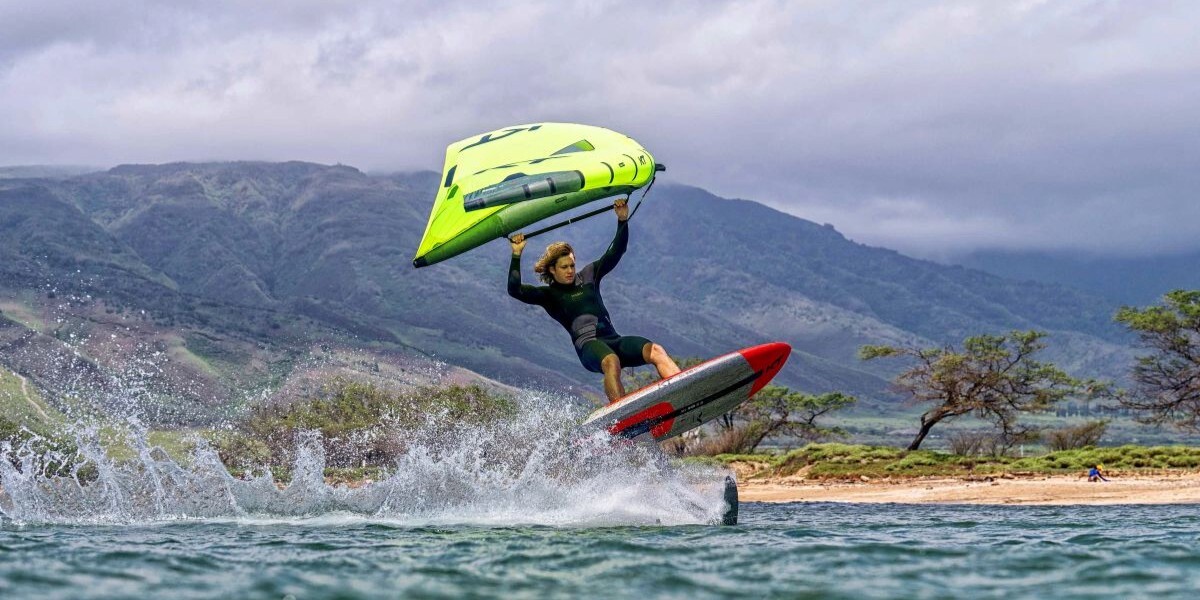
Starboard Above: The Value Winner
If you aren't shooting for the top price tier or the most expensive carbon construction out there, the Starboard Above in the LS construction is a heck of a board for the price. It comes in at roughly half the price of most premium boards, making it incredibly light on the pocketbook for all the hours of fun you'll get on the water.
The design is very similar to the Arc and was actually inspired by it. The Above has a bit more volume, though, which helps intermediate riders ensure they have enough float to stay at the surface without having to work hard to dig it out of a hole. It also has a bit more running length and efficiency for what Tucker calls an "automatic lift-off."
While the Arc wants to be put on foil and pumped out of the hole in really light stuff, the Starboard Above is more like an escalator — a pull-and-go automatic lift-off. It's very stable, very durable, and highly practical, which makes it hard to beat for newer riders looking for light wind ability.

F-One Free Downwind
While Jeff and Tucker couldn't pick just one favorite between the Arc and the Above, they also gave a strong mention to the F-One Free Downwind. It fits right into the same slot as the others. Ultimately, you can pick your color and your brand, and you're going to be happy with any of these options.
Final Thoughts on Stability and Dimensions
When looking at boards like this, it really comes down to length and width — those dimensions dictate your stability. For Tucker, 6'9" is a money spot. He doesn't like anything much shorter than that for light winds.
Added width also brings stability. Anything over 19.5 inches, pushing into the 20 to 21-inch range, gives you that extra balance. Of course, when you start getting wider, you need to get a little longer to maintain proportionate efficiency to get the board up and out of the water.
At the end of the day, light wind riding is all about maximizing your fun per hour. If you're up and riding, you're happy; if you're struggling, you're not. When in doubt, size up. If you want a board that does it all, there are trade-offs based on the sizes you choose within the midi range, but the market is rapidly improving with highly efficient, light wind-specific shapes.
MACkite Subscription Links:
YouTube | Instagram | Spotify Oddcasts
Contact MACkite Below:
800.622.4655 | Kiteboarder@MACkite.com | LIVE Chat Messenger
Recent Posts
-

Mystic Majestic X Hardshell Harness Review
The Brazilian Brothers are back to bring you a special review of the Majestic X harness by Mystic. …27th Oct 2026 -

2026 Cabrinha Unify Control Bar Review
The Brazilian Brothers are in windy Brazil to provide a thorough review of the brand-new 2026 Cabr …23rd Oct 2026 -
Naish Hatch V2 Parawing Overview
Jeff takes a few minutes out from the KoGL event to chat with Adam Carr from Naish about the Hatch …22nd Oct 2026