
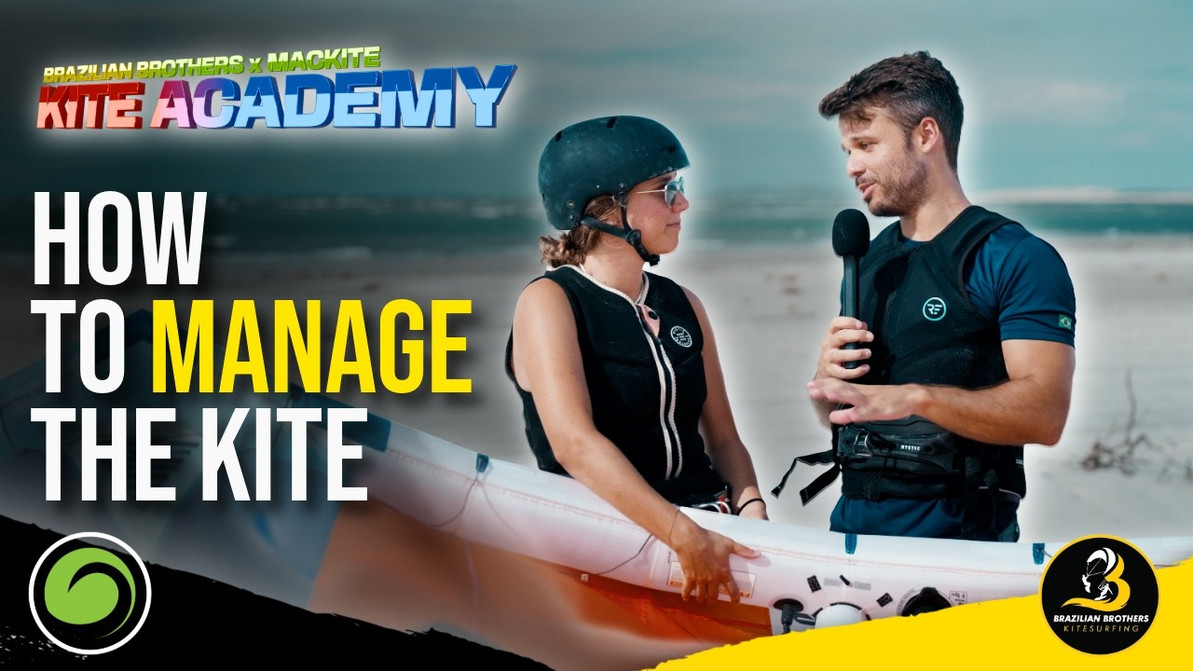
Kite Academy Episode 2: Setting Up Your Kite
The Brazilian Brothers are back for episode two of the Kite Academy. In the first episode, they walked through all the gear you need to get going: a helmet, an impact vest, a harness, a kite, and a board. Today, they're getting into the fun stuff: pumping up the kite, walking through its different nuances, and learning how to handle it, all of which is incredibly important for anyone who wants to be an independent rider.
Where Is the Wind Coming From?
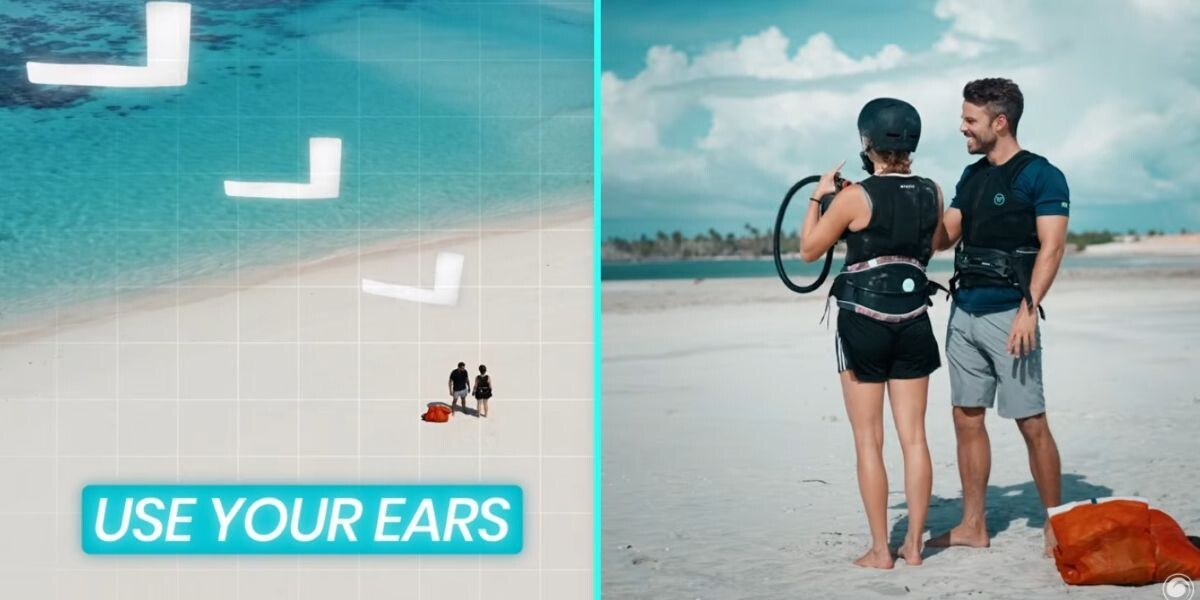
Before you even pump up the kite, you have to identify the wind direction. You can use your ears to find where the wind is coming from. Turn your head until you can hear and feel the wind equally in both ears — that tells you the wind is coming from exactly that direction. This is the first thing you need to notice because it determines how you open up the kite. You always want your back facing the wind when you're about to pump up.
Laying Out the Kite
Once you've identified the wind direction, you can lay the kite out. Make sure the leading edge is facing the wind. In kiteboarding terms, anything behind you is considered upwind, and everything in front of you is considered downwind. You want the wind to travel from the leading edge to the trailing edge of the kite before you even start pumping.
How Much PSI Should I Pump My Kite To?
The Brazilian Brothers use an electric pump, specifically the Ride Engine Air Box, to make the process easier. A common question for beginners is how much PSI to use. This depends on the kite you're flying, but the good news is the recommendation is almost always printed right on the kite's leading edge. The Cabrinha Nitro calls for between 8 and 9 PSI, and if you're just getting started, 8 PSI is a good place to begin.
Getting the pressure right matters. Too much pressure is a problem because if you crash the kite hard, you risk blowing it up. Too little pressure causes the kite to "bag out" — it loses its structure and won't hold its shape in the air. You're looking for the sweet spot where the kite isn't overly stiff but isn't overly flaccid either.
Understanding Kite Structure and Anatomy
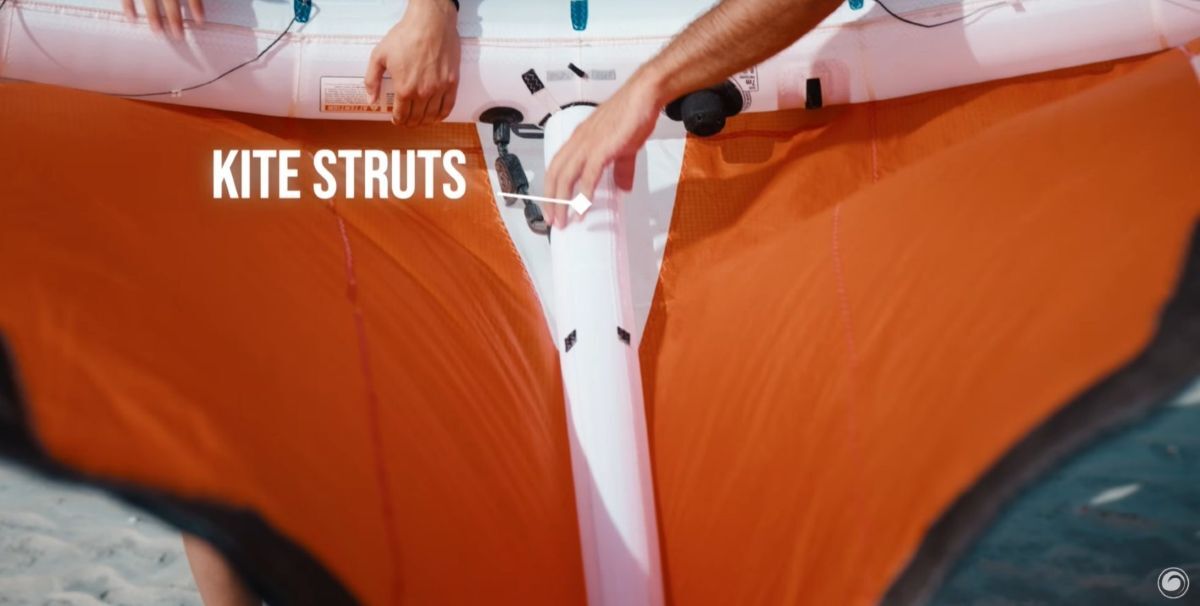
Once the kite is fully pumped up, you can clearly see the different structures. The part you hold onto while setting up is the leading edge (the part of the kite that flies forward when you're riding). Then there are the struts, the inflatable pieces that give the kite its shape. Different kites use different numbers of struts:
- Big Air Kites: Generally use 3 or 5 struts for more structural integrity.
- Wave and Foil Kites: Generally use 1 or 3 struts.
The Cabrinha Nitro shown in the video is a 5-strut kite, which is typical for big air designs to ensure plenty of structure.
Finally, you have the kite bridles: the lines that connect your bar to the kite so you can steer it. The bridles translate force from the kite to your bar, so it's important to make sure they're untangled during your setup.
Summary
Episode 2 of the Kite Academy covers everything between unpacking your kite and getting it ready to fly. It starts with the most fundamental question: where is the wind coming from? Using your ears to find equal pressure on both sides is the easiest method, and that wind direction determines how you orient your kite for setup — back to the wind, leading edge into the wind, trailing edge downwind.
From there, it's about pumping the kite to the right pressure (the recommendation is printed right on the leading edge but typically 8 PSI is a good starting point), avoiding both over-pressurization and a bagged-out canopy.
The episode wraps with the basic anatomy you'll be looking at every session: leading edge, struts, and bridles. Big air kites lean toward 3 or 5 struts for structural integrity, while wave and foil kites typically use 1 or 3. Whatever the design, untangled bridles and proper pressure are non-negotiable before the kite ever leaves the ground.
Master this setup routine and you've eliminated most of the small mistakes that derail a beginner session before it starts.
MACkite Subscription Links:
YouTube | Instagram | Spotify Oddcasts
Contact MACkite Below:
800.622.4655 | Kiteboarder@MACkite.com | LIVE Chat Messenger
Recent Posts
-

2026 Duotone Rebel D/LAB Review: 30-Knot Test
The Brazilian Brothers are ready to provide honest feedback on the 2026 Rebel D/LAB by Duotone. Th …13th Oct 2026 -

2026 Duotone Jaime SLS Kiteboard Review
The Brazilian Brothers are back to bring you another product review. Today, their focus is on the …13th Oct 2026 -
Manera Pocket Wing Belt Overview
Jeff met up with Billy Ackerman from F-One on the beach at the KoGL Test Fest to take a look at th …9th Oct 2026