
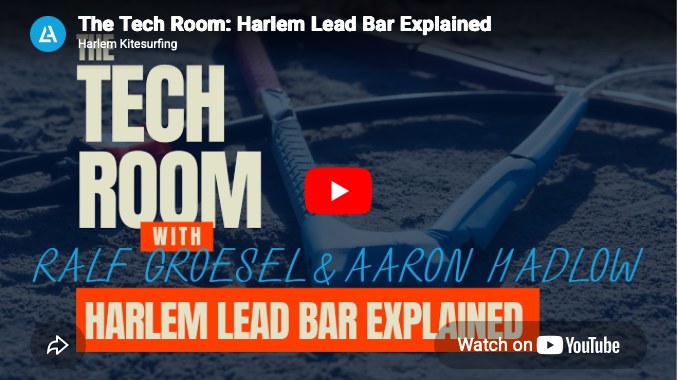
2026 Harlem Lead Bar | Features, Lines, and What Sets It Apart
If you've ever grabbed a bar and just felt instantly comfortable, like it was designed for your hands, you'll understand what the team at Harlem was going for with the Lead Bar. This isn't just another piece of kit. It's a highly engineered control system built around one clear philosophy: the connection between you and the kite should be exact, predictable, and completely trustworthy.
We sat down with the Harlem team to break down exactly what goes into the Lead Bar, from the line construction to the center block to the ergonomics of the grip itself. Here's what we found.
SK99 Dyneema Lines | The Foundation of Feel
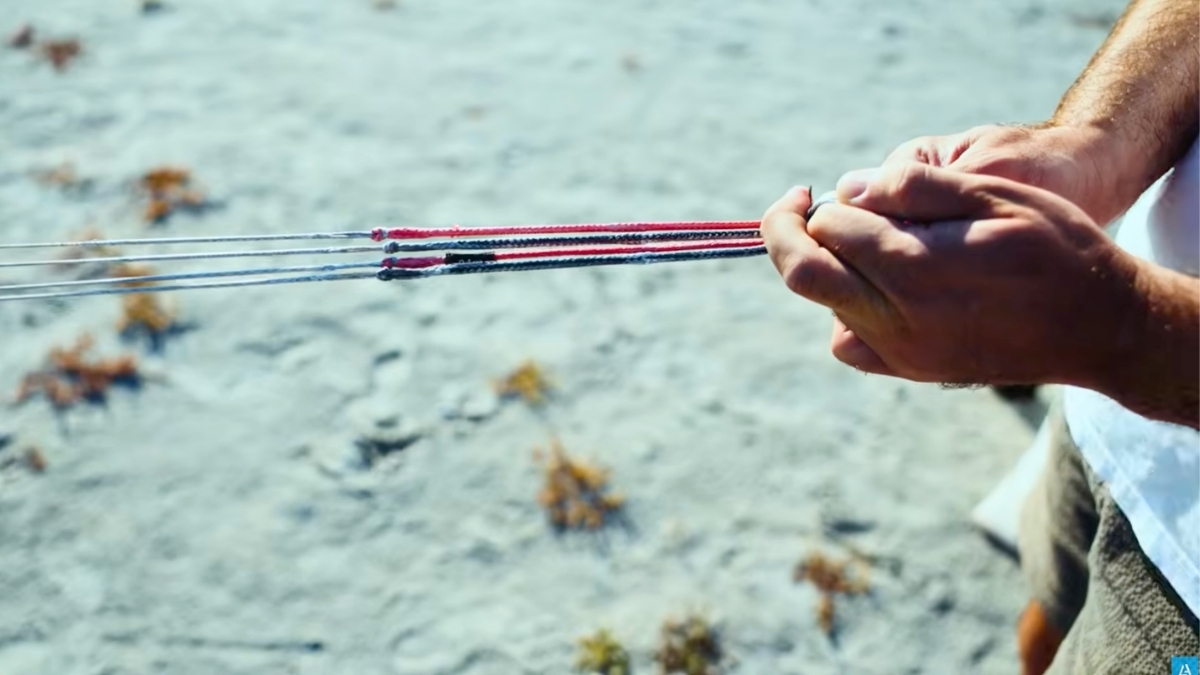
When you're flying a kite 22 to 24 meters away, the lines are your only link to what's happening up in the canopy. Harlem starts with SK99 Dyneema, one of the most dimensionally stable line materials available, specifically for its minimal stretch and shrink characteristics.
Why does that matter? Because even small differences in line length between sides will throw off your kite's trim and handling. Harlem engineers are targeting millimeter-level precision, and they can't get there with lines that change dimension unpredictably.
Key specs on the line setup:
- Front lines and steering lines: 450 kg breaking strength per line
- Leader lines: 550 kg breaking strength (part of the V splitter system)
- One color only (gray): Colored lines stretch and shrink at different rates; gray keeps stretch behavior uniform across all four lines
- Only the front pigtails are colored for identification
That last point is worth pausing on. It's a seemingly small detail that reflects exactly how seriously Harlem takes line-to-line consistency. When you dye a line, you introduce chemical differences that affect mechanical properties. By keeping the lines themselves a single color, they eliminate one more variable from an already complex equation.
Stretch Ratios and Real-World Longevity
One of the more nuanced points from the Harlem team involves proportional stretch. The goal isn't just to minimize stretch, it's to ensure that if the lines do stretch, they stretch at the same rate. A line that stretches more on one side than the other creates asymmetric handling, even if the overall elongation is small.
Additionally, back lines are known to shrink over time with use. After two seasons of heavy riding, it's not uncommon for rear lines to run 3–4 cm short. At that point, your kite is flying completely out of spec. The Lead Bar ships with additional backline pigtails specifically to address this. When the trim drifts, you swap the pigtails rather than replacing the entire line set. This is a practical, cost-effective solution that extends the bar’s usable life over many seasons.
The Center Block | Where Safety Meets Smooth Steering
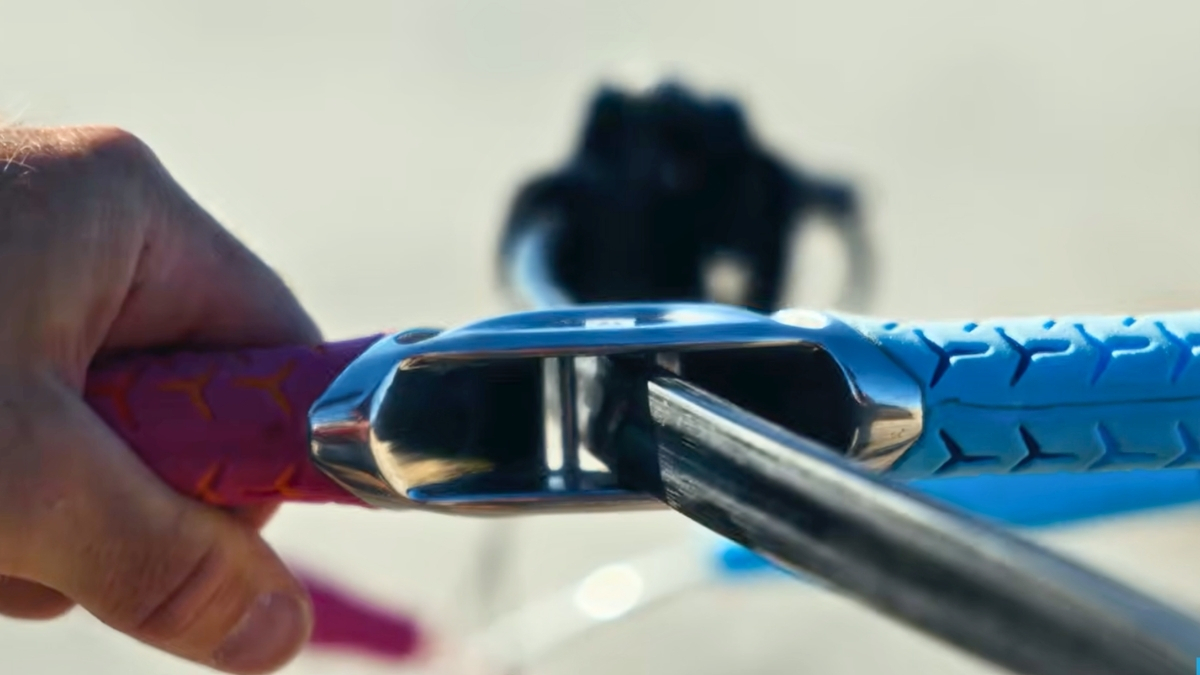
The mono block design in the center of the Lead Bar is one of the most discussed and carefully engineered elements of the whole system. Harlem developed this component in-house, not off-the-shelf, because existing solutions didn’t meet their standard.
Here's the core problem they were solving: if a monolock center piece twists under load, it can bind the bar and prevent you from sheeting in or out while steering. That's not just an inconvenience, it's a genuine safety hazard. Harlem's solution is a center block that's intentionally thick and stiff, preventing it from twisting and locking up under tension.
The geometry matters too. The centerpiece uses an elongated rectangular profile that runs through a corresponding rectangular opening in the bar. This allows:
- Auto-unwind on every release—no binding or line wrap when you sheet out
- Consistent tension along the rail—the mono stays loaded, which makes the bar feed smoothly
- Freedom of movement—you can steer and depower simultaneously without one fighting the other
Auto-unwind has essentially become an industry standard at this point, but the Harlem team is quick to note that the standard isn't the feature, the execution is. On the Lead Bar, it works flawlessly.
Quick Release and Chicken Loop | Designed for Daily Use
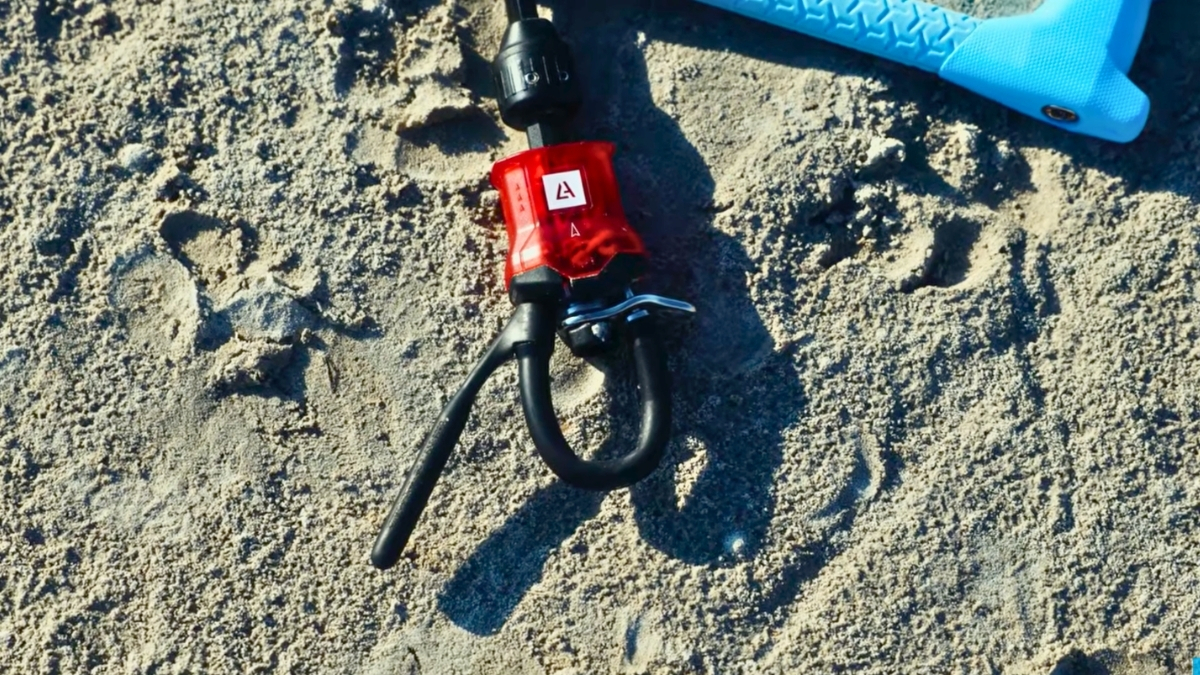
The Lead Bar's quick-release system meets industry certification standards, but Harlem went beyond compliance by considering day-to-day usability. Rather than requiring you to pull up a release cap to reassemble the chicken loop, the system uses a click-in design. It's a small thing that adds up significantly over hundreds of sessions.
Short Chicken Loop | More Depower, More Control
The standard chicken loop on the Lead Bar is intentionally short. This is a deliberate shift from earlier Harlem setups that ran significantly longer loops.
The reasoning is straightforward: a shorter chicken loop lets you sheet the bar further out, which gives you more depower range and more control when riding overpowered. With big-air kiteboarding increasingly at the forefront of the sport, that extra depower and bar reach are genuinely useful.
There's a trade-off, as some riders feel that a short loop brings them a bit closer to the bar in certain body positions, but the Harlem team considers this acceptable given the control benefits. For riders focused on unhooking and freestyle tricks, Harlem does offer the longer loop option on the Hadlow Pro Lead Bar, where the ability to get in and out of the loop quickly takes priority.
Bar Construction | Ergonomics and Durability
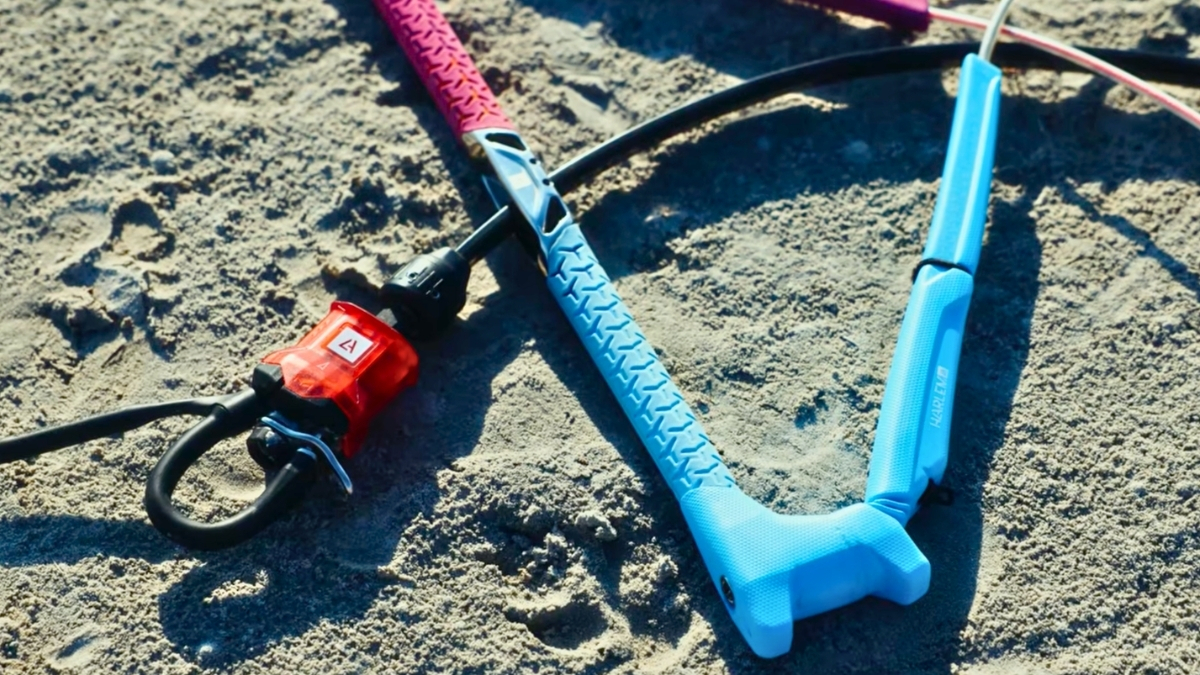
Asymmetric EVA Grip
The bar itself features an asymmetric EVA foam grip. This is one of those details that sounds subtle until you actually ride with it.
The grip has an additional layer of EVA on one side, which adds volume for your fingers. This serves two purposes:
- Comfort—the extra volume fills your hand and reduces fatigue over long sessions
- Orientation feedback—if you pick up the bar the wrong way, it just doesn't feel right, which is an intuitive safety cue in addition to the color-coded center section
The asymmetric design isn't something you consciously notice in every session. But like a well-designed steering wheel, it settles into your hands naturally, and once you're used to it, anything else feels off.
Floaters and the High-V System
The Lead Bar comes standard with a high-V setup. This is part of Harlem's overarching philosophy that this bar should work seamlessly with their kite range right out of the box. The floaters are a Harlem-designed component with intentionally flexible bending points on the outside edges. When you rotate the bar, the flexibility at those outer points reduces resistance, making the kite feel more agile and responsive.
The high-V can be removed, which also opens the door to using the Lead Bar with other kite brands if you're curious. Though Harlem doesn't recommend removing it for use with their own kites.
One Bar for the Whole Range
The Lead Bar comes in one size and is compatible with Harlem's entire kite lineup. You choose between two line length options—22m or 24m—depending on your conditions and riding style. That's it. No sizing matrix, no figuring out which bar goes with which kite model.
Key Takeaways
- SK99 Dyneema lines offer industry-leading low stretch and high breaking strength (450 kg front/steering, 550 kg leader lines)
- Single-color line construction eliminates stretch variance caused by different dye chemistries
- Additional backline pigtails included to re-trim the bar after the inevitable rear-line shrinkage over multiple seasons
- Custom-developed center block prevents twisting and binding, ensuring reliable auto-unwind and smooth depower at all times
- Click-in chicken loop assembly simplifies rigging and de-rigging for daily use
- Short chicken loop standard delivers more depower range and control, especially for powered-up riding and big air
- Asymmetric EVA grip provides comfort and built-in orientation feedback
- One bar fits the entire Harlem kite range, with 22m or 24m line length options
Talk to the Gear Heads at MACkite
If you're considering the Harlem Lead Bar, or want to talk through how it compares to what you're currently riding, our team is happy to dig into the details with you. We ride this stuff, we sell this stuff, and we genuinely love talking about it.
Reach out anytime at Kiteboarder@MACkite.com. Whether you're dialing in a new setup or just curious about what Harlem is doing differently, we're here for the conversation.
Recent Posts
-

2026 Cabrinha Unify Control Bar Review
The Brazilian Brothers are in windy Brazil to provide a thorough review of the brand-new 2026 Cabr …23rd Oct 2026 -
Naish Hatch V2 Parawing Overview
Jeff takes a few minutes out from the KoGL event to chat with Adam Carr from Naish about the Hatch …22nd Oct 2026 -

Flysurfer Soul 4 vs Sonic 5: Which Kite is for You?
Jeff is on the beach at KoGL with Marie-Eve from Flysurfer to discuss the growing excitement surro …20th Oct 2026