
eFoil Knowledge Center

Everything you need to get started, from the first trigger of the throttle to transitioning to clean, silent flights. Gear basics, safety, and techniques from the expertly-led MACkite eFoil Team.
The Ultimate Guide to Electric Hydrofoils
Ready to learn how to efoil? Explore our complete rider guide, filled with tips, tricks, and experience-backed insight to help you get started.
What is efoiling?
Electric hydrofoils (also known as "efoils") are motorized foil systems. We equate it to a magic carpet — when you're above the water, and it feels like you're gliding on nothing at all. Just you, your board, and the water well beneath you.
What is Foil Assist?
Like a complete foil system, you're being assisted to hydroplane above the water. But, the systems are often smaller and used for disciplines like prone surfing or winging. They often have a modular setup and can fit many different brand boards or foils.
Are electric hydrofoils popular?
Absolutely. It's a surge in the water sports industry, for many reasons. Considering you don't need a kite, sail, or paddle to get started, and the barrier to entry is pretty low, it's a versatile and adaptable activity that is well-loved by all ages and abilities. If you like being on the water, have moderately decent balance, and are willing to learn, then efoiling might just be your next step.
Should I take a lesson?
We wouldn't recommend going out for your first few sessions without someone knowledgeable about eFoiling. While it's straightforward enough to learn, having a buddy or instructor around to give you pointers is ideal. If you're in Michigan, you're welcome to take lessons with our team in Grand Haven.
Related Resources
Check out these helpful guides:
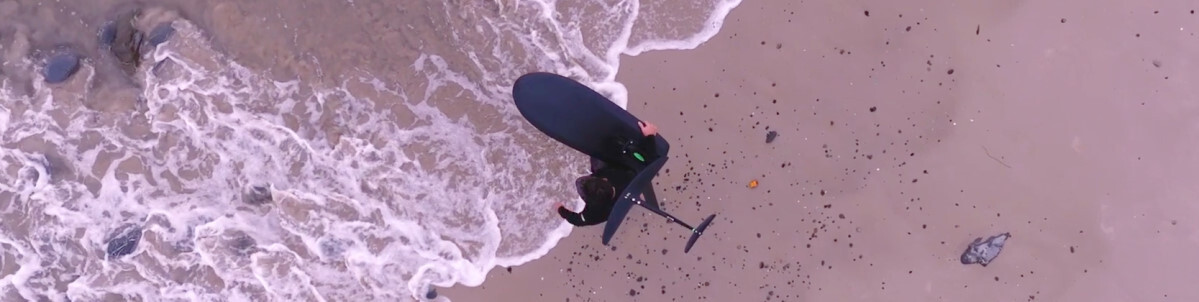
eFoil Gear Basics
Generally speaking, for complete efoil setups (board and hydrofoil included), you're typically going to find in your box:
- Board: Often, beginners will have a larger board that feels more stable for learning. More advanced riders will find a smaller volume board lets them have more performance precision.
- Mast & Foil: Different brands equip their foils with varying mast sizes. Generally, shorter masts are going to be better for beginners and shallow waters, while longer masts will be better for advanced riders.
- Battery: All electric hydrofoils will have some sort of battery component.
- Motor & Prop: All efoils will have some mechanism of a propeller and motor. If you have no prior experience, find one with prop guards for added safety.
- Remote or Control System: Some brands have remotes that you hold while others might have controls in the board.
What else should I have?
No matter what, we recommend having a Coast Guard-approved life vest, a helmet, and a whistle. (Some states or communities even require you to have them by law.) If you're in colder waters, add a proper wetsuit, boots, and gloves as needed.
Next: Types of Electric Hydrofoils | Back to top
Related Resources
Check out these helpful guides:
Foil Drive Propeller Comparison | Foil Drive Accessory List | eFoil First Buy Tips | Read all efoil articles

Types of Electric Hydrofoils
Electric hydrofoils are constantly adapting. Every season that passes, we see another innovation or improvement. That also opens up the door for new opportunities, letting electric-assisted foiling adapt to activities like surfing or winging. While this can get complicated, it doesn't have to be. Let's break down the differences:
Complete eFoils
Electric hydrofoils (aka, "efoils") typically has the board, foil system, and throttling sold together. You don't need to attach the motor to a different board, worry about a carrying an external battery, or hauling around extra gear like a wing. Some notable brands are Waydoo and Hydroflyer.
When on an efoil, you experience pure independence on the water. You control your lift and speed, often with a handheld remote. When you're on foil, which means you have enough lift to have your board above the water, it feels like you're gliding on nothing at all.
All motorized hydrofoils are considered "efoils" but they don't all act the same. The Waydoo Evo Pro, for example, offers cruising at an accessible price point with self-leveling sensors and an extended 100-minute battery life. Waydoo even has scooter options available for easier learning! Foil Drive and FLITELab focus on premium build and adaptability for different disciplines.
Who are complete eFoils for?
If you're new to water sports, want an easy setup for your lake house, or are after a new way to explore waters without worrying about wind or swell, complete electric hydrofoil units could be your answer.
That being said, there are some drawbacks:
- Traditionally heavier setups
- Less "surfy" feel
Ultimately, we find a majority of beginners and casual riders looking for this option. They're fun and a seriously one-of-a-kind experience that almost everyone can enjoy.
Motor-Assisted Foiling
Think of motor-assisted foiling like a subtle boost to help you during takeoff or lightwind sessions. It's there to get you moving, but the rest of it is up to you. What felt like a pretty daunting task getting up now seems like a breeze. As a plus, you might not even need a full wing quiver! If you're an experienced wing foiler, this might be your ticket for longer sessions.
The team has found some serious benefits to have an efoil for wing foiling, including:
- Easier assist in lightwind riding
- Reduction of gear drag by sizing your wing down and using foil assist
- Access to far-out wind spots not accessible to a shoreline
Prone Surf Assisted Foiling
Electric prone foiling mimics traditional prone surfing; as such, the type of efoil you use depends on your surf style. Right now, there are two main ways: have a prone surf efoil board (like FLITELab) or have an assisted mast system (like Foil Drive). Either way, you're getting minimal thrust for assistance to help catch those swells.
Prone eFoiling is ultimately going to tailor to intermediate to advanced riders, but more beginner-friendly systems (like Foil Drive) can help those with less experience. If you're after catching more waves with less fatigue, then an electric prone surf foil system is ideal.
Next: Are eFoils Vessels? | Back to top
Related Resources
Check out these helpful guides:
Waydoo Evo Pro Lite Overview | Why Riders Are Mixing Winging, Foil Drive, & Parawing | Read all efoil articles
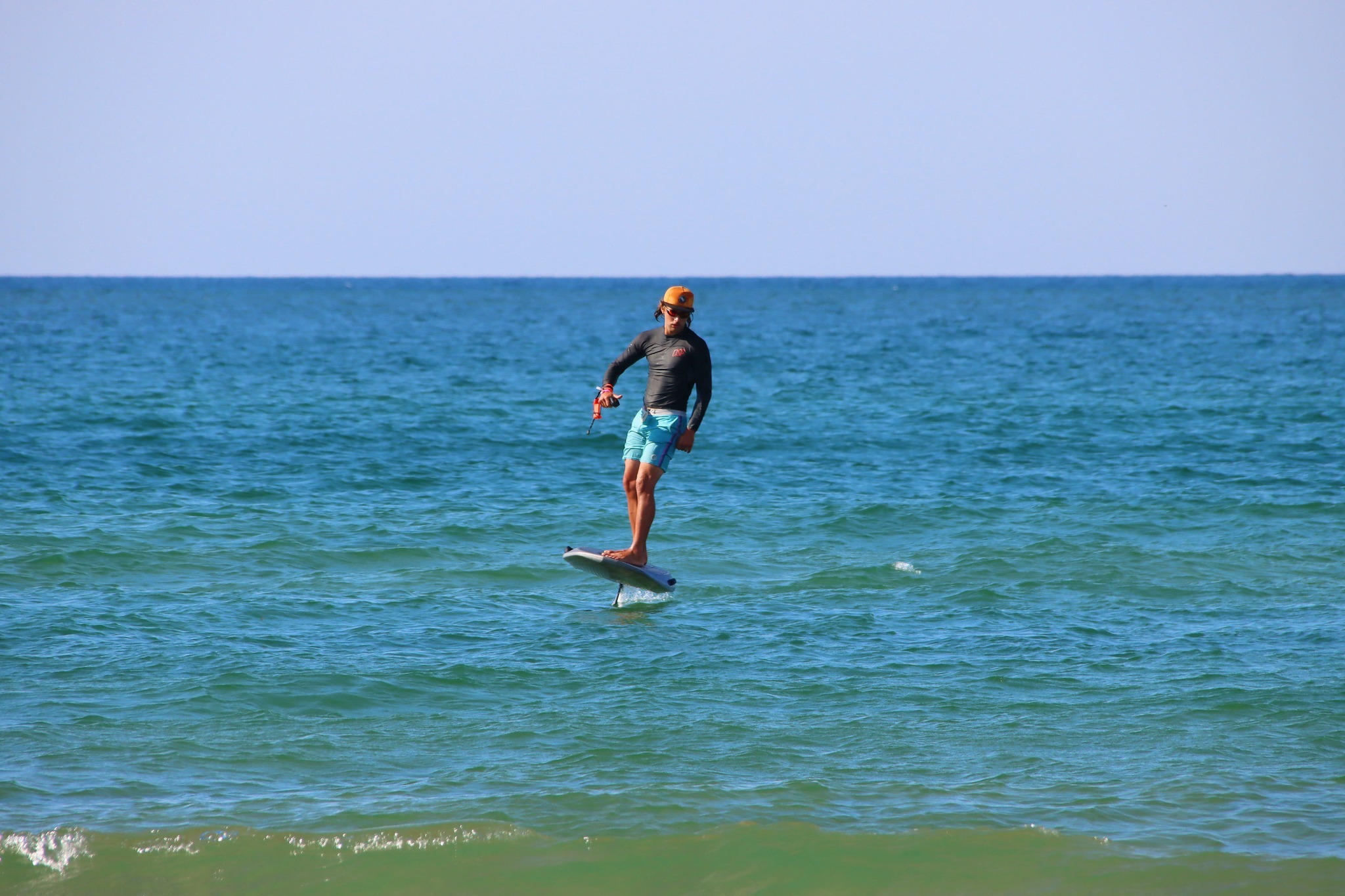
Is an eFoil a Watercraft?
Well, it's complicated. The Coast Guard has released a definition of efoils along with recommended actions. This helpful U.S. Coast Guard policy can help provide in-depth information; however, in summary:
- "eFoils" are also called "Mechanically Propelled Personal Hydrofoils" (MPPH) and electric surfboards, like FLITELab, are called "Mechanically Propelled Surfboards" (MPS)
- You must register your board and have a Hull Identification Number (HIN) that is pained or affixed to the forward half of your board. Your state might have additional requirements.
- Wear a PDF, ideally a USCG-approved flotation device.
- Carry a sound device, like a whistle.
Additionally, make sure you're compliant with all local and state laws. No one wants a ticket on the water!
Next: Maintenance & Care | Back to top
Related Resources
Check out these helpful guides:
Are eFoils Vessels? | Applying Registration Stickers to Waydoo eFoils | Read all efoil articles

Maintenance & Care
No matter if you have a Waydoo, a Foil Drive, or HydroFlyer, proper care and cleaning are key to keep your gear lasting session after session. Here are some frequently asked questions and pro tips from the crew:
How should I rinse my eFoil after every session?
Always rinse with fresh water, paying close attention to the prop area, mast, and battery terminals. Saltwater will creep into any connection it can, so don’t skip the small spots. Avoid high-pressure hoses, a gentle rinse is best.
Can I leave my eFoil out to dry in the sun?
Let everything air-dry completely before storage, but keep it shaded. Direct sun for long periods can damage seals and battery housings. A garage or shaded deck works great.
What’s the best way to store my battery?
Keep it around 50% charge if you know you won't be out for awhile. Store in a room-temperature environment — not in your car or a freezing shed. (Trust us, we've heard that before.) Batteries hate extremes just as much as we do!
If you’re riding the next day, a full charge is fine. For longer gaps between rides, stop at about half to extend battery lifespan. Check manufacturer app guidelines for exact storage voltage.
How often should I check for software or firmware updates?
Give your app a quick glance before each ride. A few minutes of prep can save you from pre-session frustration. (We've been there.)
How do I prevent corrosion or wear?
Apply grease on connectors and screws a few times per season, especially if you ride saltwater regularly. This makes a huge difference in long-term reliability.
Do I need to inspect my prop or wing bolts?
Yes. Check them regularly for tightness and wear, especially if you feel vibration. Loose hardware is the quickest way to strip threads or damage your motor unit.
What about long-term storage?
Remove the battery completely, clean and dry all components, and store them separately. Cover your controller screen and keep everything out of direct UV exposure. Give the electronics a quick check every few weeks to avoid surprises come spring.
Related Resources
Check out these helpful guides:
FLITELab AMPJet Setup Tips | Foil Drive Maintenance | Waydoo Maintenance | Read all efoil articles
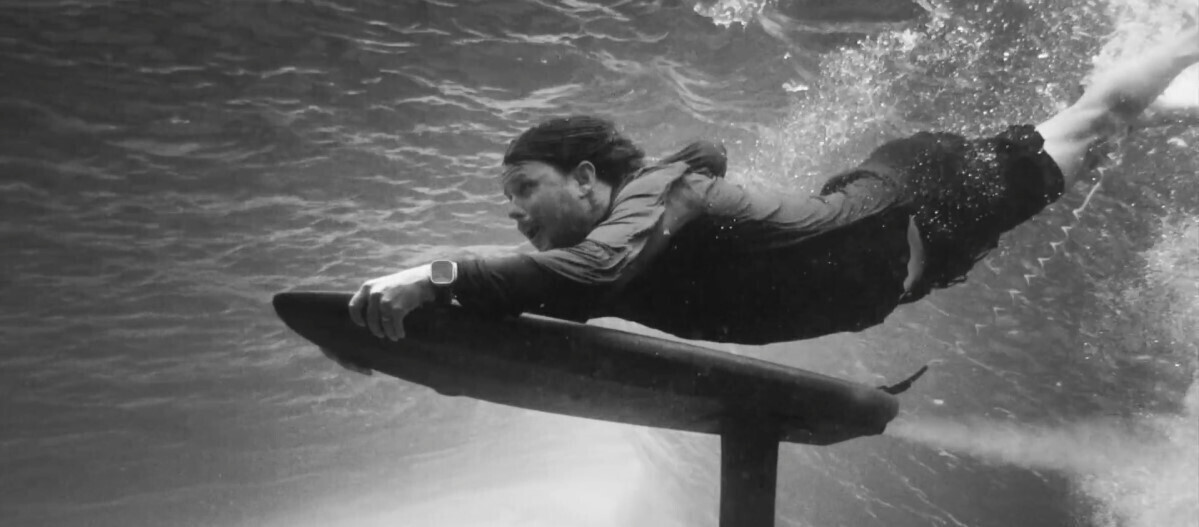
FLITELab*
This section is currently in progress, and we'll make a dedicated buyer's guide soon! Save this page for the latest updates.
FLITELab* is the one of the newest iterations of foil assist. Unlike traditional foil assist systems, where the propulsion unit is attached to the hydrofoil, FLITELab has a fully integrated cartridge that is connected to the back of their AMP boards.
The benefit? You're reducing drag by having the unit sit behind and above the foil, which lets you catch swells or cruise in light wind easier.
What's the difference between FLITELab and Foil Drive?
We have a great article where Cole explains the differences.
But, if you're looking for the quick version, here are the similarities and differences:
- While both are considered foil assist, the location of the propeller is different in each. Foil Drive sits on the mast while FLITELab's is integrated into the board.
- Foil Drive offers a universal mount that can is compatible with any foil and an integrated mast option. FLITELab lets you use any foil you'd like without mounting.
- Both systems shut off when you're on foil, conserving battery.
- FLITELab has an easier setup, while Foil Drive takes more time (especially in your first sessions).
- Foil Drive is more beginner-friendly, while FLITELab is ideal for those familiar with pumping and turning.
FLITELab Maintenance & Safety
Below are some articles for setup, post-ride care, and connecting to the FLITELab app:
- How to Set Up the FLITELab AMPJet
- Post-Ride Care Tips for Your AMPJet
- How to Connect & Customize Your FLITELab App
FLITELab FAQs
What size boards are available?
Right now, FLITELab has the AMPJet_S and AMPJet_M. The Small comes in a 4'2", 4'6", and 4'8" and features a performance prone shape while the Medium comes in 5'0" and 5'8" and is shaped closer to a mid-length board. If you're an advanced winger or surfer who wants the benefit of performance mixed with downwind sessions, choose the Small. If you're primarily into downwinders and winging but like to enjoy those super-fat and small surf days, the Medium is a solid choice.
AMPJet Board Specifications
| Width | Thickness | Volume | |
|---|---|---|---|
| 4'2"_S | 17.5" | 3.1" | 27L |
| 4'6"_S | 18.5" | 3.1" | 32L |
| 4'8"_S | 20" | 3.5" | 40L |
| 5'0"_M | 18" | 4.5" | 45L |
| 5'8"_M | 20" | 4.6" | 65L |
Product data from FLITELab*.
Is FLITELab compatible with any foil system?
Yep! The board features 14" universal tracks, so it can easily fit into your current setup.
Can I fly with a FLITELab battery?
FLITELab batteries are 142 Watts each, meaning they're most likely good to fly. We recommend contacting your airline first and researching before you fly, but most airlines accept batteries in the 100-160 Watt range.
Next: eFoil FAQs | Back to top
Related Resources
Check out these helpful guides:
FLITELab AMPJet Setup Tips | AMPJet At A Glance | Waydoo Maintenance | Read all efoil articles
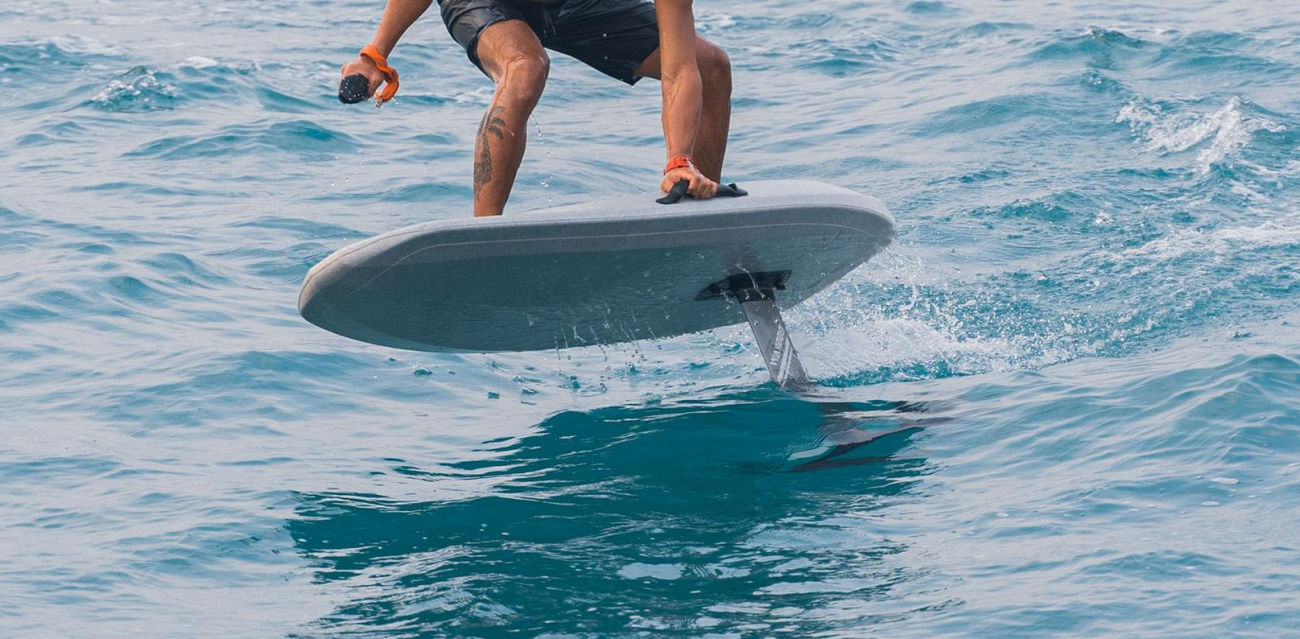
eFoil FAQs
How hard is it to learn to efoil?
Even if someone is new to water sports, efoiling is a reliativley friendly activity to get into. If you don't have previous board skills, you'll likely start riding on your stomach, transition to your knees to understand balance and board feel, and then eventually make your way to standing. You might transition back and forth between your knees and standing, which is normal! With a bit of coaching and flat water, you should be up and riding in 1-3 sessions.
How fast do efoils go?
It depends on the model, but they can travel typically between 15 and 30+ miles per hour.
How long do batteries last?
Expect anywhere from 45-100 minutes of ride time. It's ultimately dependent on your speed, weight, and foil choice. Smaller, performance-based batteries might have less battery life in an individual cartridge but the ability to hold multiples, while complete units may have an extended battery that will take 2-4 hours to charge.
Are efoils good for families?
Absolutely! Of course, young riders should always be supervised and start on lower power settings.
What's the difference between a Waydoo and a Foil Drive?
Good question! Waydoo efoils are often sold as complete units that include the board, battery, remote, and hydrofoil. A Foil Drive system adds electric assist to a standard foil setup that gives you enough boost to get on foil and more riding flexibility.
Can I travel with my efoil?
Generally-speaking, boards and masts should travel just fine. You're likely subject to weight charges (depending on your setup). While some brands are now making batteries that are travel complaint, most current efoil batteries cannot be on a plane. That being said, if you want to use an efoil while on vacation, we recommend you look into rental options. Save the hassle (and maybe some money).
Related Resources
Check out these helpful guides:
Foil Drive MAX Battery Guide | Tips & Tricks for Surf Foiling | Surf Foil Etiquette | Read all efoil articles
Stay Connected