
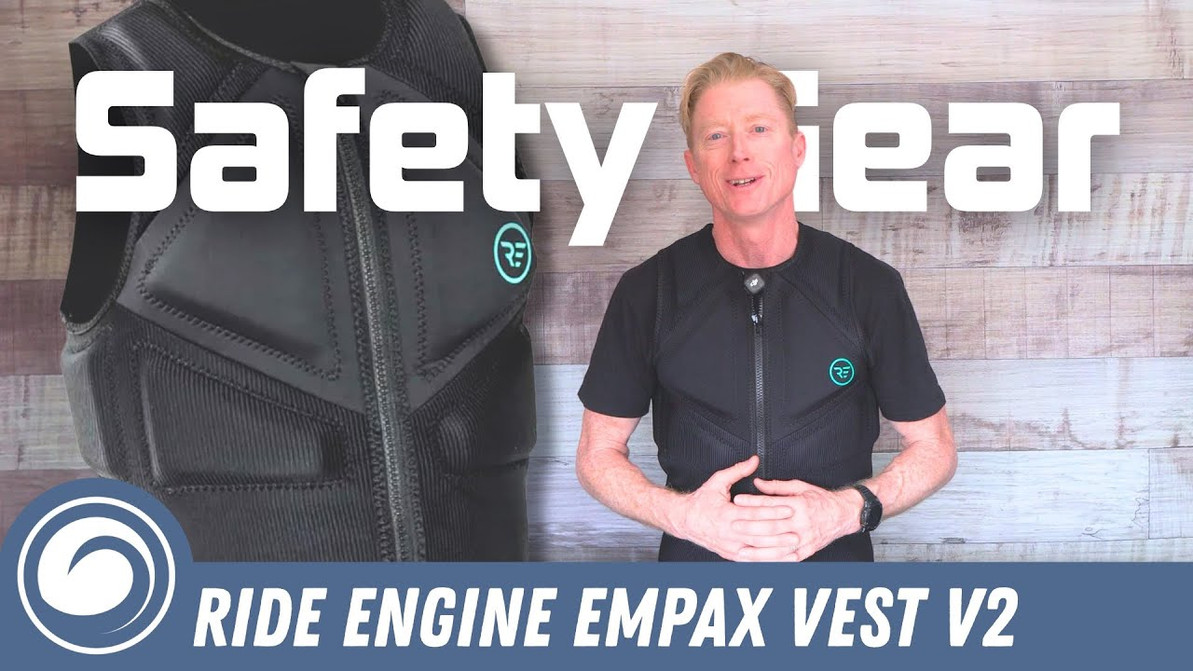
Why the Ride Engine Empax Vest Is a Shop Favorite
When riders ask us about flotation, the first thing we usually have to do is slow the conversation down. Not all vests are built for the same purpose. And if you kiteboard or wing foil, what you need on the water looks very different than what a boater might need.
The Ride Engine Empax Vest has become one of our go-to recommendations because it strikes a balance that actually works in real riding conditions. We’ve used it kiting in powered summer sessions, winging in choppy Lake Michigan swell, and layering it over thick winter wetsuits. It checks the boxes that matter without getting in your way.
Let’s break down why.
Impact Vest vs. US Coast Guard Approved Life Jacket
Before talking specifically about the Empax, it helps to understand categories.
There are two main types of flotation devices you’ll see on the water:
- US Coast Guard approved life jackets
- Impact vests
A USCG-approved vest is designed to meet strict flotation requirements and is legally required in certain boating situations. If you need compliance for regulations, that is the route to go.
An impact vest, like the Empax, is built specifically for board sports. It offers meaningful flotation and significant impact protection, but it does not meet US Coast Guard approval standards.
Why do most kiteboarders and wing foilers choose impact vests?
Because we’re not sitting in a boat. We’re:
- Taking falls at speed
- Getting pulled by a harness
- Climbing back on boards repeatedly
- Needing full range of motion in our shoulders and torso
An impact vest gives you flotation to help during water recovery and long swims, while also protecting ribs and spine when things go sideways. For board sports, that balance often makes more sense.
Note: If you need legal USCG compliance, this is not the vest for that job.
Protection Where You Actually Take Hits
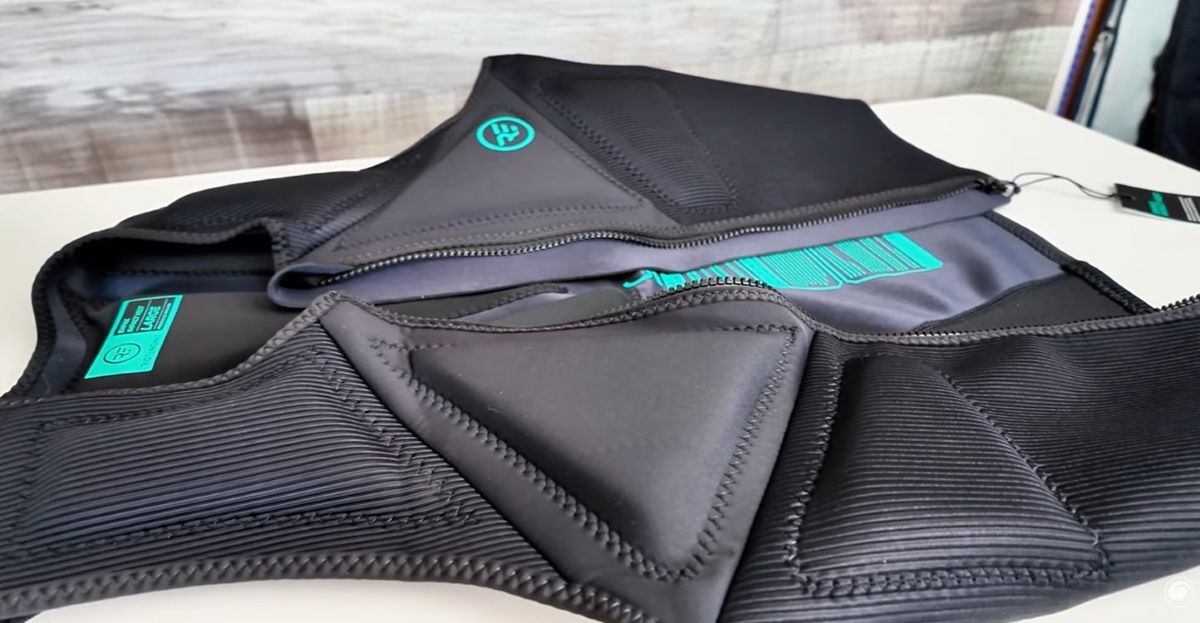
One of the first things you notice with the Empax is how well-padded it is without feeling bulky.
The protection zones are placed exactly where riders tend to get tagged:
- Lower ribs: If you’ve ever taken a hard side slap learning jumps or rotations, you know how exposed this area is.
- Upper chest: Helps cushion forward impacts and awkward landings.
- Full back panel: Whether you’re foiling and breach at speed or get worked in waves, that back padding matters.
On the Great Lakes, especially when learning new tricks in gusty wind, falls are rarely clean. Boards rebound. Foils pop up. Water gets shallow fast. That added cushion takes the edge off crashes and gives you confidence to push progression.
It also adds flotation. While not USCG-rated, the Empax provides enough buoyancy that you feel supported in the water, especially when paired with a wetsuit and harness.
The Stretch Material That Makes It Work
This is the feature that keeps us coming back to the Empax.
The material has a noticeable stretch to it. It fits snug, as it should, but it doesn’t feel restrictive. It moves with your breathing and torso rotation instead of fighting against it.
Why that matters:
- You can layer it over a 3/2 in summer or a 4/3 in fall without feeling compressed.
- In winter, even over thicker suits, it still stretches enough to stay comfortable.
- It returns to shape instead of getting sloppy over time.
Jeff wears a large T-shirt and rides a large Empax. With just a T-shirt underneath, it fits snug and clean. Add a wetsuit from 3/2 to 4/3, and it still works without feeling too tight.
Some impact vests require sizing up. This one runs true to size. A snug fit is correct. It will relax slightly with use, but it should feel secure out of the box.
Front Zip vs. Side Zip: Why It Matters
Zipper placement might seem minor until you ride powered.
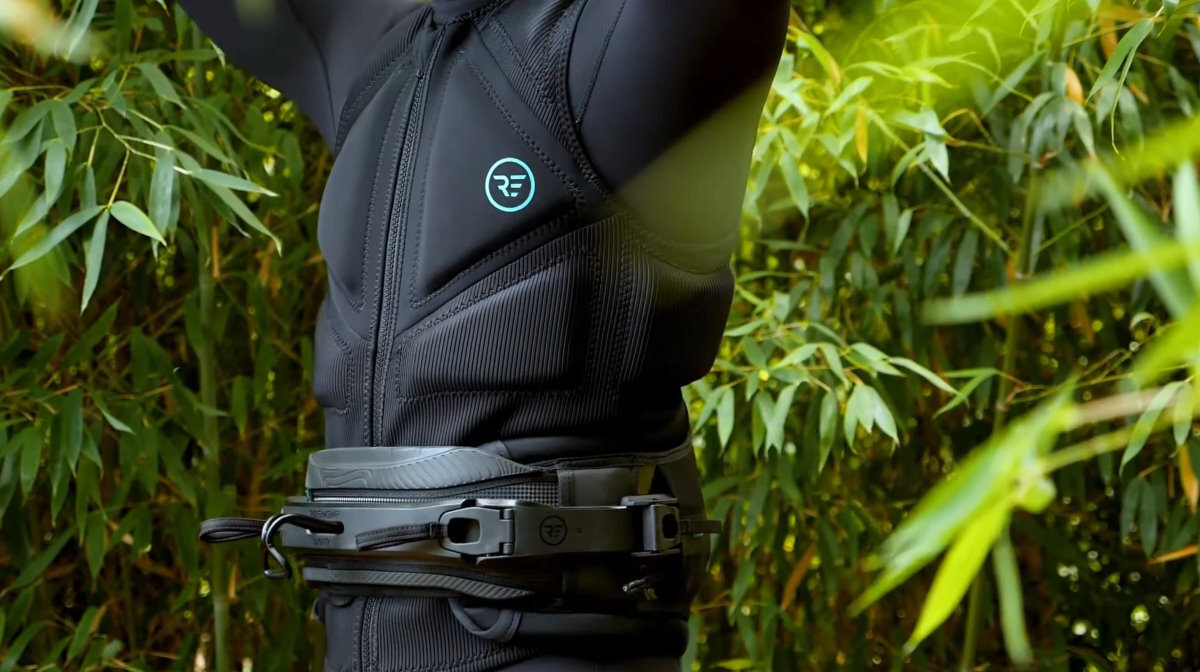
The Empax uses a front zip. A lot of riders prefer this for one key reason: harness integration.
With a side-zip vest, the zipper can sit right where your waist harness wraps around your body. Under load, that can create pressure points or subtle pinching.
With the Empax:
- The front zipper stays clear of your harness side panels.
- A waist harness sits cleanly below the vest.
- There’s no awkward stacking of hardware.
For kiteboarding especially, where your harness is constantly under tension, that cleaner interface makes long sessions more comfortable.
Wing riders using a waist leash or harness setup benefit too. Nothing bunches or digs in.
It Doesn’t Ride Up
One of the most common complaints we hear about impact vests is ride-up.
You waterstart, sheet in, and suddenly the vest creeps toward your chin.
The Empax stays put.
That’s likely due to the balance of stretch and structure in the material. It hugs your torso without being overly slick, so it grips just enough to stay in place.
In repeated waterstarts, long reaches, or high-speed runs, it maintains position. That matters not just for comfort but for consistent protection.
Real-World Flotation for Board Sports
Is it a life jacket? No.
Does it provide meaningful flotation? Yes.
When paired with:
- A waist harness
- A wetsuit
- A modern kite or wing setup
You get a lot of overall buoyancy. In cold Great Lakes water, especially during shoulder seasons, that extra support makes a difference during long swims or gear sorting.
It gives you enough float to rest comfortably while you reset your kite or climb back on your foil board, without feeling bulky or restrictive while riding.
Who the Empax Vest Is For
This vest is a great fit for:
- Kiteboarders progressing into jumps and rotations
- Wing foilers learning jibes and tacks
- Riders who crash often while pushing new tricks
- Cold-water riders layering over thicker wetsuits
- Anyone who wants solid impact protection without bulk
It’s probably not the right choice if:
- You need US Coast Guard approved flotation
- Your local regulations require certified life jackets
- You want maximum buoyancy above all else
Version 2: If It Isn’t Broken
Ride Engine is currently on Version 2 of the Empax. What we appreciate is that they didn’t reinvent it.
The updates are subtle. The core fit, protection zones, and zipper layout remain intact. When a vest already works well, consistency builds trust.
We like seeing refinement rather than constant redesign.
Sizes and Fit
The Empax comes in:
- Small
- Medium
- Large
- Extra Large
Fit guidance:
- Order your normal T-shirt size.
- It should feel snug.
- Expect slight stretch over time.
- Designed to layer over wetsuits.
If you’re between sizes and plan to ride primarily in thick winter suits, sizing up may make sense. Otherwise, stick with your standard size.
Why We Keep Recommending It
There are a lot of impact vests out there.
We keep coming back to the Ride Engine Empax because it balances:
- Real impact protection
- Useful flotation
- Clean harness integration
- Comfortable stretch
- True-to-size fit
- Minimal ride-up
It feels purpose-built for kiteboarding and wing foiling rather than adapted from another sport.
If you’re unsure whether you need an impact vest or a USCG-approved life jacket, reach out. We’re happy to walk through your local regulations, riding style, and conditions to make sure you end up with the right solution for your sessions.
If you want to read more about the Empax, check out the Brazilian Brother's Review.
MACkite Subscription Links:
YouTube | Instagram | Spotify Oddcasts
Contact MACkite Below:
800.622.4655 | Kiteboarder@MACkite.com | LIVE Chat Messenger
Recent Posts
-
Manera Pocket Wing Belt Overview
Jeff met up with Billy Ackerman from F-One on the beach at the KoGL Test Fest to take a look at th …9th Oct 2026 -
Parawing Redeploy Tip: The Simple Trick for Clean Launches
Jeff caught up with Billy Ackerman from F-One on the beach, where they chatted about parawings. Wh …9th Oct 2026 -
Appletree Zapple S RIIFT Foil Assist Board Overview
Appletree's New RIIFT-Specific Foil Assist Boards Tucker is joined by Wieger from Appletree Surfbo …8th Oct 2026