
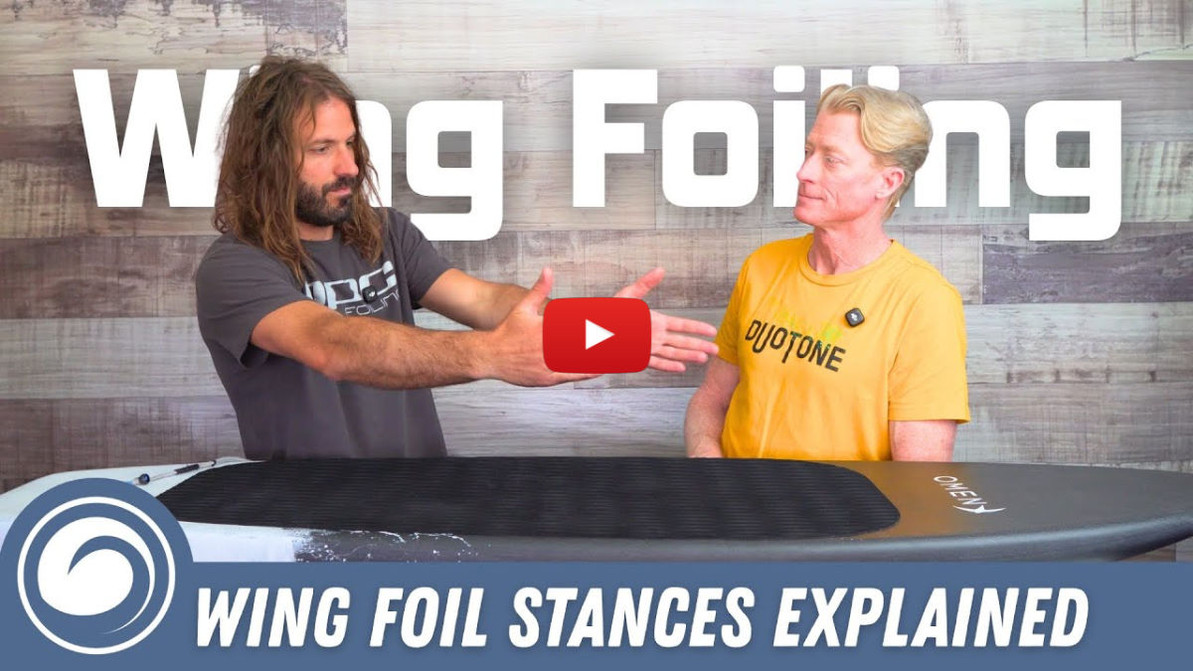
Level Up Your Wing Foiling: Dial in the Perfect Stance Every Time
If you've ever climbed onto a foilboard and thought, "Where am I even supposed to put my feet?" you're not alone.
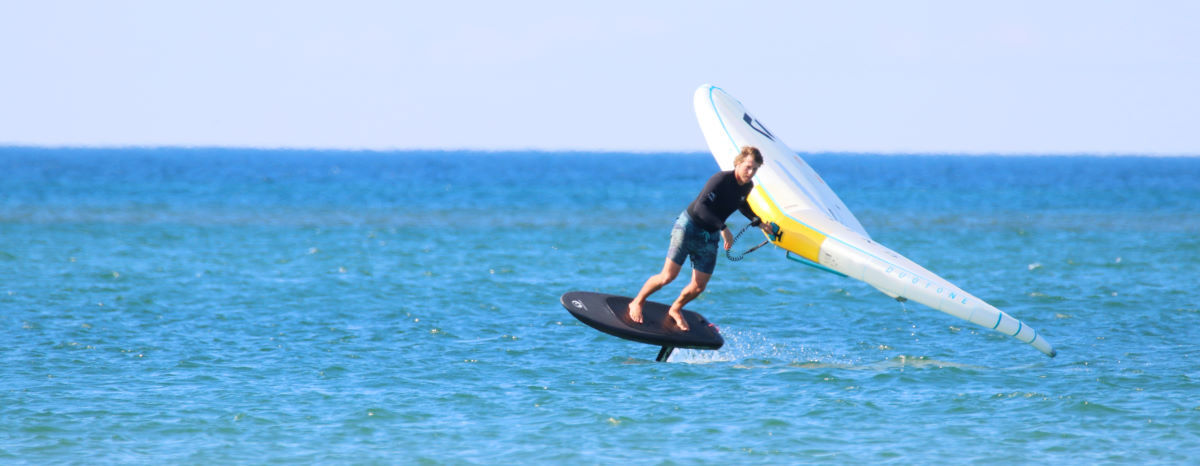
Stance is one of the biggest factors in how quickly you get up when wing foiling, how stable you feel, and how efficiently you ride. Jeff and Tucker had a chat to break it all down, from knee placement to foot positioning to subtle adjustments in your stance that can completely change how your foil feels.
We've pulled out the best tidbits here, but feel free to give the video a watch for the full conversation.
Quick Guide: Foilboard Stance Basics
- Knees: Start facing forward (best for balance and neutral takeoffs)
- Front-to-back position: Slightly behind center of buoyancy
- Goal: Keep the nose slightly up to build speed
- Stance width: Narrows as you progress, wider for hard turns or big foils
- Key tip: Use visual reference points on your board
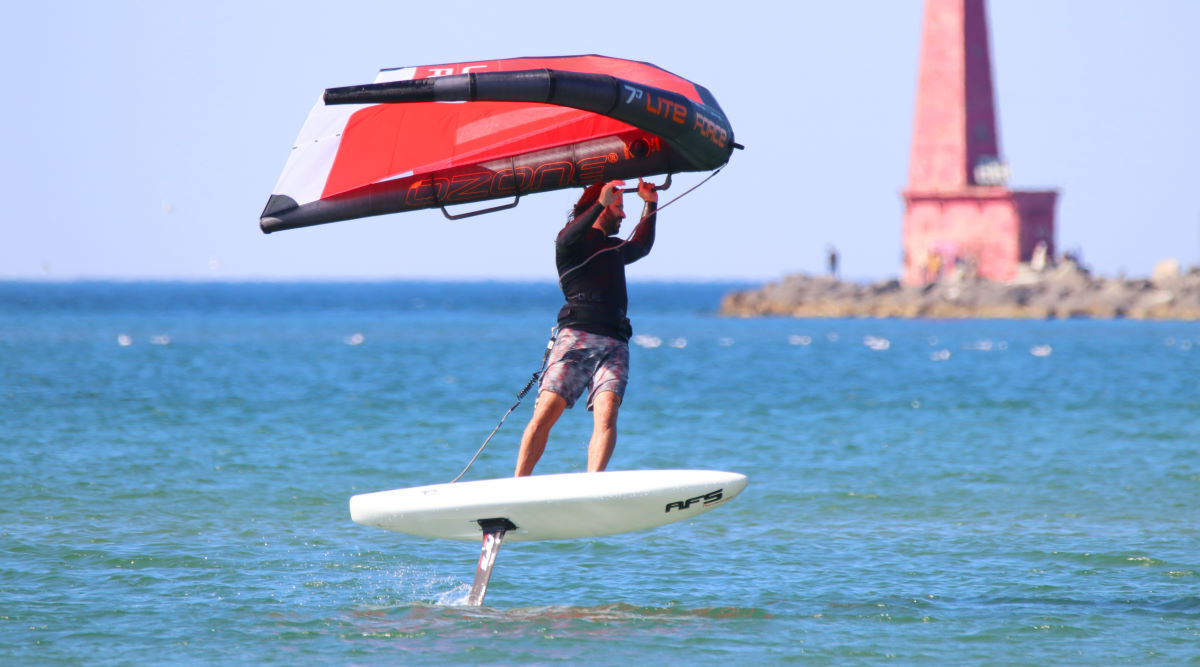
Why Stance Matters So Much
Tucker: "If you're a brand new rider... you're like, 'Man, where am I even supposed to sit or stand on this thing?'"
Getting your position right early:
- Improves stability
- Helps you build speed faster
- Makes transitions and foot switches smoother
Jeff: "Two key things... getting the stability you need to get on the board, and then getting the board speed."
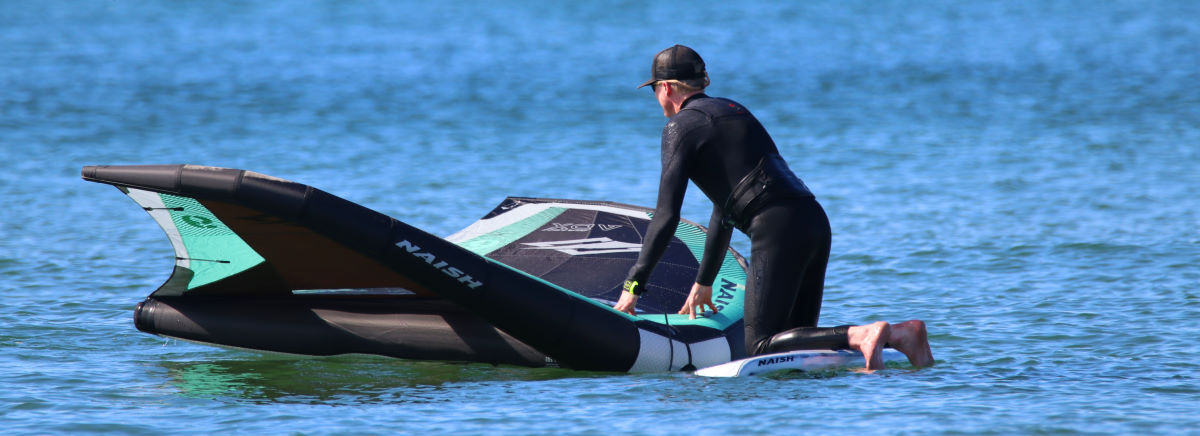
Knee Position: Where It All Starts
There are two main approaches when getting started:
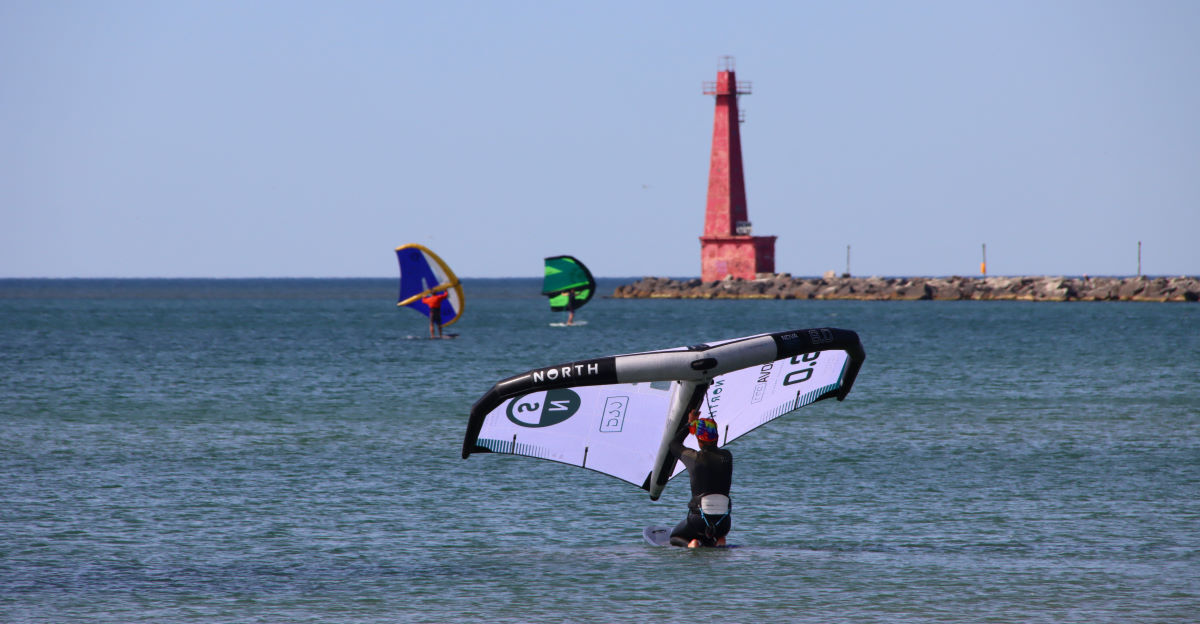
1. Knees Facing Forward (Recommended)
Tucker: "I would advocate most people should start knees facing the direction of the board."
Why it works:
- More front-to-back stability thanks to the length of the board
- Easier to balance without foot leverage
- Neutral position for standing either direction ("regular" or "goofy")
2. Side or Angled Start (Jeff's "Side-Saddle" Style)
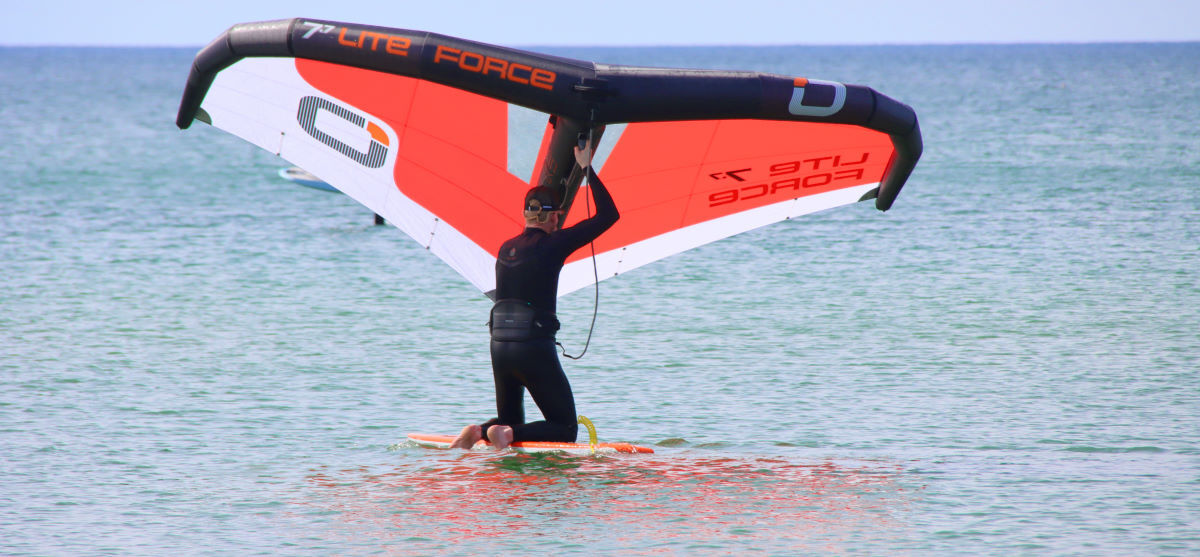
Jeff: "I initially come on the board with my knees to the side... then shift to about 45° as I get moving."
This can work well if:
- It feels natural for your body
- You use the wing as an outrigger for balance
Tucker: "If your body mechanics just say, "Dude, I need to start this way," like Jeff's did, do it."
Finding the Sweet Spot (Front to Back)
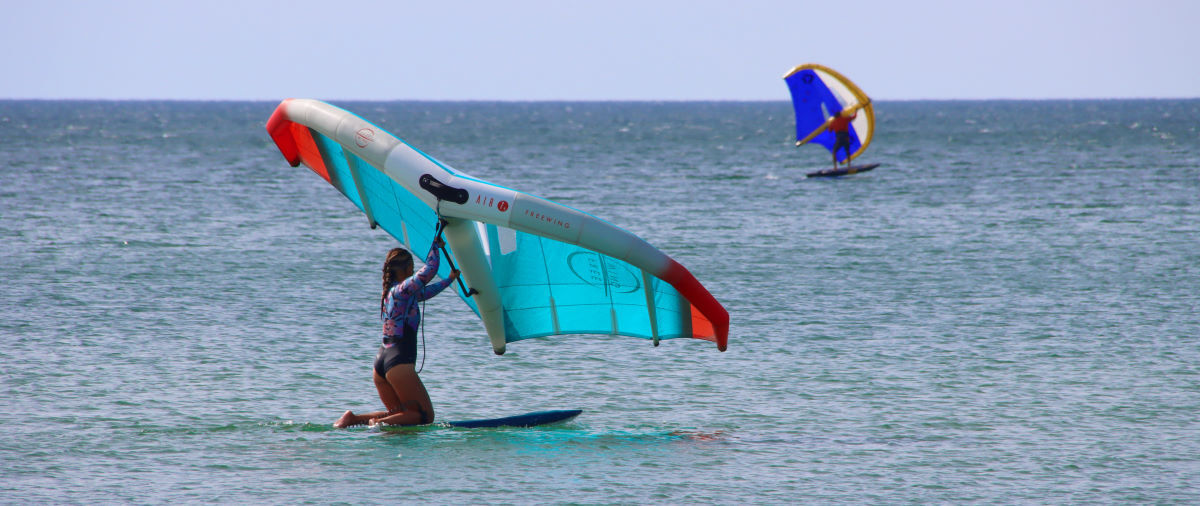
This is one of the biggest unlocks. Most boards:
- Have more volume in the back half
- Balance best just behind center
Tucker: "You want to be slightly back... so the nose is up just a bit."
Why that matters:
- Keeps the board from submarining
- Helps it rise to the surface
- Builds efficient speed for takeoff
Jeff: "You want that tip up... that's where you start to get board speed."
Use Reference Points
Even experienced riders rely on visual cues.
Jeff: "When I get on a solid black board... it throws me off not having a quick visual reference."
Easy ways to mark your stance:
- Footstrap inserts
- Pad textures, colors, or seams
- Wax line / marker
Tucker: "I like my knees centered over the front footstrap location... that's usually a really good reference."
New Board? Do This First
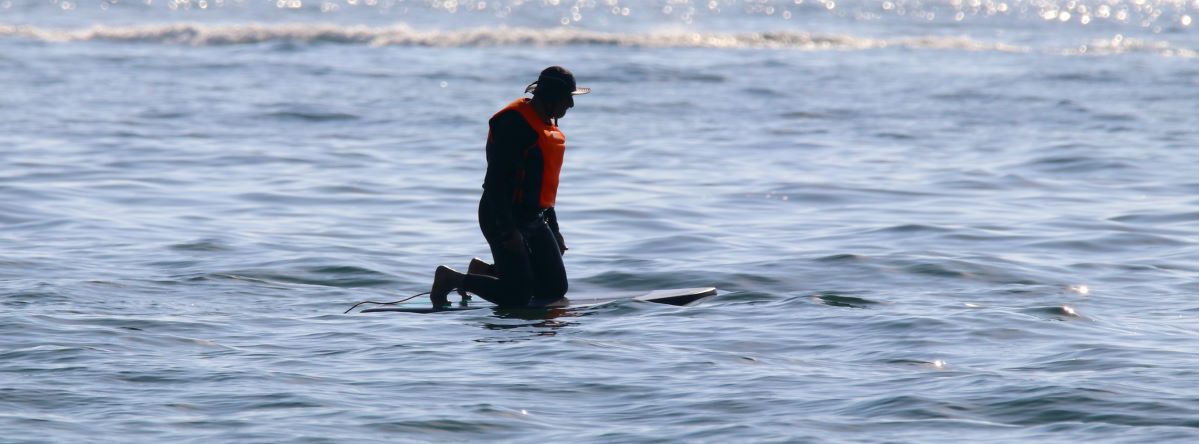
Tucker: "If you're new to a board, take it for a swim. Doesn't matter if it's windy or not, go balance on it. Find that sweet spot. Where do your knees like to be? That's going to make your life a lot easier the first time you go to ride it."
- Kneel and balance
- Feel where the board stabilizes
- Make a mental note (or mark it)
This can save a lot of frustration on your first real session with it!
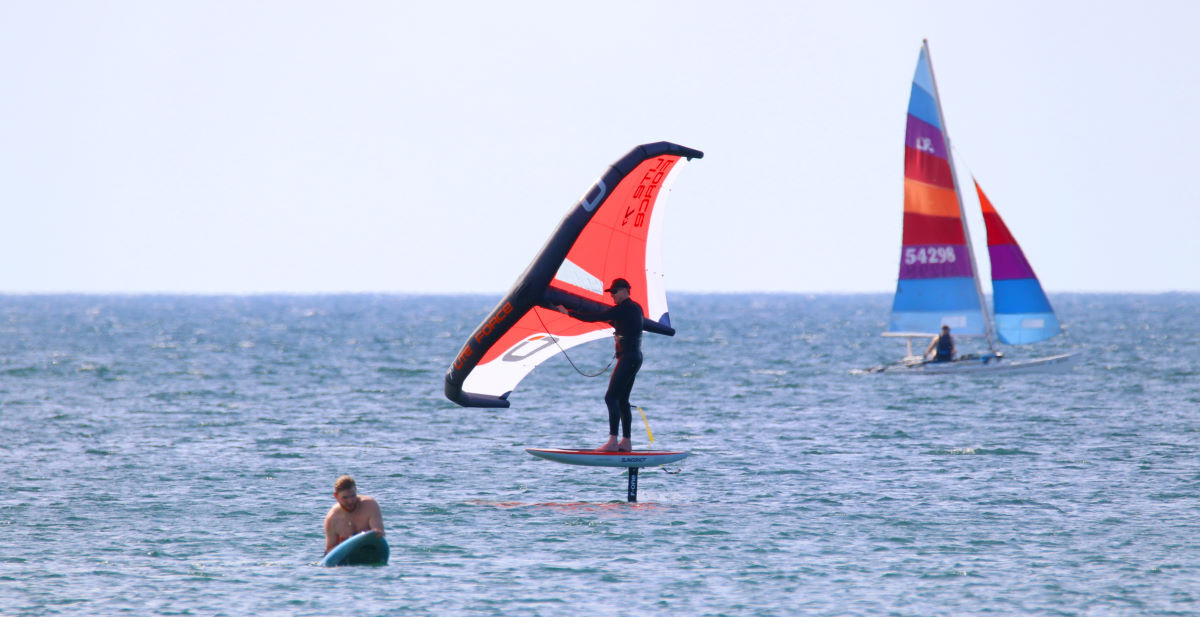
Standing Up and Foot Placement
As you progress:
- Your stance becomes more precise
- Your feet usually move closer together
Jeff: "As you learn... your feet begin to get closer together."
Why Narrower Stance Works
Tucker: "Smaller, more high aspect, twitchy foils don't want as much leverage thrown at them. They want a more stable flight, so that brings your feet closer together. They tend to need a narrower stance and quicker bounce on the pump."
Benefits:
- Faster response
- Less fatigue
- More efficient pumping
- Better control with less effort
When to Widen Your Stance
You'll still need to adjust your stance at times. A wider stance helps when:
- Driving hard turns
- Adding leverage
- Riding more aggressively
Tucker: "If you really want to rip a hard turn... widen your stance a bit. I like to grip the edge with my offside toe, with my other heel almost to the edge."
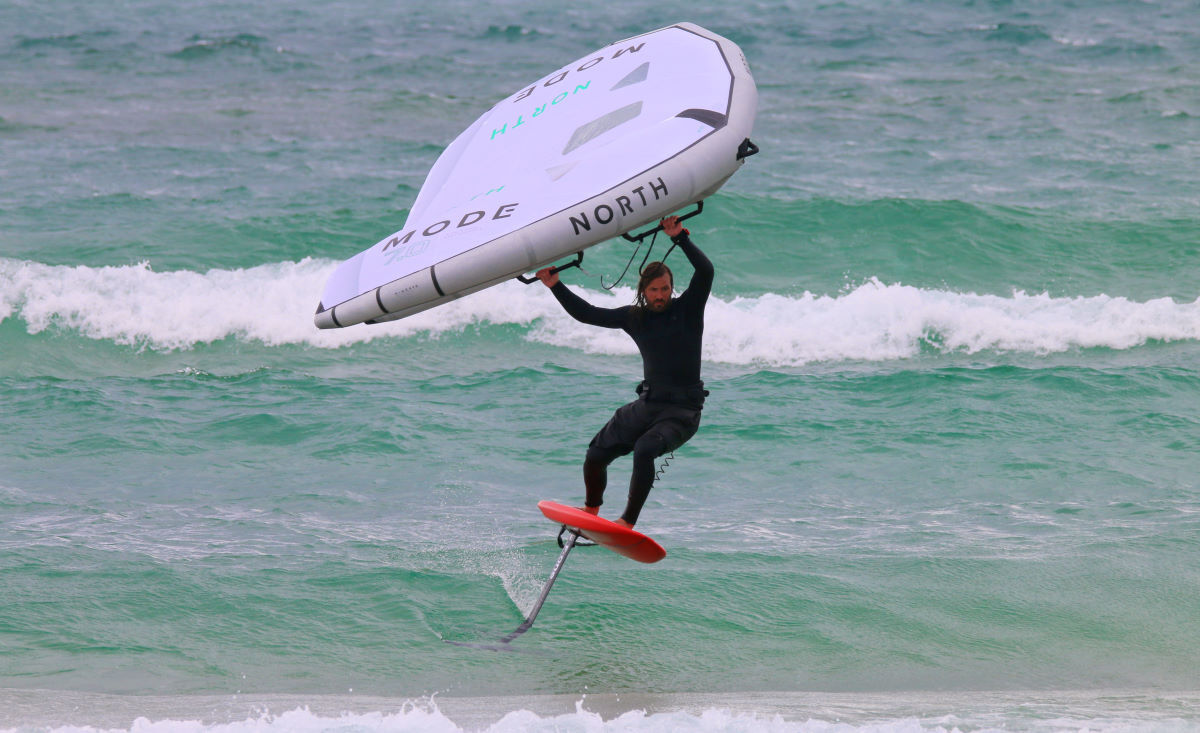
Foot Placement for Different Riding Styles
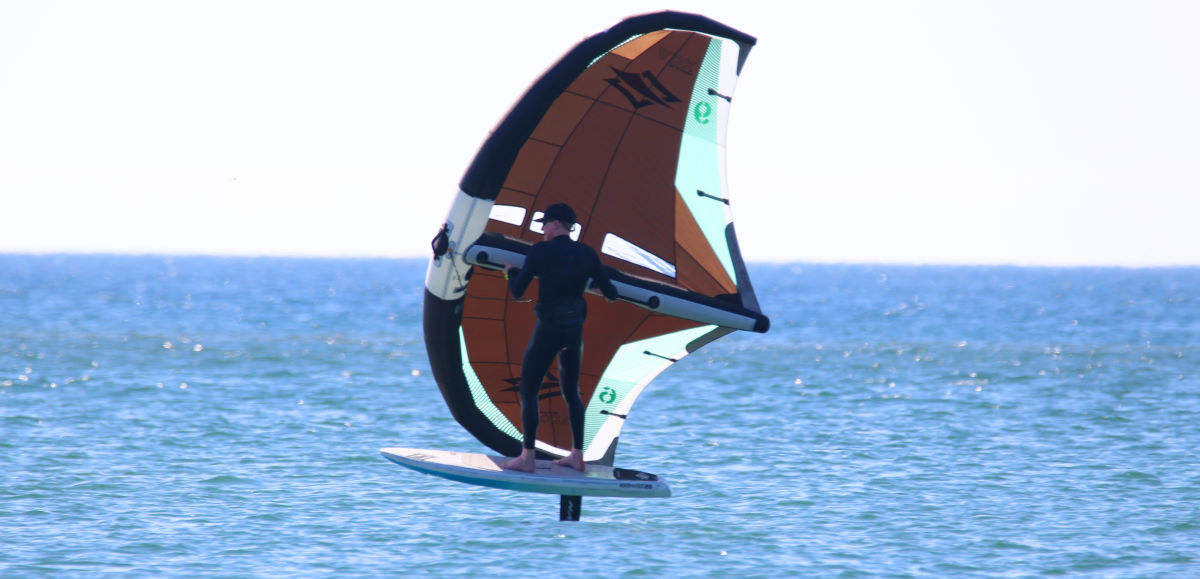
Cruising and Going Upwind
- Feet closer together
- More forward-facing
- Relaxed, efficient stance
Tucker: "A lot of times when I'm cruising and driving upwind, my feet are more pointed forwards. It allows you to angle your hips more and chill."
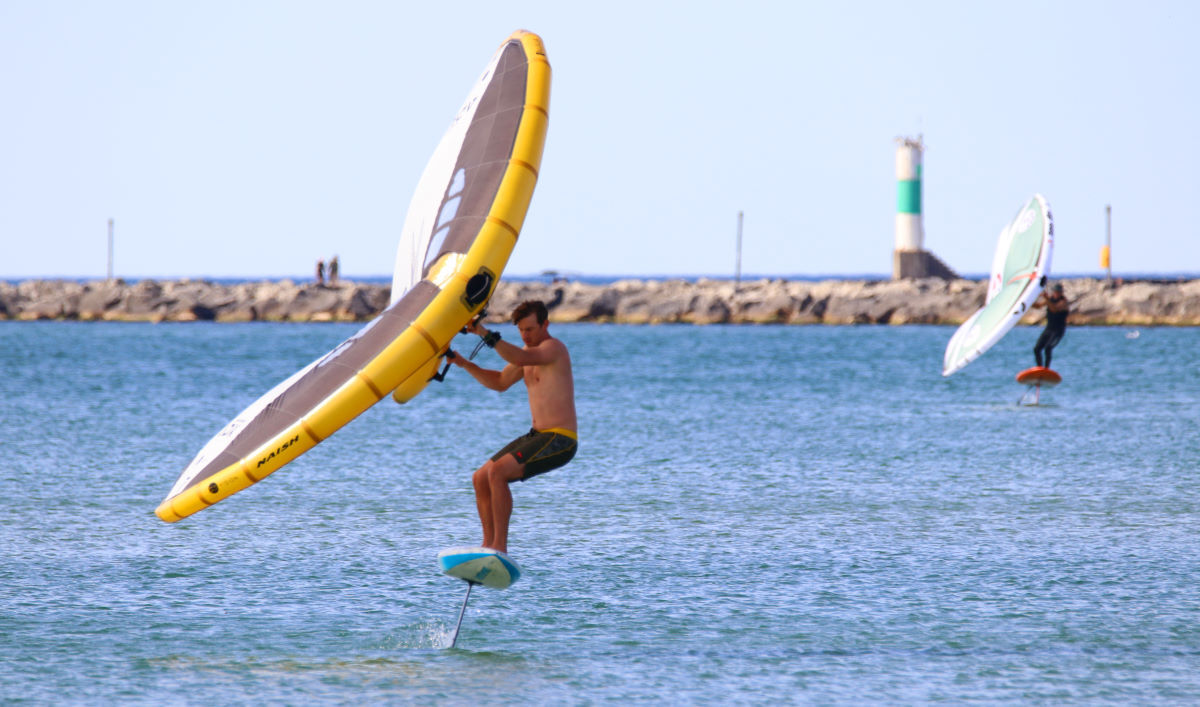
Pumping
- Narrow stance
- Centered weight
- Efficient input
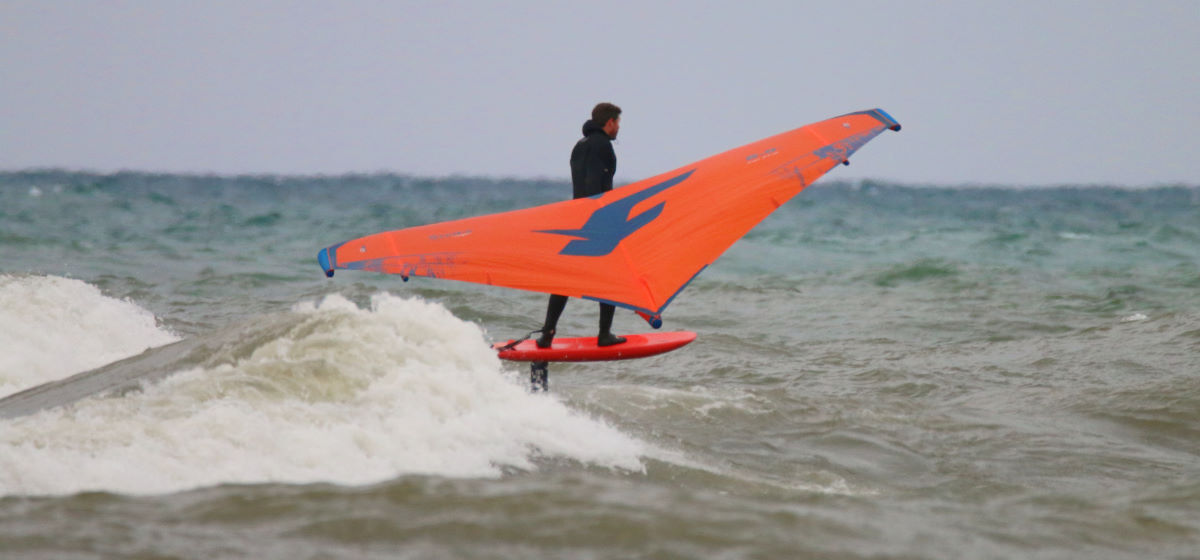
Turning / Wave Riding
- Slightly wider stance
- Back foot closer to rail
- More leverage
Jeff: "I find when I start to get into waves, I do more of an offset. My back foot's closer to the rail. And if I'm really trying to make a hard turn, I may slide my front foot back a little further and widen my stance a little bit."
Subtle Adjustments Make a Big Difference
Advanced riding is all about micro-adjustments.
Jeff: "You're not always locked in the same spot all the time. You do need to make subtle adjustments, and those can really help as you become a better rider in different conditions and feel stable and more locked in."
Things that affect your stance:
- Wind strength
- Water conditions
- Foil type
- Riding style
Common Mistakes
- Standing too far forward = nose dives
- Standing too far back = poor speed
- No reference points = inconsistent setup
- Too wide stance = over-controlling the foil
Final Thoughts: Experiment and Adapt!
Tucker: "Play with it... see what works with your body."
Jeff: "Even years in, we're still unlocking this stuff. It's been fun to experiment with different foot placements to get different responses from your foil and speed."
The key is understanding the why behind your stance so you can:
- Adapt to new boards
- Adjust to different foils
- Ride more efficiently in any condition
MACkite Subscription Links:
YouTube | Instagram | Spotify Oddcasts
Contact MACkite Below:
800.622.4655 | Kiteboarder@MACkite.com | LIVE Chat Messenger
Recent Posts
-

2026 Duotone Rebel D/LAB Review: 30-Knot Test
The Brazilian Brothers are ready to provide honest feedback on the 2026 Rebel D/LAB by Duotone. Th …13th Oct 2026 -

2026 Duotone Jaime SLS Kiteboard Review
The Brazilian Brothers are back to bring you another product review. Today, their focus is on the …13th Oct 2026 -
Manera Pocket Wing Belt Overview
Jeff met up with Billy Ackerman from F-One on the beach at the KoGL Test Fest to take a look at th …9th Oct 2026