
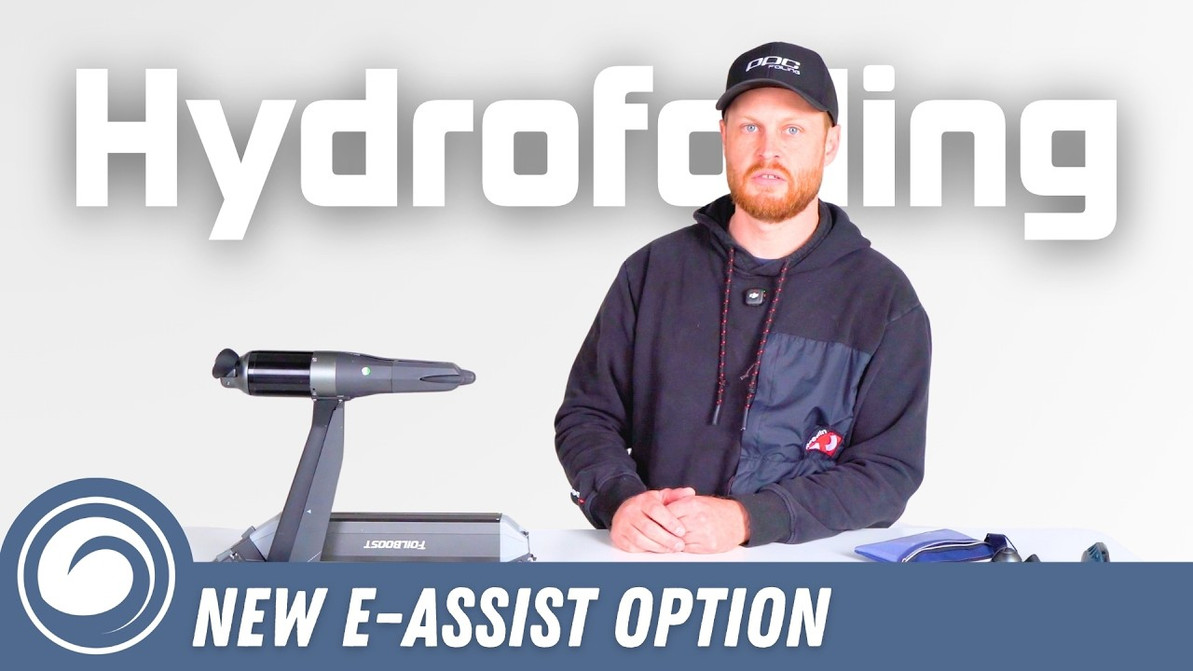
Is the Foil Boost Waydoo's E-Assist Solution?
The e-assist market has exploded over the last few years. What was once using motorized assistance to get into waves and swell has transformed to foiling without resistance. Now, Waydoo has a solution for the foil assist market.
Waydoo has been around for a while producing eFoils, and we've been using them for quite some time — they make a great eFoil. The Foil Boost is the brand's entry into e-assist, with a motor mounted up closer to the board so you can power into a wave, ride around under power, then hop on a swell, come off the motor, and just foil around resistance-free.
Ryan has been getting out on the Foil Boost for a few sessions now. It's still very new, but here's a walkthrough of what he's discovered — what's working, what isn't, and where this product fits in the market if you're thinking about picking one up.
Easy to Set Up
The first thing about the Foil Boost is that it's really easy to set up. You have two batteries with simple locks on the front and back. The batteries remove easily, and once they're off, you can drop your mast right in.
The nose cone does require a tool to remove, but the included Allen key handles it. The key slots in to loosen a bolt on each side, the nose cone comes off, you drop the mast in, pop the nose cone back on, and a little spinning knob tightens it to the mast. From there, you connect the unit to the board, pop the batteries on, and you're ready to ride.
It's a super easy system to put on and take off your board. When the batteries are removed, the unit also stands on its own. There aren't many moving parts, and everything stays connected, so it's really easy to throw the whole thing disassembled into your car without worrying about stressing wires or losing pieces.
Rear-Facing vs. Front-Facing Propellers
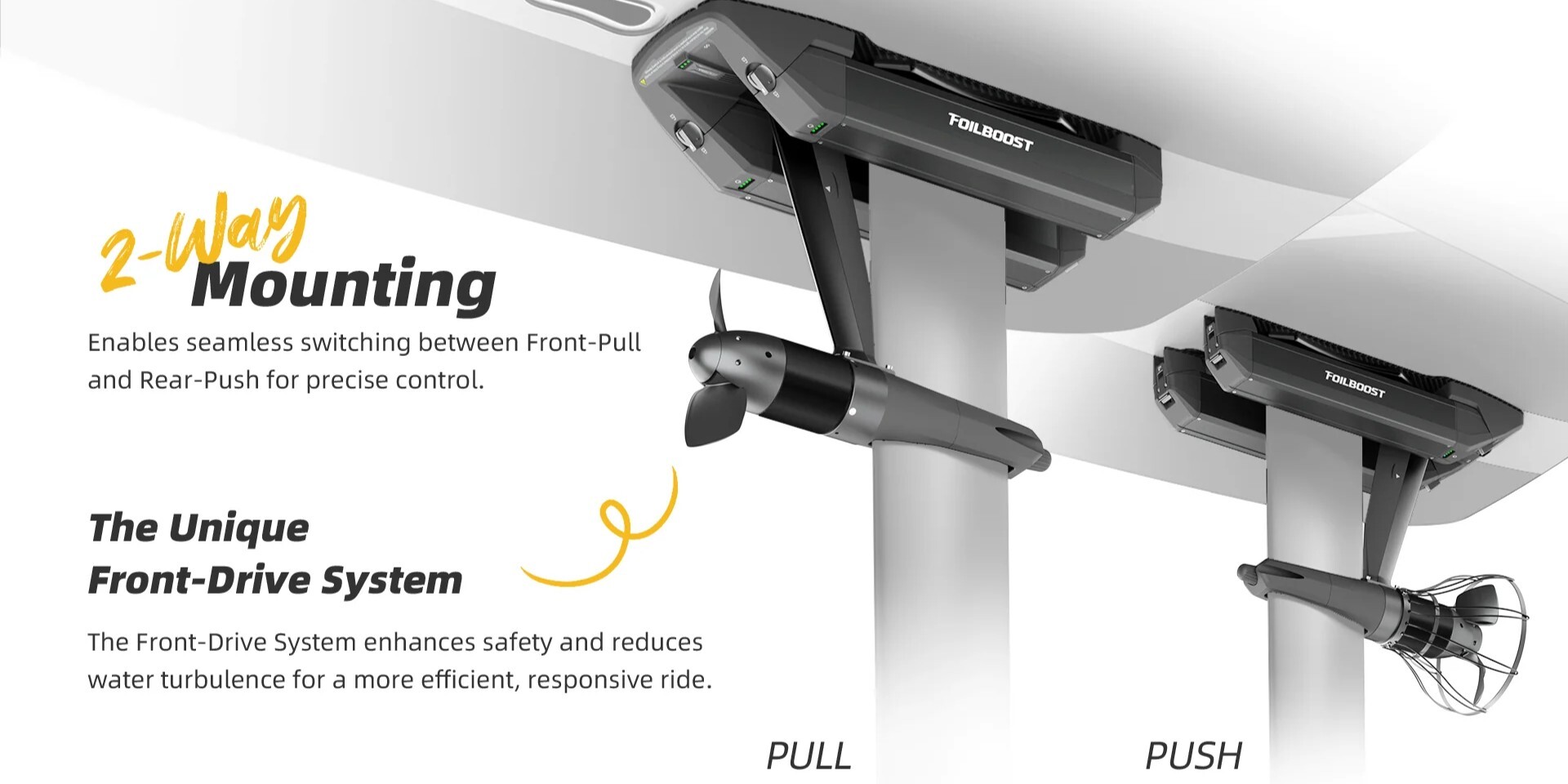
Another unique feature of the Foil Boost is that it can run with a rear or forward-mounted propeller.
To switch from the rear position, you use the key that's tucked into the wrist strap of the remote to loosen and slide off the rear prop, then slide the forward-facing prop into place. This does require pulling the mast off the unit and spinning it around. Then, you lock down the nose cone (which is now on the trailing edge of the mast), and you're ready to run forward-mounted.
Out on the water, Ryan noticed the forward-mounted prop position is definitely easier to ride. Part of the reason is water flow: the forward prop pulls through clean water with no turbulence in front of it, while the rear-mounted setup has to deal with turbulence coming off the mast.
That said, forward-mounted isn't necessarily the best for riding in waves if you touch down. With the pod in front of the mast, there's a little more drag on a touchdown. Still, it's a cool option that makes learning to foil noticeably easier with the front prop versus the rear. Swapping props is quick—five minutes at most to pull the mast off, flip it, and switch the props over.
Charging and Remote
Everything is pretty well put together. The charger sets flat on the table, both batteries pop on, and an indicator light shows when it's charging and when it's full. Charging time isn't too long — Ryan hasn't timed it yet, but these aren't huge batteries, so they recharge pretty quickly. The remote is the same one Waydoo uses on their eFoils, and it works well.
Solid Power
The unit has enough power for Ryan, who weighs 180 to 185 pounds (plus a bit more with the thick neoprene he's been wearing). It had plenty of grunt to get him up and going on average-sized gear: a 45-liter board and a 1300 foil — nothing huge, nothing small.
Getting up on really small gear might be a little more difficult, and for a heavier rider it could feel underpowered. But in the average scenario with an average-weight rider and average gear, there's plenty of power on tap.
The remote currently has three gear settings. Ryan has been using gear three to get up and going, then letting off the trigger a bit once he's riding. At his weight, there isn't quite enough power to stay purely in gear two, but a lighter rider around 140 pounds could probably run the whole session in gear two.
Lighter Design
The unit is pretty lightweight too. Once you're up and riding on foil, the whole package feels light. It carves around really nicely without the sensation of throwing around a bunch of battery weight.
Areas for Improvement
Signal Challenge on Carbon Boards
There's a lot to like, but there are also a few spots where there's room for improvement. On one carbon board, Ryan got no signal transmission at all. Waydoo sells an antenna that attaches to the board, which is a nice solution because you can leave the antenna on the board permanently — it doesn't have to come on and off with the unit. The kit even includes tape so you can secure the antenna and not accidentally snag or break it. With the antenna installed, it worked great.
For carbon boards, most — if not all — are probably going to need the antenna. Ryan also used the Foil Boost in a trench board designed for a foil drive unit. That trench has a window in the front, which made for clean signal transmission with zero issues. Most fiberglass boards will likely behave similarly, letting the Bluetooth signal reach the unit without the antenna.
Increased Drag
The unit does stick up quite a bit, almost an inch more than some other units on the market. That creates more drag as water flows across the bottom of the board and hits those batteries and the unit. There's a notable amount of drag that slows you down a little on takeoff, but there's enough power to push through it and get you up on foil.
Propeller Aeration
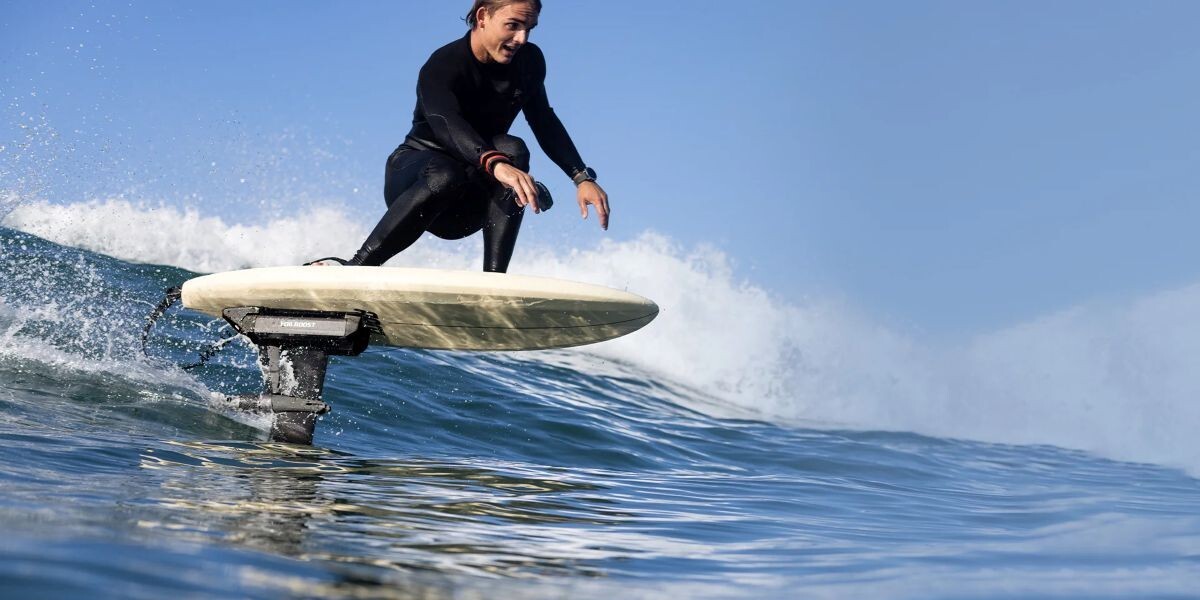
Where the challenge really shows up is finding the sweet spot where the props don't aerate, but the water also isn't slapping against the batteries. Hitting the batteries with water adds a ton of drag and can knock you straight off the foil and back down onto the board.
Ryan has been riding the Foil Boost in a trench board recently, and that's been a great solution. The batteries still stick up above the trench, but it's more forgiving when the unit gets closer to touchdown. The trench reduces some of the drag and lets water deflect off the board more cleanly than it would on a flat hull. Trench boards could become a real go-to pairing with this unit.
Aeration is especially noticeable with the rear-facing prop, and he found that the forward-facing prop wasn't as affected. Both props are two-blade designs, and as soon as a two-blade prop starts to aerate, you lose about 50% of your thrust almost instantly. That sudden loss of power makes the whole unit hard to keep stable and prone to dropping toward the board. A longer cable or a three-blade prop down the road could really help here.
The key is riding in that narrow zone where water stays on the props but doesn't brush the batteries.
Battery Life
These are smaller batteries, and Ryan has been getting about 20 to 30 minutes of battery life with his setup. Mind you, that's 20 to 30 minutes whether he's straight e-foiling with a 1300 foil or riding swell and motoring back, but he feels that most riders should land in that range.
Smaller, less efficient gear setups might come in at the lower end, or even slightly under 20 minutes. For longer sessions, an extra set of batteries is a great move, pushing total ride time to 40 minutes or even an hour.
Who It's For
Overall, the Foil Boost is a good solution for riders looking to get into the e-assist market at a lower price point. It isn't necessarily the highest performer on the market right now, and the specs aren't identical to the top-tier units, but for a lot of situations it works really well. Waydoo did a great job making everything fit together as a system.
Summary
The Waydoo Foil Boost is Waydoo's entry into the e-assist category, and it's built around accessibility and ease of use. Setup is fast (two batteries, an Allen key, and a spinning knob to lock the mast in), the unit stands on its own once the batteries are off, and the whole package is light enough that you don't feel battery weight while carving on foil. The clever twist is the swappable prop direction — rear-facing for typical use, forward-facing for an easier learning experience thanks to cleaner water flow into the prop. The remote and charger are familiar Waydoo kit and work well.
There are real watch-outs. The unit sits up an inch higher than some competitors, which means more drag on takeoff and a narrow sweet spot between water on the props (good) and water slapping the batteries (bad). Two-blade props are prone to sudden thrust loss when they aerate, and carbon boards almost certainly need Waydoo's add-on antenna for reliable Bluetooth (fiberglass and trench boards generally don't). Battery life lands around 20 to 30 minutes, so a second set of batteries is a smart purchase for longer sessions.
Pair the Foil Boost with a trench board for the smoothest experience, and it's a solid, lower-priced way for average-weight riders to get into e-assist without committing to the most premium gear on the market.
MACkite Subscription Links:
YouTube | Instagram | Spotify Oddcasts
Contact MACkite Below:
800.622.4655 | Kiteboarder@MACkite.com | LIVE Chat Messenger

Recent Posts
-
Manera Pocket Wing Belt Overview
Jeff met up with Billy Ackerman from F-One on the beach at the KoGL Test Fest to take a look at th …9th Oct 2026 -

Parawing Redeploy Tip: The Simple Trick for Clean Launches
Jeff caught up with Billy Ackerman from F-One on the beach, where they chatted about parawings. Wh …9th Oct 2026 -
Appletree Zapple S RIIFT Foil Assist Board Overview
Appletree's New RIIFT-Specific Foil Assist Boards Tucker is joined by Wieger from Appletree Surfbo …8th Oct 2026