
The Biggest Foil Drive Board Downsizing Mistakes & How To Fix Them
Riding a small board in the waves on your Foil Drive is a lot of fun: it unlocks a lot of the unit's potential, but it isn't as easy to get up on a small board as it is on something a little bit larger. Ryan and Hunter have broken it down into three of the most common mistakes or situations that cause riders to struggle getting up on their Foil Drive after downsizing to a smaller board.
Tip #1: Board Angle
When you first hop on your board in the water, you want that board angle to be level with the surface. You don't want to be too far back where the board is angled up, and you don't want to be too far forward where the nose is down. With the nose down, you probably won't get as good of a connection when you're driving, or you'll sink the front when you start to go. It's important to get the board angle level with the surface so when you pull the trigger of the Foil Drive, you're coasting and then start to skim the board right across the surface.
You definitely need the nose at the surface for good connection — both before you squeeze the trigger and as you squeeze the trigger and start to move. If the board is at too great of an angle, it'll either porpoise up or submarine down.
Tip #2: Allow the Board to Build Speed
One of the most common things the team sees when riders downsize their board — and even on the first time out on a Foil Drive in general — is that they don't allow the board to build speed and they're hopping up too early.
When you hop up too early, the board plows through the water. It's got too much drag to really pop up on foil, and you end up draining the battery without getting up. Nobody wants a shorter session because they're burning power and not actually riding.
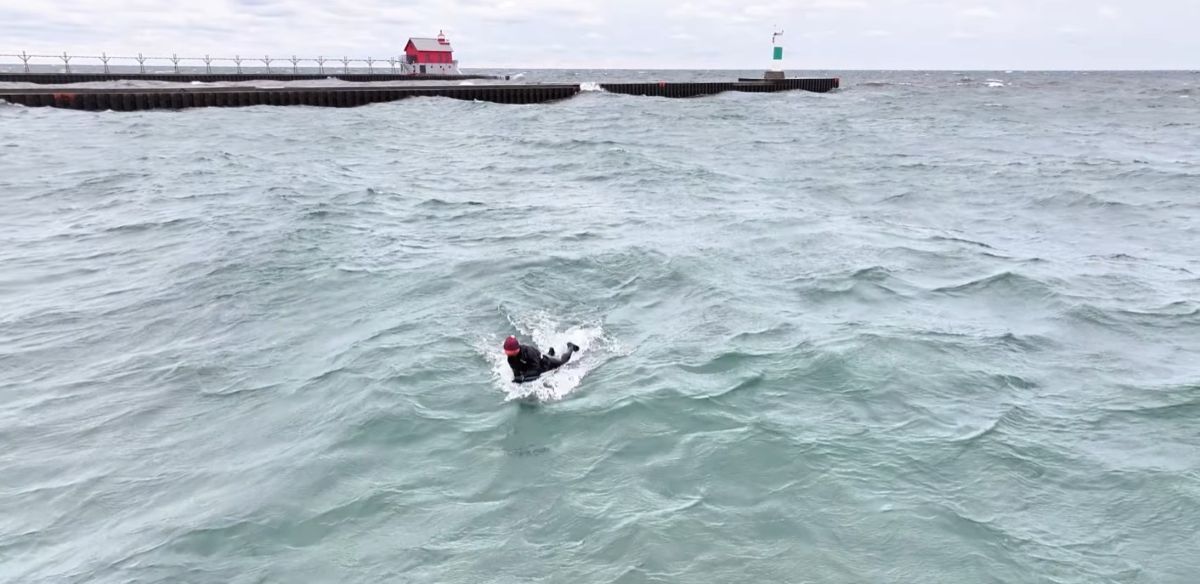
The fix is simple: stay on the board on your stomach for just a little bit longer than you think you need to.
Tip #3: Proper Pop-Up Technique and Timing
You don't want to stay on your stomach forever, either. If you do, you'll end up going fast across the water, getting onto foil when you're not expecting it, and you'll probably just coast on your stomach. That can be fun, but if you're trying to get to your feet, it's going to be hard once you've built that speed and unlocked the foil while still lying down.
The key is timing: once the board actually starts to plane out, hop on your knees, and then pop up to your feet. Hopping up on knees first adds an extra step of stability. It helps you get a feel for what the board is going to do, and once it's planing a little more, you can hop up onto your feet and make sure the board isn't going to drag.
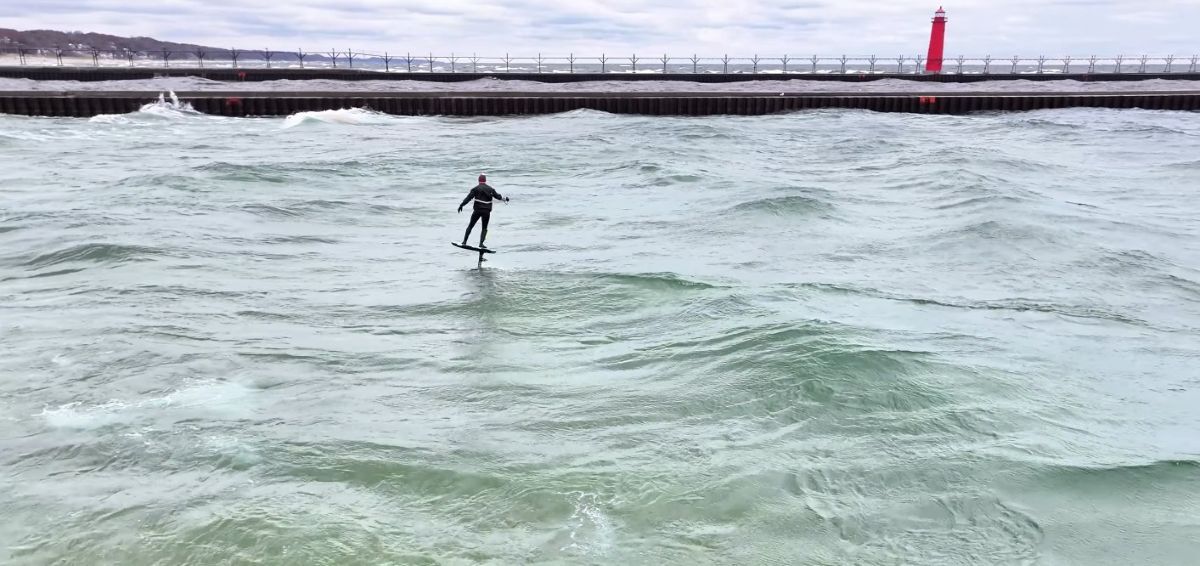
There's not a lot of time between the board planing across the surface and you starting to lift off on foil — it's a quick transition. You want to be ready so that once the board starts to plane, you can easily hop up to your feet. Some riders can go straight from their stomach to their feet, and that can come with time, but when you're first getting started, it's a lot easier to cheat that step a little bit. Hop up to your knees right as you're starting to plane out, and as soon as you feel the board plane, do your quick pop-up and land on your feet.
Landing in a Balanced Position
The key here is landing on your feet in a balanced position where you want your feet to be on the board. Too far back, the board shoots out of the water. Too far forward, you submarine it. Too far to the right or left, it's easy to come off the side. All of this takes practice. Just like the first time you got on the Foil Drive, it takes a few sessions to feel comfortable. With the small board, it's all about the angle you're holding the board in the water, allowing it to build speed, and popping up quickly and effectively.
Final Thoughts
Downsizing to a small board on the Foil Drive is one of those upgrades that feels intimidating until something clicks — and then you wonder why you didn't do it sooner. The whole game comes down to three things: keep the board flat on the water, give it time to build speed before you move, and time your pop-up to the moment the board planes out. Get those three dialed and the small board stops fighting you and starts unlocking the kind of riding that drew you to the Foil Drive in the first place.
Like anything in foiling, give yourself a few sessions to find the rhythm. Stuff the nose a few times, drain a battery or two figuring out the timing, and remember that every rider on a small board went through the exact same learning curve.
Shop Foil Drive-Compatible Boards
MACkite Subscription Links:
YouTube | Instagram | Spotify Oddcasts
Contact MACkite Below:
800.622.4655 | Kiteboarder@MACkite.com | LIVE Chat Messenger

Recent Posts
-
Manera Pocket Wing Belt Overview
Jeff met up with Billy Ackerman from F-One on the beach at the KoGL Test Fest to take a look at th …9th Oct 2026 -

Parawing Redeploy Tip: The Simple Trick for Clean Launches
Jeff caught up with Billy Ackerman from F-One on the beach, where they chatted about parawings. Wh …9th Oct 2026 -

Appletree Zapple S RIIFT Foil Assist Board Overview
Appletree's New RIIFT-Specific Foil Assist Boards Tucker is joined by Wieger from Appletree Surfbo …8th Oct 2026