
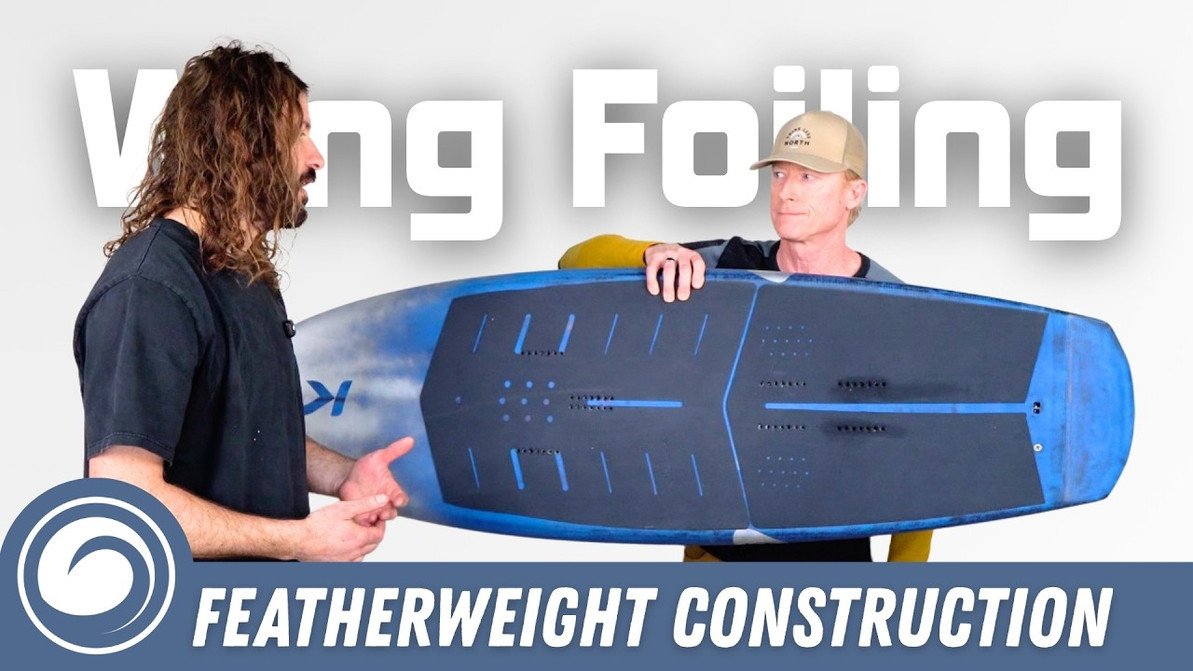
KT Arc Pro Carbon Board Review with Tucker & Jeff
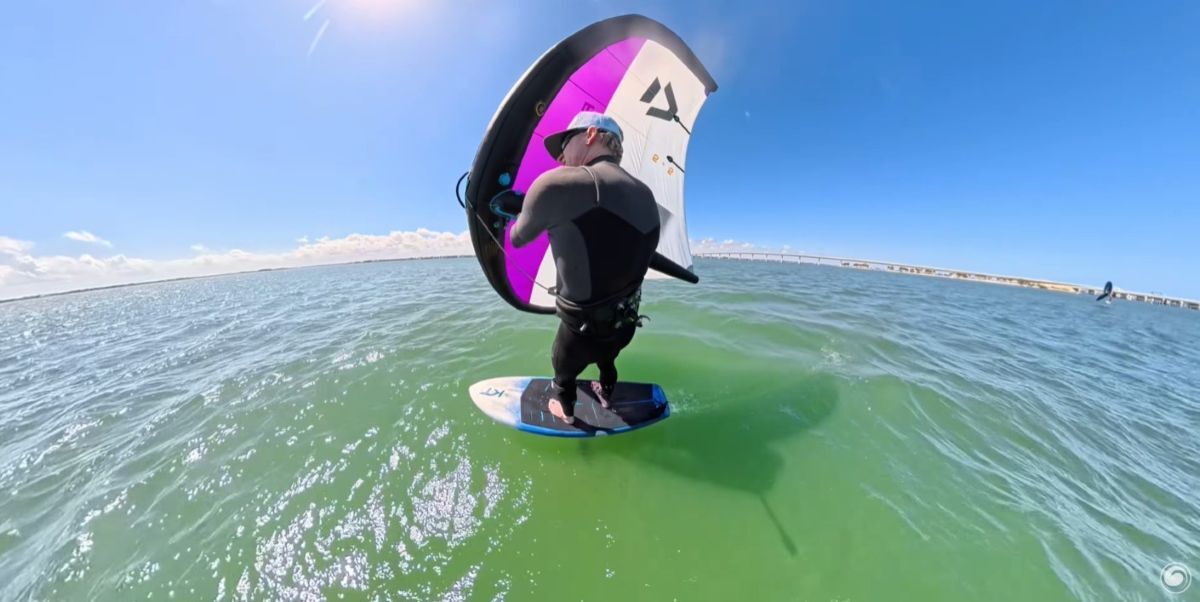
Tucker and Jeff are taking a look at a brand new board from KT called the Arc. The board shown in the review is a sample prototype, so the graphics look a little different, but the shape and dimensions are identical to the production models. Jeff received the board a week prior and took it down to Florida, riding the causeways on the Indian River to get a feel for it.
Premium Pro Carbon Construction
The Arc features KT's highest level of Pro Carbon construction, making it a premium, lightweight, and highly durable board. At its core is the KT Dual Shock Core: a lightweight inner foam keeps the board crazy light, then it's shot again in a mold with a higher-density foam to create an exoskeleton (or armor) on the outside. The result is a tougher, stiffer board, and when it comes time for repairs, the denser foam doesn't absorb as much resin, keeping the repair weight down.
Unlike many brands that only put a PVC sandwich on the top and bottom, the Arc wraps a PVC sandwich around the entire board, fully encapsulating the rails. Multiple layers of carbon fiber keep it light and stiff. Jeff traveled with the board in a board bag and had no issues with damage, noting it's nice and light to travel with.
Specs and Dimensions
The specific board Jeff tested is the 68L model, measuring 5'8"x20". It's listed at 4.85" at the thickest part, but in the "business area" where you stand, it's around 4" thick: quite thin for a board of this size.
Shape and Design Features
Inspired by the Super K, the Arc steps in as the surf version — a wave machine mid-length. It gains a little more planability and width, with specific features to help with release and liftoff. The key focus of this board is wave performance and shredability.
The Elliptical Cockpit and Rocker
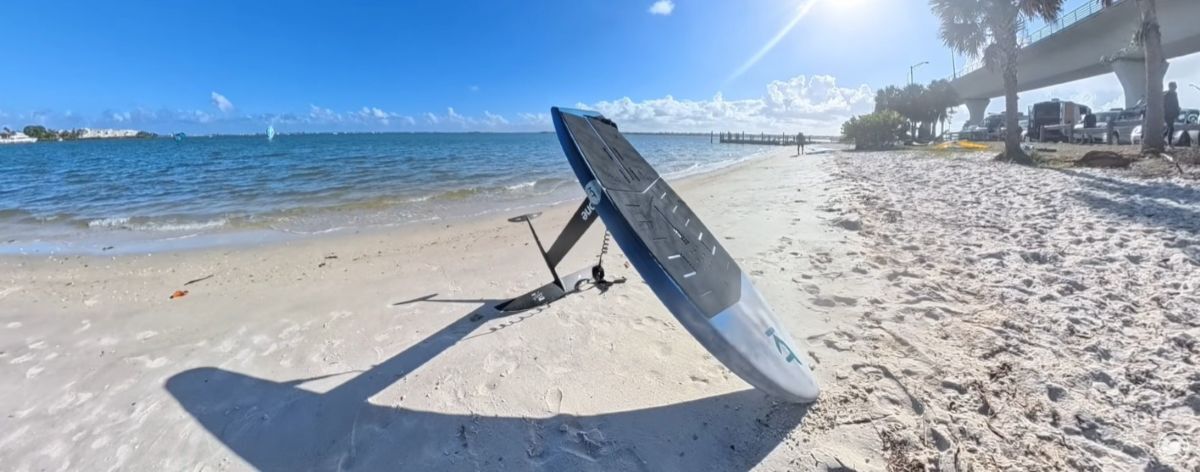
Tucker describes the deck as an "elliptical cockpit." There's rocker raised in the front and back that creates a natural concave pocket, making it incredibly easy to find your foot placement. The deck is flat through the middle but features a little lip at the edge for leverage near the rail. The kick in the front and back rolls your ankles in slightly, engaging you in the board and giving you leverage to push up and down like a kicktail. That takes strain off your knees and ankles compared to a dead-flat board, where your feet have to angle awkwardly to account for the flat surface.
Stance and Foot Placement
A significant change on the Arc is the rear strap area, which is moved up about three to four" compared to traditional boards like the Super K. This gives you a narrower stance and lets you keep your hips open. Jeff found his back foot naturally sat right at the edge of the pad, and the board felt perfectly balanced with equal amounts of board off the front and back. It simply disappeared under his feet, feeling much smaller than it actually is.
KT Pad Details
The KT pad is a favorite for both Tucker and Jeff, offering a great combination of comfort and grip without fatiguing your feet. It features thicker bands by the straps and the front foot, a centerline reveal, and a stance split reveal. Those indicators help reduce weight and give you extra bite and reference points while riding.
Volume Distribution
There's a magic volume hump right in the front of the board. As soon as the water level hits it, the board pops right up — which means you can stay centered on the board when kneeling and standing, rather than shifting your weight back toward the tail.
Performance and Riding Experience
Jeff was able to start and ride without moving his front foot at all. Depending on the foil he was using, he did move his back foot up a bit to pump it. In light conditions (getting up in under 12 knots), pumping the board released the water nicely without feeling locked in. The board let go exactly where it needed to in order to get him up and riding.
KT Arc vs. Super K
While the Arc is inspired by the Super K, there are several distinct differences between the two boards:
- Speed and Release: The Super K has more initial board speed through the water without doing anything. The Arc requires pumping the board in conjunction with pumping the wing to release.
- Rocker Profile: The Arc has a continuous rocker, whereas the Super K has a flat section. The continuous rocker gives a flow and roll, creating a bit of a teeter-totter under your stance — you can rock it to fly without creating extra drag in the tail. The Arc also features a bit more nose rocker.
- Hull Design: Because of its width, the Arc planes up more, using a double concave blending into a channel on the edge to direct water flow. The Super K relies more on hull speed.
- Stability: The Arc sits lower in the water since it's thinner and wider, making it more stable side-to-side when kneeling.
- Technicality: The Arc is slightly more technical to get flying than the Super K, but you're generally riding a lower volume than you would in a Super K.
- Price: The Arc is only available in Pro Construction, coming in around $2,500 to $2,600 — roughly $400 to $500 more than the regular carbon Super K.
Sizing Recommendations and Applications
The Arc is designed for parawing, winging, downwind prone, and foil drive. Sizes run from 48L (5'4") up to 98L (6'4"), offering a concise range with plenty of options to refine your choice based on weight and conditions.
For sizing recommendations:
- Light Wind Machine: If you want a dedicated light-wind board, size up.
- Mid-Length Do-It-All: Stay true to your normal board liters. If you normally ride a 70L traditional board, the 68L Arc works perfectly because of the added length. Compared to a shorter "chicken nugget" board, you keep the same literage but gain light-wind ability and ease of use.
- Extreme Light Wind (6 knots): Volume matters. You need a minimum of your weight in liters, ideally more.
- Powered Riding (10+ knots): If you're riding above 10 knots with a good wing, you can size down to your heart's content (into the 40L range).
Jeff sees the 68L as a perfect one-board quiver for parawing in decent conditions and winging in light wind. It's small enough that it could even be used for prone or foil drive.
Final Thoughts
The only negative Jeff could find with the KT Arc Pro Carbon is the price. It's a premium, high-end board — comparable to a Ferrari — so if you're willing to pay the extra money for it, you won't be disappointed with the performance. The surf design, shape, build quality, and lightness are all nailed perfectly. The production models will feature hot new graphics and a lighter-weight paint job compared to the prototype shown in the review.
MACkite Subscription Links:
YouTube | Instagram | Spotify Oddcasts
Contact MACkite Below:
800.622.4655 | Kiteboarder@MACkite.com | LIVE Chat Messenger

Recent Posts
-

2026 Cabrinha Unify Control Bar Review
The Brazilian Brothers are in windy Brazil to provide a thorough review of the brand-new 2026 Cabr …23rd Oct 2026 -

Naish Hatch V2 Parawing Overview
Jeff takes a few minutes out from the KoGL event to chat with Adam Carr from Naish about the Hatch …22nd Oct 2026 -

Flysurfer Soul 4 vs Sonic 5: Which Kite is for You?
Jeff is on the beach at KoGL with Marie-Eve from Flysurfer to discuss the growing excitement surro …20th Oct 2026