

How the Omen SuperMarine 120L Turns Junky Days into Fun Sessions!
Late this past winter, Tucker got a special delivery in. It was the SuperMarine foilboard, a board he'd designed with Omen to meet the needs of riders who wanted a board like the Flux but needed something a bit larger for light wind, added stability for newer riders, or more volume for larger riders. In his video about the Supermarine, Tucker mentioned that he'd still like to see it in more sizes. Well, the Big Mama has arrived. You can now get the SuperMarine in a whopping 120L, and it's exactly what Tucker was hoping for.
| Size | Length | Width | Thickness | Weight |
| SuperMarine 95L | 6' 1" | 22.5" | 5.1" | 15.2 lbs |
| SuperMarine 105L | 6' 4" | 23.5" | 5.2" | 16.3 lbs |
| SuperMarine 120L | 6' 9" | 25" | 5" | 17.4 lbs |
Who is the 120L SuperMarine For?
The 95L and 105L SuperMarines were well-received, and the 95 turned out to be one of Tucker's favorite boards for parawing and light wind. It's also a great board to learn on. But there were riders who still found those sizes to be a bit small. Larger riders who have never foiled before, parawingers who need a bit more stability, and anyone wanting to get out in very light conditions where you're hunting for a gust to get you up can all appreciate the 120L SuperMarine. It's stable, long, and efficient.
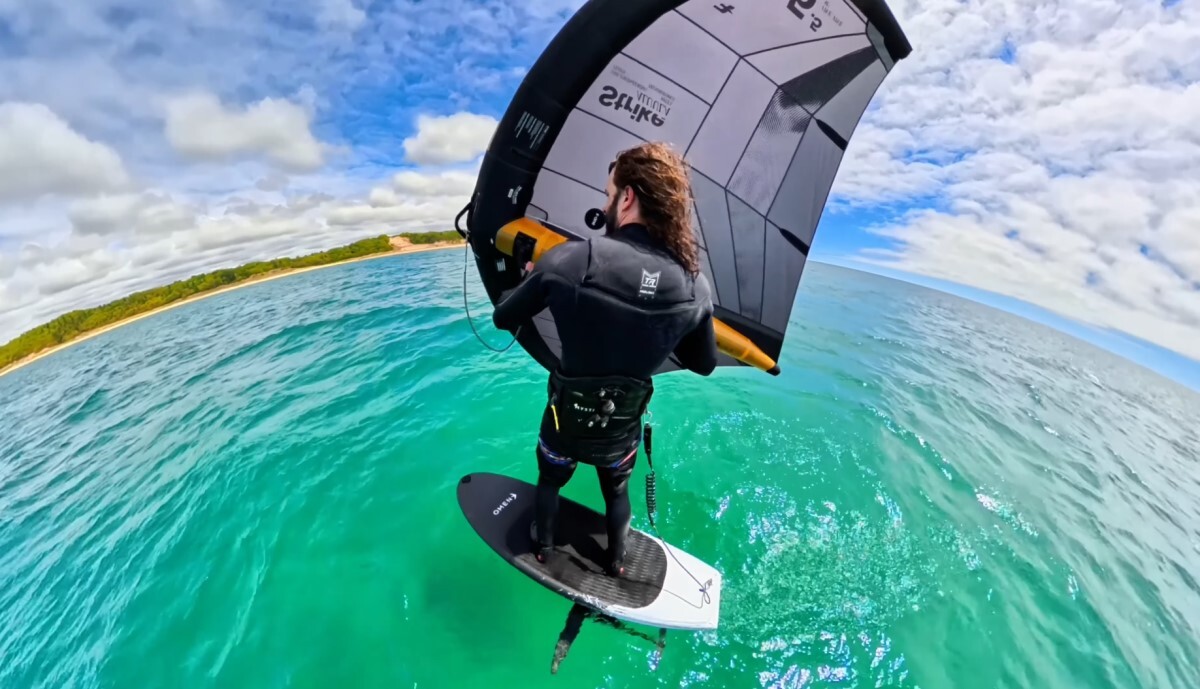
Tucker's been testing his 120L in conditions with very light wind, almost no waves, a big foil, and a parawing and turning marginal days into a session. It's also his go-to when he needs to demo a smaller wing or foil for the shop, but the wind isn't cooperating.
What Are Some Characteristics of the 120L SuperMarine?
Greg and Tucker actually had to go back to the drawing board for the 120L. A scaled-up version of the 95L and 105L sizes wasn't going to work, so the 120L is almost a new model unto itself. It's definitely a big board at this point, but they didn't want it to feel like a big board. Big boards are slow and chunky, but they wanted it to be agile and fun. The 120L was designed with those words in mind, so the shape is different and the box placement is different.
It's not quite a downwind board, but it does have that low-end ability, speed, and easy takeoff. It's more stable and user-friendly, but less tracky. When you're on foil, it's more agile and surfy.
Although the outline isn't exactly like the smaller SuperMarines, you can see it's quite similar and still shares the DNA of the Flux. It's longer for more drive, speed, and efficiency. This will also help you stay upwind in light wind conditions.

If you're paddleboarding, you'll get more momentum and projection with your paddle so you're not fishtailing or going in circles. A few very experienced paddlers might even be able to get up in flat water on this board.
What Are the Features of the 120L SuperMarine?
Deck
The nose is a bit convex to shed water and help it surface when going through a wave. It also reduces drag when you're carving and swinging it through the wind.
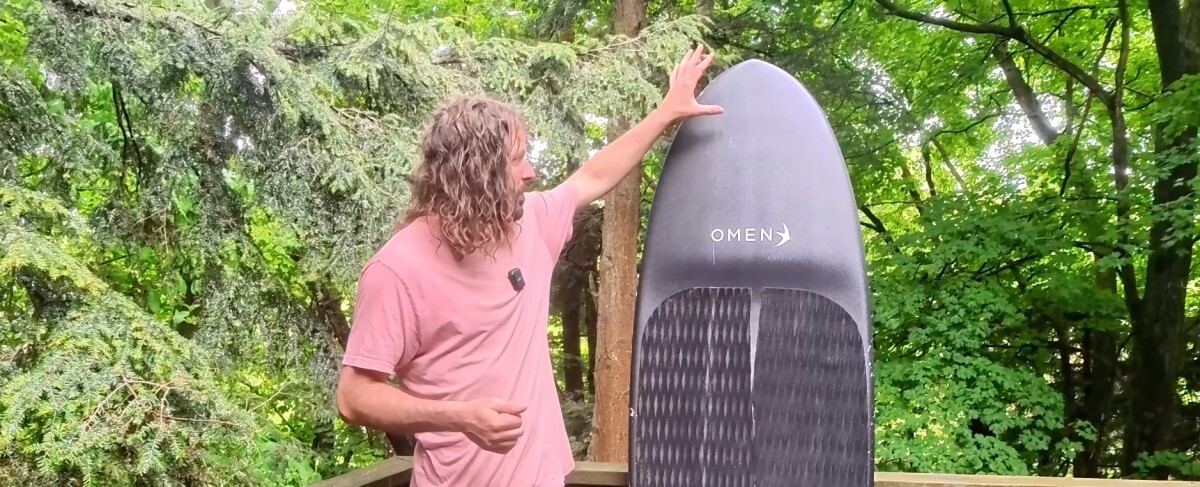
A unique feature of the 120L deck is its cockpit-style standing surface. This lowers your center of gravity and gets your feet closer to the foil so you have more leverage and a better feel for what's going on under the water. (Note: The deck pad isn't the final one; this is a pre-production board and Tucker slapped this pad on himself in the parking lot. Yours will ship with the pad pre-installed.)
The cockpit makes maneuvering the board easier, more fun, and more intuitive, giving it the surfy feel of a smaller board. Think of your foil as a pendulum. The shorter the pendulum, the faster it swings. Keeping the board as thin as possible shortens the pendulum and lets you turn faster.
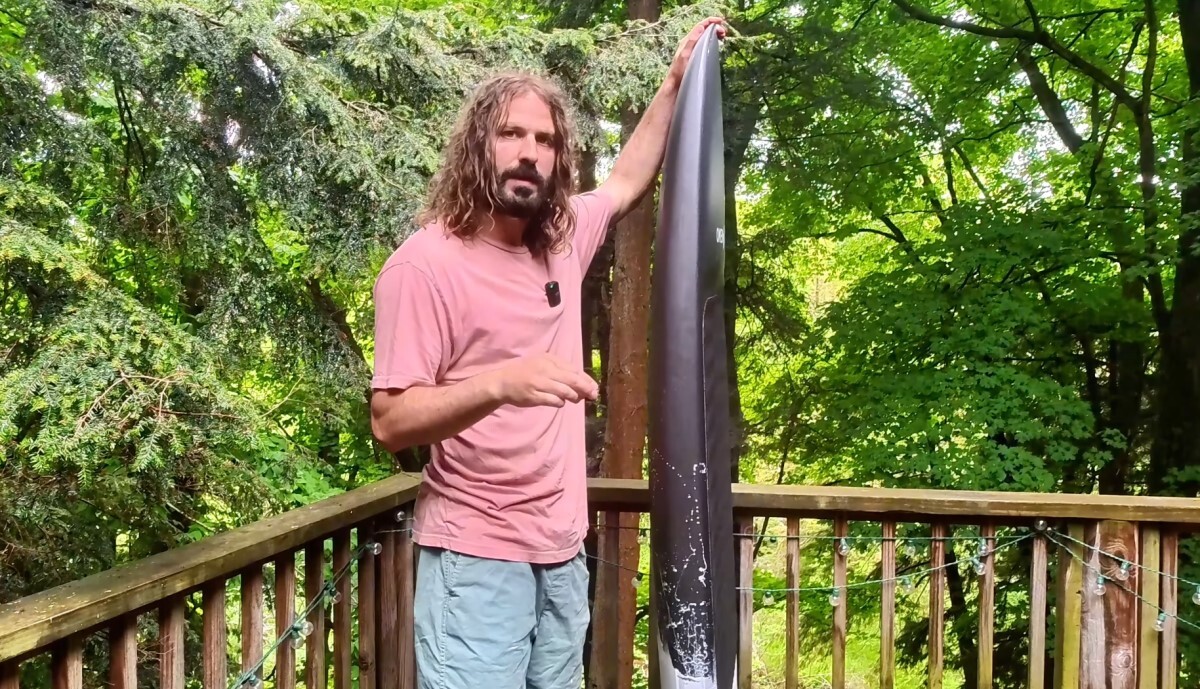
The extra width of this board also gives you more control over your foil. You can get your feet out to the sides and gain a lot more leverage, which is especially nice when you're on a bigger foil.
The cockpit is mostly flat for comfortable cruising with a bit of ramp towards the edges for leverage. It also helps you index where your feet are without looking down. The front and back also have ramps for pumping.
Many riders prefer to ride bigger boards without straps so they can move around when needed, but straps are an option. Sometimes you want a little help pulling the board up onto foil, or you might want to be able to get more leverage turning a big foil. The back strap inserts are located right over the back of the track box, which works well with most foils.
Bottom
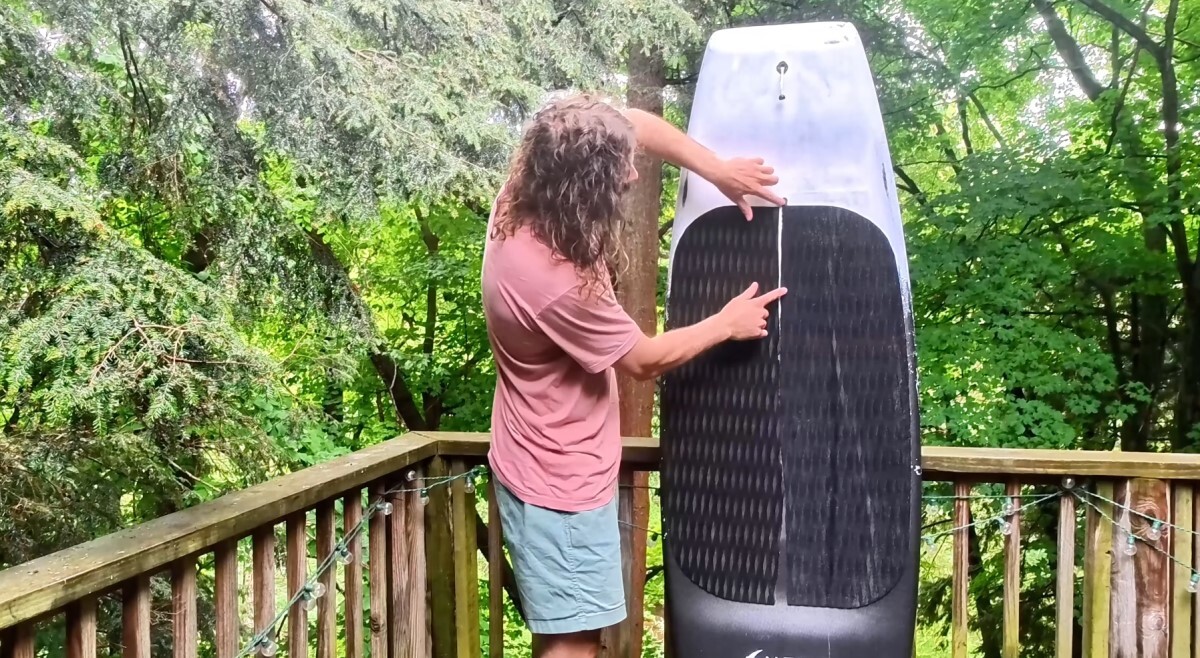
The nose has a sort of spoon shape, with it being flat in the middle and rolling into round low chine rails. This creates lift with a smooth flow going into the front of the board. This is especially nice in chop and lets it glide right through. There are no hard edges that can cause a board to bounce around and twist.
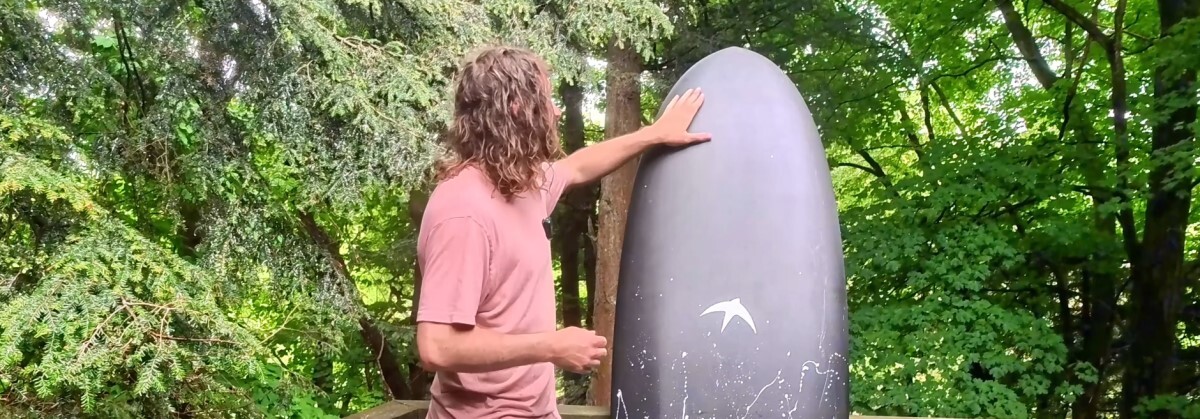
The rounded chines let you turn your hips and point the board. It's easy for longer boards to get tracky, especially if they have hard rails that grab the water, but these soft rails add to the SuperMarine's user-friendliness.
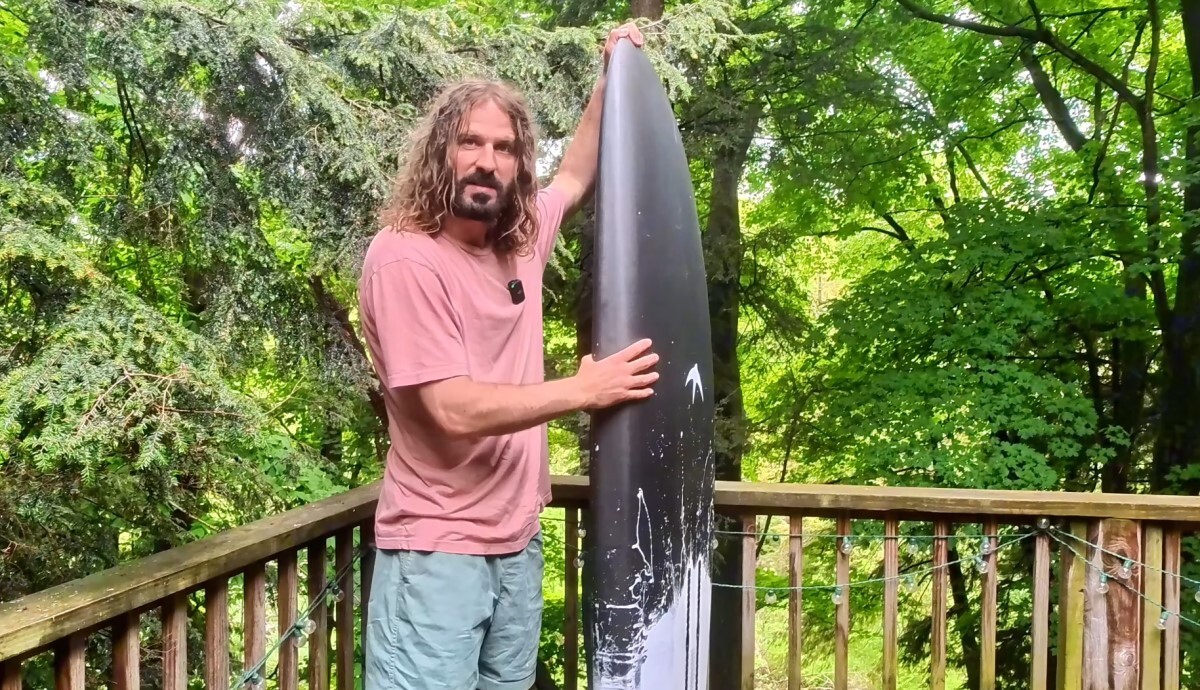
As you move toward the back of the board, the angle of the chines stays low, but they do gradually get harder. This is to help the water release cleanly as it flows off the back of the board. This actually accelerates the water and keeps it from rolling around the rail.

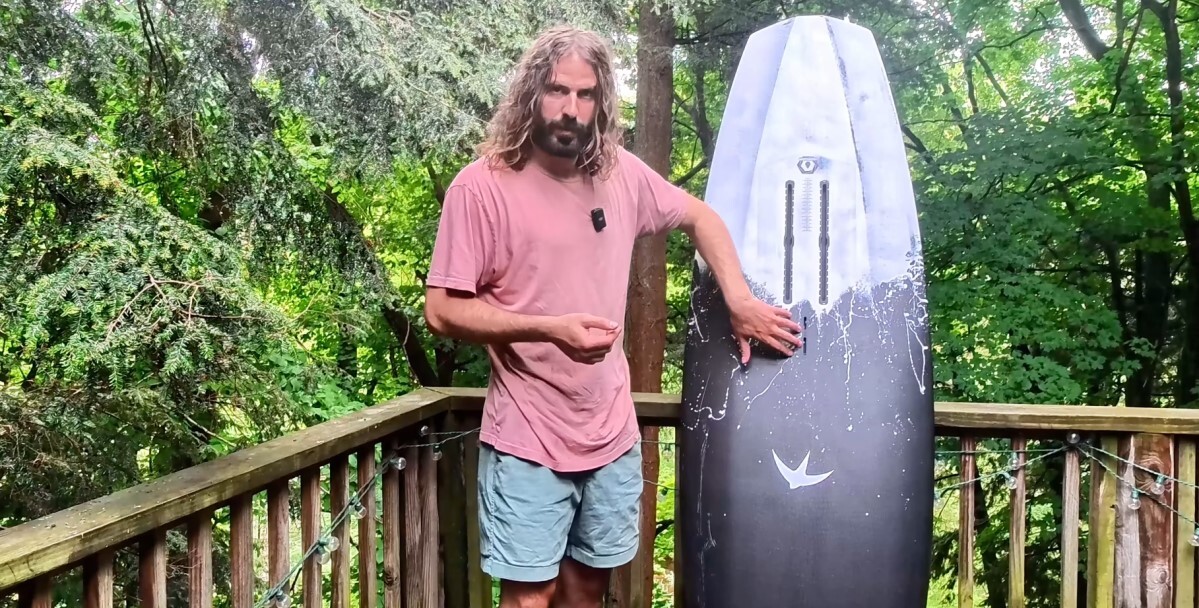
The track box is positioned quite far forward. Because the board is designed primarily for winging and parawinging, it's best if you can keep your feet in one spot both while taking off and while flying so you don't interrupt your acceleration. This track position puts your feet right where you need them, about in the middle of the board. It's also quite a long track, so whether your foil likes to mount in front of your feet, under your back foot, or a little bit behind, you're set.
A feature unique to Omen boards is the FCS2 fin box just forward of the track box. It comes with a stubby G10 fin that gives the board a bit more forward drive and doubles as a carry handle. If you want more forward drive and trackability, you can put a bigger fin in there. You can use SCS1 or FCS2 click-in fins, so this is a great way to fine-tune the feel of your board.
How Does the 120L SuperMarine Ride?
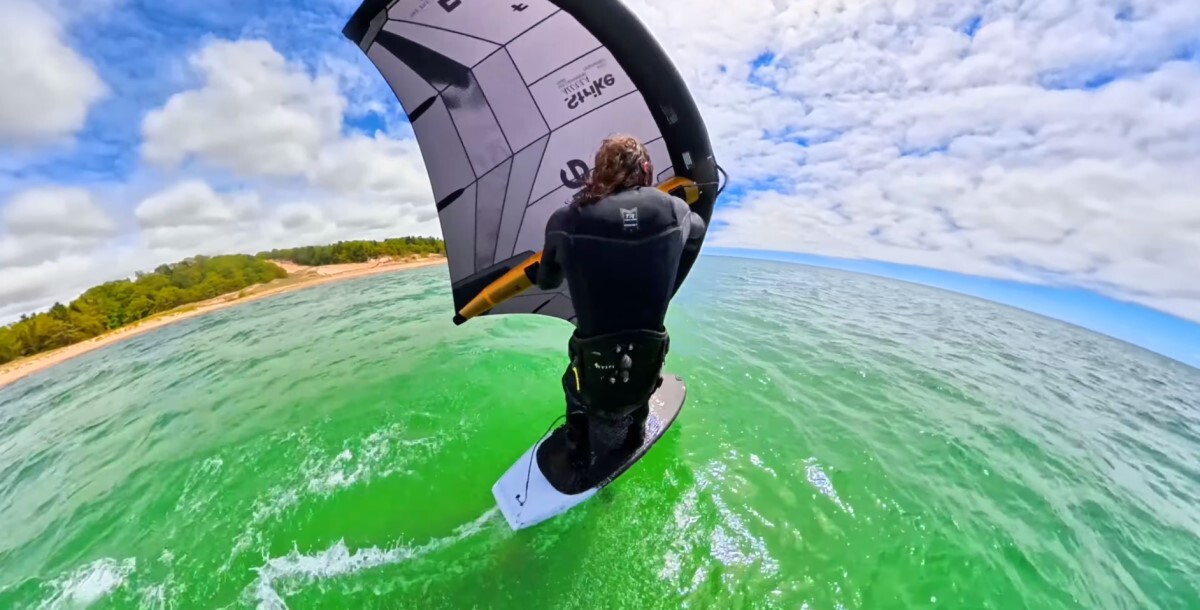
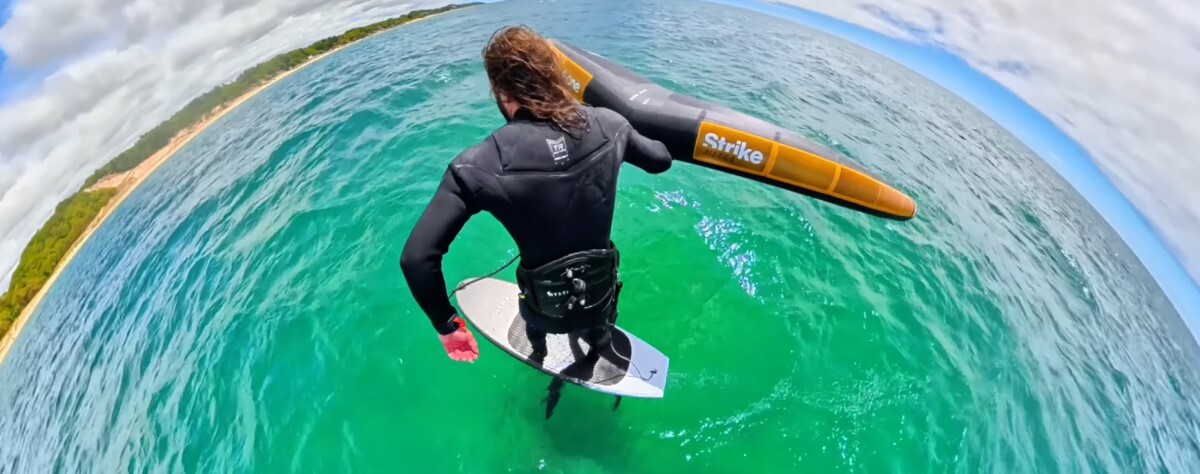
Conditions have been pretty light lately... which is just perfect for testing the 120L SuperMarine! To add to the challenge, Tucker's been getting small 3m parawings to demo. And he was able to make those sessions happen and not only get up, but to have a blast doing it. It was a great feeling to see a concept actually work out exactly as he hoped.
Would Tucker give this board to a new winger? Yes, especially if they were fairly athletic. It's also a board they'd be able to progress on since it's a little narrower than most beginner boards. A wider board is more stable but needs to push more water out of the way. The smooth, low-entry rocker on the SuperMarine glides over the water and lets you get up with less power and even a smaller foil. We've mentioned in other articles that you want to size down your foil before your board, and this board lets you do that.
Because the SuperMarine is beginner-accessible, but not a true starter board, you won't outgrow it. You can use it in multiple areas, like light wind, SUP, parawing, and even with a Foil Drive. Its construction is nearly bulletproof, so this is a board you won't ever need to replace.
What's Not So Great About the SuperMarine?
That robust construction does come at the cost of weight. It's made with a high-density extruded foam. This makes it incredibly durable. It can last you a lifetime, and if you ding it, it won't take on water. But this does make it heavier than some other boards.
Its cost is also a bit of an investment, and it may not be something that everyone can afford, especially when you're first starting out and may not be sure you'll stick with it. On the bright side, its tough construction means that once you do take the plunge, it's a one-time deal since this isn't a board that'll end up in a landfill in five years. Over the course of many years of use, its per-session cost will probably be less than cheaper boards.
Is the 120L SuperMarine Right for Me?
If you're looking for an efficient 120L board that you can have fun with for a long time, it's certainly worth checking out. New riders and 300lb riders will feel very comfortable on it. It'll get you up with a parawing in light wind. It'll give you better control over wide foils or let you size down to smaller foils. You can play around with SUP foiling. It's just going to make a lot more days rideable. If you like to experiment or you get a lot of light days at your spot, this board might fit nicely in your quiver.
If you do pick one up, be sure to give Tucker your feedback. The production method at the Appletree factory allows for rolling inline updates to the design. Most will probably be pretty subtle since the board is doing what it was designed to do, but a few tweaks here and there could make it even better, so we'd love to hear how you're using it!
MACkite Subscription Links:
YouTube | Instagram | Spotify Oddcasts
Contact MACkite Below:
800.622.4655 | Kiteboarder@MACkite.com | LIVE Chat Messenger
Recent Posts
-

Parawing Redeploy Tip: The Simple Trick for Clean Launches
Jeff caught up with Billy Ackerman from F-One on the beach, where they chatted about parawings. Wh …9th Oct 2026 -

Appletree Zapple S RIIFT Foil Assist Board Overview
Appletree's New RIIFT-Specific Foil Assist Boards Tucker is joined by Wieger from Appletree Surfbo …8th Oct 2026 -

Ride Engine Empax V3 Impact Vest Review
The Brazilian Brothers are back to bring you a product review of the brand-new Ride Engine Empax V …7th Oct 2026