
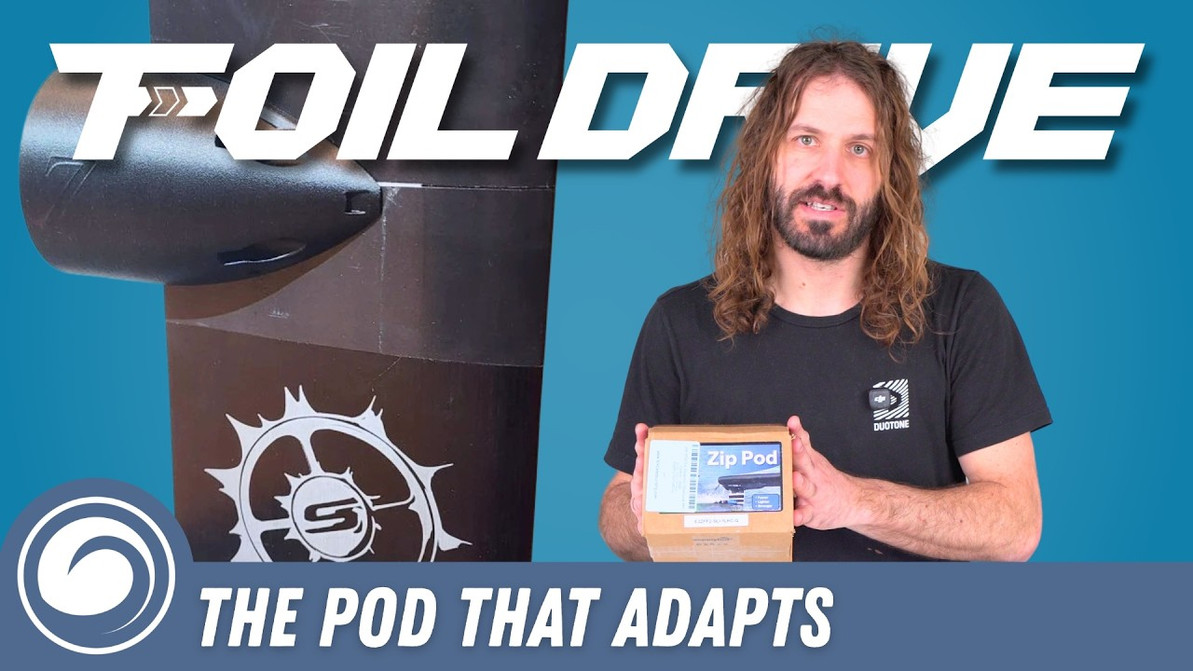
Tucker's Zip Pod Foil Drive Mount Review
Tucker is stepping out of his comfort zone of talking about wing and kite foil gear to dive into foil assist mode. He has been absolutely stoked about this new product from Zip Pod — testing it over the winter, putting it through its paces, and comparing it against regular foil drive setups and integrated masts. The Zip Pod has some really compelling reasons to like it, which is why it's what Tucker uses when he goes Foil Driving.
Unboxing the Zip Pod Kit
Below is a quick rundown of what comes in the box when you pick up a Zip Pod kit:
- Instructions: Follow these and you won't have any issues.
- Zip Ties: A huge bundle of high-quality zip ties.
- Electrical Tape: Thick, heavy-duty 2-inch electrical tape. Tucker has been using this stuff for years on his Foil Drive gear rather than thin tape: it cuts down on the bulk and makes your life easier putting it on and taking it off.
- Spare Screws: Included just in case you need them.
- Clippers: For trimming the excess off your zip ties or cutting them off at the end of your session.
- Cable Guides: You use these on the back half of the mast to hide the cable and get a streamlined, efficient flow from the foil. It feels almost like there's no cable there at all, similar to an integrated mast. There are different sizes so you can stack as many as you want depending on your effective cable length. If you are using it like an eFoil, where the Zip Pod sits all the way at the bottom of the mast and need more, you can contact us or Zip Pod for additional 3D printed parts.
- The Zip Pod: The magic itself.
- Spare Plugs: These go in to hide the screw holes and keep the pod nice and hydrodynamic.
Compatibility and Fit
The specific pod Tucker is showing is meant for the Slingshot One-Lock, but Zip Pod makes one for all the popular masts in the foiling industry. If you don't see one for your mast, we can get a hold of Zip Pod, take some measurements, and get you a custom pod if need be. However, Tucker has found that if you take some measurements and compare them to the ones already made, you can usually find one that works great.
The Zip Pod is ideally set up for the most popular mast positions. If you have a carbon mast that is tapered, like the high modulus One-Lock from Slingshot, it will work around the 15cm to 25cm position. It will work in sections beyond that — Tucker can put this particular one as high as roughly 12cm, but you kind of have to squeeze the Zip Pod on there and flex it just a little bit. You can go lower than that too, but you might just need to use a little bit more electrical tape under the connection to deal with the additional bulk. These pods are custom for certain foil models, designed for easy plug-and-play, and are going to fit best in that 15 to 25cm zone if using a tapered mast.
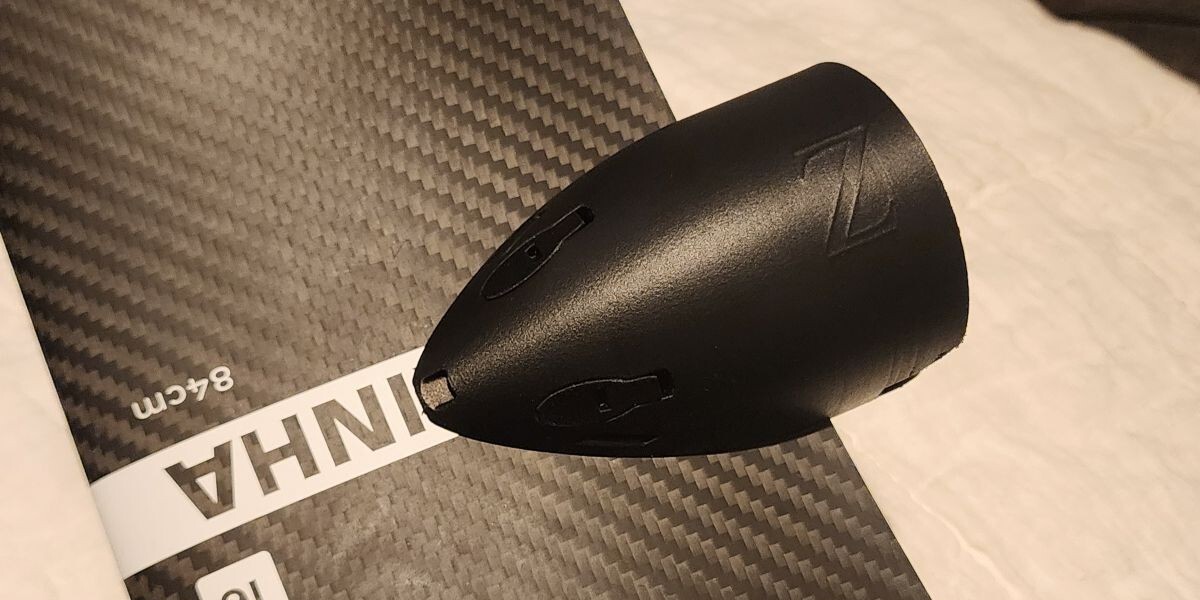
Low Drag Design vs. Integrated Masts
What is so special about the Zip Pod? In Tucker's opinion, the standout feature is that it is a very low-drag pod. It has a very similar form factor and a very similar motor position right at the back edge of the mast.
Compared to the universal pod from Slingshot that comes standard in their kits, the Zip Pod puts the motor closer to the mast. That does a couple of things:
Less swing weight to move around. When the motor is closer to that pivot point on the foil, you don't feel the weight of the motor as much.
Less drag from the wetted surface area. Being a little pod sticking out rather than the whole universal setup makes it more maneuverable in the water.
Also, the Zip Pod doesn't make a big splash or a big turbulence when it enters the water. The propellers can engage and give you thrust more quickly and smoothly. When you are pumping in and out of the water or surfacing, it's a more seamless transition with less drag. It's less of a bucking bronco, especially for newer riders. When you re-enter the water and throttle up, hitting the water creates turbulence and air, and you don't get that thrust until a few seconds later. This helps resolve that.
This gives you a very similar experience to the integrated masts that everybody is really excited about, only this kit is $250. Most integrated masts are between $2,000 and $3,000. On the whole, the Zip Pod gives you a very similar experience at a much more palatable price point.
The Advantage of an Adjustable Motor Position
The other massive advantage you get with the Zip Pod versus an integrated mast is that it can be moved along the mast. That was the big selling point for Tucker. Even working at a shop where he can grab an integrated mast in any size he wants, if the conditions change or he decides he wants to ride in a different style, he can't change that motor position on an integrated mast.
As somebody who has been Foil Driving for a long time, Tucker really likes to change his motor position depending on the conditions and his riding style. For instance, if he's going out on a downwinder with long periods of smooth, clean waves, he's uses the Zip Pod to get up quickly and then gliding on the foil for miles. He wants it up and out of the way, so he'll put it up high, around 12 or 13 centimeters. That gives him enough thrust to get on foil, and he can position his mast more in the center of the board where he can maneuver around. Being higher, it doesn't have as much leverage driving the nose up, so it's a more fluid, normal, non-powered feeling setup.
Conversely, on a day where it's a really short session, choppy, with multiple directions of waves — like a lot of days on Lake Michigan — it's messier. You are going to want that motor a little lower on the mast, especially if you are looking to motor back out after riding a wave and stay on foil. To do that, you want a little bit more forgiveness in terms of ride height.
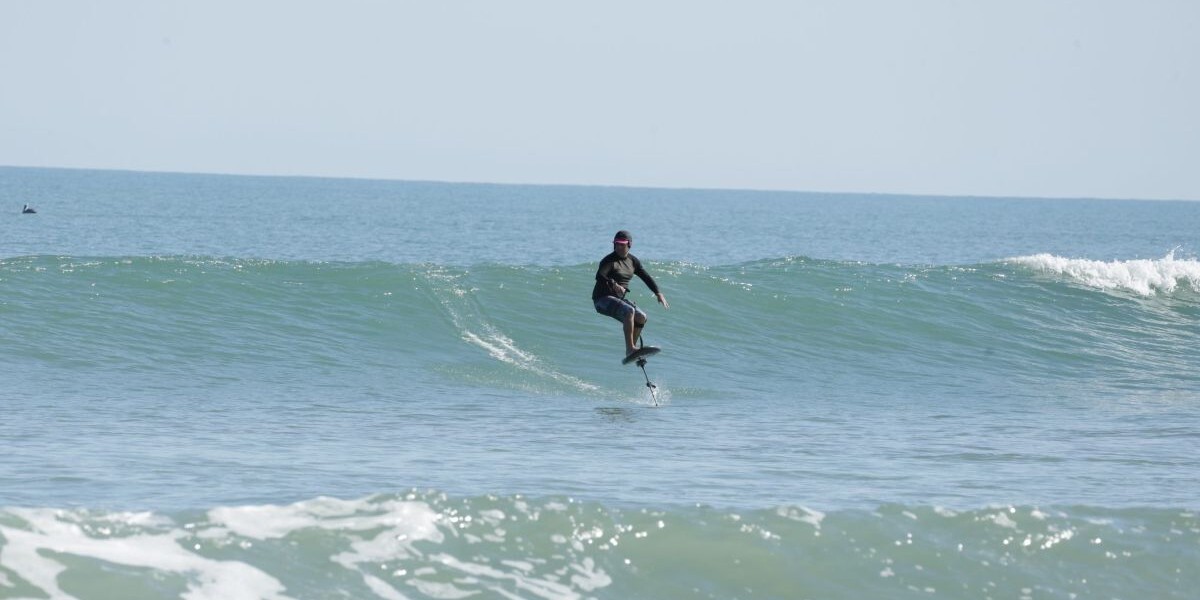
Naturally, with waves converging and melting out in short period swell, you can't adapt and adjust for every little dip and dive. You are either going to be touching down or pulling the motor out of the water frequently, which gives you that jerky, bucking bronco feel. Navigating those conditions with a high motor pod is really hard. You create mistakes, it's higher stress, and you end up using more throttle and battery than you need because you are trying to pull yourself out of those jerky situations.
In those conditions, Tucker likes to get down to a 20 or even 25cm motor height to give yourself more forgiveness, more consistent power delivery, and the ability to ride through the waves and chop without touching the board down or pulling the motor drive out of the water and losing thrust. He often settles in that 18 to 20cm zone if the waves are semi-clean and he's riding the same kind of laps. But there are days where he wants less, and days where he wants more motor position. This allows you to adapt for that without buying multiple integrated masts.
Installation Pro Tips
The Zip Pod is very easy to use. You have your mast, and you are going to fit the pod onto the area you want. Attach it, and make sure the open slot for the cord is facing towards the board, because that's where your cord is going to come out. If you mount it upside down by accident, the cord is going to be coming out the wrong direction.
Once it's seated, you stack your cable guides on the trailing edge of the mast, tapering off super cleanly so that cord gets nested right into the foil section. Then you wrap it with your 2" electrical tape to cover everything. When this is all taped up clean with the shims on, it looks really good, is very low drag, and is sleek.
At worst, the issue Tucker has seen — and there is a remedy for it — is riders going out and saying their zip ties are a little loose after their session. What he's found is they are not seating the pod properly on the back of the mast first. They just kind of set it and then yank on the zip ties.
If you need some extra help, here is a video on installing the Zip Pod from the founder of Zip Pod.
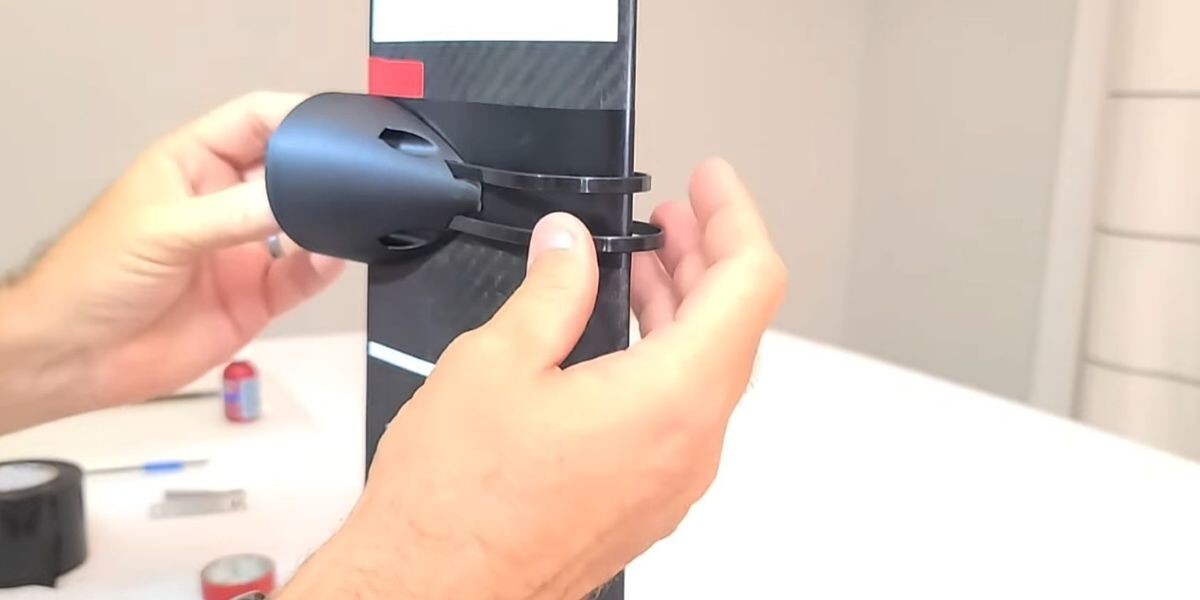
The zip ties aren't really there to tighten it to the mast; you want to seat the pod onto the mast first, get it nice and snug, and then use the zip ties to secure it. Load the zip ties up and give them a good pull so it's nice and tight. In reality, the zip ties are just a really nice triple fail-safe. Even if you manage to get one to fail (which Tucker hasn't seen yet), there are still two more holding the unit. If for some reason you manage to whack a reef backwards by some miracle, you are still connected via the cable.
If you find the magic sweet spot for where you want the Zip Pod and you have a dedicated mast, you can actually omit the zip ties and affix this permanently using 3M adhesive or epoxy. You can smooth it out, make it really clean, and omit the zip ties and electrical tape entirely if you decide you want to DIY your own integrated mast.
Build Quality and Final Thoughts
The quality of this is top-notch. It is very stiff and very durable. It is a carbon fiber 3D print and is melded all together. Tucker has yet to have an issue with any of these quality-wise. It's an elegant, well-thought-out solution from Zip Pod.
If you're interested in ordering a Zip Pod, look up the compatibility with your mast first. Then, let us know if you'd like a V1 or V2-style motor. While we primarily stock the V2, we can find a custom solution for you if you don't see your ideal configuration on our site.
For Tucker, this has been a real saving grace, allowing him to put a foil drive in his truck no matter what the day. He does a lot of our foil testing, so he never really knows what foil is going to be in his car. He's found a lot of these fit across different brands, and he can use a little extra electrical tape under the pod to provide extra bulk if going from a thicker mast to a thinner one. Tucker switches between disciplines frequently — one day he might be prone foiling, the next doing parawinging — so not having to carry a really expensive secondary mast for a specific brand has been ideal.
MACkite Subscription Links:
YouTube | Instagram | Spotify Oddcasts
Contact MACkite Below:
800.622.4655 | Kiteboarder@MACkite.com | LIVE Chat Messenger

Recent Posts
-

Mystic Majestic X Hardshell Harness Review
The Brazilian Brothers are back to bring you a special review of the Majestic X harness by Mystic. …27th Oct 2026 -

2026 Cabrinha Unify Control Bar Review
The Brazilian Brothers are in windy Brazil to provide a thorough review of the brand-new 2026 Cabr …23rd Oct 2026 -
Naish Hatch V2 Parawing Overview
Jeff takes a few minutes out from the KoGL event to chat with Adam Carr from Naish about the Hatch …22nd Oct 2026