
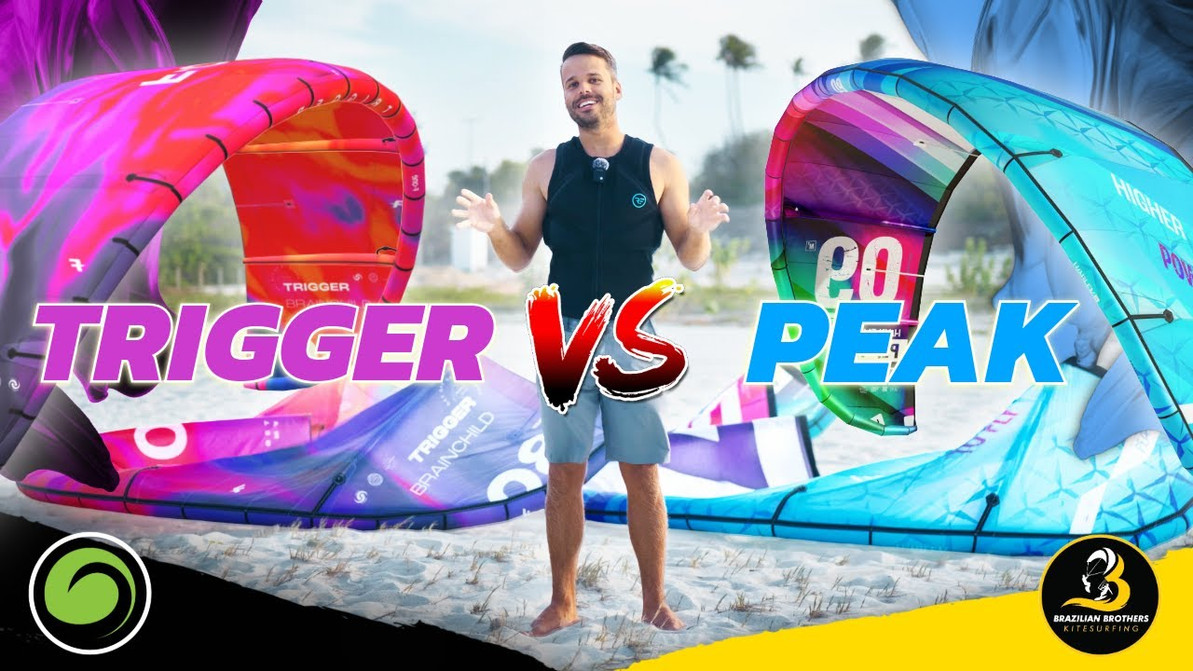
Brazilian Brothers' Harlem Peak vs. F-One Trigger Brainchild Comparison
The Brazilian Brothers are back with a very special kite comparison: the Harlem Peak versus the F-One Trigger Brainchild.
The Influence of the Harlem Peak and F-One Trigger
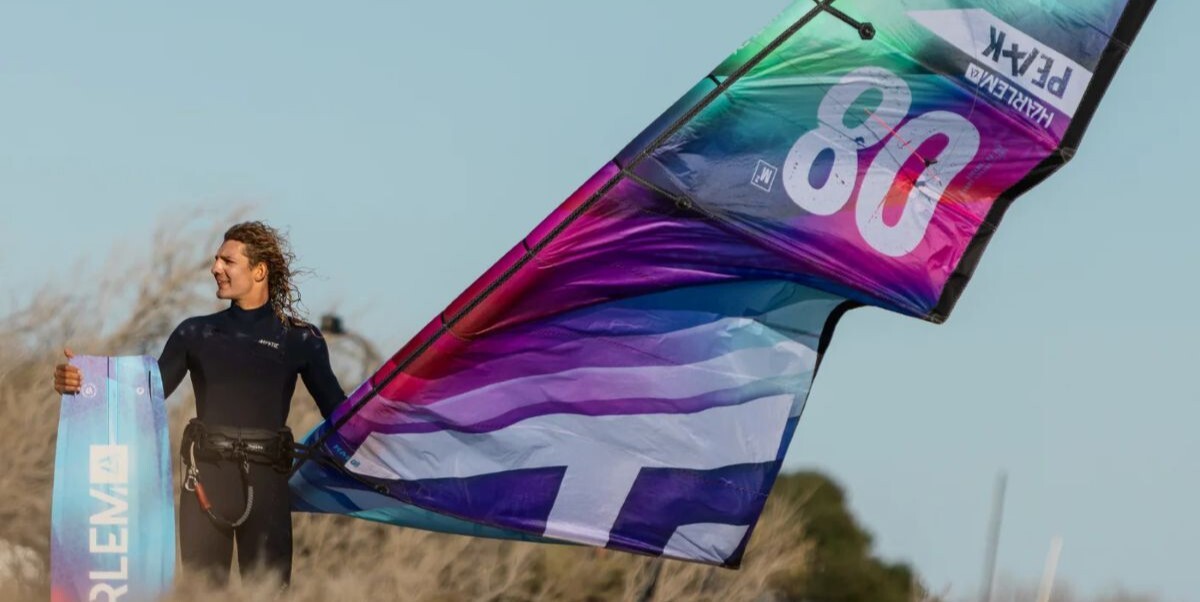
The Harlem Peak is a massively hyped kite at the moment, largely thanks to the performances of Leonardo and Lorenzo Casati. Lorenzo has done the trilogy this year — winning a World Championship, the Megaloop Challenge, and King of the Air — showcasing just how much top-end performance the Peak has.
In terms of global influence, the Trigger has lagged behind the Peak, with Josh Gillett representing F-One. Josh is one of the Brazilian Brothers' favorite riders and incredibly talented, but he hasn't been able to go as deep into competitions on the Trigger. Does that mean you should automatically buy the Peak?
Shared Design and Construction
Both kites are five-strut big air machines designed by legendary kite designer Ralf Groesel and manufactured at the Brainchild factory in Macedonia. Both take advantage of ProWeld technology, which lets Brainchild drastically reduce leading-edge diameter, making these two of the lightest five-struts on the market.
Weight Comparison
- Harlem Peak (8m): 2.48kg
- F-One Trigger (8m): 2.56kg
In addition to ProWeld, both kites are made using a digital printing process with Eco-ink, which allows Brainchild to produce some epic-looking kites. The Peak and the Trigger both stand out on the water. That said, the Brazilian Brothers still think the Trigger Brainchild is the best-looking kite on the market right now.
Drastic Performance Differences
With all these similarities, it would be easy to assume the two kites perform identically. There are plenty of people on the internet making that claim — but after testing both back-to-back in Brazil over the past couple of months, the Brazilian Brothers can confidently say they perform drastically differently. Anyone making the "they're the same" claim clearly has not tested them side by side.
Bridle Systems
For starters, the bridle systems are completely different. The Trigger has six bridle attachments per side, with a direct and fixed bridle arrangement. The Peak has seven attachments per side on the leading edge, plus a one-sided pulley with a stopper. As any kite rider knows, small differences in the bridle can produce big differences in feel and performance.
Back Line Attachments and Bar Feel
The back line attachments are also very different. The Trigger uses the usual orientation, with a single line that connects straight to the kite. The Peak has a more complex system, with two lines attaching to the back of the kite. The setup actually reminds the Brazilian Brothers a lot of the Rebel, and one interesting note is that you can't easily modulate bar pressure on the Peak, which was a surprise.
In terms of bar feel, the Trigger has light bar pressure with a very direct kite feel. The Peak has more moderate bar pressure with a slightly less direct feel.
Jumping and Big Air Performance
Both kites are exceptional jumpers, but the Peak has a slight edge. Lorenzo Casati not only landed the biggest kite loop in recorded history on the Peak, he also recently set the world record on the Surfr app with a 35.7-meter jump. The Peak is a sheet-and-go kite that delivers really good vertical lift and serious height without requiring a ton of technique.
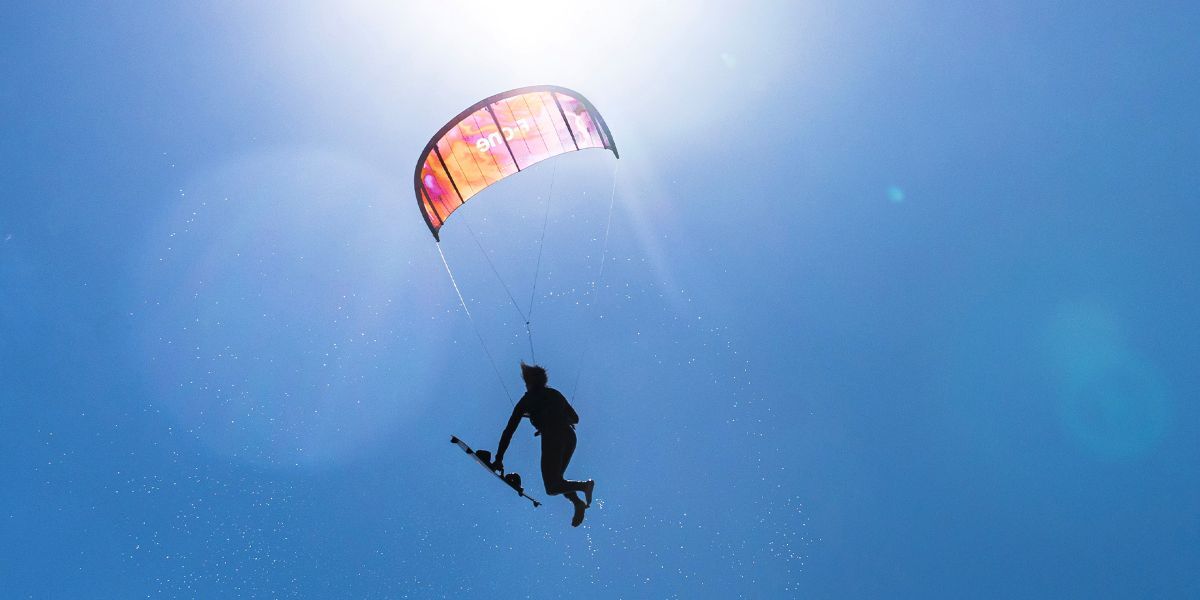
The Trigger isn't that far behind, but it's a more technical kite when it comes to maximizing height. That said, the Trigger shines in the hang time department and how easy it is to come down softly. The Brazilian Brothers were able to land more softly on the Trigger on average than on the Peak.
Kite Looping and Progression
For looping, the Trigger is the clear winner. The lighter bar pressure and more direct feel make the loops faster and more reliable. The Peak is a very good looper too, but it's more aggressive with a rounder loop, which makes it a scarier kite for kite loop progression. The Trigger has a very consistent pull, and the light bar pressure makes it a progression weapon when it comes to kite loops.
Ease of Use
For ease of use, it's a very close call, but the slight edge goes to the Trigger. The Peak is definitely easier when it comes to getting height, thanks to that very easy sheet-and-go feeling. But the Trigger's lighter bar pressure and more direct feel mean much more consistent heli-loop hang time, as well as a much easier time progressing through kite loops.
Real Talk: Which One Should You Choose?
First and foremost, the Trigger is the Brazilian Brothers' favorite. Being in Brazil, they love to loop and they're going for kite loop progression. If you're looking for a kite that makes looping and heli-looping very easy, look no further: go with the Trigger.
That said, if your priority is to jump big and you're chasing Woo records and Surfr app records, lean toward the Peak. It has higher overall height potential. Both kites are amazing in their own way, and the Brazilian Brothers highly recommend giving each one a shot to make sure you make the correct decision.
MACkite Subscription Links:
YouTube | Instagram | Spotify Oddcasts
Contact MACkite Below:
800.622.4655 | Kiteboarder@MACkite.com | LIVE Chat Messenger
Recent Posts
-
2026 Harlem Lead Bar | Features, Lines, and What Sets It Apart
If you've ever grabbed a bar and just felt instantly comfortable, like it was designed for your ha …13th May 2026 -

2026 Cabrinha Airframe System | How to Remove and Replace the Clips
The 2026 Cabrinha kite lineup rolls out a refreshed airframe system, and one of the most practical …13th May 2026 -

Is the Foil Boost Waydoo's E-Assist Solution?
The e-assist market has exploded over the last few years. What was once using motorized assistance …13th May 2026