

Session Impression: Wing Foil and Parawing in Small Waves
Jeff and Ryan went out for a session together in Muskegon but had very different experiences. Ryan was on a wing, while Jeff opted for a parawing. He's had a couple hours on parawings, but it's still a new skill for him, while Ryan had never used one before. They'd originally planned to swap gear during the session, but the conditions weren't ideal for parawinging and Ryan decided to wait for a better day to give it a try.
What were those conditions like, what did each of them ride, and how did their sessions turn out?
How Were the Conditions?
The water had finally warmed up, which was a nice change. The mid-afternoon northwest thermals brought gusty 16-21 knot winds that picked up to a nice, steady 19-22 knots later in the session. The swell went from knee-waist high to a very fun waist-chest high, so the second half of the session was definitely more exciting.
What Did Ryan Ride?
Ryan's setup was new to him (apparently Jeff's been hogging it all in his car). He went out on the Duotone Float wing, the Starboard Take Off Blue Carbon 5'5" 80L board, and an Ensis foil the crew is trying out.

What Did Jeff Ride?
Because of his success with 4-5m parawings in earlier sessions, Jeff decided to level up to a 3.5m parawing. He matched this smaller parawing with the Code S 1300 foil and an Omen 120L SuperMarine board.
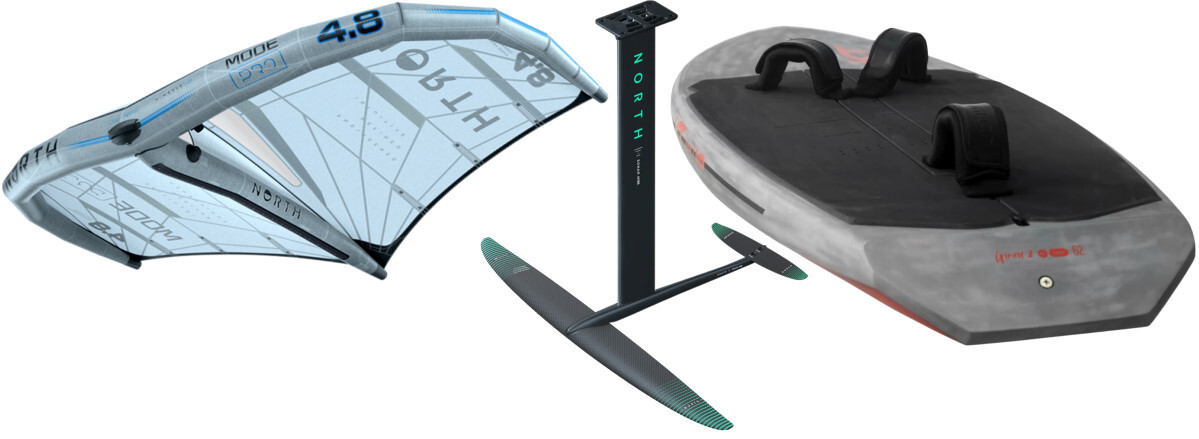
Later in the session he went back out with a North Mode Pro 4.8m wing, a KT Ginxu Pro Carbon 62L board, and the North SF 830 foil.
How Was Ryan's Session?
At first, the sets coming in were fun and rideable, but anything else was pretty frustrating. The wind was adequate for the 4m Float and 1000cm2 foil, and Ryan had no trouble getting up on foil and riding around, though he didn't quite have the power to zip around. The wind was shifty and made the setup feel a little slow.
However, the Ensis foil accelerated with each pump, a characteristic Ryan has loved in Code and Axis foils, so that was perfect for hopping from wave to wave and did feel fast. He was able to keep up with the waves in spite of an unusually strong current.
The board gave a stable and easy ride. It built speed well and was a nice all-around board that worked well for cutting around in the waves.
The Float wing felt slow until the wind picked up 4 or 5 knots, and then it was ready to shine. The swell got bigger, and so did Ryan's smile. He caught some long rides and was able to carve around, then turn and carve around the other way. The wing wasn't holding him back at all as the wind picked up, and he finally got the speed he'd been looking for earlier. It was like night and day, a perfect example of why the guys try to test gear in different conditions before coming back with a review.
By the time Ryan got off the water, the Float had become his top pick for riding swell. It didn't twist when he was luffing and really did just float there. You can walk it down the line and it doesn't fall in front of you. It's got a lifty feeling that pairs well with wave riding.
The board was also right for the conditions. The only thing Ryan would have changed if he could would be to size down on the foil to pick up a bit more speed. Something around 800cm2 would have been about right for that session to pick up some speed to stay on the wave without pumping.
How Was Jeff's Session?
Jeff had made a lot of progress in just a couple hours on parawings. During his last session, he had been up and foiling for about 15 minutes, had stashed and relaunched, and even tacked back up to the pier with it, so he felt ready to head out with a smaller 3.5m. He had a big foil and a big board so he'd have plenty of lift and stability. However, reality didn't quite live up to his vision.
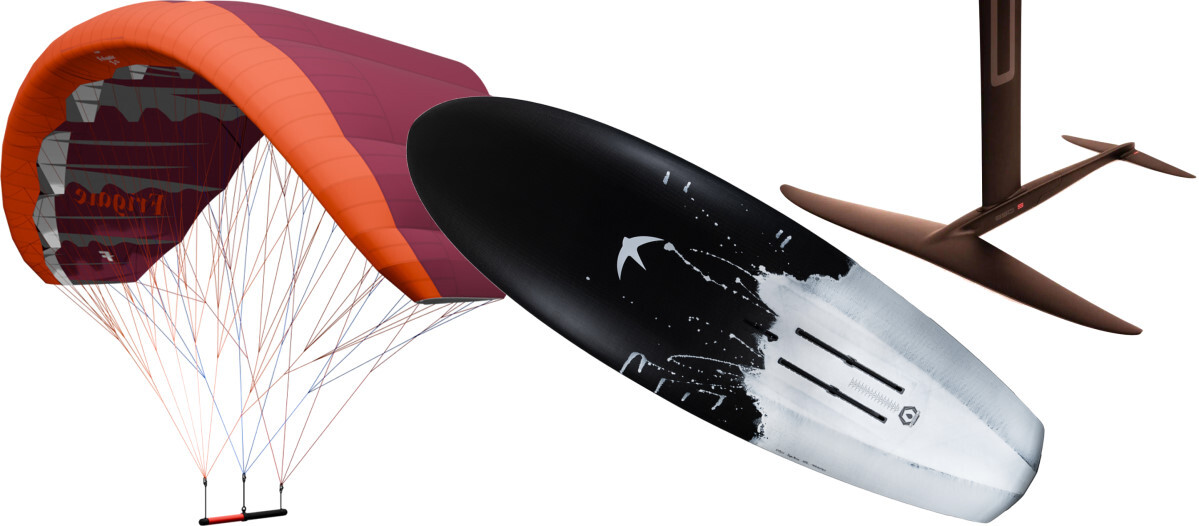
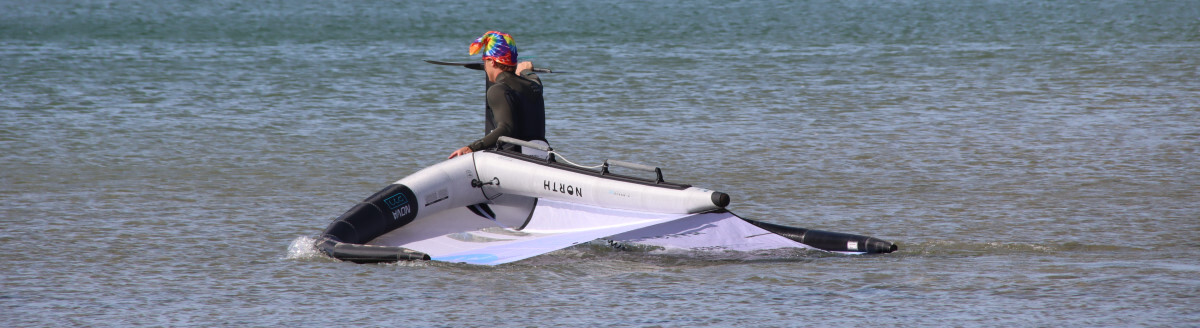
The waves were bigger than his previous sessions on a parawing, and the wind was coming from the same direction as the waves. To complicate things, these were pushing right into two shallow sandbars, and there was a good amount of current, too. With all the waves, Jeff couldn't put the parawing on the board to keep it dry as he walked out, and it wouldn't stay in the air, either, so he had to have it collapsed and it got wet right off the bat.
All this added up to it becoming very difficult to get the space he needed to head downwind to get some speed, then bear down and head up to get the power to lift off. He did manage to stand up for a bit and did some upwind tacking on his knees, but he never was able to lift off. And anytime he hit a pocket where the wind was below 16 knots, the parawing just fell into the water.
His takeaways were:
1) Don't size down your parawing too soon and
2) If the conditions add too many variables, that might not be a good day for learning a new skill. (On the plus side, he did get a lot of practice launching a wet parawing...)
At that point Jeff got to walk back for the first time in years. He ran into Ryan, who had come in for a breather, and they agreed it was a better wing than parawing day. While you need to be comfortable going back to being a beginner when you're learning a new sport, it's also important to take the conditions into account and set yourself up for success.
But not all was lost. Jeff swapped out his parawing kit for a wing setup with all his favorites, and suddenly his day turned around completely. He was back in his comfort zone, and the wind and waves had picked up by then, too. Sometimes a session can start out pretty rough and leave you feeling discouraged, but conditions can change, and if you have different gear, that can make all the difference too.
The KT Ginxu Pro Carbon 62L is one of Jeff's favorites when it's powered up. It's light-feeling and has good balance. It's thin, which helps you feel connected to the foil. The North SF 830 is a great foil for the waves. It's fast and carves very well, yet is so stable it almost feels like it's got training wheels on- in a good way. It's smooth and lets you relax and do your thing in the surf.
Jeff went from frustration to a flowy session full of snaky turns. The short board complemented the foil perfectly, and the Mode Pro wing let Jeff rip upwind. He had the 4.8m in his car and would have chosen something smaller if he'd had it, but it handled the high end well and, though it could feel a little heavy and needed a little muscle at times, it wasn't a problem.
Even the foil could have sized down a bit. The SF 680 has a surprising amount of lift and control for how fast it is. The waves were really cruising and it would have been easier to stay with them with less pumping.
Jeff ended up getting a wonderful session. There were nice little bumpers and waves on the inside once the lake cleaned up a bit, with smooth water between the waves, a rare treat on the Great Lakes. He went to the outside and poached waves, always looking for the next one.
Key Takeaways
This session was a perfect illustration of how important both gear and conditions can be. Ryan was on a good setup from the start, and his session got more fun as conditions improved, though a smaller foil would have made it even better.
Jeff was initially on the wrong gear for his skill level and the conditions, but when he switched to something he was proficient on, he started having a good day, which also got better with the conditions. A smaller wing and foil were the only things that could have made it perfect.
MACkite Subscription Links:
YouTube | Instagram | Spotify Oddcasts
Contact MACkite Below:
800.622.4655 | Kiteboarder@MACkite.com | LIVE Chat Messenger
Recent Posts
-
F-One Seven Seas | The All-Around Foil That Earns Its Place in Any Quiver
The F-One Seven Seas has been quietly doing its thing in the wing foil world for a few years now, …2nd Apr 2026 -
Is the F-One Strike CWC the Best Light Wind Wing on the Market?
Light wind days are where a lot of sessions die before they even start, and that can be hella frus …2nd Apr 2026 -
F-One Free Surf vs Free Downwind: Which Foil Board Should You Choose?
F-One Free Surf vs Free Downwind boards—what’s the difference, and which one is right for your rid …2nd Apr 2026