
Five Ways to Jibe a Parawing
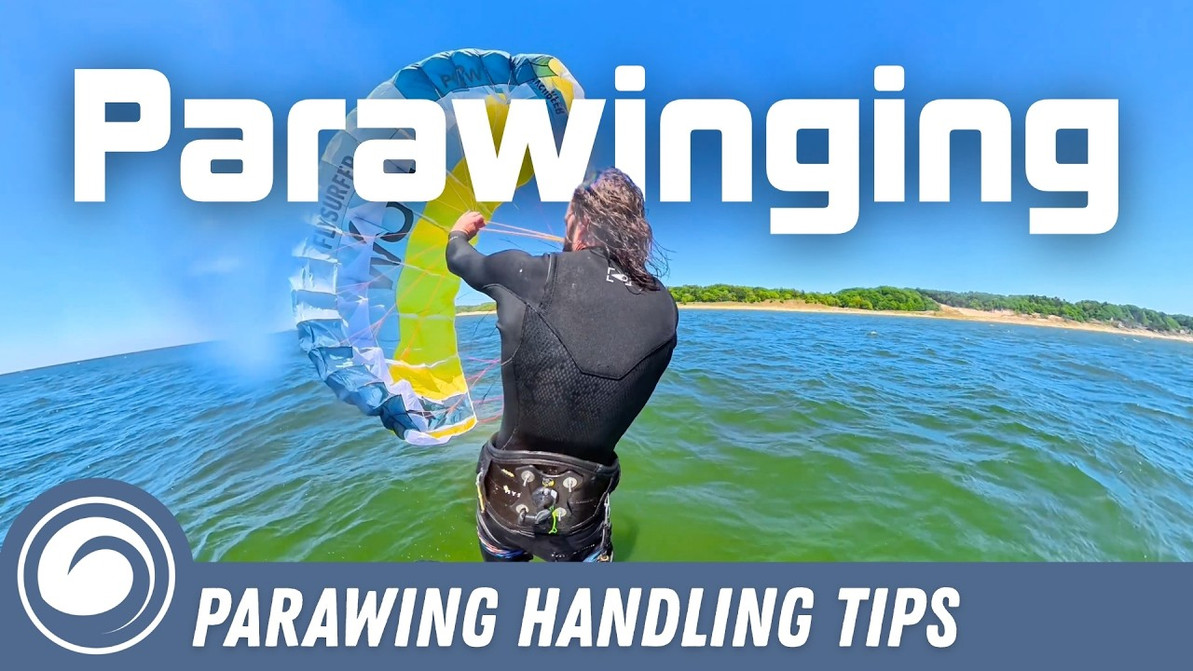
Tucker and Jeff dive into a parawing tip video focusing on the easiest ways to handle your parawing during a jibe. Once you get up and learn to ride, the first major obstacle is going the other direction.
A jibe is a downwind turn, and many riders don't put the forethought into practicing on the beach before hitting the water. Jeff, still a newbie to parawing, notes the frustration of finally getting up and riding, feeling at home ripping upwind, only to realize you have to make your first turn. Coming from kiteboarding and winging backgrounds, they break down five ways to handle the wing during a jibe.
1. Over the Head Jibe
Coming from a kiteboarding background, the first instinct is to bring the parawing up above your head to 12 o'clock and bring it over to the other direction. Tucker notes this works okay if you have good wind and take a nice, gradual arc downwind without overrunning the wind and the wing. It requires a bit more backhand pressure, especially if you have a deeper-sitting parawing, to stall it downwind and redirect it.
In light wind, though, this method doesn't work well — you'll just run into your lines, the canopy will collapse on you, and you'll be fighting a tangled mess. Jeff points out that when the wing is above your head, you don't have much backline tension, so you have to give it a little more steering input and redirect than you might think. You can also grab the front line a bit to tag it, or grab the rear line to the wingtip to collapse it and get it to spiral.
2. Chest-Level Downwind Jibe
Another method is keeping the wing downwind at chest or shoulder level. This feels more natural if you're a winger. You come in with a lot of speed, flag it out by holding the front handle, make your turn, and then pick it up and go. You still have line tension and steering input, but you run the risk of back-stalling it. You have to keep tension and power, and turn the right way while doing it. Tucker mentions he's done this by accident and it snaps around fairly quickly.
3. Stow and Redeploy
The stow and redeploy jibe works exceptionally well in waves. You stow or stash the parawing, make your turn, and throw it back out to reinflate. For smaller wings, it's easy enough to take the turn, throw it out, and let it reinflate. In lighter winds or if you botch the redeploy, though, things can go wrong. You might get a bridle line hooked, it might not reinflate quickly enough, or it might fly off in the other direction. Without waves, it's not quite as consistent because you need to carry good speed into the turn to complete it and throw the wing back out by the time you get power.
4. The Behind the Back Jibe
Tucker considers this the "magic" one and the most foolproof method, especially in lighter winds or when using a bigger wing that doesn't want to fly positively when moving downwind at it. It takes a little practice on the beach to build the muscle memory, but it's highly effective.
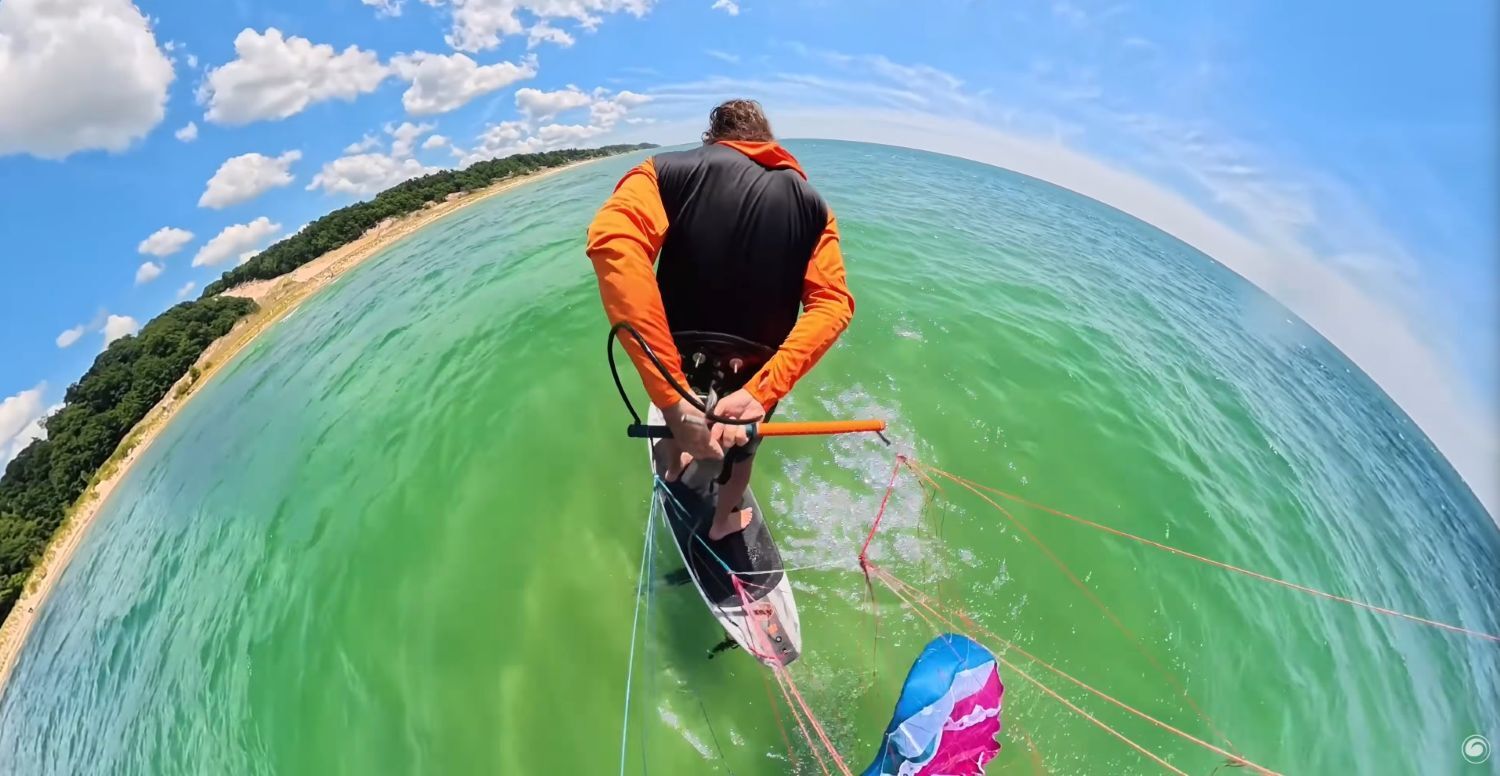
Going into the turn, you turn the leading edge down as you head downwind. You slingshot your way into it, keeping the wing deep, and dump the leading edge down on the water on your downwind side. Then you grab the bar behind your back and pull it out in front of you. The leading edge goes down behind you, and when you pull it up, it comes right back through the window. Most of the time, the bridles keep tension, so there's no risk of tangles, and the canopy stays inflated and erect.
When you pull it across, it acts almost like a Heineken jibe in winging: coming through the window to give you a boost of power flying positively in your new direction. Jeff compares it to a cowboy jibe, noting that it keeps the wing out of the way so you don't back-stall it in front of you or get a rat's nest in your face.
5. The Downloop Turn
Coming from a kite foil background, Jeff brings up the downloop turn. Tucker has tried this one, noting it works pretty well and is similar to a downwind pivot. The weirdest part is that the handling of the handle ends up upside down. You can still run into it or stall it, making it a fun variation to try, but it doesn't necessarily offer a distinct advantage over the behind-the-back jibe.
Practice Makes Perfect
Jeff and Tucker highly recommend practicing these movements on the beach before your session to build muscle memory. If you have flat water or a lighter wind day, grab a bigger parawing and use that downtime to practice your turns. It's an exciting time to be part of a new wind sport frontier, pushing boundaries and figuring out what works best on the water.
The MACkite Take
The jibe is the first major hurdle after you learn to ride a parawing — and unlike winging or kiteboarding, there isn't one universal way to handle the wing through the turn. Here's the five-method rundown, along with when each one actually works.
- Over the Head Jibe: The kiteboarding instinct, and fine in decent wind with a gradual arc. Fails in light wind: you'll run into your lines and end up with a collapsed canopy. Requires solid backhand pressure to redirect.
- Chest-Level Downwind Jibe: The winging instinct, natural if that's your background. Flag it out, turn, pick it up. Watch for back-stalling — you have to maintain tension and power and turn the correct direction.
- Stow and Redeploy: The move in waves. Stow, turn, throw it back out, reinflate. Flat water and light wind make this one inconsistent, since you need real speed carry into the turn to make the redeploy work.
- The Behind the Back Jibe: Tucker's "magic" pick and the most foolproof method, especially in light wind or on a bigger wing. Dump the leading edge downwind, grab the bar behind your back, pull it out in front — the canopy comes through the window with a Heineken-jibe-style boost of power in the new direction. Practice it on the beach first.
- The Downloop Turn: Kite-foil-inspired, works well as a fun variation but doesn't beat the behind-the-back jibe on foolproof-ness. The handle ends up upside down, which is the weirdest part.
MACkite Subscription Links:
YouTube | Instagram | Spotify Oddcasts
Contact MACkite Below:
800.622.4655 | Kiteboarder@MACkite.com | LIVE Chat Messenger

Recent Posts
-

2026 Cabrinha Unify Control Bar Review
The Brazilian Brothers are in windy Brazil to provide a thorough review of the brand-new 2026 Cabr …23rd Oct 2026 -
Naish Hatch V2 Parawing Overview
Jeff takes a few minutes out from the KoGL event to chat with Adam Carr from Naish about the Hatch …22nd Oct 2026 -

Flysurfer Soul 4 vs Sonic 5: Which Kite is for You?
Jeff is on the beach at KoGL with Marie-Eve from Flysurfer to discuss the growing excitement surro …20th Oct 2026