
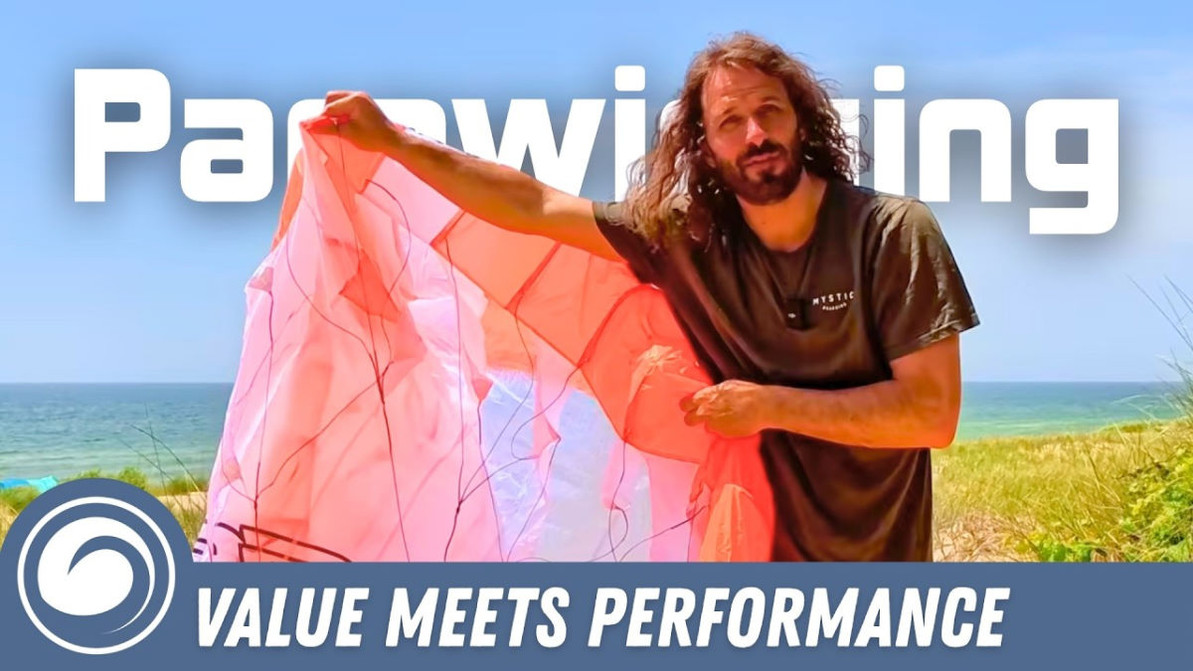
AFS Stow Parawing Review: Value and Performance
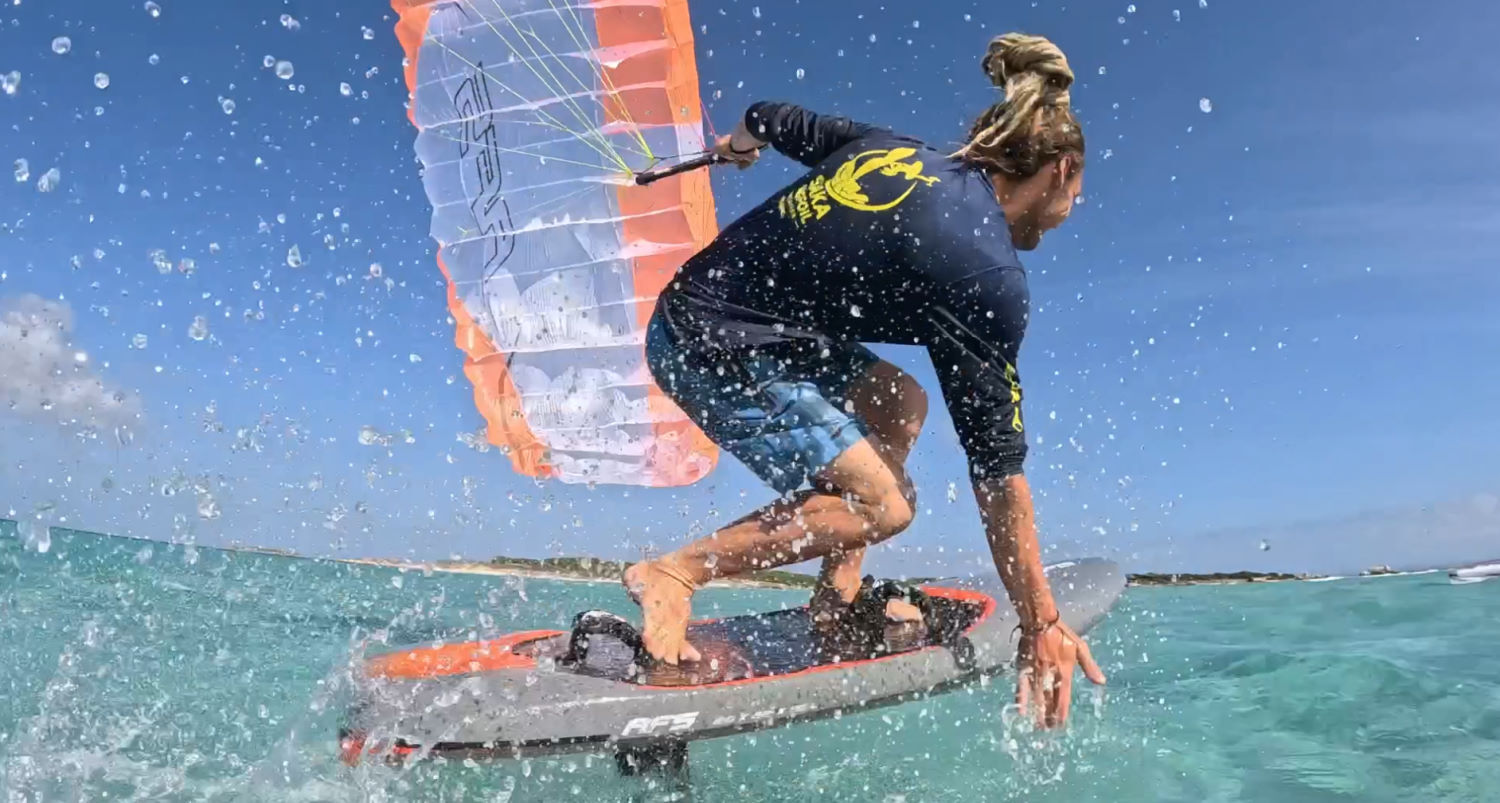
Tucker from MACkiteboarding has been riding the 4.5m AFS Stow Parawing for a number of hours and sessions, and he's ready to give a quick rundown on how it performs. The AFS Stow is a notable parawing in the market today. While it might not necessarily be the absolute highest performance choice or the 100% easiest to use, it hits a really nice blend of performance, value, and ease of use. For a lot of people looking to get into wings like this, the Stow is definitely worth a good look.
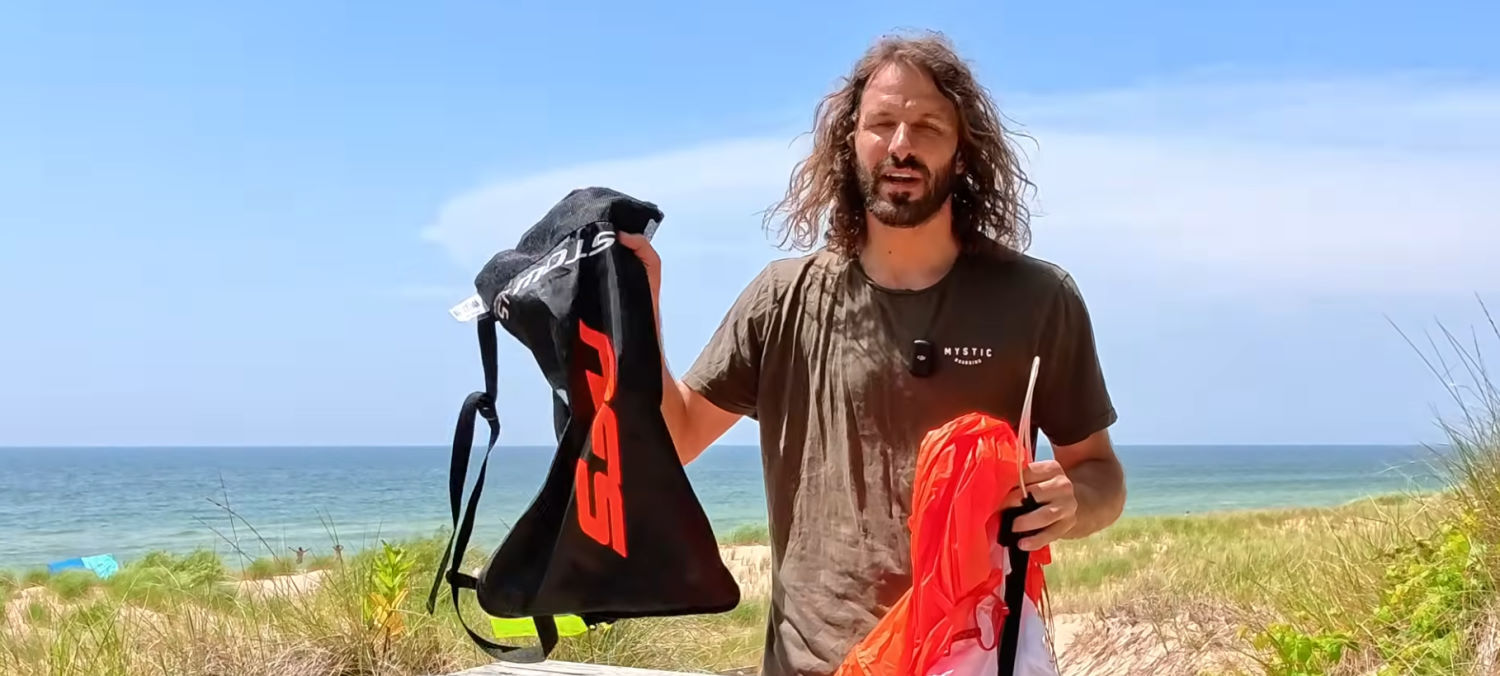
The Bag and Bar Setup
Taking it right out of the bag, the AFS Stow comes with a basic stow bag featuring some venting on the bottom. It includes minimalist backpack straps, which are still totally usable if you want to take it on a long hike or carry it along. Tucker added a harness loop to his setup, which is not included with the wing, but it is something you might want if you plan on riding for a lot of hours or doing a lot of upwind riding.
Getting into the bar, it is a simple, medium-to-short length carbon fiber bar, depending on what you are comparing it to. A cool touch is the neat carbon fiber reveal on the bar itself. One side features a rounded bar end, while the other side has a cap with a nub to balance the A-line coming off the front of the wing.
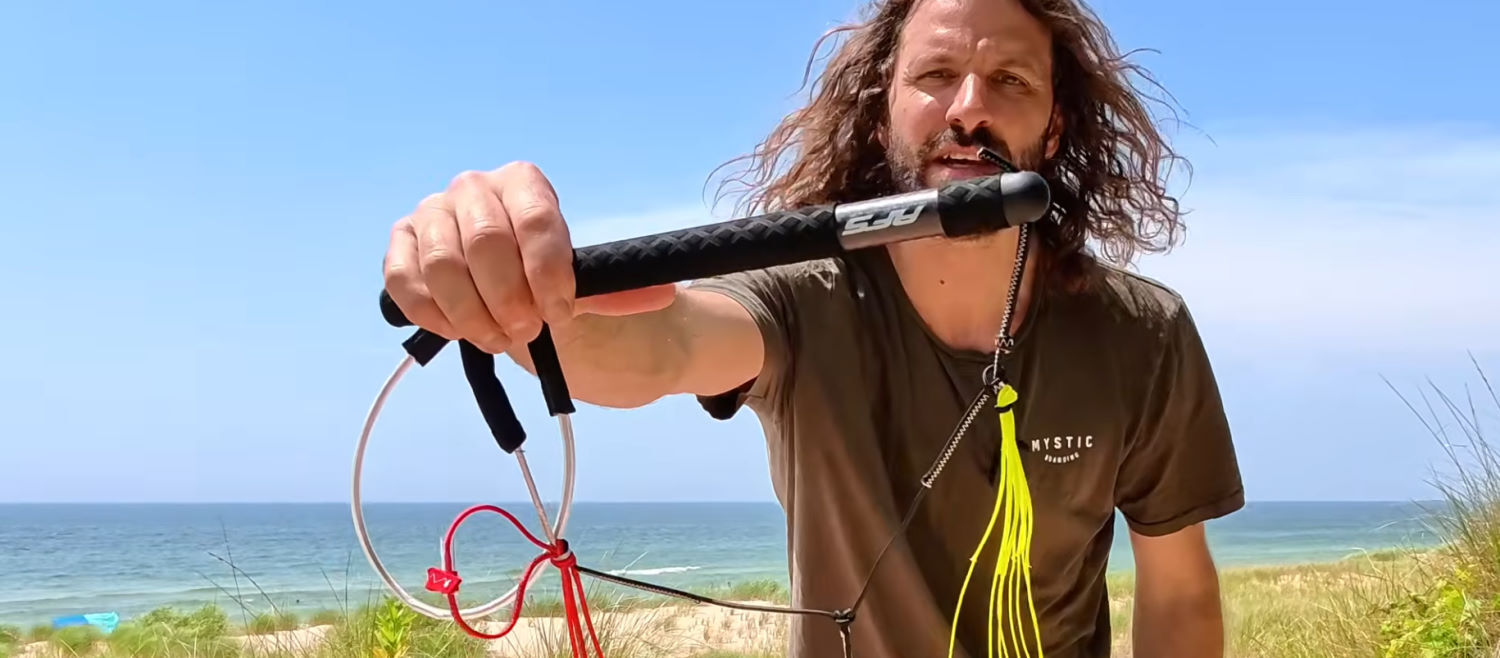
The Brake Handle Feature
AFS included a unique feature here: a brake handle off the A-lines. When you are cruising, you can pull on this handle if you need a little more depower in the middle of a gust, or if you are finding the wing too hard to control and overpowered. You can yank it with your other hand to choke the A-lines a bit. While it is not something you would want to fly on all the time, you can definitely use it two-handed, or you can actually loop it over the knob to permanently choke it off if you are riding around and simply too overpowered. It is a neat, creative feature from AFS. Tucker notes that the bridle can sometimes get wrapped around it, so it is removable if you prefer to take it off.

Lines and Bridle System
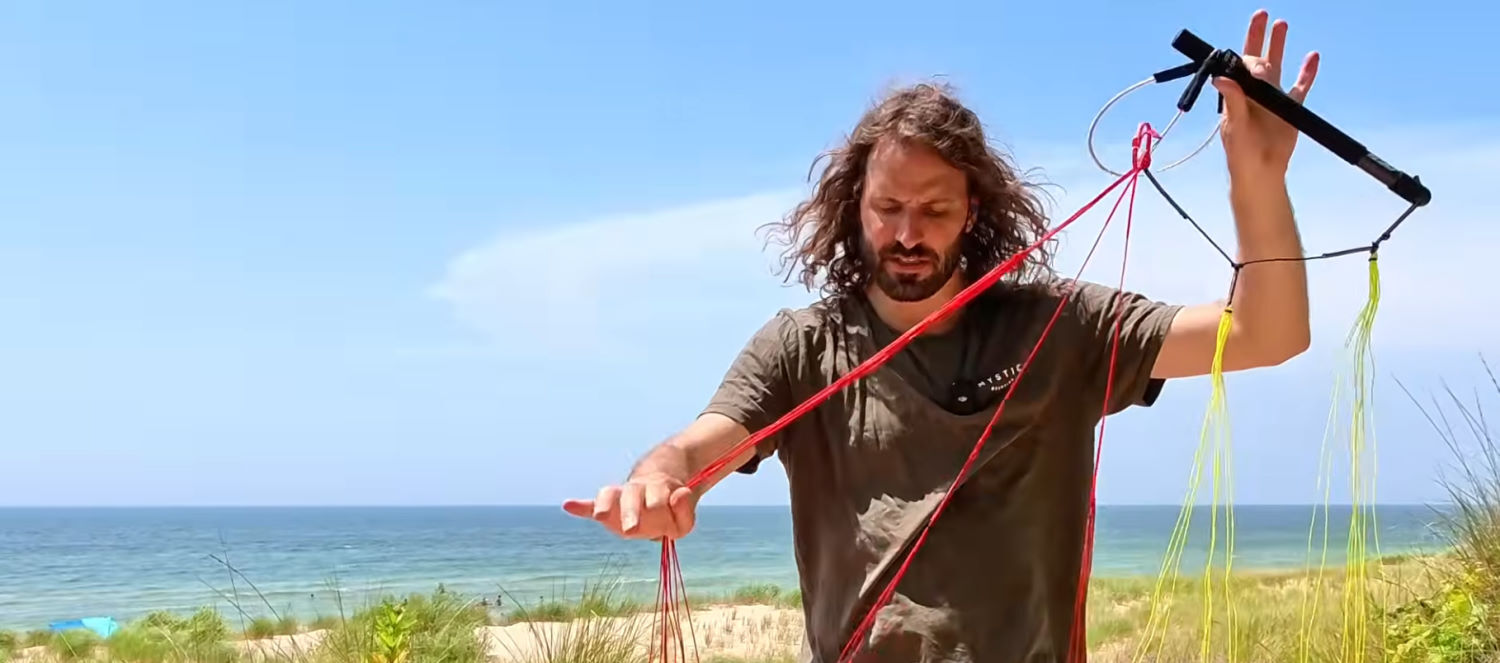
The lines themselves are a standard medium stiffness and are very smooth and clean, especially on the front leading edge lines. AFS has done a lot of hard work to make those nice and smooth, avoiding any sharp edges. When you get into the leading edge, the lines become a little more fine where they split off into the bridles, but they pack down very smoothly.
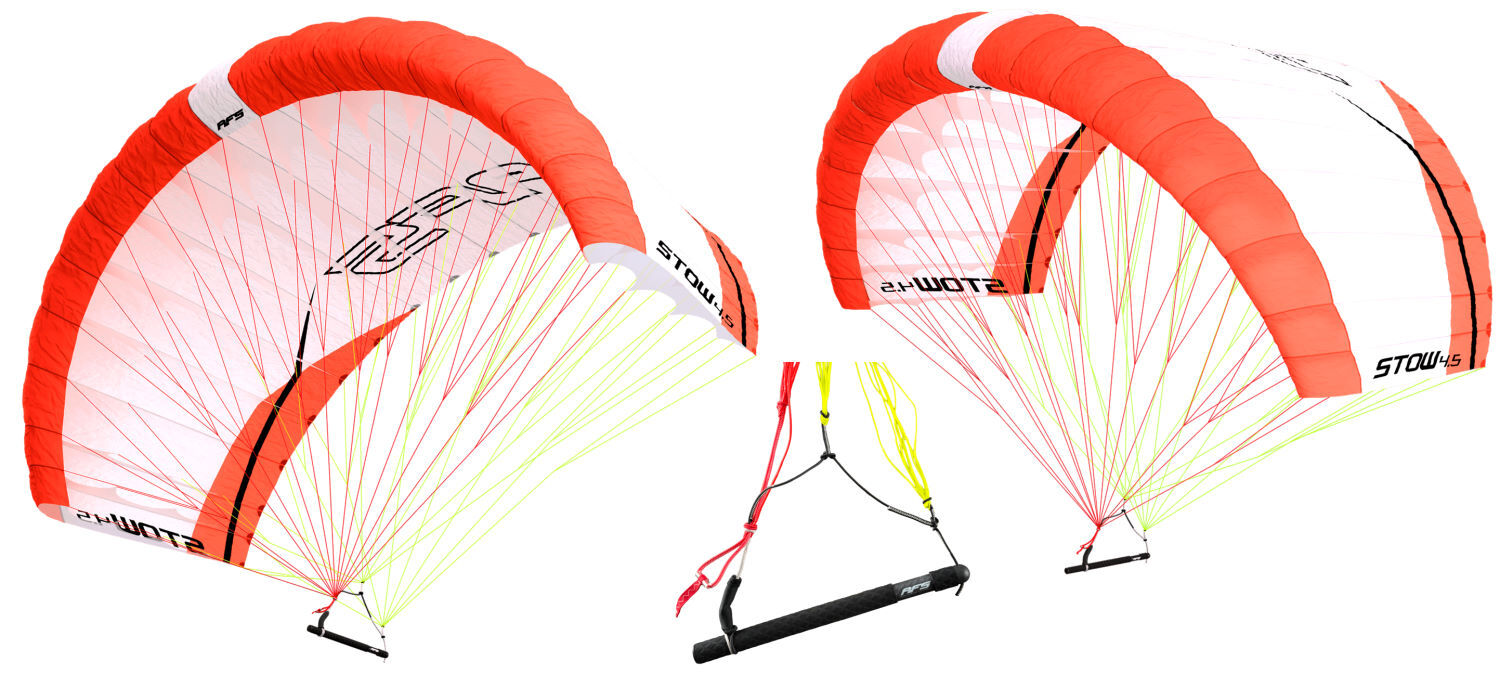
The wing features a yoke and a three-stage system. The front lines are split into steering lines and center lines for easy stowability, exactly as the name "Stow" would indicate. The rear lines and center lines are all the same color. For Tucker, this isn't a huge problem because there aren't so many of them that it becomes a confusing, tangled mess. The leading edge lines are a distinct different color, utilizing red and deep red to separate the center lines from the A-line steering lines.
Canopy Design and Materials
Looking at the canopy, it features nice, stiff leading edge stiffeners and a deep profile, which creates a good amount of power on the low end. The ribs sort of taper off the further back you get. The canopy itself is rather simple with no fancy tricks, but you do get nicely reinforced zones to help with durability. After hours and years of riding, going in the water, and getting taken down by waves, it is nice to have something that holds up.
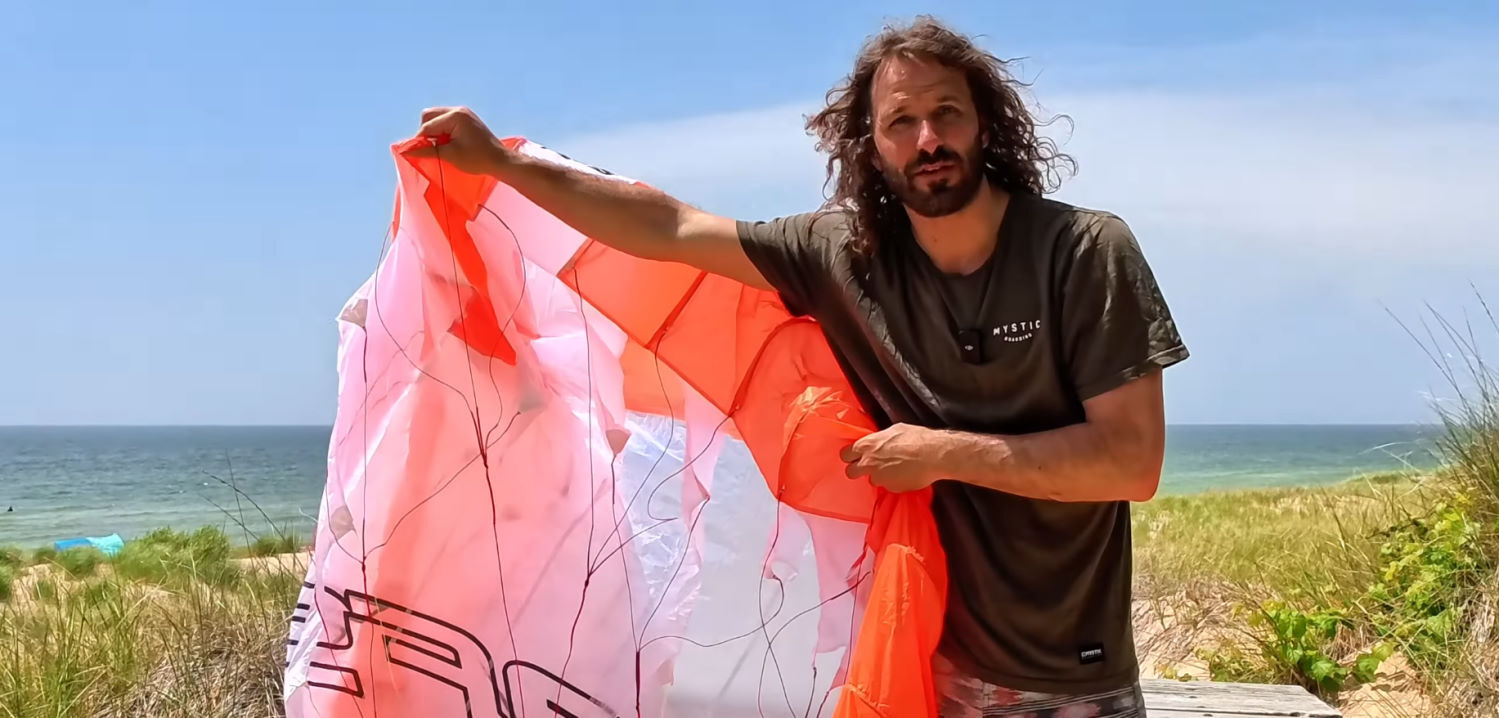
The fabric is extremely lightweight. It is not the super premier paragliding-type material you see from the top-level brands that is the most expensive, but it is also not the heavy, crumply kite canopy material either. It sits somewhere right in between, offering a nice balance. It is really tough and stiff, doesn't seem to stretch much at all, and is great for drying out quickly on the water.
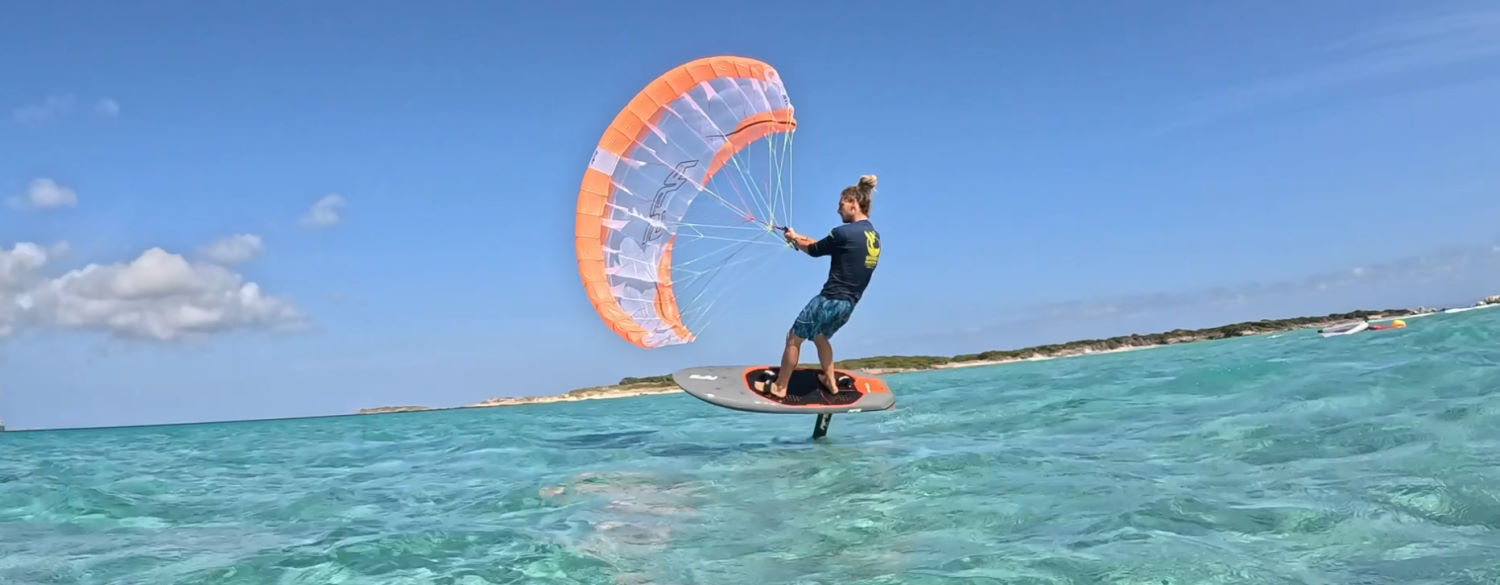
The wingtips have a truncated design with a vent-type wingtip. The wing flies fairly flat and holds quite stable while you are flying.

Flight Performance and Riding Experience
The AFS Stow has a good low-speed lift and a broad sweet spot for your trim angle. For a wing with this much grunt, it surprisingly goes upwind quite well and has a decent top end. At first look and first feel, you might think a wing with this much pull wouldn't have a lot of top end or go upwind that well, but it is actually quite good. While it isn't going to compete with the absolute fastest, highest VMG wings out there, given its price and how user-friendly it is, it has a really respectable mid-to-top end range and upwind VMG.
In terms of the riding experience, it is a very stable, easy-to-fly wing. It is not twitchy or finicky with regard to sail angle. AFS has done a great job refining that sweet spot. It is certainly a wing somebody could get into as a brand new rider and progress all the way up into advanced levels of riding without needing to upgrade, unless they wanted to for a very specific reason.
Stowability and Deployment
As the name indicates, this wing stows well. The lines are quite short, though maybe a little long for shorter individuals. Tucker is 6'3", and it takes almost his entire arm span to collapse it entirely into a perfect concertina. However, it is also quite easy to double-choke it because the lines are so simple and not overly bridled. If you need to give it a quick yank to fully concertina, you can do that easily as a shorter rider.
The biggest highlight for Tucker is the split A-line section, which folds perfectly into your hand. You don't get a weird pocket that spirals around or makes you choke up on different parts of the canopy. It throws out really nicely from the trailing edge. It does leave a little bit of an air pocket from the trailing edge, but most people will want to collapse from that center line A-split, which gives you a perfect easy stow and throw experience. Even if you wad it up, you can probably just drop it, grab that A-line to sort them out, make sure they aren't tangled, and throw them back out to get ready to rip.
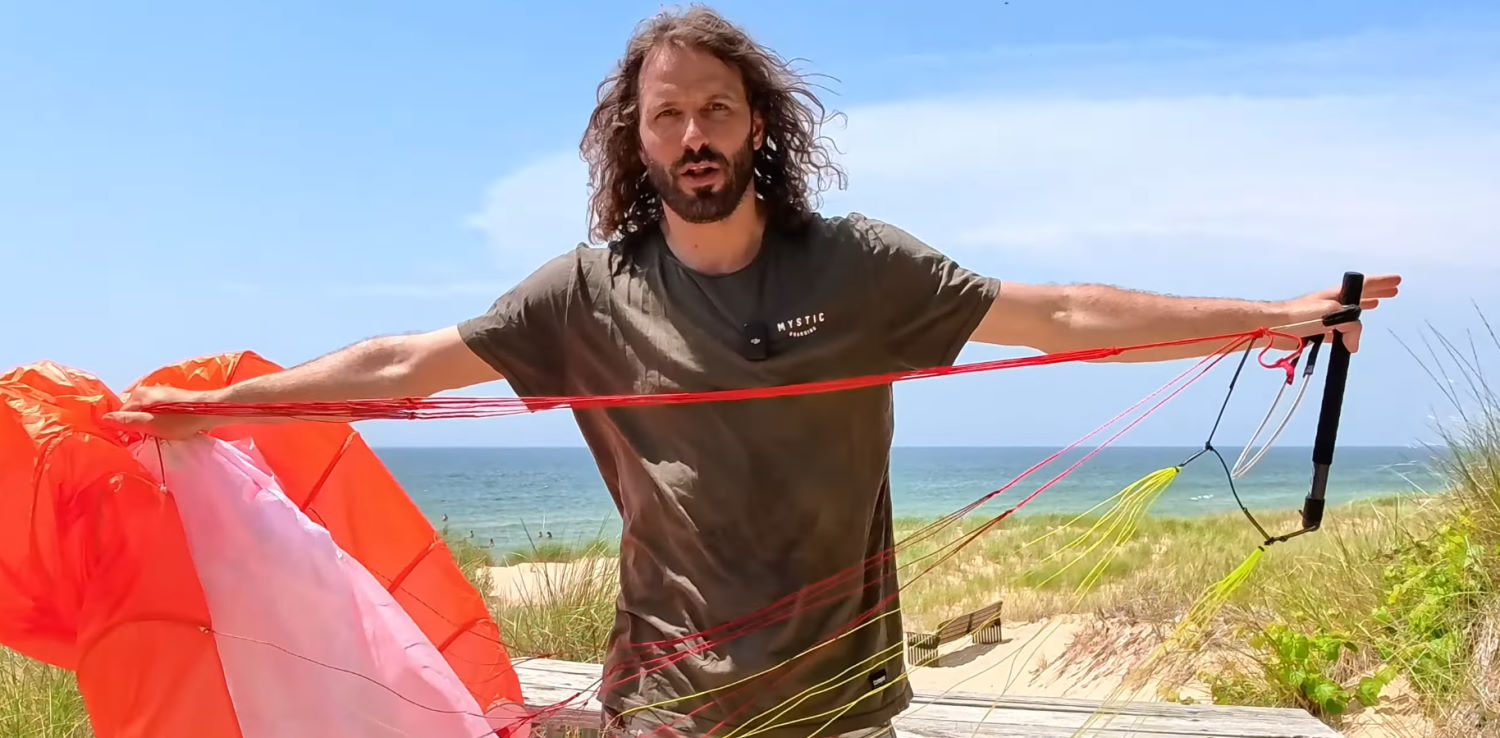
Color-wise, it is a highly visible option, which is different from what a lot of other brands are doing. Tucker personally doesn't love that the leading edge and trailing edge are the same color, but the middle part of the canopy is a stark white, making it not too big of an issue. The center point of the canopy is also marked in white, allowing you to find the center quite easily.
Tucker's Nitpicks
It is hard to find negatives about this wing without mentioning the price, because you get a lot of kit for the value. If there is a negative, the first would be the way the bridles can sometimes tangle around the brake knob. It is not a critical issue, but it is something you get used to sorting out the more you ride.
Obviously, the bag itself could use some improvement to function better as a dedicated downwind bag. However, since it is thrown in for free, it is great for saving money if you aren't a person who uses a downwind bag all the time anyway.
Final Thoughts
The AFS Stow Parawing is one of the greater values in the market today. Coming in 20 to 30% cheaper than a lot of other wings out there, the moral of the story here is value. You are getting a highly capable, user-friendly wing with a respectable range that will easily take you from your first flights well into advanced riding.
MACkite Subscription Links:
YouTube | Instagram | Spotify Oddcasts
Contact MACkite Below:
800.622.4655 | Kiteboarder@MACkite.com | LIVE Chat Messenger
Recent Posts
-

Ride Engine Air Box Mini Review
The Brazilian Brothers are back to bring you a review of the brand new Ride Engine Air Box Mini. T …30th Sep 2026 -

Foil Drive MAX+ Review
Ryan and Hunter have been testing the all-new Foil Drive MAX+. This new unit is officially replaci …24th Sep 2026 -
Foil Drive MAX+ Overview: 650Wh Battery and V3 Remote
Ryan has an exciting delivery from Foil Drive: the all-new Foil Drive Assist MAX+. He is unboxing …23rd Sep 2026