
Wake Foil Knowledge Center

MACkite's Guide to Wakefoiling
Wakefoiling: what was once a fringe experiment behind a boat has quickly become one of the most popular ways to ride water. At MACkite, we’ve watched the sport progress and see riders become fully obsessed (even some of our staff).We built this starter guide as a hub for our beginners and frequent flyers who have questions. We cover what wakefoiling is, how it works, the gear you need, and what learning looks like with links to deeper guides whenever you’re ready to go further.
What Is Wakefoiling?
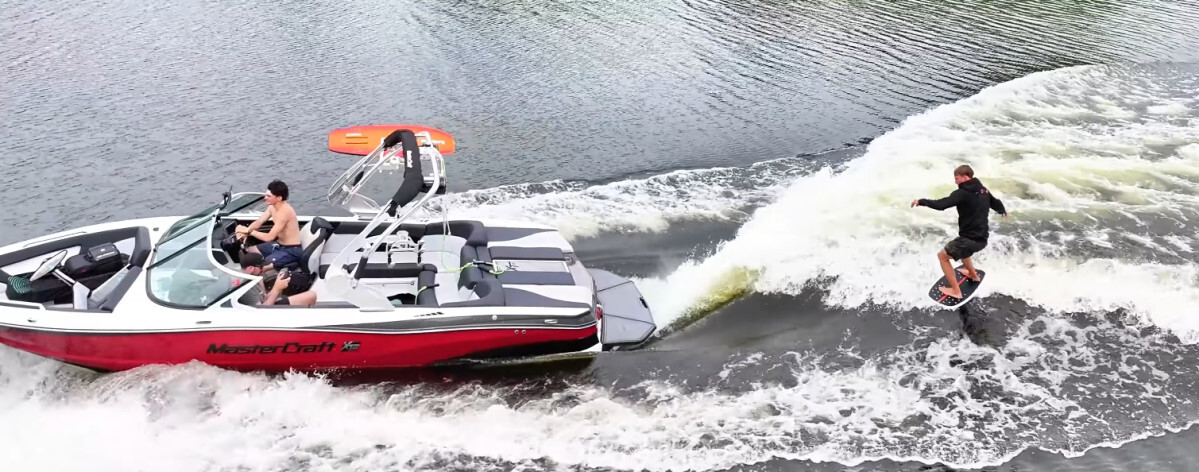
Wakefoiling is riding a hydrofoil board behind a boat, where the board lifts above the water on a submerged wing. Instead of riding the surface of the wake, you’re above it. Once you’re up, you can often drop the rope, ride the endless wave created by the boat, and keep the momentum by pumping.
New to wakefoiling?
Wakefoiling: who it's for and how to get started.
Wakefoil Riding Styles
There's no "one way" of wakefoiling. Once you learn the basics, you can explore a world of possibilities!
- Wakefoiling: This is your foundation, where you’re simply learning how to get on foil and ride.
- Surf style foiling: Essentially you’re throwing the rope and riding on pure wake power, where you pump between different wakes or flat water.
- Freestyle: As implied, wake foiling is more-or-less flips and spins.
- Flat Water: No boat, no wake, just pumping -- just you and the hydrofoil.
Want to learn more about riding styles?
Full riding style breakdown and how riders progress between them.
Is wakefoiling the same as wakesurfing?
Learn the differences between wakefoiling and wakesurfing.
How Does Wakefoiling Work?
Similar to a traditional setup, wake foils work by creating lift as water flows over the wing. As your speed increases, the wing lifts the board above the surface, reducing drag. Many hydrofoils have an efficient setup to get you floaty quickly, letting you wakefoil at slower boat speeds.
Not sure how all the foil pieces come together?
Our guide on wakefoiling terminology and foil fundamentals.
Wakefoil Gear Basics
Here's everything you'll need to get started:
Boat
This is a given but still crucial. Surprisingly, you don’t need one of those fancy wake boats to wakefoil. If your boat has at least a 30 horsepower motor, you’re good to go. What matters most is consistent speed, not wake size.
Haven't driven a boat for wakefoiling?
Here's how to drive your boat for a wake foiler.
Wake Foil Board
As a new rider, it’s better to have the right size board. Large hydrofoil boards will allow you to ride the board on top of the water without letting the foil raise you up.
If your board is too small, you can't keep the board in contact with the water. You also can't perform “touch and go’s,” a critical step in the learning process. As you get more experience, you can size down to a smaller board.
Not sure the gear you need to get started?
Our list of four must-have pieces of gear for wakefoiling.
Some boards come with footstraps, but do you need them?
When and if you need footstraps for wakefoiling.
Hydrofoil
A hydrofoil for wakefoiling has the same parts you might see on the market for other disciplines. Ultimately, we recommend getting a beginner-friendly option to start. Not only will it help you learn how to wakefoil easier, you’ll also be limiting hard falls.
We find the key is to focus on a foil with a front wing with a large surface area. The larger the surface area, the slower you can ride to get on foil, which prevents those high-impact crashes.
Not sure your wake hydrofoil is set up properly?
Ryan and Caden’s guide to mast materials and stance positioning.
Not sure what mast height is right for you?
Here's why mast height matters.
Safety Gear
You didn’t think you could get away with not having proper safety gear, did you?
Having a helmet and a life vest is crucial for riding behind a boat. In fact, wearing a Coast Guard-approved life vest is necessary by law when performing watersports. And, trust us, the effects of a hard fall can hurt your noggin’. Stay safe out there, my friends.
Optional Gear
You might not need this gear all the time, but we still recommend to keep your it safe:
Board Bags
Imagine lugging around all that gear just to find a cracked wing or unfortunate ding in your board.
If your gear is traveling, we recommend grabbing a board bag. Some bags have openings specifically for your foil, so it can stay mounted on your board. Others might need you to disassemble your setup. If you have any questions, feel free to give us a shout.
Upgrading Your Gear
Eventually you might want to size down or get a different setup based on your progression needs. Most think transitioning to an intermediate board is the first step to upgrading your gear. Surprisingly, we actually recommend adjusting your foil setup first.
By adjusting the surface area on your front wing, you can focus on getting on foil faster. That way, you can play around with more technical maneuvers.
Looking to upgrade your wakefoil setup?
How changing your foil setup affects wakefoil progression.
Learning How to Wakefoil
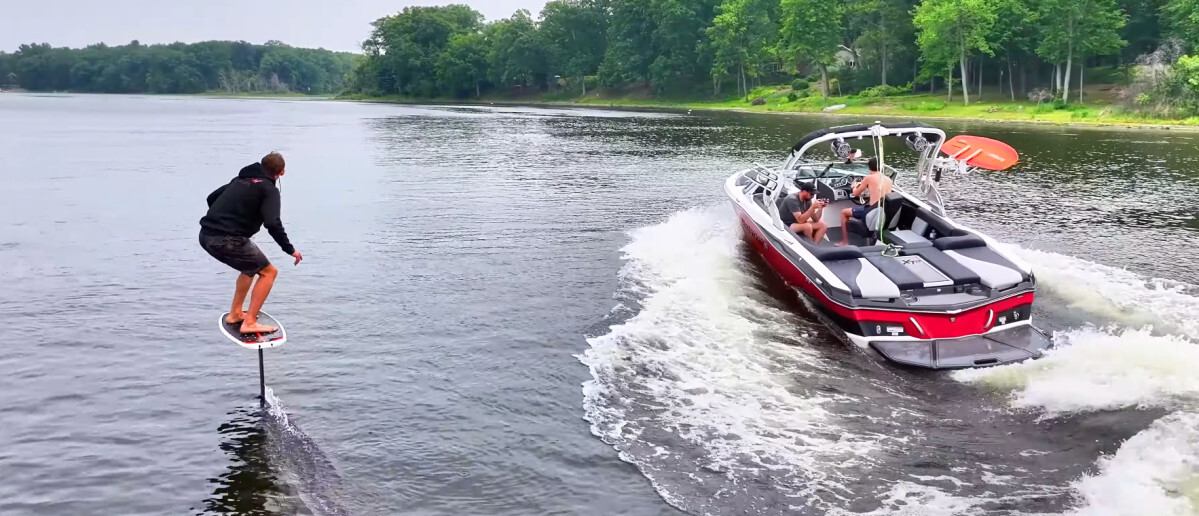
The first time you see someone wakefoiling, it looks sketchy. The good news is that learning to wakefoil is way more approachable than it looks! The key is starting slow, trusting the foil and boat, and knowing what’s going on underneath your feet.
When you’re floating in the water ready to start, keep things simple. Hold the handle with one hand and use your free hand to grab the rail of the board. As the driver idles forward, let the water push the board gently to your feet instead of trying to force it into position.
Once you plant your feet, your stance matters more than your strength. Your back foot needs to be directly over the mast. This gives you control over the foil and prevents most beginner wipeouts before they happen. Your front foot should be about shoulder-width forward, relaxed and centered.
When the boat starts pulling, bring your knees to your chest and keep your arms straight. Don’t fight the boat. Let it do the work.
This part feels similar to getting up wakesurfing, but here’s the difference: commit to front foot pressure. (Yes, really.)
On a wakefoil, front foot pressure keeps the board stable while the foil builds lift underneath you. Too little front foot pressure and the board rockets out of the water. Too much and it submarines.
Think balanced but biased forward. You can always fine-tune once you’re up.
Feeling Comfortable With Your Board
One of the biggest mistakes we see beginners make is trying to lift onto foil immediately. Instead, stay on the surface for a few seconds. Carve gently, feel how the foil tracks underneath you, and let your body calibrate — the more you ride, the more natural it will feel.
Even with the board still touching the water, the foil is already working! This short moment builds confidence and allows the transition to flying to feel controlled instead of chaotic.
When the board naturally lifts, you’re officially wakefoiling. That moment is quiet, smooth, and usually followed by a grin you can’t hide.
Falling With Style
You’re going to fall. Everyone does. If you’ve never fallen, you haven’t learned. If you fall, the goal is to make them as predictable and least impactful as possible.
Riding involves a lot of commitments, including the need to commit to the fall. The second you feel it going wrong, stop trying to save it. Fighting a fall is how riders end up near the foil. Let it happen, jump into the water clean, and reset.
New to falling?
Here's how to fall safely.
Struggling with too many wipeouts?
How to fix common beginner falls.
Progressing Beyond the Basics
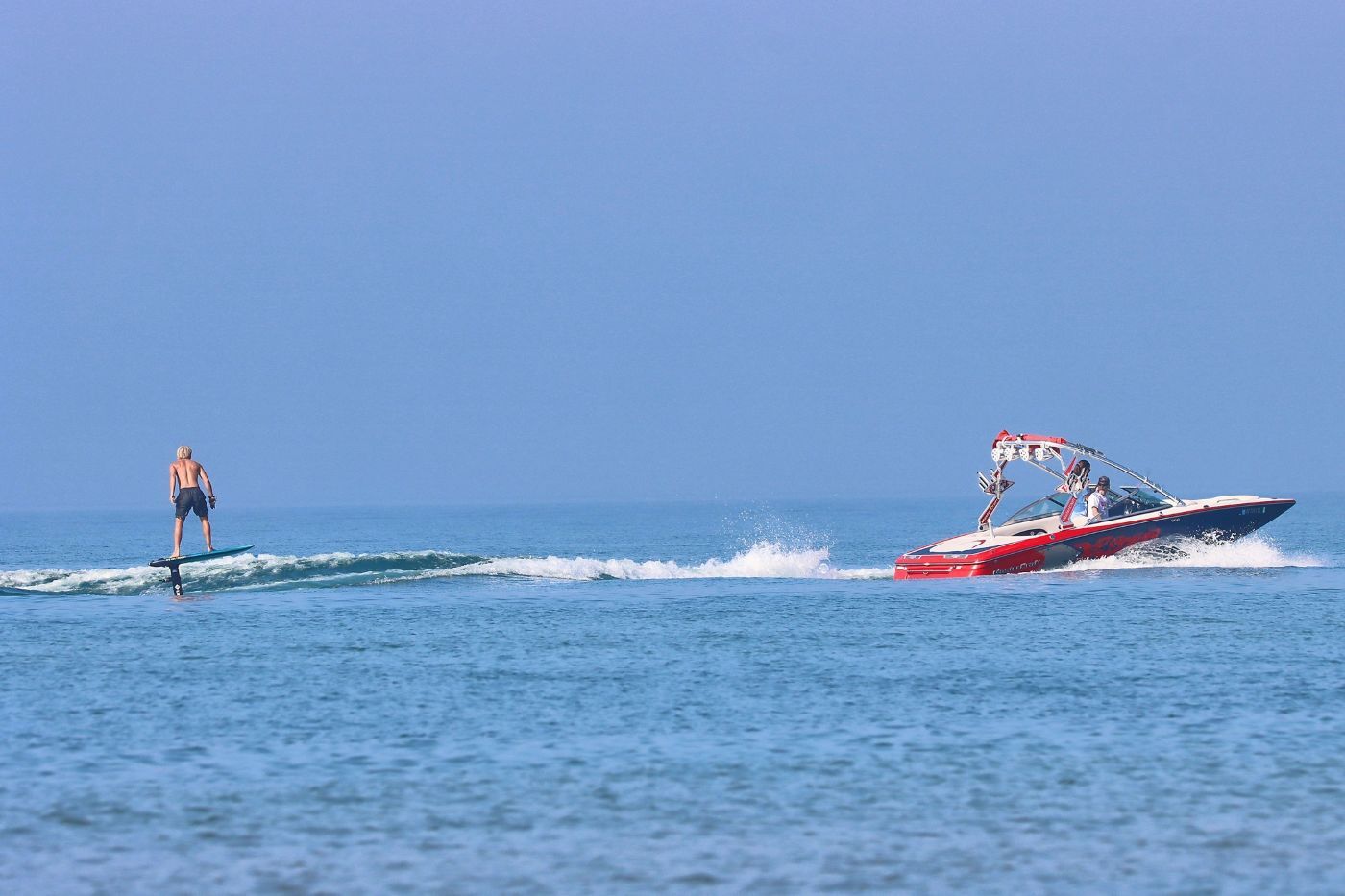
Once you’re up and running, now’s the time to let go of the rope and see what you can do! You’ll transition to pumping, building speed, and even 360s.
Check out some of our favorite articles for intermediate and advanced riding:
Wakefoil FAQs
What speed should we go for wake foiling?
Most beginners learn around 9-12 mph. Start slow and increase speed slightly as you lift onto foil. Advanced riders might cruise around 12-14 mph depending on their foil size and style.
Can I foil behind any boat?
Almost any boat with 30 horsepower or more will work for wake foiling, including pontoons, ski boats, and fishing boats. Just be sure the prop sits deep enough and that riders stay clear of it at all times.
What size foil should I start with?
A front wing around 1500-2000 cm2 is ideal for beginners up to about 200 lbs. Heavier riders may prefer larger wings for easier lift, while lighter riders can size down slightly. Once you get the hang of it, you can likely go down about 400-500 cm2.
How long should my rope be for wake foiling?
A rope between 55 and 65 feet usually places riders on the second roller (the safest and smoothest part of the wake for learning). Adjust length based on your boat and comfort level.
Is wake foiling dangerous? Will I get hurt?
Wake foiling is generally safe, as long as you follow the proper precautions. We recommend you always wear a helmet and a Coast Guard-approved life vest, maintain distance from obstacles and swimmers, and learn how to properly fall away from the board.
Should beginners use foot straps?
Nope! New riders should avoid straps, so they can safely separate themselves from the board during falls. If you're an intermeidate or advanced rider who is looking for more control or pursuing freestyle maneuvers, then consider one.
Can kids learn to wake foil?
Totally. Always keep kids under supervision with a properly fitted vest and helmet. Focus moreso on balance than trying to rip.
Can I wake foil without a wake?
With modern high-aspect foils, you can pump and glide even behind small boats or in flat water. You can even practice behind pontoons or with dock starts on calm days.
What's the average cost to get into wake foiling?
Like we mentioned before, wake foiling is often more expensive than wakeboarding. A complete setup will typically cost you $1500, including board and foil. Aluminum setups are more budget-friendly, while carbon adds performance at a higher price.