

Slingshot's 2026 Glide Craft V1 and Flow Craft V2 | Easy Progression and Surfy Performance
Slingshot has designed a couple new foilboards for 2026, and Tucker and Jeff are pretty excited about them. When you think of Slingshot's Craft line of boards, you might envision a chicken nugget shape, but they've gone back to the drawing board with the Flow Craft and Glide Craft. These have been updated with a sleeker surfy approach and a clean white top that gives off surfboard vibes. What's the difference between them, and how do they feel out on the water?
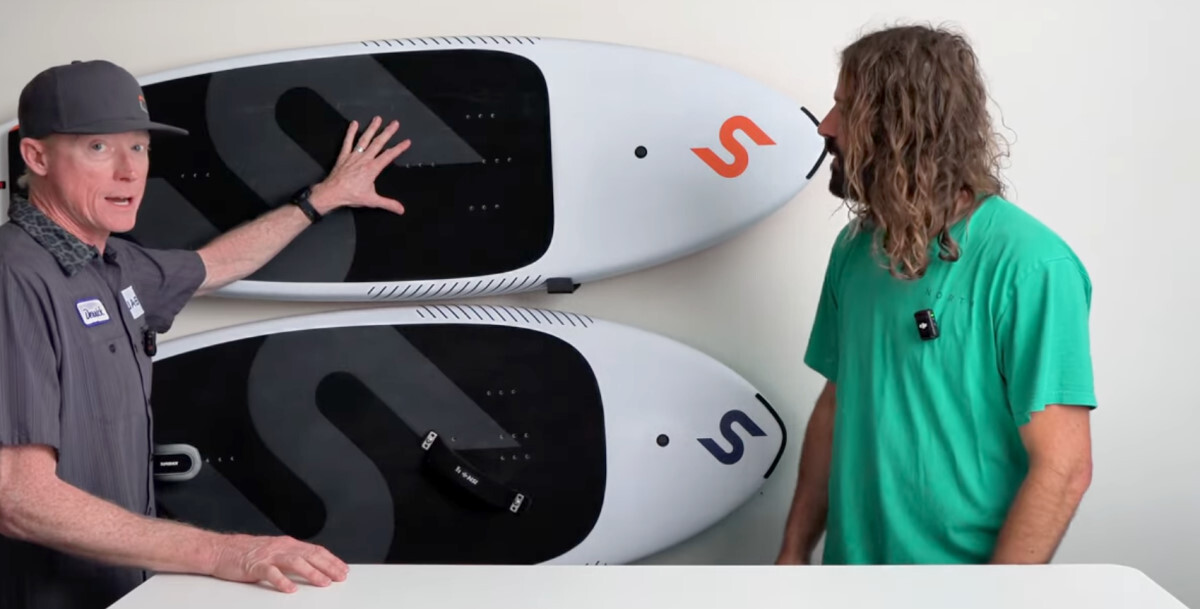
Flow Craft: Construction
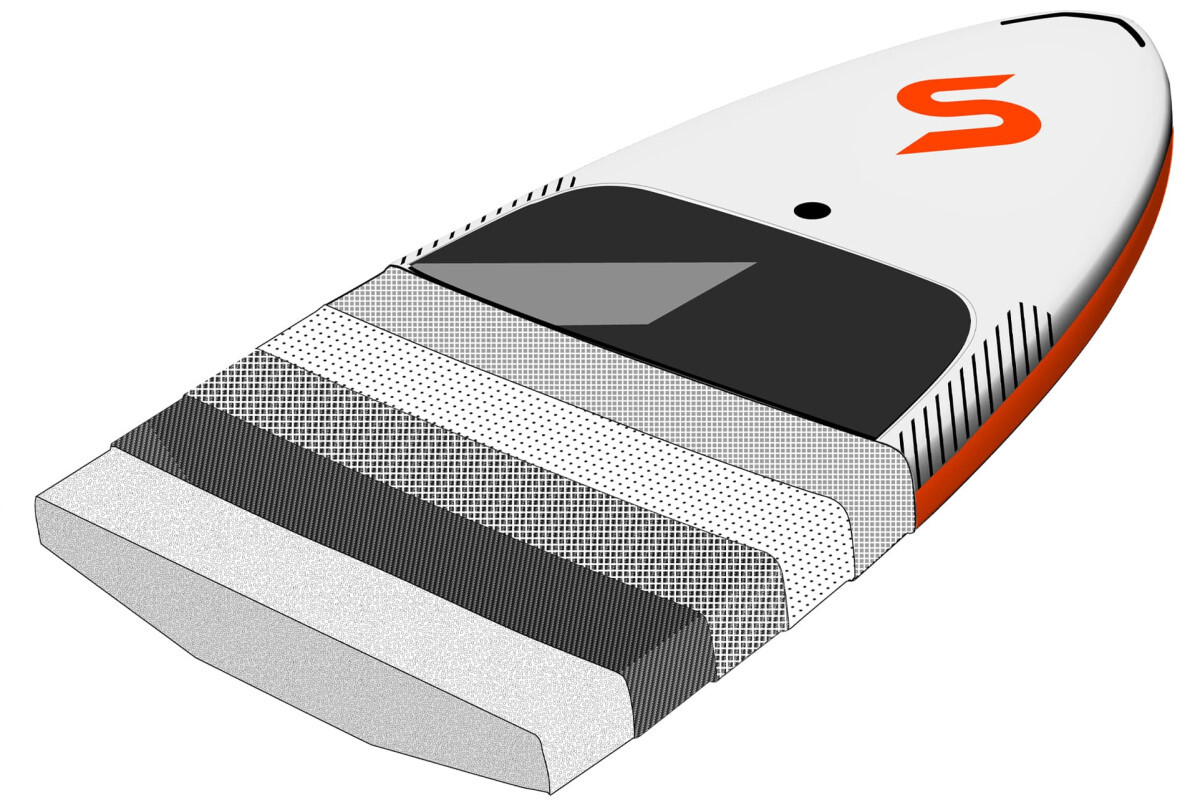
The first thing Jeff noticed about the Flow Craft was just how light it was. Slingshot has a reputation for building bombproof boards to withstand the nuking conditions at their Hood River testing grounds, but that usually means added weight. But the Flow Craft feels like a high-performance board when you pick it up. It's got a standard EPS core, but it uses a carbon lamination technology that provides strength while keeping the weight down. While this does add to the cost, you'll get a lightweight board that will last for years.
Flow Craft: Graphics
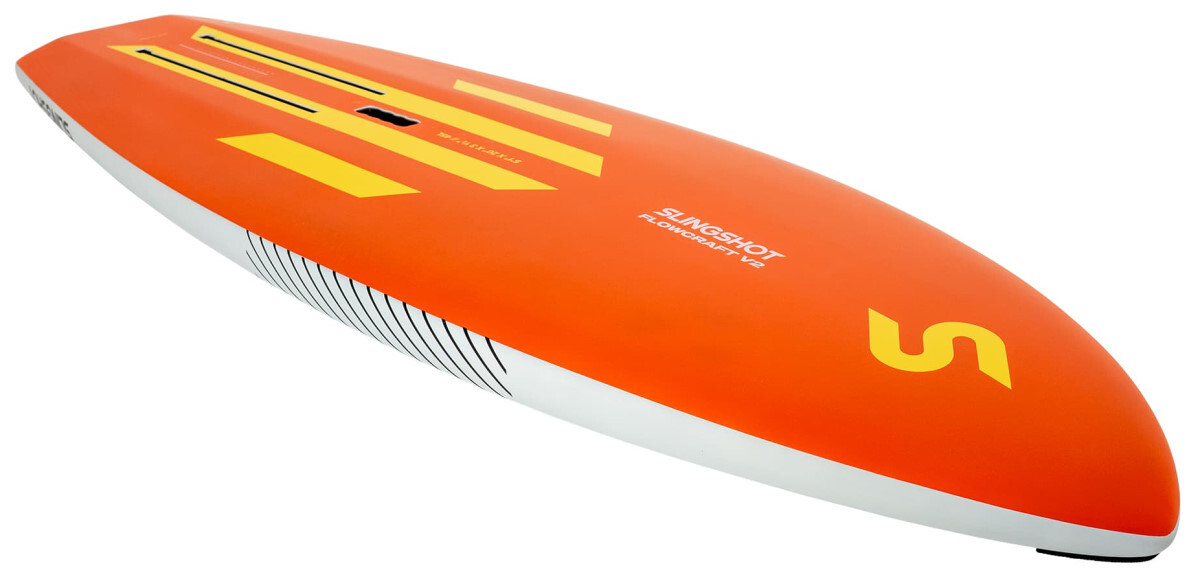
Whether you love or hate orange, you've got to admit that it's easy to spot. When you're up on foil and that bright bottom is visible, you'll be hard to miss. The white deck may seem a bit bland, but it's clean and reflects heat well, and it makes a nice blank canvas to add stickers or custom art. Jeff felt that it would have been nice to have a window to show off the carbon since this is a higher-end board, though.
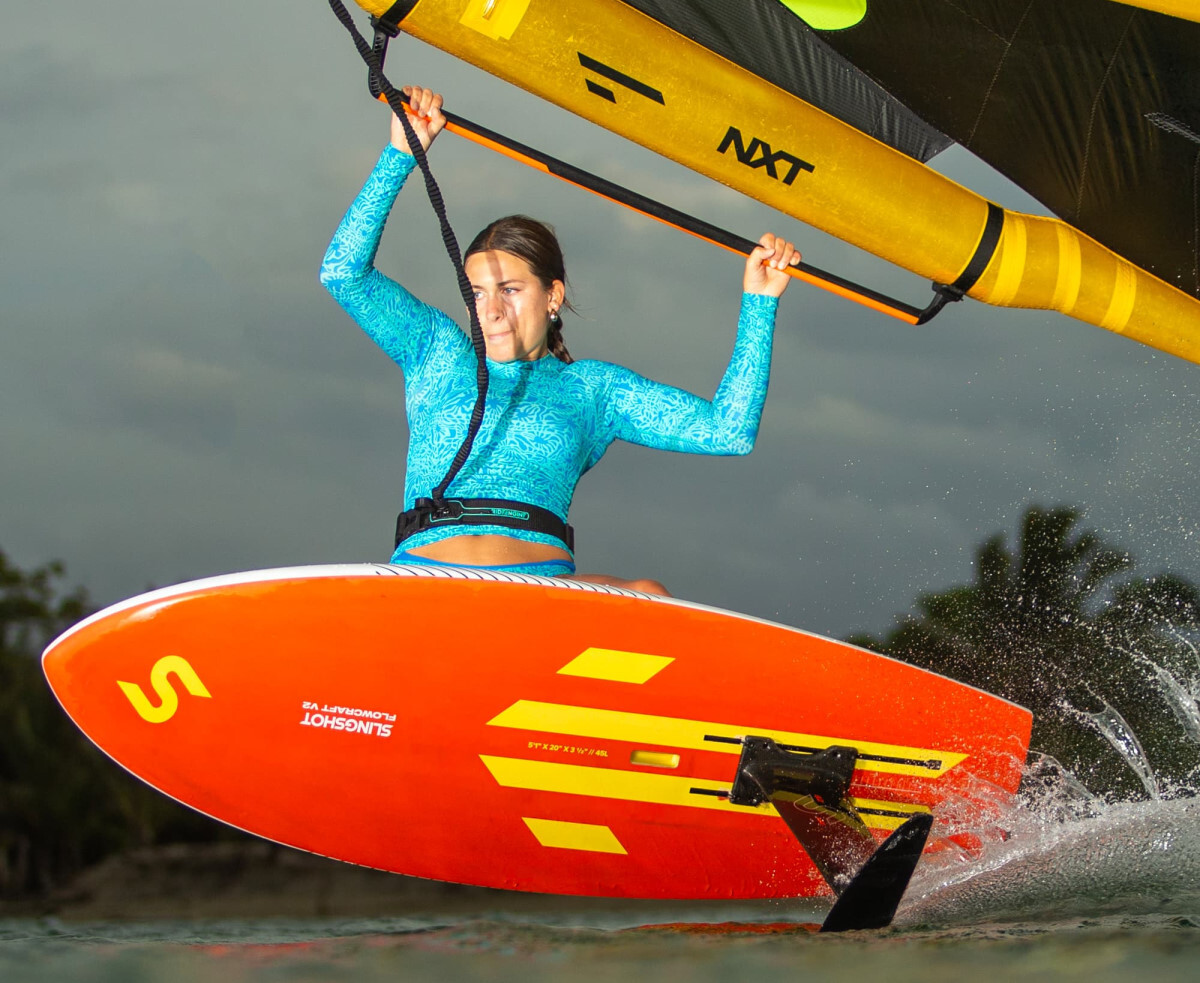
The stripes along the side of the board not only add visibility, but they also help you index where you like to kneel or have your front foot. There's a big S graphic on the pad to help you locate your sweet spot as well.
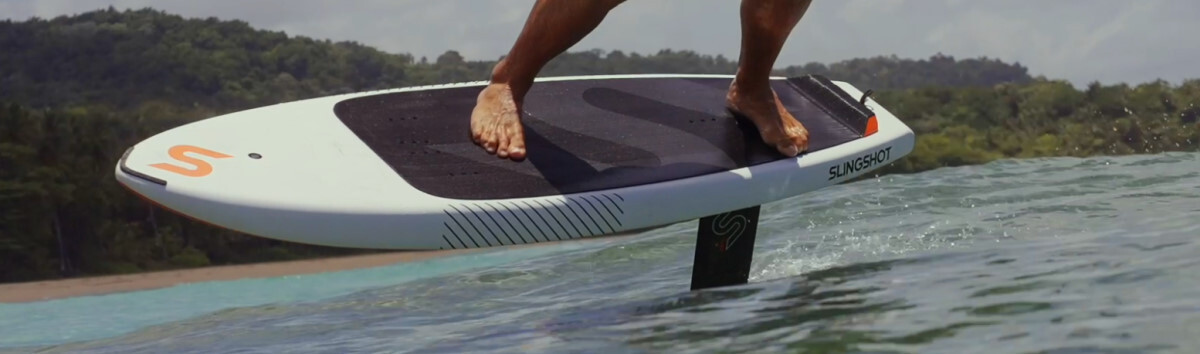
Flow Craft: Performance
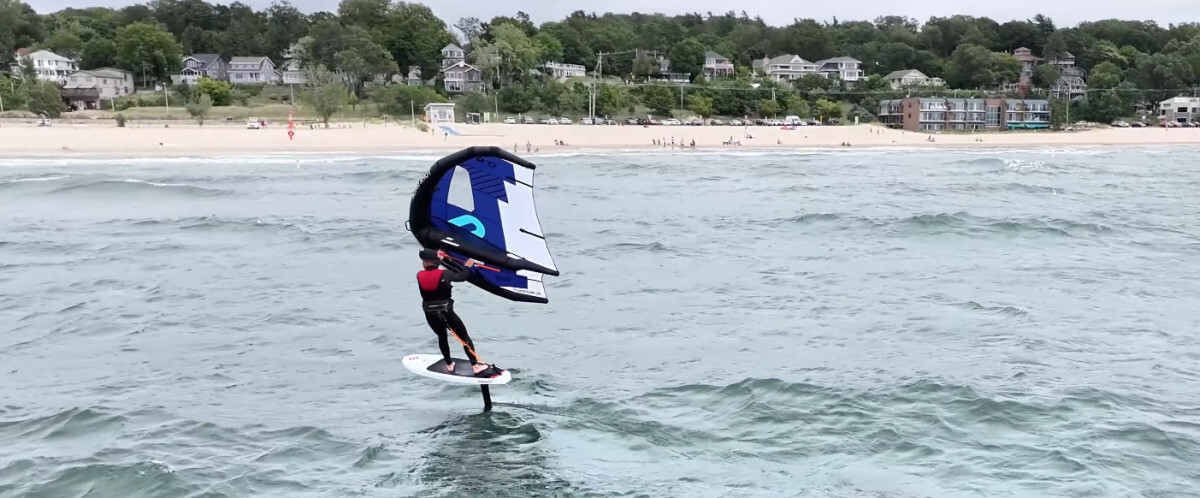
The board the guys tried was the 75L 5'9" x 21 1/8" x 4 3/5", and that's a good size for folks looking to do a one-board quiver. While Jeff had a bit of trouble getting to lift-off speed in the light wind, once he was up he felt completely connected to the board and it responded to his input without giving any annoying feedback.
Once the wind picked up and Jeff was riding properly powered, he found that the Flow Craft got up to speed and popped up very easily. If you're riding in moderate conditions, go ahead and size up your wing and this board will do just fine.
The length and width were perfect. When testing a new board, Jeff likes to do a heelside tack and see if he feels balanced and maneuverable, and the Flow Craft nailed it. He had his foil maybe a centimeter forward of center in the track, right under his back foot, and it was just right. Jeff was able to pump around and ride the small waves that were on offer that day, and he was impressed with how the board performed.
Flow Craft: Who's It For?
The Flow Craft was designed for powered shredding, riding waves, and small foils. It's not for beginners and, as Jeff discovered, it's not for light wind. An experienced rider can certainly use it in light wind, but the design has traded off some low end for better performance when the board is powered up. Don't be afraid to size up, because it rides like a smaller board and some extra volume can make this a one-board quiver if you do find yourself out on a lighter day.
Flow Craft: Design
Starting at the bottom front of the board, the nose has a concave hole that runs to the middle of the board, where it turns into a flat section about eight or nine inches wide and continues to the tail. The rails are relatively hard and start pretty far forward, with wide chines that become more defined toward the tail to help the board release from the water. All this combines to help the board build speed and shed water for a clean liftoff with a smaller foil.
The Flow Craft also handles touchdowns very well. Rather than gripping the water, it skips right off and lets you keep riding. This is important when you're riding waves. As you're carving and maneuvering, you're naturally going to touch down at times, and this board is great for that.
The 5'9" x 21 1/8" dimensions are just right. It's long enough to be efficient and has enough width to give you leverage for those hard turns, but it's not so big as to be cumbersome in the waves.
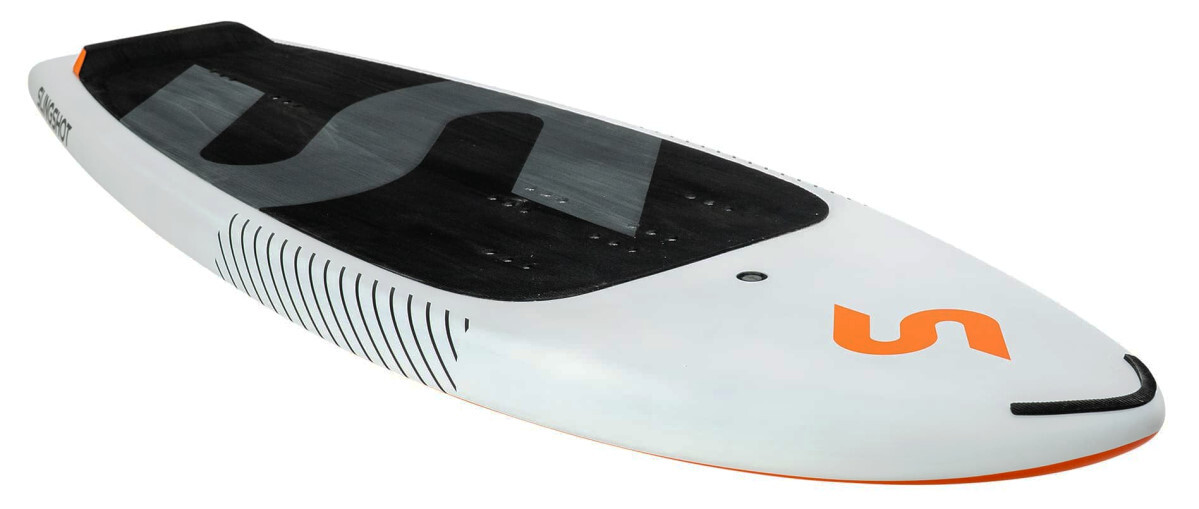
The deck has a slight concave to get you closer to the foil, but it's nice and flat in the middle. It's got a nice traction pad, though the guys do wish it went all the way to the edges to give them more usable space and a bit better ding protection.
Straps are an option with the inserts, which run along the center line and are spaced with smaller foils in mind.
Flow Craft: Review
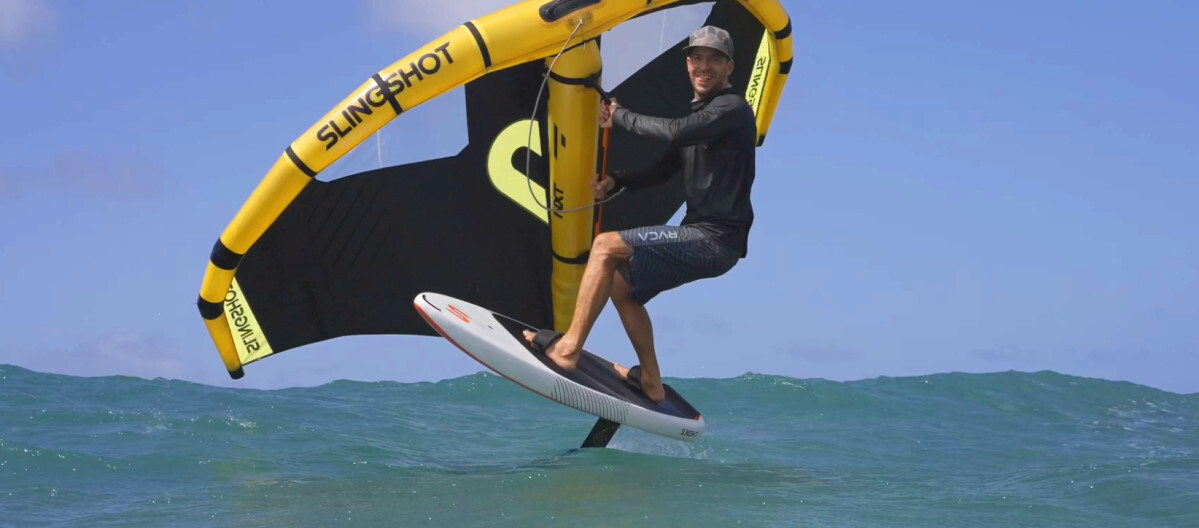
Overall, Tucker and Jeff loved the Flow Craft. The sizing was spot on, and they felt like they had a great connection to the foil. It felt smooth underfoot, and it was easy to find a sweet spot for their stance. Once the wind picked up, they felt like the board would not hold them back.
Jeff even let a couple locals swap boards with him during his session, and they were all smiles. They loved the board for the same reasons Jeff and Tucker did. They felt it was high-performance, had good speed, and was well-balanced. It had enough deck space to move their feet around. Aptly named, it was surfy and flowy.
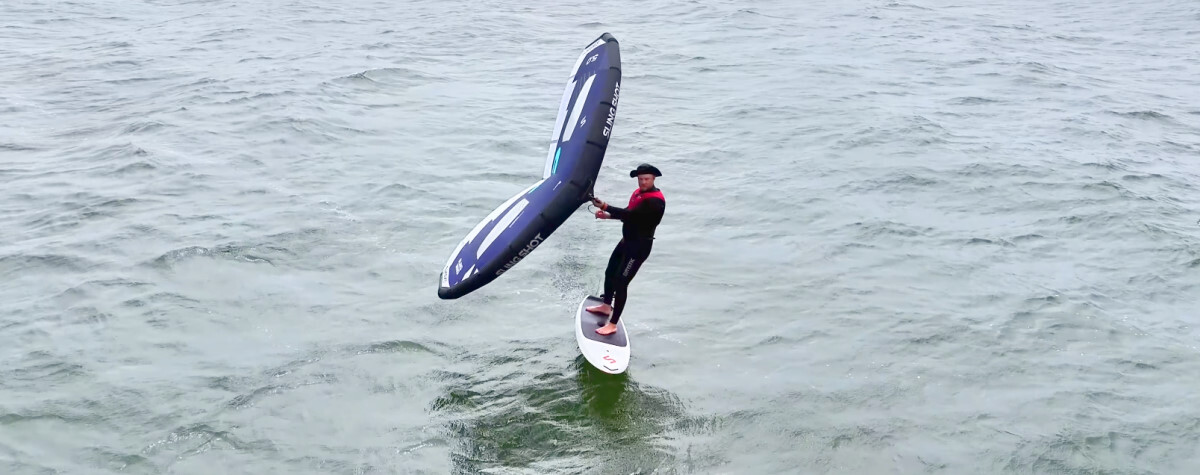
Glide Craft: Who's It For?
The Glide Craft is great for beginners and intermediate riders. It's similar to the Flow Craft, but it's wider and thicker, which makes it friendly for newer riders. That said, it's not going to hold you back, and you'll be able to grow with it. Even advanced riders will have a lot of fun with it as a freestyle machine, flipping and spinning the smaller sizes. It's also fully capable in the waves.
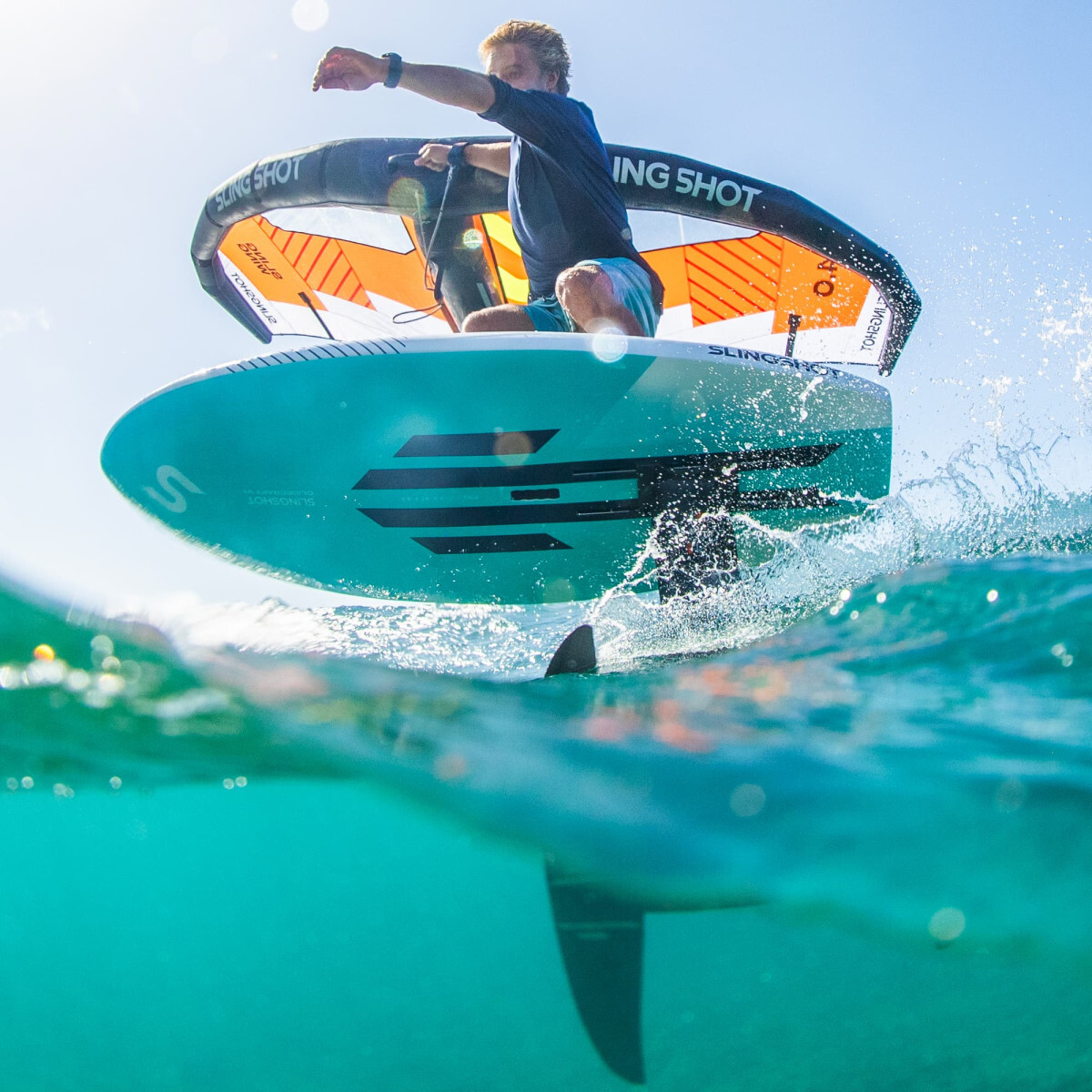
Glide Craft: Design
The bottom of the Glide Craft is very similar to the Flow Craft. Like the Flow Craft, the flat section follows the center like rather than the rail line, giving it the same smooth liftoff and clean touchdowns. This is especially nice while you're learning since you need something that's going to lift off easily and be forgiving when you touch back down.
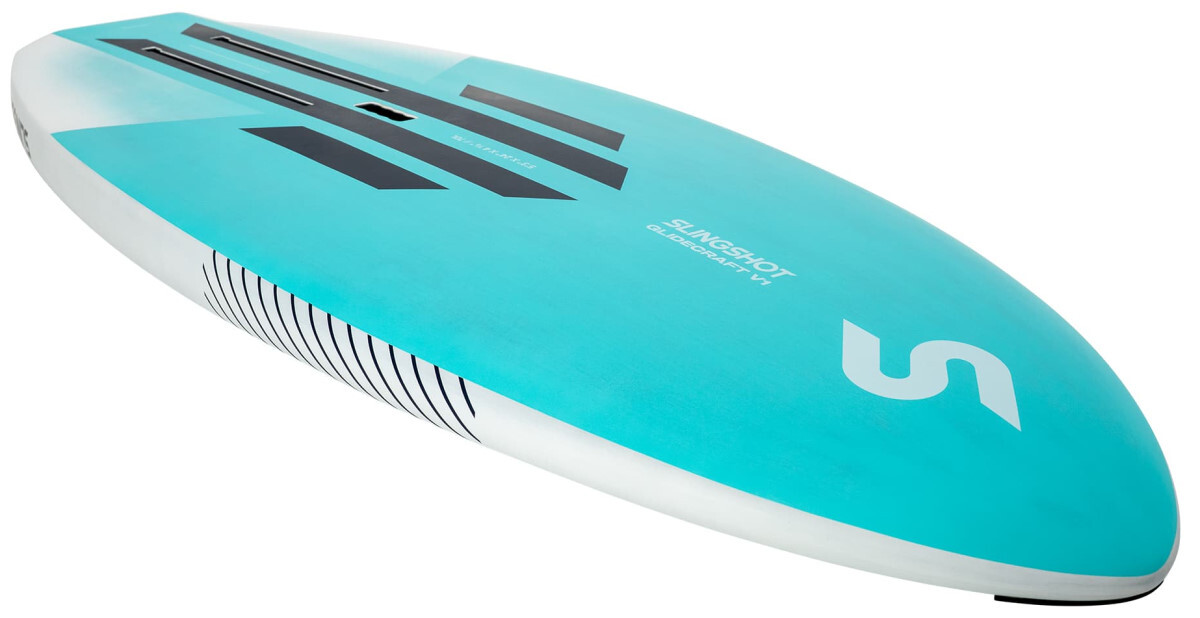
The deck is also similar to the Flow Craft. It's got the recessed cockpit with strap inserts, which are handy for freestyle, jumping, or wingers who prefer straps. Unlike the Flow Craft's inserts, there are two center rows in the front, with one offset and spaced for riding wider foils.
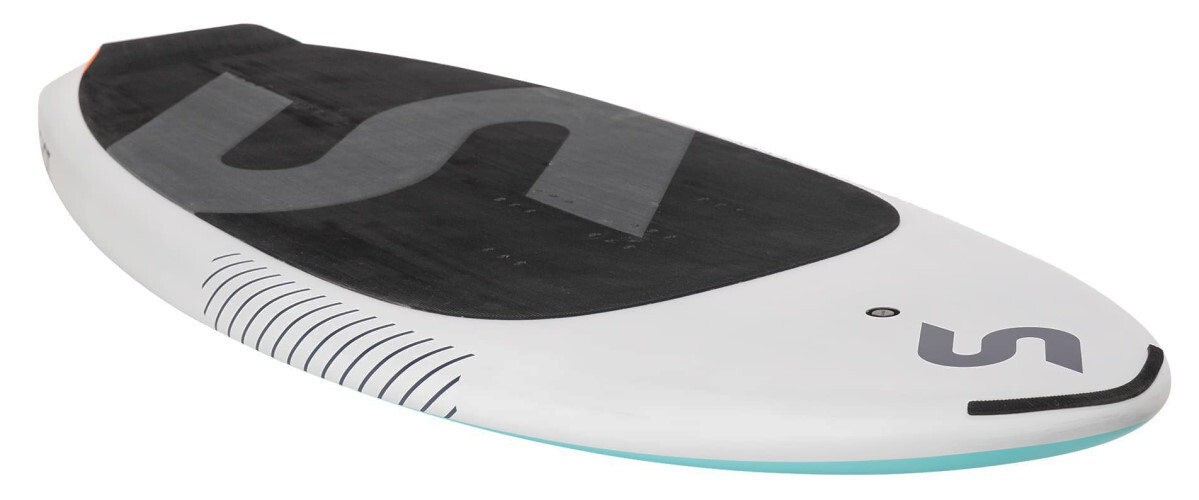
The nose has a bit of a dome, and the tip is a bit more blunt than the Flow Craft's. It's got a nosetip pad to protect your board from dings and scratches while you've got it upside-down to attach your foil.
The shape is inspired by mid-length boards, but has more width and volume for some extra stability and ease-of-use that's perfect for progression.
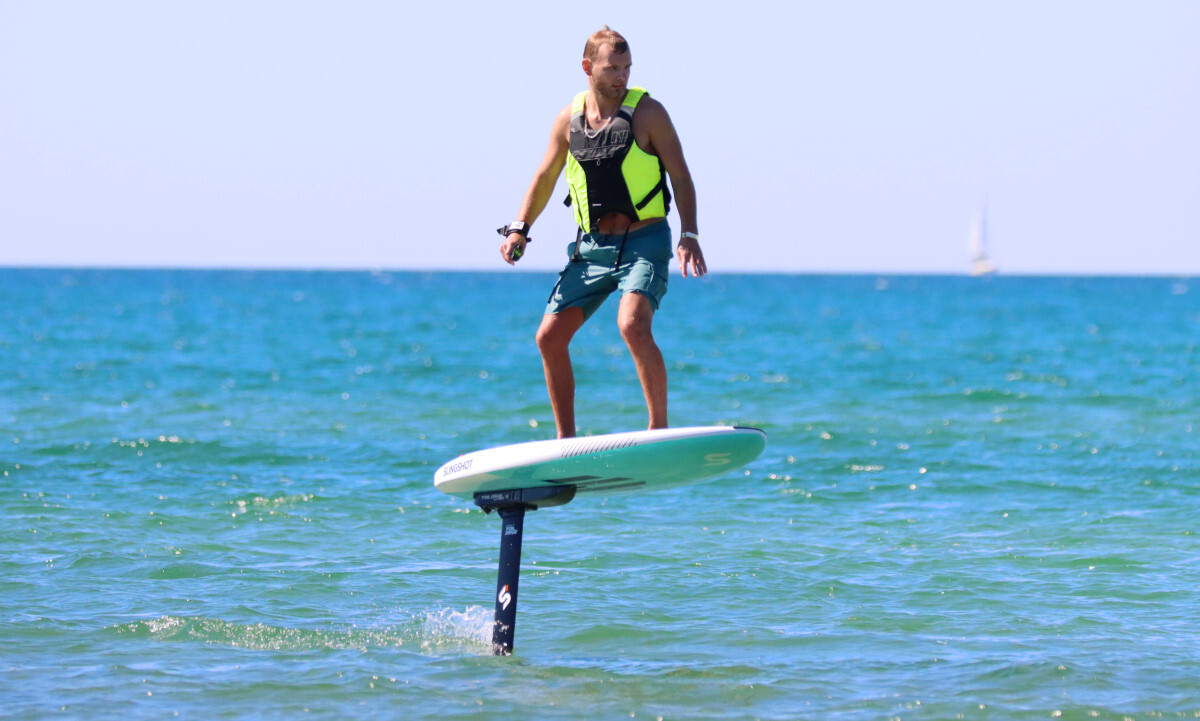
Glide Craft: Performance
The size the guys tested was 5'4" x 24" x 4 3/4" 80L. Although it's shorter, it's got extra width for stability and more volume to keep you on the surface. Tucker found that it felt nimble, especially for an 80L board, and it was a lot more fun to ride than other fat boards with bigger noses.
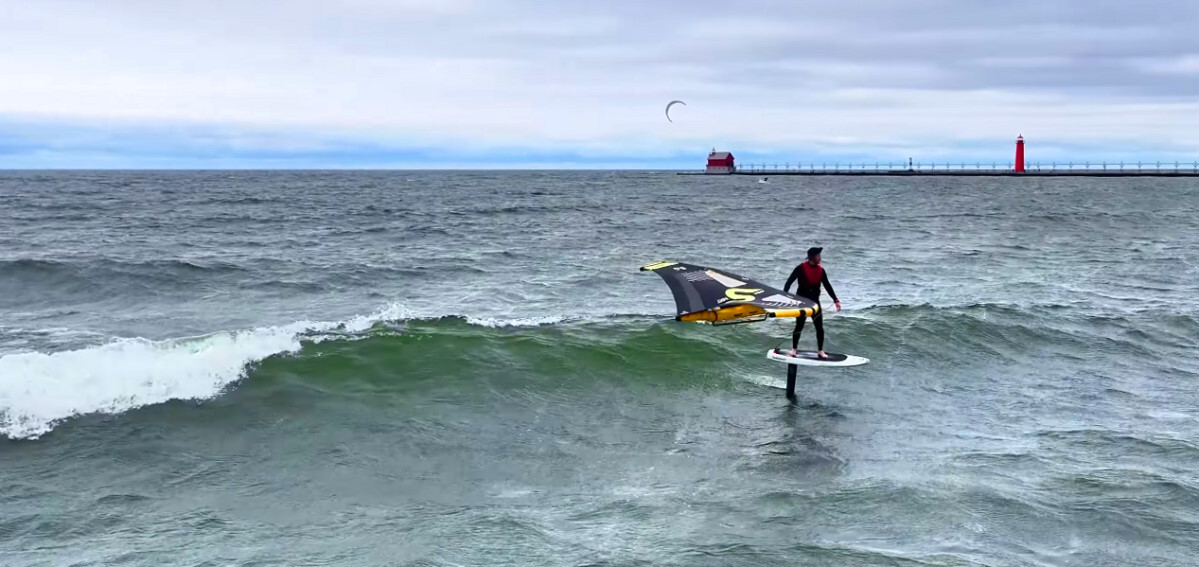
The length was enough to make it efficient for planing and takeoff without feeling corky. This means that you can upgrade your beginner foil to something more high-aspect without needing to buy a faster board. You'll still be able to get up just fine on the Glide Craft.
Like the Flow Craft, the Glide Craft isn't a light wind board, but beginners need to be properly powered to learn to foil anyway.

Both boards have leveled up their performance with the higher quality build, making this a nice step forward for Slingshot. Tucker and Jeff had a lot of fun on them and are happy to chat with you to see which version and size might be right for you.
MACkite Subscription Links:
YouTube | Instagram | Spotify Oddcasts
Contact MACkite Below:
800.622.4655 | Kiteboarder@MACkite.com | LIVE Chat Messenger

Recent Posts
-

Naish Hatch V2 Parawing Overview
Jeff takes a few minutes out from the KoGL event to chat with Adam Carr from Naish about the Hatch …22nd Oct 2026 -

Flysurfer Soul 4 vs Sonic 5: Which Kite is for You?
Jeff is on the beach at KoGL with Marie-Eve from Flysurfer to discuss the growing excitement surro …20th Oct 2026 -

2026 Duotone Rebel D/LAB Review: 30-Knot Test
The Brazilian Brothers are ready to provide honest feedback on the 2026 Rebel D/LAB by Duotone. Th …13th Oct 2026