
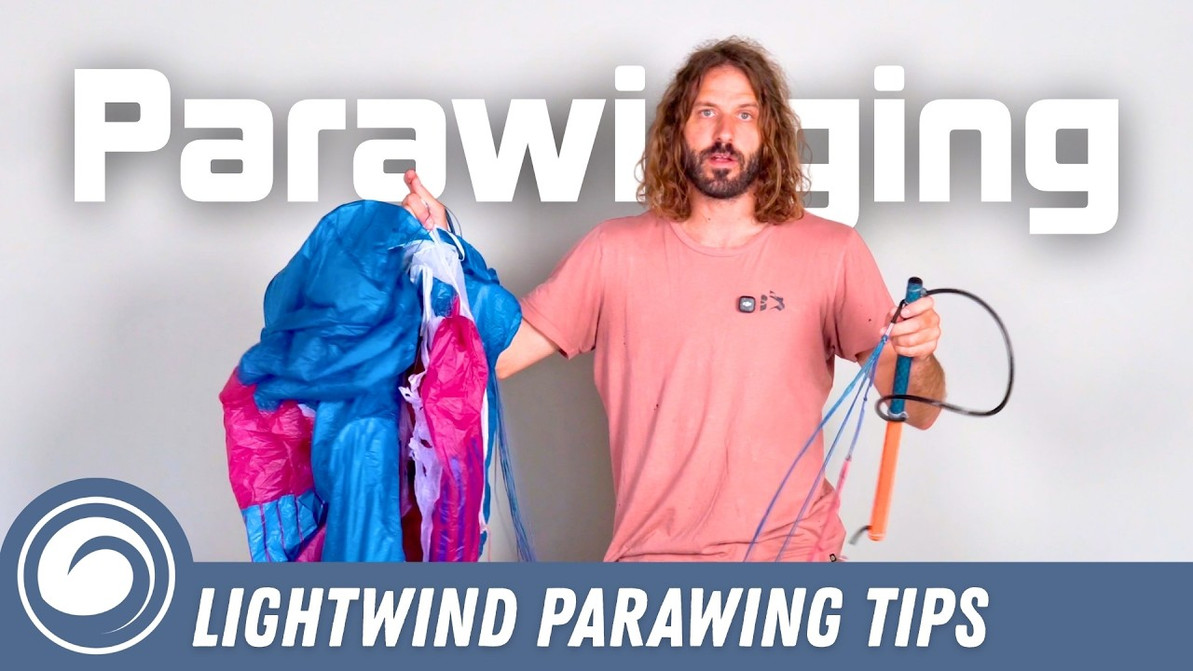
Light Wind Parawinging: Tucker's Top Tips and Favorite Gear
Tucker has been getting a lot of questions lately about light wind parawinging. He put together a rundown of his top tips, his favorite gear, and his thoughts on whether it's worth your time and money to get out there — or if you should just wait until it gets windier.
With everyone getting excited about parawinging, it's natural to want to ride even when there isn't much wind. In the past, Tucker wasn't convinced it was worth the effort, preferring to wait for 14 to 15 knots to wing or kite foil. Recently, though, his perspective has completely flipped.
Tip 1: Get a Huge Parawing
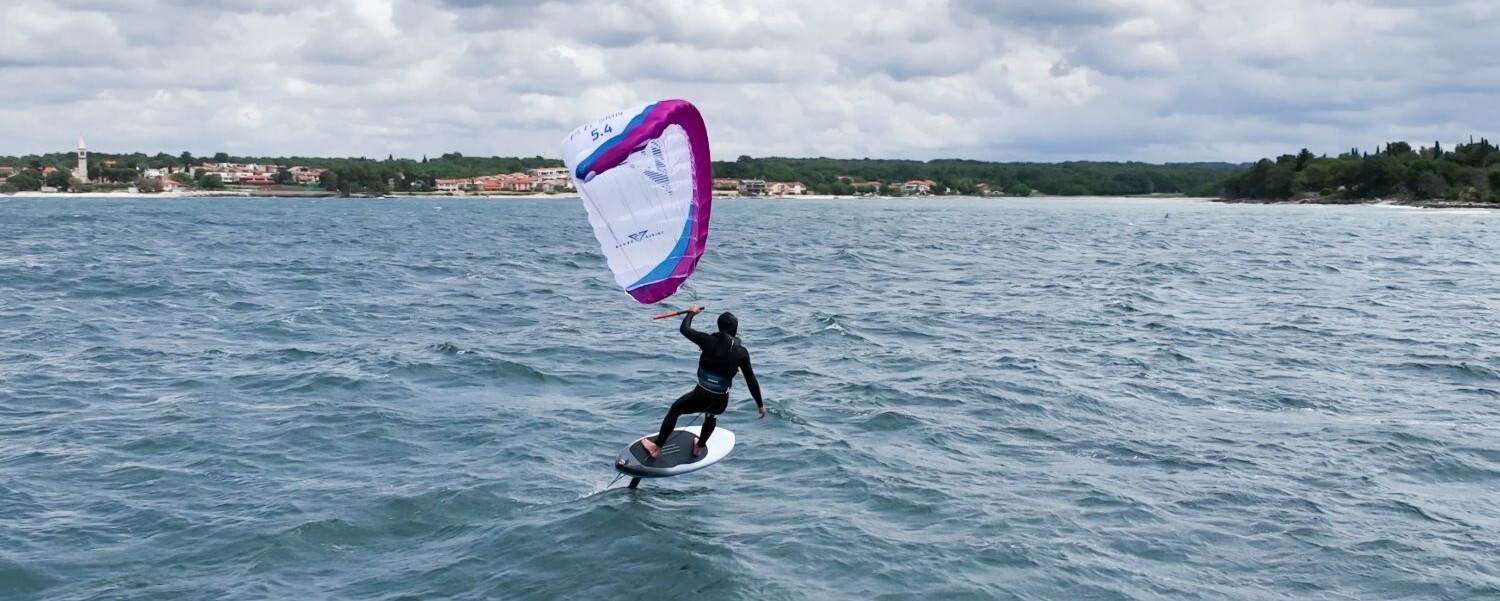
Tucker's first major tip is to get a massive parawing. A "big" wing in the parawing world is typically considered 5 meters, but Tucker recommends going at least 5 meters, and even up to 7.5 meters. His personal light wind king this summer has been the Triple Seven (777) PT Skin in the 7.3m size. This wing has saved countless sessions that he normally wouldn't have even considered going out in.
Even if he's starting a session on a 5m or 5.5m wing, Tucker will often pack the 7.3m PT Skin into his downwind backpack as a safety measure. If the wind drops and he gets stuck way out, having that massive 7.3m ensures he can get back home.
What Makes the Triple 7 PT Skin Special?
The standout feature is obviously its size. Not many brands are making wings larger than 5.5 meters. The 7.3m naturally offers significantly more power and grunt for those marginal conditions. Just being big isn't enough, though — it has to fly well in lighter breezes. Triple 7's technology allows them to build a huge wing that remains lightweight and nimble. You need that extra lightweight, efficient-flying canopy to generate power without falling out of the sky.
Packing Down a Massive Wing
Even in light wind, you still need the ability to pack the wing down. Tucker demonstrates that with a wing of this massive span, you usually can't concertina it in one single draw. Grabbing the center four lines (the 4 A's), he uses a bit of a fishing pole action or drops the bar to collapse it the rest of the way.
Despite being essentially twice the size of an average wing, it packs down incredibly small. It features a fairly short cord, and while the lines are a bit droopy, they're highly workable. You can easily fit it into a stow belt, drop it, and surf ground swell or boat wakes. When you're ready to ride again, it shakes out easily for a quick relaunch.
This packability comes down to the construction. Triple 7 uses an extra high-quality, fine paragliding canopy material. The ribs are used sparingly and feature cutouts to eliminate extra weight and bulk, while the back end of the canopy is kept incredibly simple.
Tucker also notes that the 5.6m PT Skin is another fantastic size. It's a bit more manageable for lighter-weight riders who don't need the monster 7.3m, and it boasts a respectable top-end range, easily handling up to 18 knots if you lean into it with a faster foil.
Tip 2: Choose an Efficient Board and Foil With Glide
The other essential tools for riding in light wind are an efficient board and a foil with excellent glide and low-speed lift.
If you have adequate wind, you can still ride a smaller setup. Tucker mentions he can ride a 70-liter board and a 900 foil down to about 12 or 13 knots with the big 7.3m wing. To venture into that ultra-light wind zone, though, you need a longer, sleeker board. A long mid-length board with good volume or a dedicated downwind board is ideal. Tucker's absolute favorite light wind boards are the KT Super K 2 in the 104L or 95L sizes.
For your foil, you need something lifty. That means either a higher aspect foil with a good span or a bigger, thicker foil that gets you up easily and keeps you in the sweet spot for speed. Remember, once you get up, you have to maintain that speed to compound your apparent wind.
Tucker's go-to foils for these conditions include:
- Code R Series 1250: Great for gliding little bumps with an excellent speed range to build apparent wind.
- Code S Series: The 1300S, 1525S, and 1725S are all a ton of fun on lighter days.
Naturally, you'll want to shift these sizes according to your own weight and ability, but working in the middle-to-upper end of a foil's speed range is preferable, so you have plenty of stall speed to play with on the low end. In light wind, you want to get up and stay up without struggling or falling off the foil.
Bonus Tip: The Behind the Back Jibe
As a bonus plug, Tucker highly recommends mastering the behind the back jibe. He considers it the easiest jibe in parawinging, and it's especially crucial when you're riding in light winds with big wings. This specific jibe lets you get around quickly and progress through the wind window without stalling or collapsing the wing in front of you.
The MACkite Take
Tucker used to skip light wind parawing sessions entirely, but his recent flip in perspective boils down to one thing: the right gear turns a marginal day into a rideable one. Two tools do the heavy lifting: a much bigger wing than most riders own, and a board plus foil combo built for glide and low-speed lift.
- Size up your parawing — way up. Tucker's light wind pick is the Triple 7 PT Skin 7.3m, which is essentially twice the size of an average parawing. The 5.6m PT Skin is a great alternative for lighter riders who don't need the monster and still handles up to 18 knots on a faster foil.
- Even on a normal day, pack the big wing as insurance. Tucker routinely stashes the 7.3m in his downwind backpack even when starting a session on his 5m or 5.5m. If the wind drops and you're stuck offshore, the bigger wing gets you home.
- Pair the big wing with an efficient, glidey board and foil. Tucker's ultra-light wind board picks are the KT Super K 2 in 104L or 95L — long, sleek, and dedicated to glide. His foil picks are the Code R Series 1250 for apparent-wind building, and Code S Series 1300S, 1525S, or 1725S for lighter-wind sessions.
- Ride in the middle-to-upper end of your foil's speed range. That gives you stall speed to burn on the low end, so a lull won't drop you off foil. Getting up and staying up is the whole game in light wind — struggle and fall, and you're done for the session.
- Learn the behind the back jibe. Tucker calls it the easiest jibe in parawinging, and it's critical for big wings in light wind because it moves you through the wind window without stalling or collapsing the canopy in front of you.
MACkite Subscription Links:
YouTube | Instagram | Spotify Oddcasts
Contact MACkite Below:
800.622.4655 | Kiteboarder@MACkite.com | LIVE Chat Messenger
Recent Posts
-

2026 Duotone Rebel D/LAB Review: 30-Knot Test
The Brazilian Brothers are ready to provide honest feedback on the 2026 Rebel D/LAB by Duotone. Th …13th Oct 2026 -

2026 Duotone Jaime SLS Kiteboard Review
The Brazilian Brothers are back to bring you another product review. Today, their focus is on the …13th Oct 2026 -
Manera Pocket Wing Belt Overview
Jeff met up with Billy Ackerman from F-One on the beach at the KoGL Test Fest to take a look at th …9th Oct 2026