
How to Do an Assisted Kiteboarding Launch
The Brazilian Brothers have put together a quick tutorial on how to launch your kite with an assistant. Their method is not the same as what many kiteboarders do, but they feel it's better and safer. Check out the steps and see if you may have been missing something in your own launches.
1. Secure Your Kite and Save Your Sail
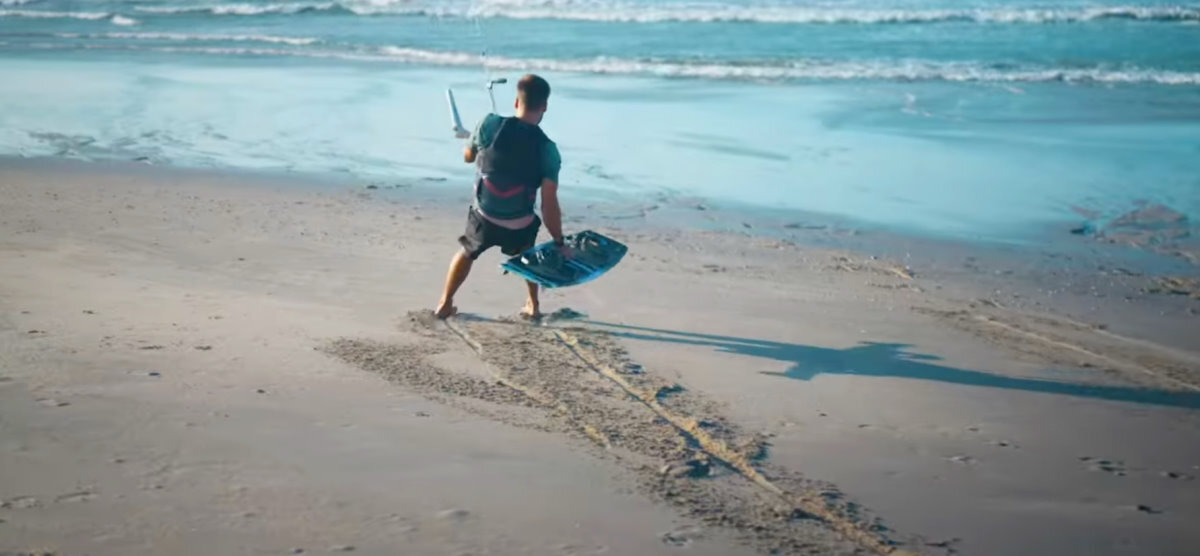
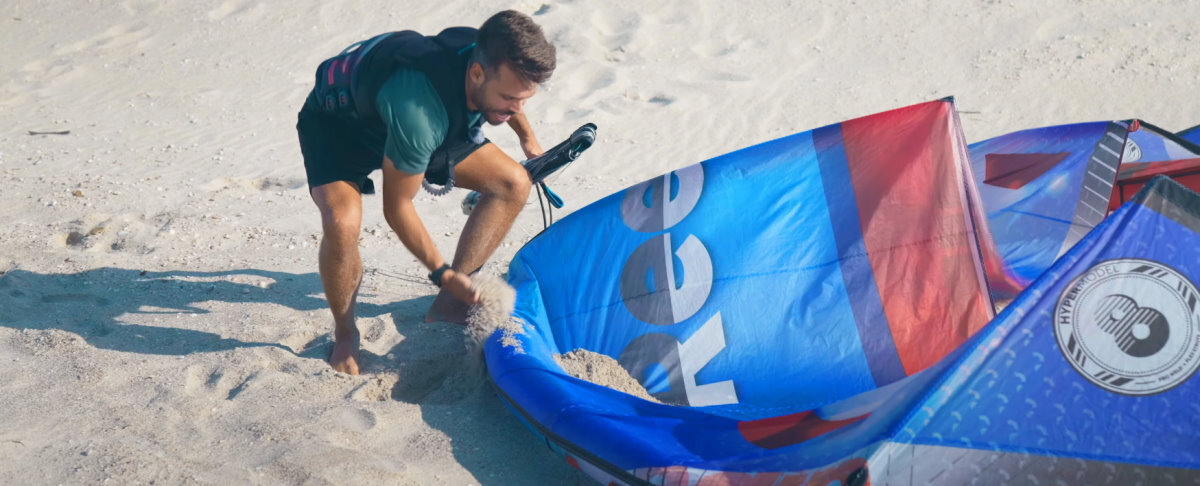
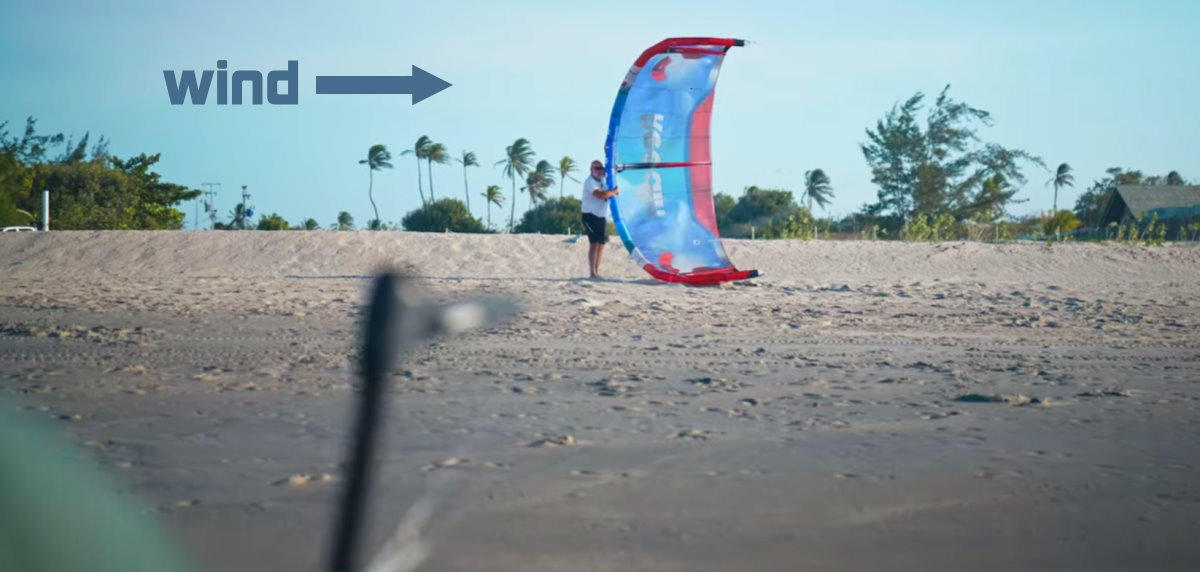
Your kite is pumped up and your bar is in your hand. Set the kite on the beach so that the leading edge is pointed upwind. If there's a lot of wind, it may want to slide downwind if you don't weigh it down, but even if there isn't, your canopy is probably flapping. That flapping does put a lot of wear and tear on the fibers in the sail, so even if you feel that the kite isn't going anywhere, you should scoop some sand onto the canopy to stop it from flapping while you set up.
2. Walk Your Lines Downwind
Yep, downwind. This allows you to do a safer launch, especially in high winds. Put all 4 lines down together at the kite and weigh them down with some sand, then unwind your lines from the bar as you walk downwind.
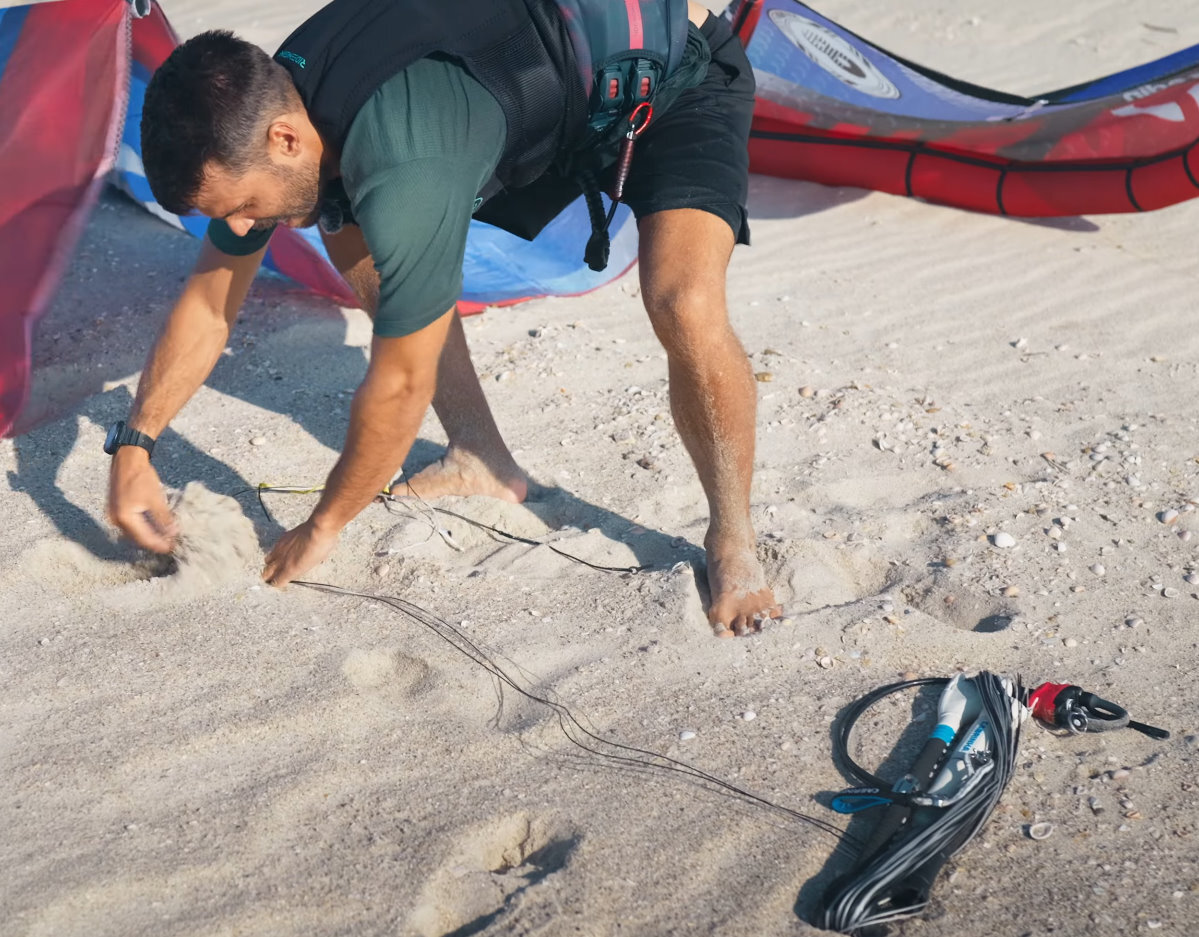
Since you're downwind of the kite, flip your bar over so the front is facing down. Once you launch, everything will be lined up correctly.

3. Organize Your Lines
One easy way to make sure your lines aren't twisted is to place each foot between a center line and an outside line. Pick up a center line and an outside line in each hand. The center lines will run between your legs as you walk back to the kite. Your legs will each keep a center and outside line separate, while your hands will separate the left and right center lines.
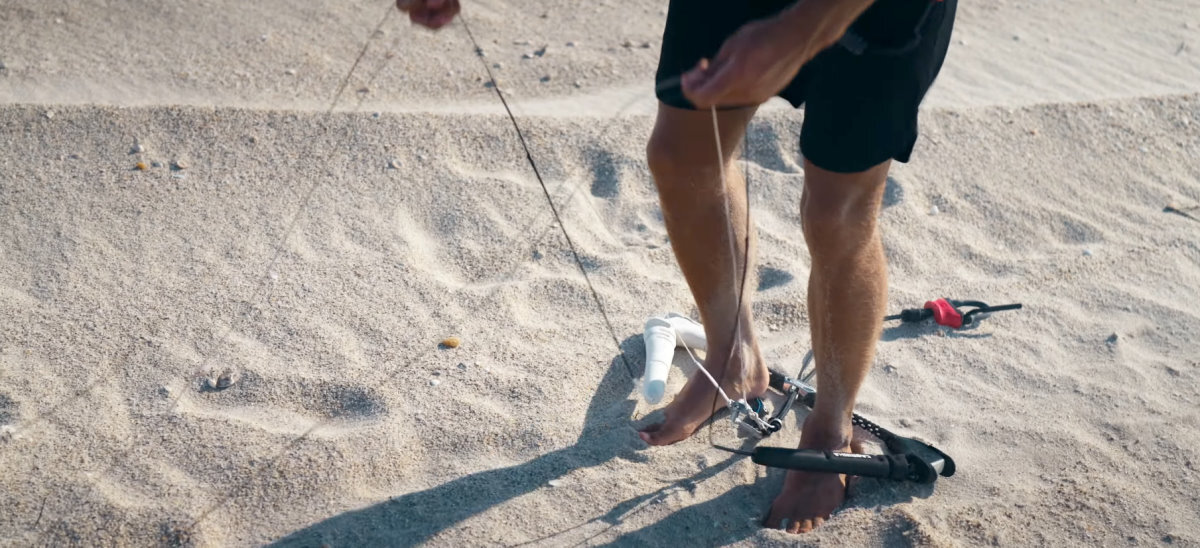
When you get back to the kite, set the end of each line down so that they're separate. Turn around to see that there are no tangles. With this simple method, there shouldn't be any.
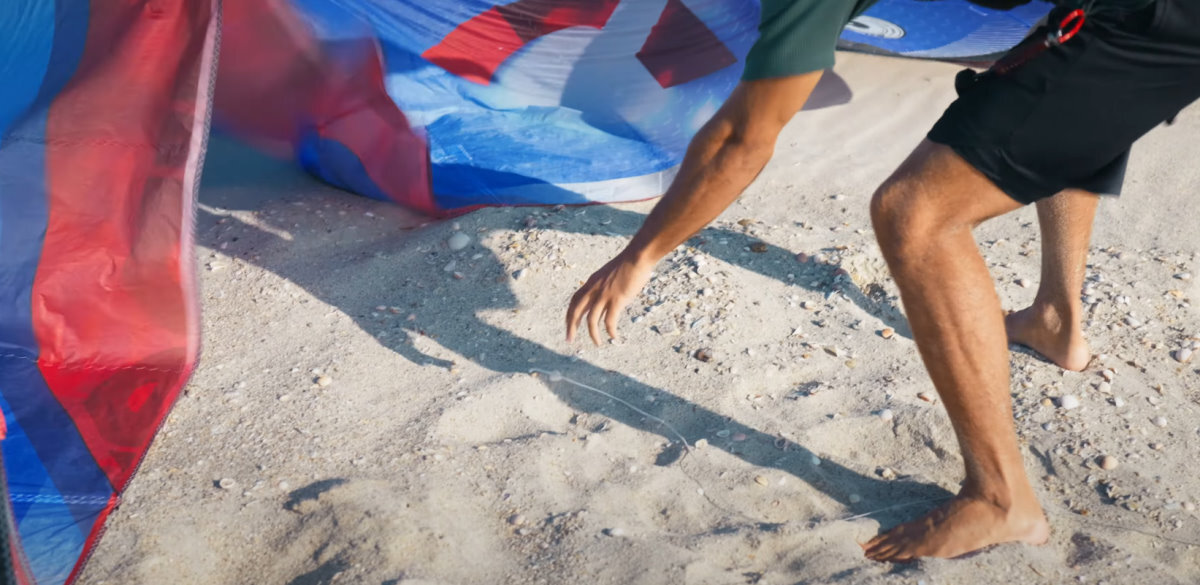
4. Attach Your Lines
First, check to make sure your bridles are not wrapped or tangled up.
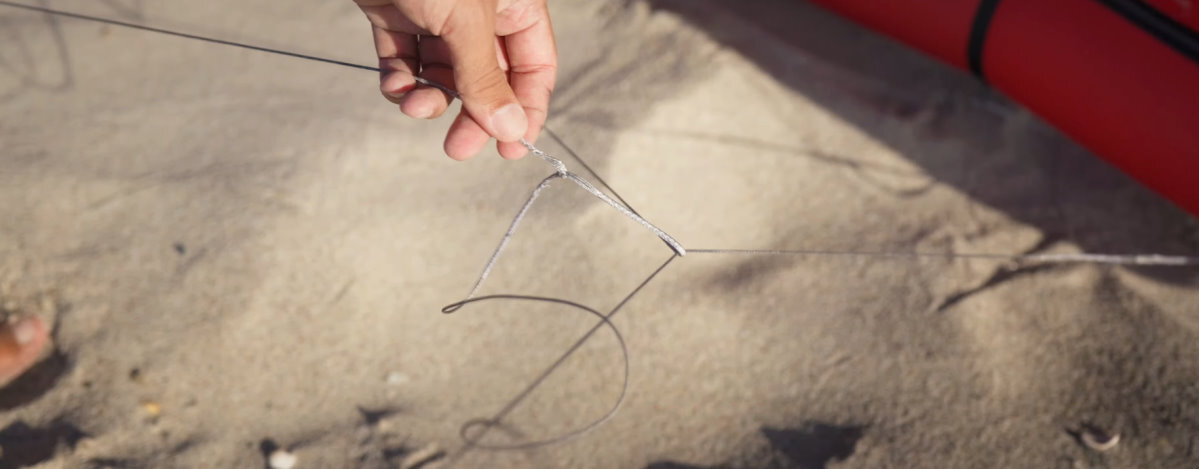
Now you can attach your lines to the kite. One end will have a loop. Form a lark's-head by pulling the line through its own loop to make an adjustable loop. Slide this over the line with a knot and pull the loop tight. Check to make sure it's secure and won't slip off.
5. Safety (Line) First
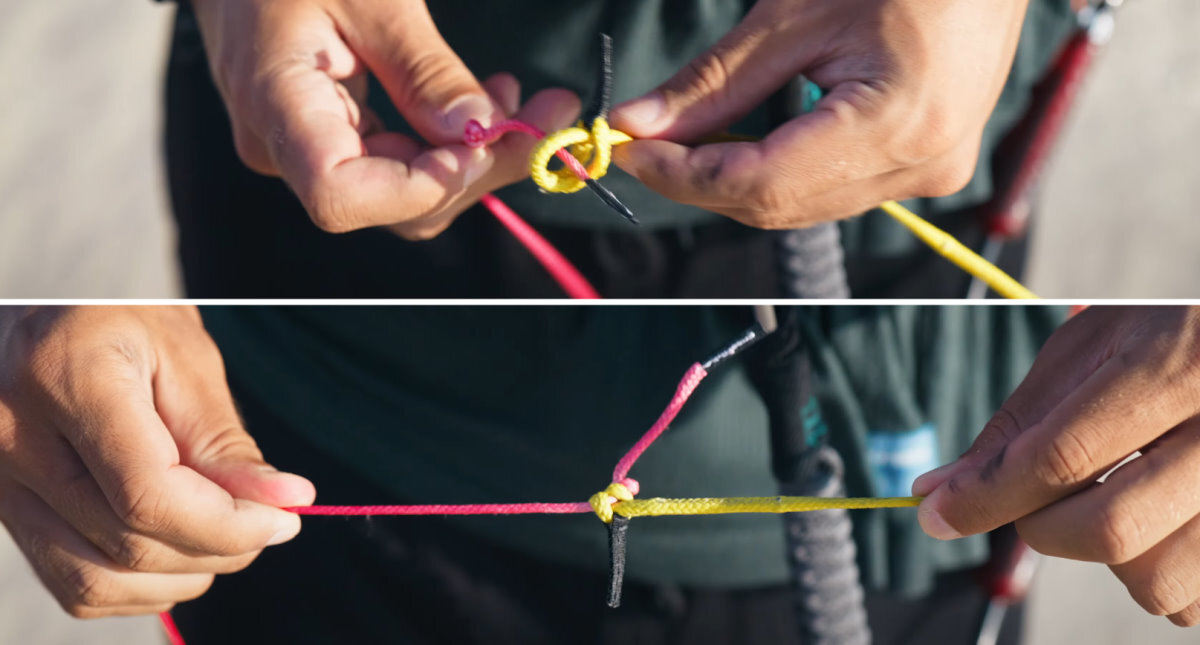
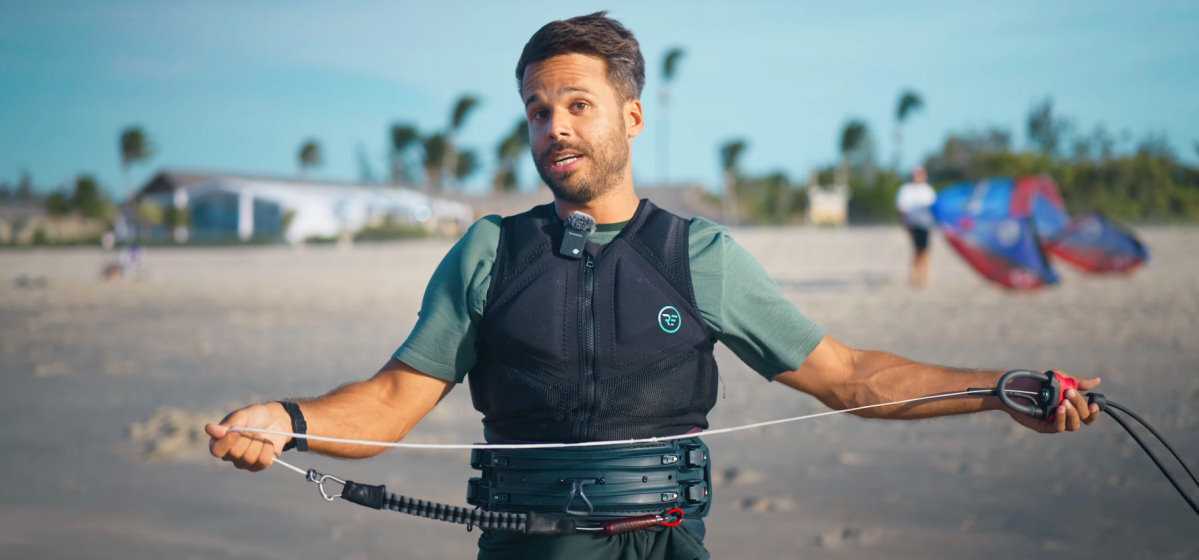
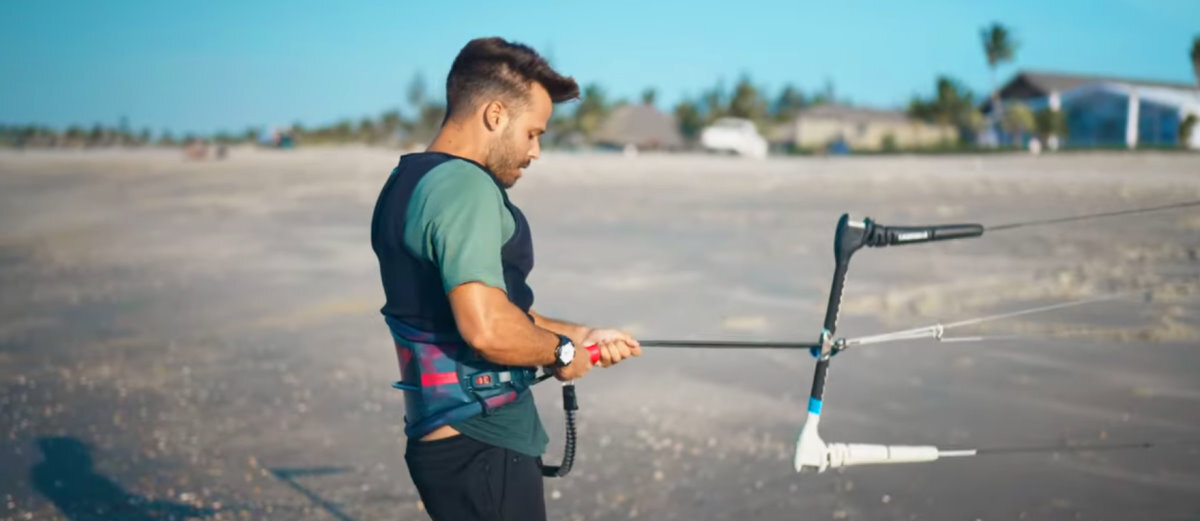
Head back to your bar and connect your safety leash, but don't hook in yet. The lack of tension on the lines can cause the chicken loop and donkey stick to come undone. Instead, hold the chicken loop as you walk upwind and to the side of your kite.
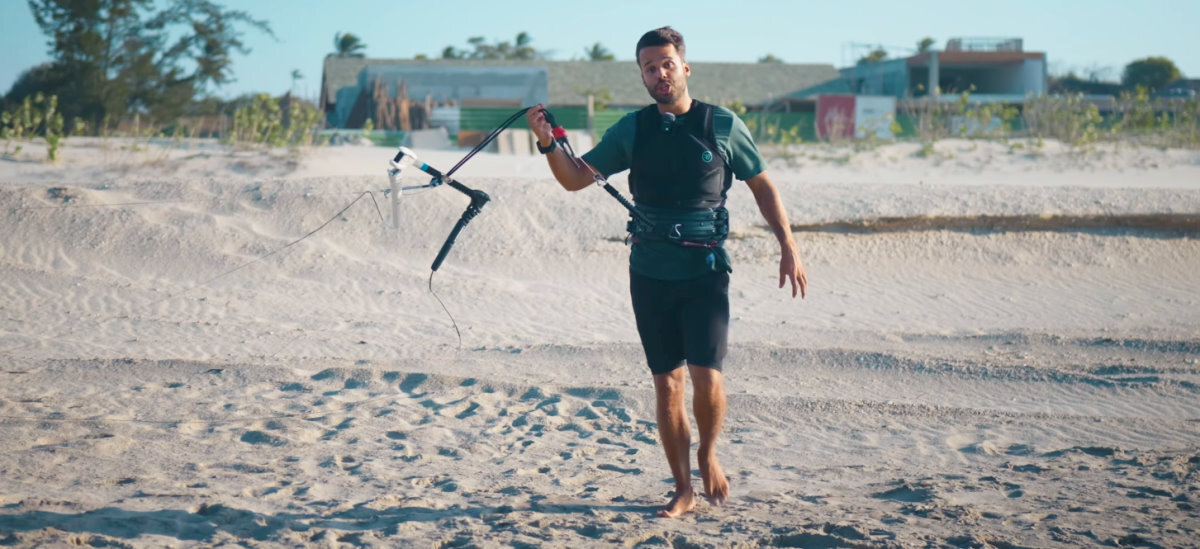
Before every session, you must check that your safety line can move freely through the PU tube, and now is a great time to do that. Pull it out about 3 feet (1 meter) to ensure that there isn't any debris lodged inside the tube that could cause it to bind up.
6. Go to the Edge of the Wind Window
Continue to hold your kite by the chicken loop and, with your lines stretched out, walk upwind until your kite begins to fill with air and the canopy stops flapping. Don't go any further than this or it will become difficult for your launch assistant to maintain control of the giant sail they're trying to hold for you.
7. Hook In
Now that you're almost ready to launch, you can go ahead and connect your chicken loop and donkey stick.
8. Launch the Kite
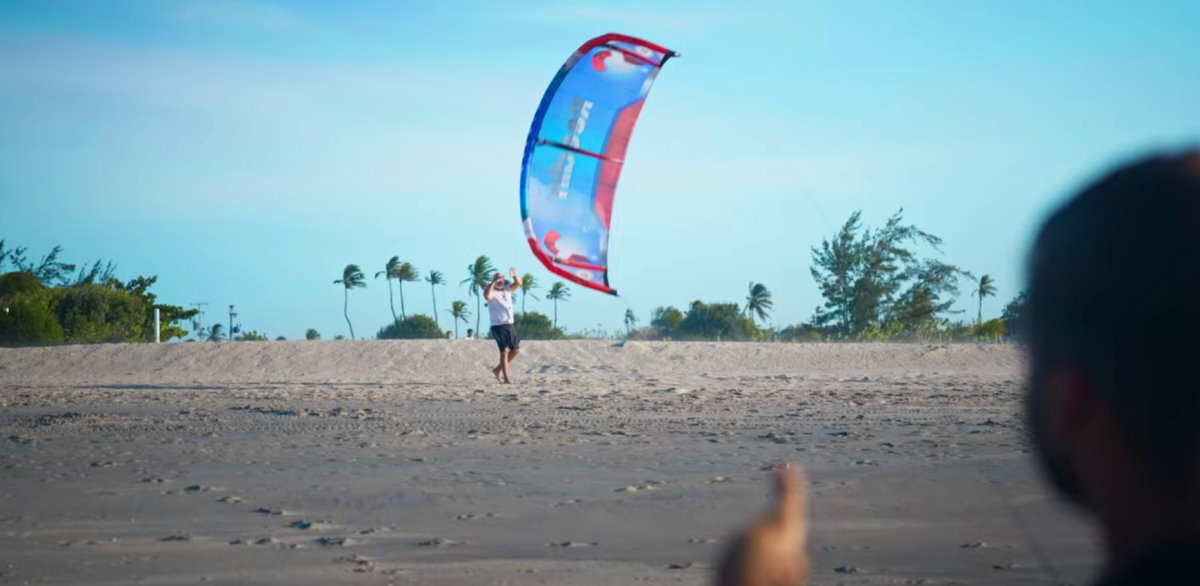
When you're ready, give your assistant the signal, usually a thumbs-up, and they'll release the kite. Guide it slowly into the air so you can get a feel for the wind as you bring it overhead and get down to the water.
MACkite Subscription Links:
YouTube | Instagram | Spotify Oddcasts
Contact MACkite Below:
800.622.4655 | Kiteboarder@MACkite.com | LIVE Chat Messenger
Recent Posts
-
Wing Foiling Footwork: When (and Why) to Switch Stance for Better Riding
Your board stance can affect a lot of things when you're out on a wing and foil. Tucker and Jeff w …10th Apr 2026 -
Reedin Wing Foil Package Overview: Built to Learn, Designed to Progress
A Carefully-Crafted Entry Into Wing Foiling If you've been eyeing wing foiling but feel overwhelme …9th Apr 2026 -

Foil Drive's New Props Explained
For a long time, the black prop was just the prop. It came in the kit, it worked, and you rode it. …9th Apr 2026