

Wing Foiling in Waves | What Makes a Foil Great for Surf?
Whether by divine will or simple serendipity, local surf legend Marc just happened to walk into the shop as Jeff and Tucker were getting ready to film a discussion on surf foils. Marc was even wearing an NP shirt, one of his favorite foil brands from back in the day. Naturally, the guys pulled him into the studio to join the conversation, totally unscripted, yet clearly meant to be.

A few weeks ago, Tucker and Jeff talked about which wings they like to use in the waves, so this is a natural continuation of that chat. Wings and foils have made surfing more fun on the mushy days that would be too much work to surf for long on a traditional surfboard. Even knee-high waves are fun and exciting on a foil. While ocean spots can deliver consistently big waves, many people live near lakes with smaller conditions, and a foil is their ticket to fun in the swell.
What Makes a Foil Good for Surf?
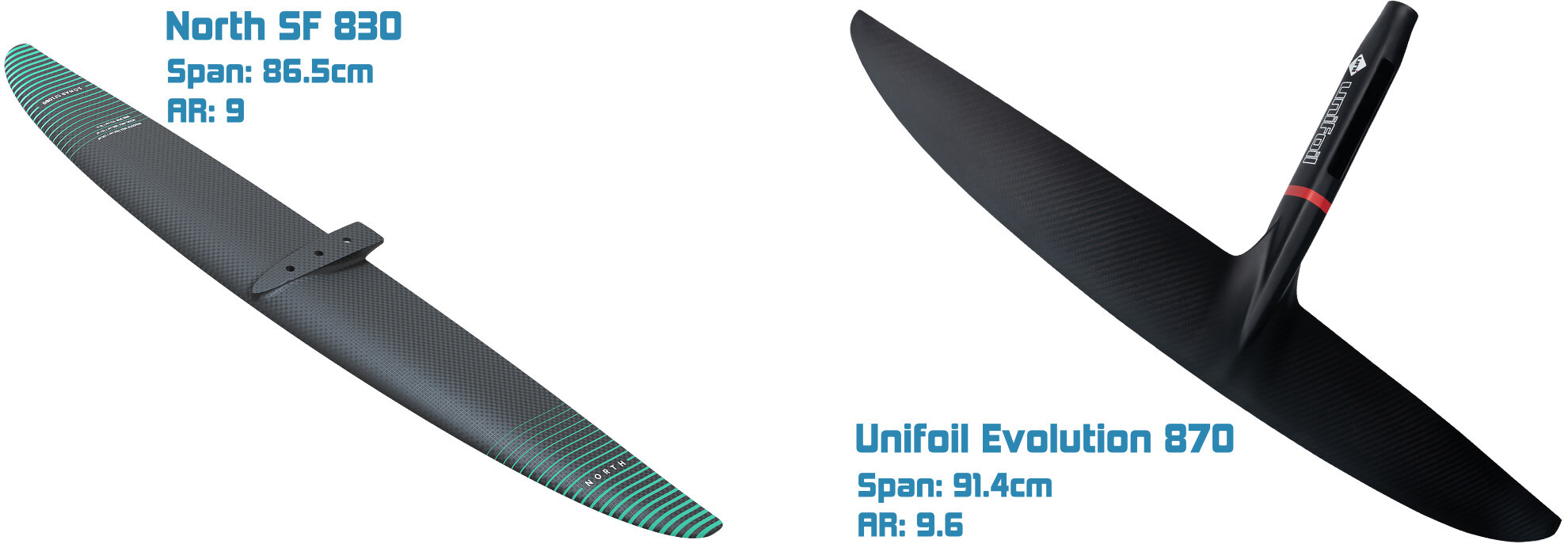
A lot of brands have surfy foils, but we'll focus on four of the shop's most popular ones: the North SF Series, the Code S Series, the F-One SK8, and the Unifoil Evolution. These will have the speed and glide that works in the waves. You want something that lets you rip. It also needs to be pumpable to get you to the wave and sitting where you need to be on it. It needs to pivot and roll, turn and carve. That's a pretty long wish list for one foil, so there will necessarily be some trade-offs to consider for each foil.
That means that each foil has strengths and weaknesses, but not that one is inherently better than the other. However, one might be better for you based on things like price point, your local conditions, the type of riding you want to do, and where your skillset is now and where you want to be in the future.
What's Marc Riding?
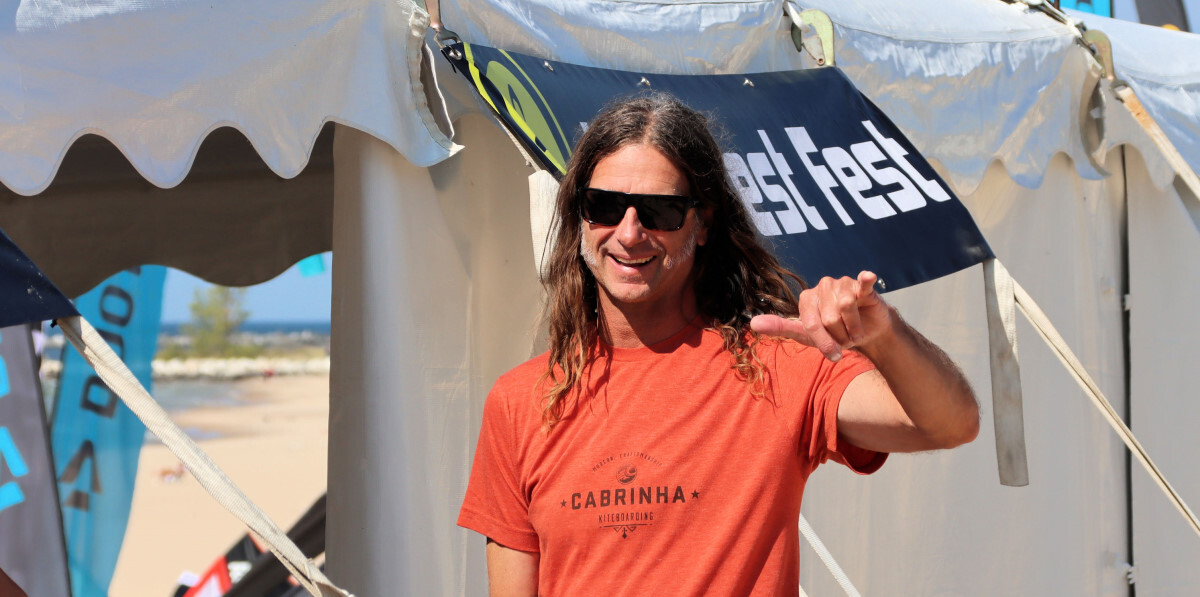
A typical surf foil is between 700 and 1100cm2, so it's not huge, but not tiny either. Marc's been riding a Cabrinha X Series 930, a medium-low aspect foil. He pairs it with his 58 L Code and it cruises comfortably, but doesn't hold him back. It's smooth, predictable, and carvey. He does sacrifice a bit of glide when he kicks out to pump to the next set or goes on a little roller coaster ride out the back, but it's great in the pocket. It stays in and doesn't outrun it, which is ideal for the short period waves we get on Lake Michigan.
On days when the waves are small and Marc needs to pump around more to poach the waves, he'll bump up to a 1000cm2 wing. That'll give him the glide he needs without holding him back on the wave.
How Important is Size?
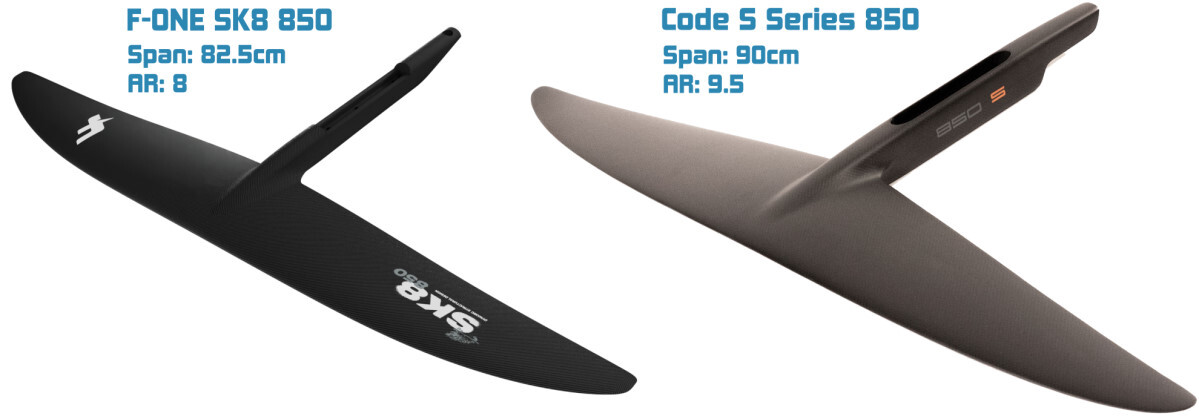
Getting the right size is only part of the equation. An 850 F-One SK8 is quite different from an 850 Code S Series. Where the S Series has more low end, pumpability and glide, the SK8 has more rolling agility. More than the wing area, the wingspan is the number to look at. Two wings can have as much as a 200cm2 difference, but if the wingspan is the same, they'll feel quite similar in turns.
In general, wider wingspans give more glide and a wider speed range, while shorter wingspans give better rolling maneuverability. Glide is great in open swell where most of your turns use yaw or don't need to be very tight. Rolling, on the other hand, is what you need in critical sections of breaking waves and steep waves where you want to put some G-force into those turns.
Code S Series vs. F-One SK8
These are two shop favorites, but they do give different rides. The glide and low stall speed of the S Series makes it more pumpable. It's not as playful as the SK8, but you can push the S Series and drive it pretty hard. You can also be off wing and glide longer on the S Series. It will pump out of a hole without too much input as well.
While both are quite stable, the SK8 loves to play, and it accelerates as it turns. However, it decelerates faster than the S Series when gliding. If you need to pump out of a hole, you can, but it will take more work.
And How Do the North SF and Unifoil Evolution Compare?
The SF is similar to the SK8, but a bit more pumpable for its size. The Evolution sits between the S Series and SK8. Since it's a little thinner with less camber and reflex in the design, it doesn't have that super low speed, but it has a very nice blend of gliding and ripping.
Sometimes the guys get a little jealous of how well Marc can read the waves and stay in the pocket. The SF is a bit of an easy button if you're having trouble staying in the pocket as well as you'd like. Even in pitchy waves, you won't get spit out at the bottom as quickly. More time on the wave means more fun.
How Does Skill Factor In?
A newer rider will do well with a foil that's a little slower or in the middle of the range. Even if you fade off the wave, you're still gliding, and you'll be happy when you're able to glide with the wave.
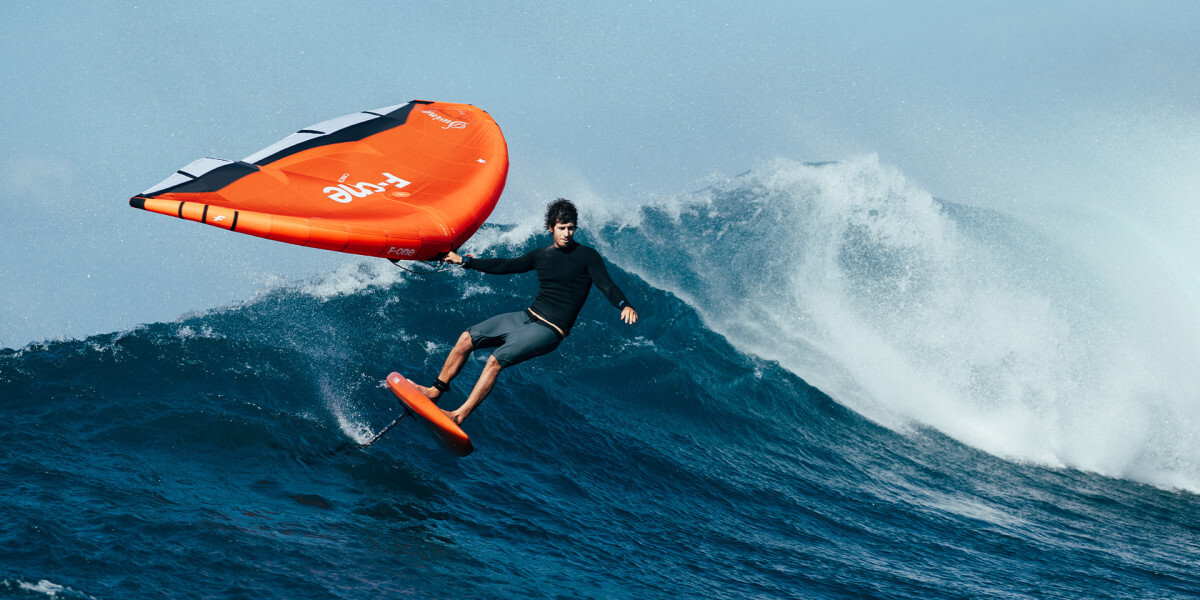
Once you get more experience, though, you'll enjoy something a little looser and more slippery that you can use to carve around on the wave and explore different areas of the face and even up on the shoulder and back down again. A wave is a playground, so you want to be able to play. It's a big level up from what you can do with a surfboard.
What About the Rest of the Foil?
While the front wing determines a lot of how a foil performs, the mast, fuselage, and tail all have their role to play as well. Masts around 80-85cm work well in Great Lakes waves, and small to medium fuselages are also common, depending on the tail and board choice.
Compared to other styles of foiling, the stabilizer moves around more when surfing, so it's almost as important as the front wing. More than just a stabilizer, it helps you navigate and push through turns.
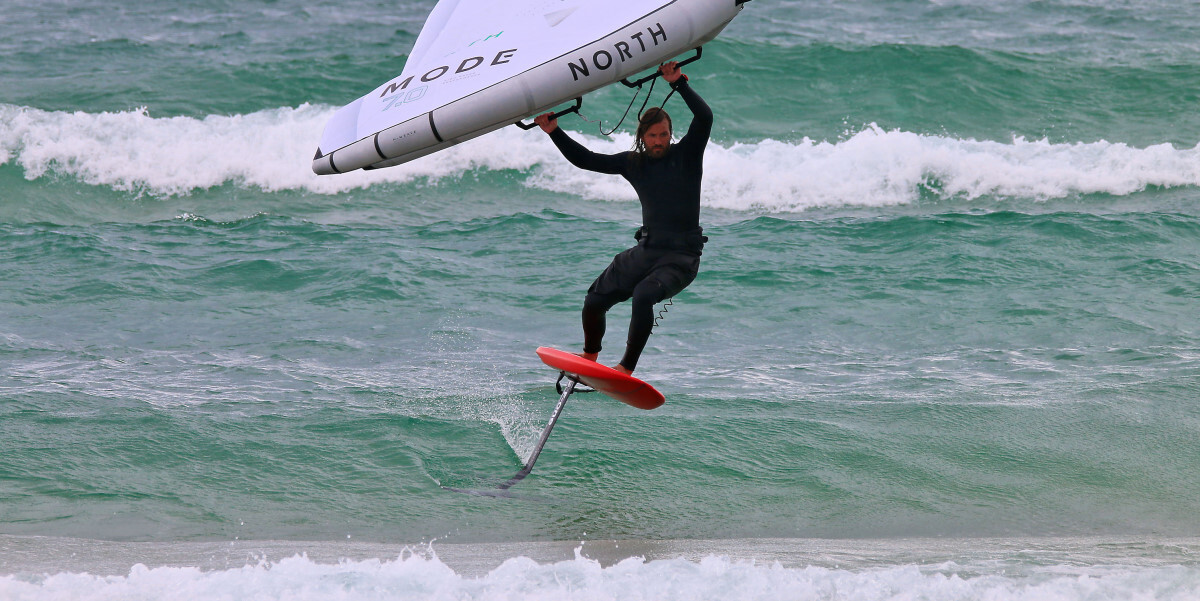
The Code AR tails between 142 and 158 work well for surfing. The Unifoil After Burner 14.5 and 15.5 tails are a good choice for progression. Smaller tails are more maneuverable and faster, but the tradeoff is pumpability. You can get a little of that back with a longer fuselage, though.
Marc likes a 180 tail. He tried the 230 to gain some pumping ability, thinking it'd compensate for the lower aspect 930 wing, but it had too much drag, so he switched back to the 180.
Which Foil Is Right for Me?
There is some give and take in every surf foil, and some will feel better than others in your conditions and riding style. See if you can try out some different ones from your local crew, or at least talk to someone who's ridden a variety of foils. Our crew is also more than happy to chat with you about your goals and where you ride and can recommend a setup you're likely to have a lot of fun on.
MACkite Subscription Links:
YouTube | Instagram | Spotify Oddcasts
Contact MACkite Below:
800.622.4655 | Kiteboarder@MACkite.com | LIVE Chat Messenger
Recent Posts
-

Reedin SnackPack | Why Kiters Are Calling it the Funnest Board in Years!
At the 2025 King of the Great Lakes event on Lake Michigan, the MACkiteboarding crew got an early …20th Mar 2026 -
Airush Ultra Team V5 Kite Review
The Ultra Team V5 from Airush takes the concept of kite foiling efficiency further, introducing a …19th Mar 2026 -

2026 F-One UHM Mast, T2 Connection, SK8 V3, and Eagle V2
The 2026 F-One hydrofoil lineup introduces meaningful upgrades aimed at improving stiffness, effic …11th Mar 2026