
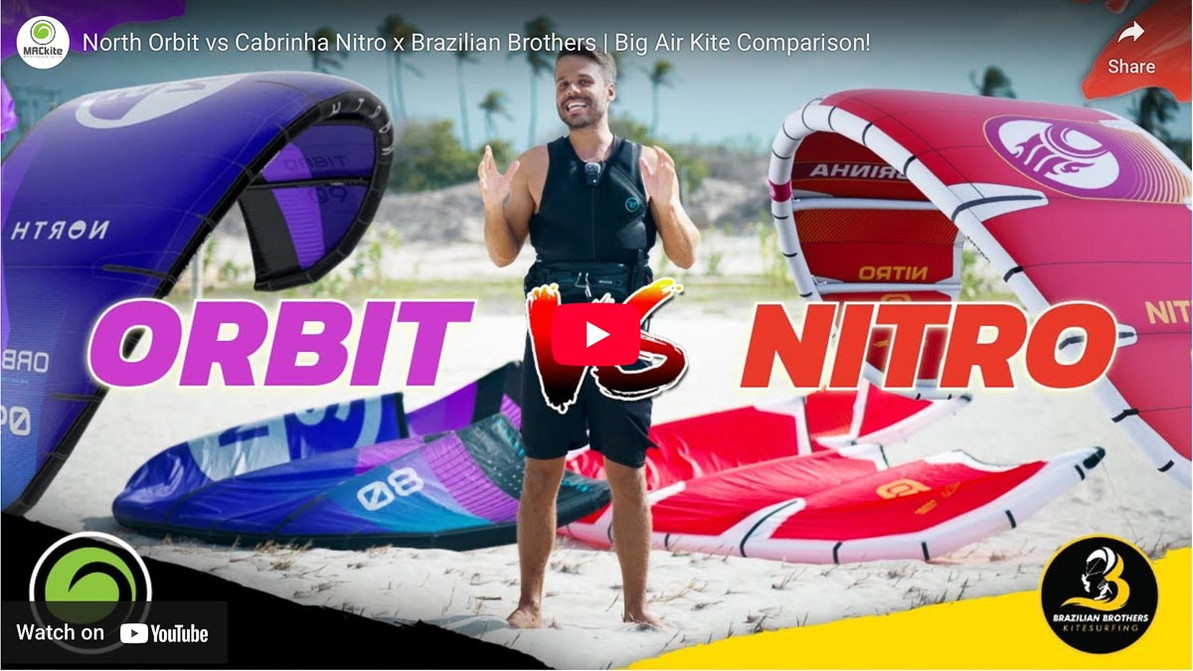
Cabrinha Nitro vs North Orbit | Hangtime, Loops, and Bar Feel
When it comes to modern big air kiteboarding, few comparisons spark as much interest as the matchup between the North Orbit and the Cabrinha Nitro. Tested in Brazil by the Brazilian Brothers under real overpowered conditions, this comparison digs past marketing claims and into how these two kites actually feel, perform, and differ when ridden hard.
At first glance, the Orbit and Nitro share a lot of similarities. Both are designed squarely for big-air riding with a twin tip under your feet, both thrive in strong winds, and both deliver direct, confidence-inspiring handling. But once you start focusing on the details—bar feel, looping behavior, hangtime, and ease of progression—the differences become clear.
This breakdown walks through those differences and helps you decide which kite is the better fit for your riding style.
Shared Design DNA: Why These Kites Feel So Similar
One of the biggest reasons the Orbit and Nitro feel so alike is their design heritage. Both kites share a common denominator in Pat Goodman, one of the most influential designers in kiteboarding history.
Pat Goodman originally designed the Orbit during his time at North Kiteboarding. After returning to Cabrinha, he drew on decades of design experience to create the Nitro. This shared lineage explains why both kites feel direct, efficient, and purpose-built for big air.
In recent years, Pepijn Smit has taken over development of the Orbit, introducing small but meaningful refinements that have advanced the kite—especially in its latest 2026 version.
Bar Feel and Handling: Direct and Predictable
When both kites are in the air, the first thing most riders notice is how direct they feel on the bar. This is largely due to their pulley-free designs, which translate rider input straight into kite movement.
North Orbit Bar Pressure
Traditionally, the Orbit has been known for light bar pressure. For 2026, North increased the bar pressure slightly, moving it into the light-to-moderate range. This change provides riders with slightly more feedback, especially when loading for jumps or initiating loops, without making the kite feel heavy or tiring.
Cabrinha Nitro Bar Pressure
The Nitro remains one of the lightest-feeling Dacron big air kites on the market. The bar pressure is minimal, which makes it exceptionally comfortable for long sessions and particularly forgiving for riders learning to loop.
Key takeaway:
- Orbit offers more feedback and a slightly firmer connection
- Nitro delivers ultra-light, effortless bar feel
Jumping Performance: Height vs Hangtime
Jumping is where subtle design changes really show.
North Orbit Jumping
The Orbit holds a slight edge when it comes to raw jumping performance. For 2026, North increased the kite’s aspect ratio, which has translated directly into improved vertical lift and noticeably better hangtime. Riders looking to maximize height and float will immediately feel this improvement.
The Orbit’s takeoff feels powerful and efficient, rewarding clean timing and strong edging with explosive boosts.
Cabrinha Nitro Jumping
The Nitro isn’t far behind. It delivers very respectable jumping ability, especially when ridden overpowered. However, compared to the Orbit, it lags slightly in hang time when pushed against the true big-air powerhouses.
Key takeaway:
- Orbit wins on height and hangtime
- Nitro still jumps well, especially in strong wind, but with less float
Looping Performance: Progression Made Easy
Looping is where the Nitro clearly separates itself.
Cabrinha Nitro Looping
The Nitro is arguably one of the easiest Dacron kites on the market for loop and megaloop progression. Its combination of light bar pressure and minimal yank through the loop makes it incredibly forgiving. This predictable behavior is why it’s a favorite tool for teaching loops during clinics in Brazil.
For riders learning kite loops or stepping into megaloops for the first time, the Nitro builds confidence quickly.
North Orbit Looping
The Orbit remains a highly reliable looper, but the 2026 version is slightly more technical. With increased bar pressure and more kick through the loop, it demands better timing and commitment. That added aggression can benefit advanced riders but slightly raises the skill threshold.
Key takeaway:
- Nitro is the easier, more forgiving looper
- Orbit delivers more power and requires more precision
Ease of Use and Confidence in Strong Wind
Both kites shine when the wind is fully powered.
In overpowered conditions, both the Orbit and Nitro feel intuitive, stable, and confidence-boosting. Riders can comfortably throw maneuvers knowing the kite will respond predictably.
That said, the Nitro still holds a small advantage in overall ease of use. Its light bar pressure and smooth looping behavior make it particularly accessible for riders focused on progression rather than maximum performance.
The Orbit’s 2026 update brings in some of the more technical characteristics found in the Orbit Pro, which slightly increases the learning curve—but also elevates performance potential.
Stability Improvements: Orbit’s Biggest Leap Forward
One of the most important updates to the 2026 Orbit is stability. Previous generations of the Orbit occasionally struggled with frontals or Hindenburgs. That issue has been effectively eliminated.
The latest Orbit is the most stable version to date, offering consistent canopy support and predictable flight even in challenging conditions. This improvement alone makes the 2026 model a major step forward.
Versatility and Wind Range: Where Both Kites Are Limited
Despite their strengths, both kites share similar limitations.
Twin Tip Focus
Neither the Orbit nor the Nitro is designed for versatility across disciplines. These are twin-tip big air kites, plain and simple. They are not well-suited for foiling or strapless freestyle, where different canopy behavior and drift characteristics are required.
Low-End Power
Both kites prefer strong wind. They truly come alive in 25 knots and above. Riders looking for excellent low-end power or light-wind performance may find these kites demanding outside their ideal range.
Key takeaway:
- Both kites excel in strong winds
- Neither is a light-wind or multi-discipline solution
Final Recommendations: Which Kite Is Right for You?
Choosing between the Orbit and Nitro ultimately comes down to your priorities.
Choose the North Orbit if:
- You prioritize maximum height and hangtime
- You want a more performance-oriented big air kite
- You’re comfortable with a slightly more technical feel
Choose the Cabrinha Nitro if:
- You want the easiest kite possible for loop progression
- You value ultra-light bar pressure
- You prefer smooth, forgiving handling in strong wind
Both kites are excellent when ridden as intended—with a twin tip under your feet in nuking conditions. Neither choice is wrong; they simply cater to different styles of big air riding.

Recent Posts
-

F-One Seven Seas | The All-Around Foil That Earns Its Place in Any Quiver
The F-One Seven Seas has been quietly doing its thing in the wing foil world for a few years now, …2nd Apr 2026 -

Is the F-One Strike CWC the Best Light Wind Wing on the Market?
Light wind days are where a lot of sessions die before they even start, and that can be hella frus …2nd Apr 2026 -
F-One Free Surf vs Free Downwind: Which Foil Board Should You Choose?
F-One Free Surf vs Free Downwind boards—what’s the difference, and which one is right for your rid …2nd Apr 2026