
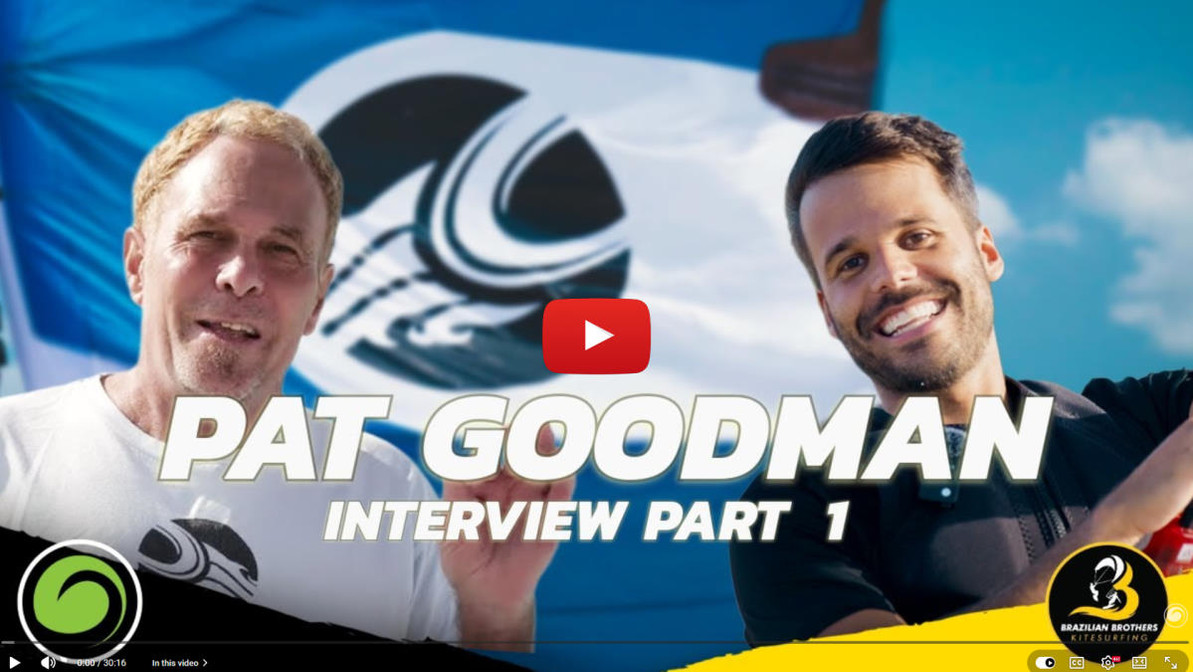
Innovation at Cabrinha: Pat Goodman on the Drifter, Switchblade, Nitro and Moto X | Part 1
Few things are more confusing for riders than navigating a kite lineup, especially when every new model promises to jump higher, turn faster, and do it all. To cut through the noise, Brazilian Brother Rubens sat down with Pat Goodman, longtime designer at Cabrinha, for an honest, no-hype conversation about what actually matters on the water. In Part 1 of this two-part interview, they dig into Cabrinha's core freeride, wave, and big air kites, break down who each model is really for, and share how thoughtful, incremental design, not marketing buzz, has shaped some of the most iconic kites in the sport.
Rubens: Can you walk us through the lineup and explain who each kite is really for? What should riders be thinking about when choosing a kite, straight from the source?
Pat: Sure. It really comes down to a few things: your skill level, the conditions you ride most often, your weight, and what you want to do on the water. Most people want to jump and get some airtime, so that already narrows things down, with a few exceptions like the Drifter.
Take the Switchblade. Almost everyone enjoys it and its reputation speaks for itself. You can't really go wrong; it does a bit of everything. It works in side-onshore conditions, it's fine in waves, and it has a huge wind range, which means you can get away with owning fewer kites.
It's also incredibly stable and handles being overpowered really well. If you ride somewhere with squalls or gusty conditions, the Switchblade stays calm and predictable instead of getting sketchy. That kind of control makes a big difference, especially when the wind picks up unexpectedly.
Drifter - Wave Kite
Pat: Now, the Drifter is a different animal. It's designed as a wave kite and sits farther back in the window, which gives it excellent drift. The depower works differently; it's more of an on/off feel that's great for maneuvering on a wave face. It doesn't shoot forward in the window like a Switchblade, so you're not getting that same kind of hangtime.
It'll still jump because it's fast, but it doesn't float. And that's fine; hangtime just isn't what it's built for.
What surprises people is how popular the Drifter is in schools. It's super predictable, low aspect, relaunches easily, and is just really fun to fly. Personally, I love it in strong wind- a 5m Drifter is my go-to high-wind freeride kite. It's fast, lively, and a blast.
So yeah, it's primarily a wave kite, but if boosting huge airs isn't your priority, the Drifter can actually work really well as an all-around option.
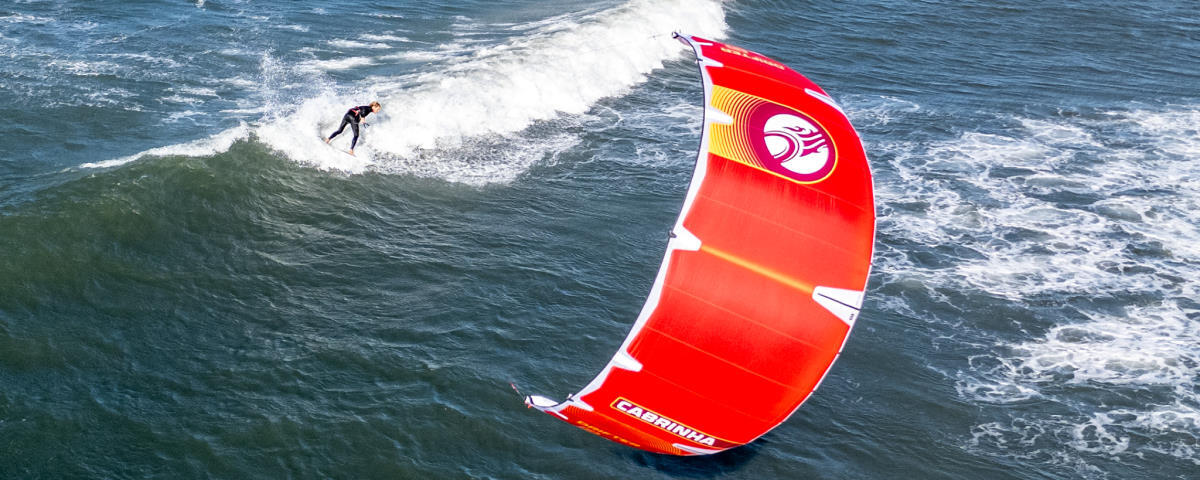
Switchblade – Freeride Kite
Pat: When you get into freeride kites, the Switchblade really is the Swiss Army knife. It does everything, and I don't think anyone is ever disappointed with it.
What's funny is that even some pros have started riding it and gone, "Wow, I had no idea." A lot of them are focused on the Nitro, so the Switchblade isn't even on their radar. But because it has a slightly lower aspect ratio than the Nitro, it actually loops tighter. You don't get the same hangtime, but the kite loops clean and controlled, and it's surprisingly easy to do.
That's the beauty of the Switchblade. You can ride it any way you want. It's just incredibly versatile.
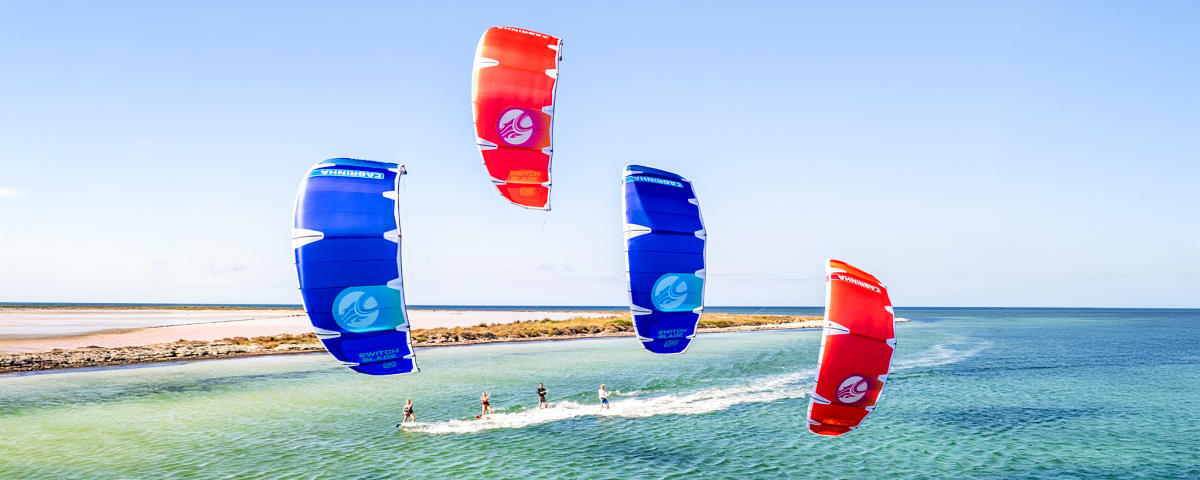
Freestyle – What About C-Kites?
Pat: If you're a full-on freestyle rider, we don't really have a true, dedicated freestyle kite right now, though there's always talk about going back there.
Freestyle kites are tricky because the moment you add a bridle and make a hybrid C-kite, it becomes great for most riders, but then the pros don't want it. They want a pure C-kite. The problem is, making a C-kite usually means producing a small run, and half of them end up going straight to team riders.
That's why you only see a few brands still holding onto C-kites, mostly just for competition. There's this idea that if you're not riding a C-kite in a freestyle contest, it's somehow not legit.
And honestly, every time someone pulls out an old Chaos or something similar, they say the same thing: "Wow, this makes tricks way easier." And it's true. So I totally get where they're coming from. I wouldn't be surprised if we go back in that direction again at some point. We'll see.
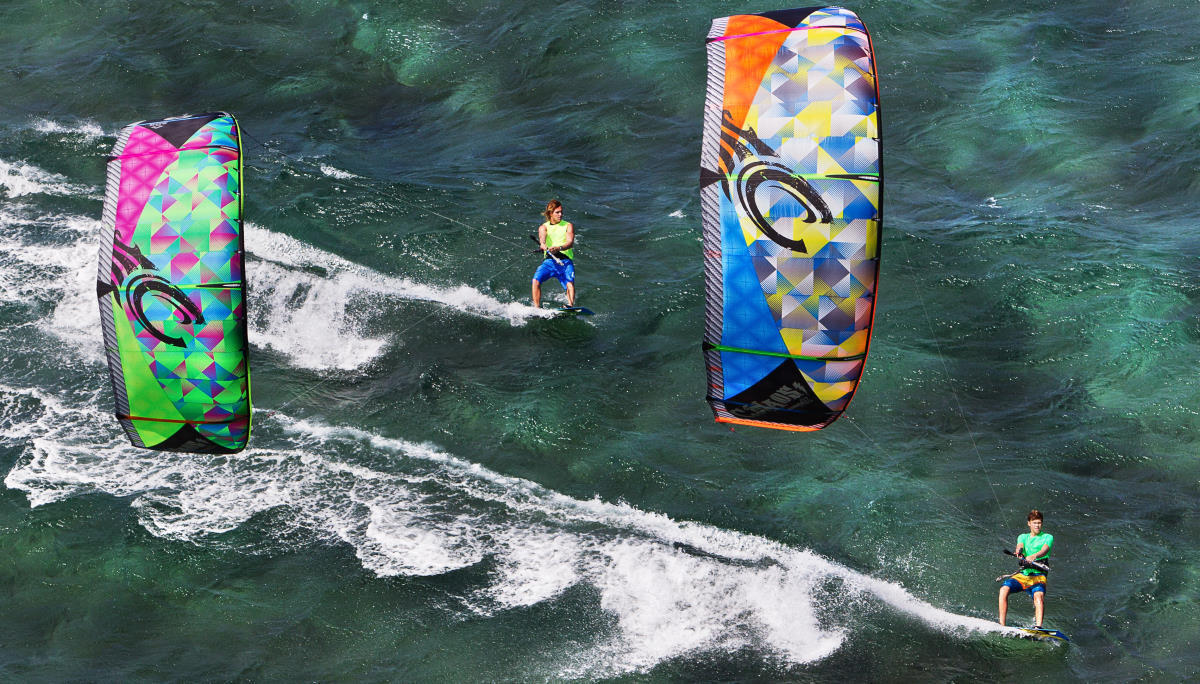
Nitro – Big Air Kite
Pat: The Nitro came from wanting to get back into big air, which is really the root of the sport. When I spent a few years at North Kiteboarding and worked on the Orbit, that was part of the big-air resurgence. Suddenly, old-school tricks like board-offs and big floaty jumps were cool again.
It felt like the sport had come full circle, back to the reasons a lot of us got into kiting in the first place.
So when I came back to Cabrinha, we had to have a kite in that category. That became the Nitro. The goal was to make something better than the Orbit, but different, not just a copy. We evolved the design and ended up with a really solid big air kite.
The key thing riders need to understand about the Nitro is that it likes to be ridden wound up. Much more so than the Switchblade. That's where it really comes alive.
Rubens: What do you mean by "wound up"?
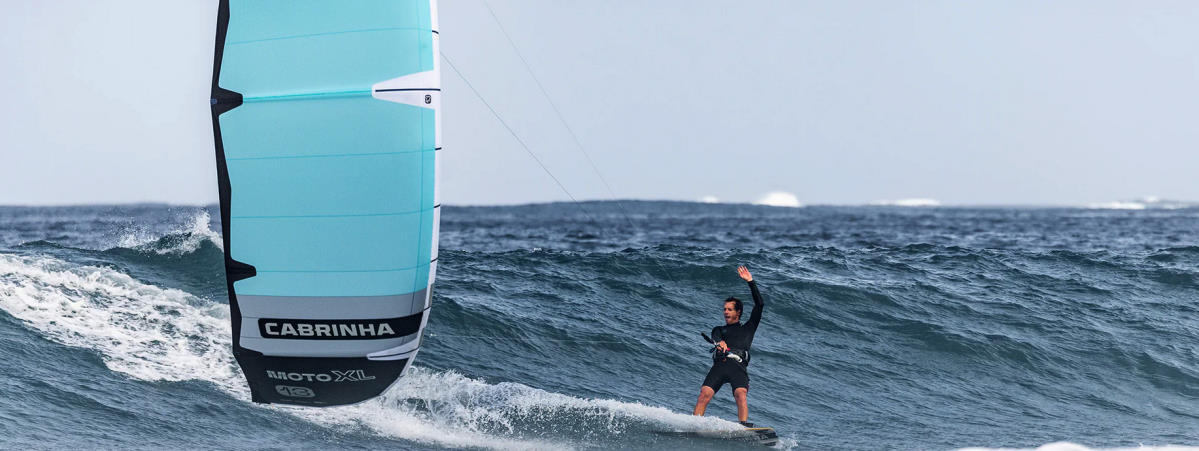
Pat: Basically, riding it near the top of its wind range, not the bottom. If you're expecting big jumps on a 12m Nitro in 15 knots, that's not going to happen. In those conditions, you'd jump higher on something like a 13m Moto XL.
But flip that around- if it's blowing 25 knots and you're on a 12m Nitro, you're going to be very happy. Meanwhile, you'd be totally out of control on a 13m Moto XL.
That's where the Nitro shines. It likes to be ridden powered. When it is, it's stable, comfortable, and a serious big air machine. It's not that it lacks power; it just doesn't have the same low-end drive as some other models. The profile is thinner, everything's leaned out a bit. But once the wind picks up, that kite really comes alive.
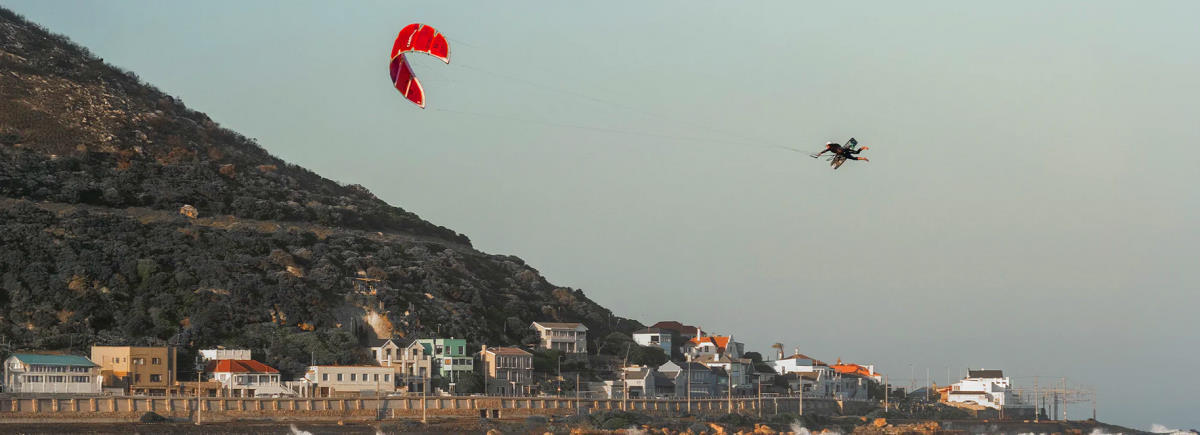
The Evolution of the Switchblade
Rubens: I'd love to hear about how the Switchblade came to be. From my perspective, it kind of revolutionized kiting: a five-strut kite that's accessible, helps people progress, has a big sweet spot, and lets riders learn loops safely. How did that first Switchblade happen?
Pat: At the time, we were all riding C-kites. Then Bruno Legaignoux showed us this early bow kite concept and gave us a prototype to try. It was wild- huge depower, but very rough. Heavy bar pressure, a 2:1 pulley bar, seven struts. Most of the testers didn't get it. It felt totally different, and you couldn't ride it the way we were used to.
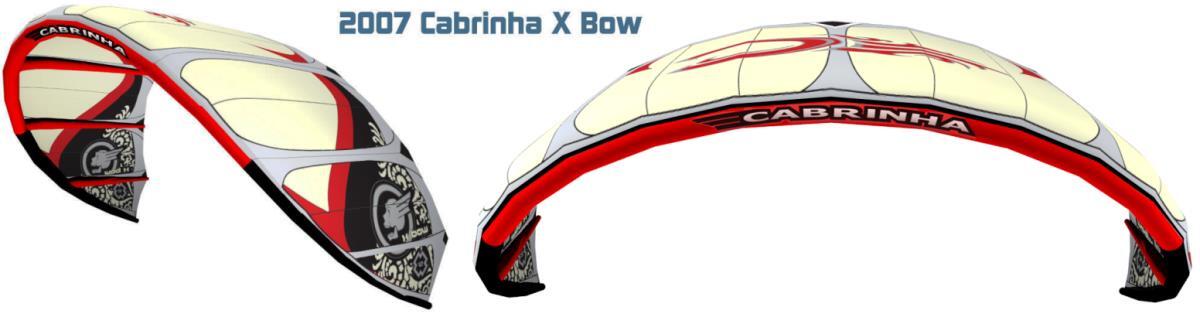
Then Pete rode it and came back saying, "This is going to change the world overnight." He said it had enough depower that he'd feel safe teaching his 12-year-old daughter to kite. And safety really mattered because people were getting seriously hurt back then. Our U.S. importer had been killed due to lack of depower. So there was a strong internal push to improve safety.
That kite became the Crossbow. We spent a ton of time refining it, especially the bar pressure and bridles. It had an incredible wind range and depower, but it was complex and not for everyone.
So I told Pete, "I think we can simplify this." The idea was to keep the depower but remove the pulleys, reduce sweep, and make something more affordable and easier to ride. We also wanted fewer struts and a control system that worked across the lineup.
We found that five struts were enough. Less sweep meant better depower without needing massive bar throw. And suddenly, we had this really clean, approachable kite.
People think the Crossbow took over the world, and it did, but by the end of that first year, we were selling as many Switchblades as Crossbows, even though the Switchblade launched later. It was just more accessible for most riders.
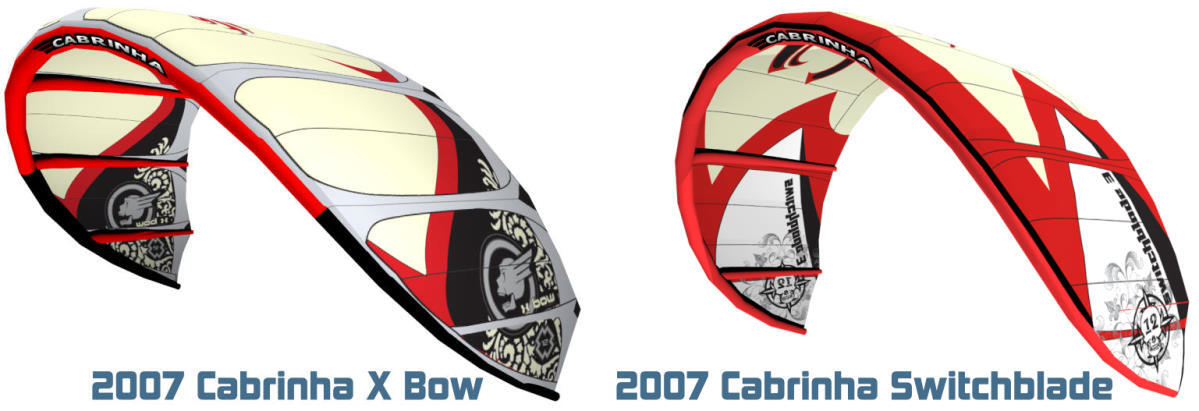
Around that time, Andre Phillip was riding the Switchblade for wakestyle, showing that you could ride unhooked and push the kite hard. He became an icon, and that really helped cement the Switchblade as the go-to kite for progression.
Since then, it's just evolved. Every year we apply lessons from other designs—the Drifter, race kites, everything—and feed that back into the Switchblade. It's always been incremental, but it's never stagnated. It just keeps getting better.
Recent Improvements and the Current Direction of the Switchblade
Rubens: Where do you see the Switchblade heading now? And what do you think are the biggest improvements over the last few years?
Pat: What's funny is the direction I get from John and the product team is always, "We want a better Switchblade, but don't change it." [laughs] They're really protective of that DNA, especially for beginner and intermediate riders who know and trust that feel.
Historically, the Switchblade has had higher bar pressure than most kites. That gives riders something to lean against—almost a built-in safety buffer—especially for heavier riders. I've always pushed to make it lighter and lighter, but the truth is, we've had to find a balance. They're right, and I'm right.
A good example is the wingtip settings. The kite now ships on the firmer, forward setting because a lot of riders, especially in places like Miami, preferred that extra feedback. Personally, I loved it on the softer, lighter setting and wasn't a fan of the heavier feel. In the end, we compromised: ship it on the firmer setting, but make sure people try both at demos. And sure enough, a lot of riders really do like having that extra feedback.
What's changed over time is that the Switchblade has definitely become lighter and faster. It still offers that familiar stability, but now with more performance. There used to be this perception that it was a "trucky," heavy kite that's perfect for beginners, but something you'd eventually outgrow. That mindset has shifted.
Now people are saying, "Actually, I could ride this long-term." And that's exactly the point. The kite has evolved without losing what made it iconic in the first place, and it's still evolving.
Rubens: That was exactly my experience. I used to think of the Switchblade as a beginner kite, especially because of the bar pressure, but that idea really needs to change.
I'd encourage anyone who has that prejudice to actually go try one, because I think they'll be surprised. Personally, I prefer the soft setting too—I love light bar pressure—but once you're out there, you realize this is a high-performing kite. I was doing the same tricks I'd do on any other kite.
What stood out to me was the confidence it gives you, especially in strong wind. The sweet spot is huge. A lot of modern kites are incredibly fast, sometimes too fast, where everything has to line up perfectly to get a good pop. Pros can hit that 10-out-of-10 timing every time, but that's not most riders.
With the Switchblade, you don't need everything to be perfect. You still get solid pop, consistency, and control, and that makes a big difference for the average rider.
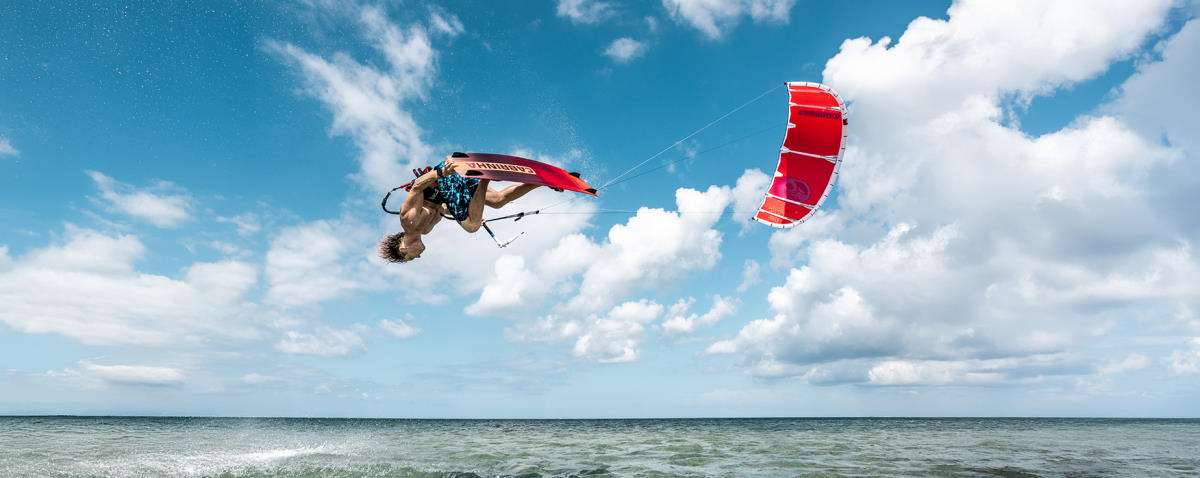
Cabrinha Nitro 2024 vs. 2025 - What's Actually Changed?
Rubens: What's new on the 2025 Nitro compared to the 2024? A lot of brands say "it's faster, it jumps better" every year, and riders start to get skeptical. I can feel a difference, but it'd be great to hear exactly what changed.
Pat: I'm glad you brought that up, because I see a lot of marketing that says "we changed everything" without ever explaining how. Honestly, reinventing a kite every year is risky- you often end up going backwards. If you change just for the sake of change, it usually takes a year or two to iron out the problems.
The Nitro wasn't broken, so we didn't try to reinvent it. What we did was make small, meaningful improvements, and those are the ones you're feeling.
The biggest design change is in the bridle. I've been learning more and more about bridle weighting, and the goal here was to tighten up the turning and make the kite feel more pivoty. The Nitro is a fairly wide kite in the sky, so refining the bridle helps reduce loop size and makes the kite feel more agile without losing stability.
The other major change is materials. We moved to a new factory and changed the canopy cloth. The leading edge material stayed the same, but for the canopy we went back to the Japanese fabric we originally used in the early 2000s.
That material has something really special going on. It's not about being super stiff or low-elongation, it's about recovery. When you pull it on the bias, it can stretch significantly, but it snaps back to about 99% of its original shape. Most fabrics achieve "recovery" by barely stretching in the first place. This one actually moves and then comes back.
That matters because the entire kite is constantly bending and twisting when you steer. When it snaps back into shape quickly, the kite feels more dynamic, responsive, and alive in your hands.
So between 2024 and 2025, it's not a revolution, but it is a real evolution: refined bridles, new bridle materials, and a new canopy fabric. Small changes, but together they make a noticeable difference.
Cabrinha 2025 Nitro vs. 2025 Switchblade - How to Choose
Rubens: What are the biggest differences between the 2025 Nitro and the 2025 Switchblade? For an average rider looking for a five-strut kite, how do you make that choice easier?
Pat: The simplest way to put it is that the Nitro is the more extreme version of the Switchblade.
The Nitro wants stronger wind, and when you give it that, it really rewards you. It's built for aggressive big air: more hangtime, more boost, and a more locked-in feeling when you're pushing your jumping to the next level.
The Switchblade, on the other hand, is more forgiving and a bit more playful. It's easier to dial in, especially for advanced intermediate riders. An experienced rider can absolutely push a Nitro harder than a Switchblade, but both are great kites, and you could get used to either one.
Where people sometimes get it wrong is assuming, "I want to do big air, so I need a Nitro." That's true if you've got the wind and the skill level. But if you ride more average conditions and consider yourself an average rider, you'll probably have more fun and progress more on a Switchblade.
Moto X — The Three-Strut Option
Rubens: The Moto X is a three-strut platform. Can you explain who it's for and where it fits?
Pat: When I came back to Cabrinha, the first thing I wanted to do was completely redevelop the Moto. Starting with the 2023 version, it's an entirely new kite. Nothing was carried over from the original Moto except the name.
It became a really solid all-around three-strut freeride kite, and we kept pushing it. In 2024 we introduced the Moto X Apex, using Apex materials in the leading edge. We'd already tested that material in a few sizes earlier and it was very successful, so we leaned into it.
The Apex version is fast and aggressive. The material feels soft on the bias, which helps steering and recovery, but it's not super stiff. It allows the kite to move a lot, which feels great, but it also means it takes a bit more skill to really control it.
Out of curiosity, we built the same design with a stiffer material, and that became the Moto X Lite. The design is about 90% the same, but the feel is different. It's a bit stiffer, slightly slower than the Apex, but very stable and predictable, and it ended up being extremely popular.
The Apex is more high-performance and lively. The Lite is easier for most riders to manage, with a better usable wind range, especially when it's strong.
Originally, the Moto X Lite actually started as a project called SBL: SwitchBlade Lite. The idea was to make a three-strut Switchblade. It didn't end up being exactly that, but some of that DNA is still there.
In a lot of ways, the Moto X Lite is the Swiss Army knife of three-strut kites.
One Kite, Many Disciplines
Rubens: So would you say the Moto X is the most versatile option? For someone who wants to foil, ride strapless, and still use a twintip, is this the kite?
Pat: Yeah, absolutely. Either version works, but the Lite has a bit more wind range and handles strong wind better because it's stiffer.
We did a lot of foiling testing on the Moto X Lite, and it works really well. It was also one of the few kites where we kept small sizes, including a 4m, because foilers still want that option when the wind is up.
So if someone wants one kite that can cross over to foil, strapless, and twintip, the Moto X is definitely the right place to look.
In Part 2, we take the conversation further by zooming out to the bigger picture: how materials like Aluula are changing performance, why design choices often matter more than fabric alone, and how details like low-V versus high-V bar setups can dramatically influence how a kite loops and feels in the air. If you're curious about the engineering decisions that shape modern kites, Part 2 pulls back the curtain.
MACkite Subscription Links:
YouTube | Instagram | Spotify Oddcasts
Contact MACkite Below:
800.622.4655 | Kiteboarder@MACkite.com | LIVE Chat Messenger
Recent Posts
-

Wing Foiling Footwork: When (and Why) to Switch Stance for Better Riding
Your board stance can affect a lot of things when you're out on a wing and foil. Tucker and Jeff w …10th Apr 2026 -

Reedin Wing Foil Package Overview: Built to Learn, Designed to Progress
A Carefully-Crafted Entry Into Wing Foiling If you've been eyeing wing foiling but feel overwhelme …9th Apr 2026 -

Foil Drive's New Props Explained
For a long time, the black prop was just the prop. It came in the kit, it worked, and you rode it. …9th Apr 2026