
Foil Masts
Mast length shapes more about your foiling experience than most riders expect going in. Shorter masts keep you closer to the surface and suit choppier water and tighter conditions. Longer masts give you room to move through your range without breaching. Stiffness and material factor in too — a stiffer mast transfers energy more directly, while more flex can take the edge off in certain conditions. Getting the right mast is crucial, whether you are building a new foil setup from scratch, upgrading for a particular discipline, or simply replacing a component that is worn out. Reach out if you need help dialing down your options.
-
On Sale


Cedrus Carbon Evolution Wind Mast
Project Cedrus
Now: $1,500.00Was: $1,700.00Don’t let the name fool you; Evolution Wind is not just for kite and wing foiling. This mast is optimized for higher speeds and longer lengths, which are typically associated with more powered forms of foiling from tow-in to gusty DW conditions...Now: $1,500.00Was: $1,700.00 -
On Sale


Cedrus Carbon Evolution Surf Mast
Project Cedrus
Now: $1,500.00Was: $1,700.00Evolution Surf features industry-leading glide characteristics coupled with the stiffness and strength that Cedrus is known for. With reduced wetted area in the hydrodynamically critical region of the mast, Evolution Surf offers more efficient pumping...Now: $1,500.00Was: $1,700.00 -


KT Carbon Mast
KT
$1,149.00 - $1,444.00Available in 70, 77, 85 cm. Our Carbon Mast is constructed from a High Modulus (HM) Carbon blend, delivering superior strength and minimal weight. Its straight, zero-taper design ensures a consistent feel while reducing submerged drag, optimiz-ing...$1,149.00 - $1,444.00 -

Code Foils Ultra High Modulus PLUS Mast
Code Foils
$1,512.50 - $1,677.50The PLUS MAST SERIES is the latest development by Code in Masts. This Ultra High Modulus Mast from Code Foils has outstanding stiffness in both torsion and flexion. It is crafted from ultra high modulus carbon with consideration in its layering to ensure...$1,512.50 - $1,677.50 -
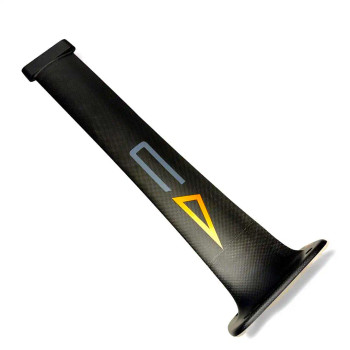

Code Foils High Modulus Mast
Code Foils
$1,067.00 - $1,177.00Code Foils High Modulus Mast Sizes: 75cm / 85cm World class foils demand world class masts. Code Foils pulled out all the stops here. Designer Notes: For the mast design we really wanted to prioritize stiffness and predictability. We did this through...$1,067.00 - $1,177.00 -
On Sale2024
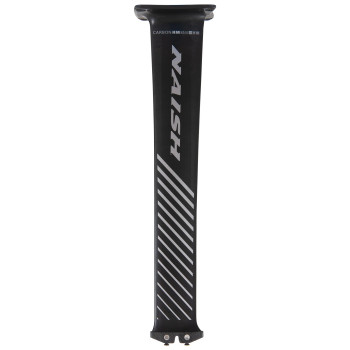

2024 Naish Foil Mast Carbon HM
Naish
$715.00 - $725.002024 Naish Foil Mast Carbon HM Sizes: 75 / 85 / 95 Size Weight (LB) Weight (KG) Mast Length (cm) Mast Length (in) Board Mount 75 3.66 1.66 75 29 1/2" Plate 85 4.11 1.86 85 33 1/2" Plate 95 4.58 2.08 95 37...$715.00 - $725.00 -


Axis PRO Ultra High Modulus Carbon Mast
Axis
$2,676.00 - $3,000.00Axis PRO Ultra High Modulus Carbon Mast Sizes: 720 / 800 / 900 / 1050 Affectionately named the 'dogleg' by the test team, the PRO – Ultra High Modulus Carbon is quite a departure from the industry's more conventional masts. Building on the...$2,676.00 - $3,000.00 -
On Sale

F-One 16mm Carbon Mast
F-One
$787.00 - $809.002025 F-One Carbon Mast 16mm Sizes: 80cm / 85cm Accessible, reliable and ultra-stiff, the F-ONE Carbon Mast 16 will bring instant feedback and direct sensations while foiling. 16mm profile High rigidity for a more direct feel Full Monobloc...$787.00 - $809.00 -


North Sonar AF
North
$799.00SONAR AF Aluminum Foil Edition Mast Options: AF72 / AF85 Includes: AF72 or AF85 Mast AF Board Adaptor A700 Fuselage S270 Stabilizer with cover Tool Kit Sonar Board Adaptor Screw Pack A (M8x40) Sonar Fuselage Screw Pack B (M8x35 Screws, M8 Flat...$799.00 -
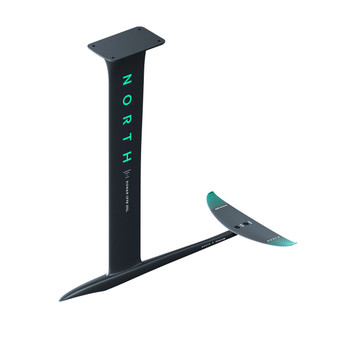
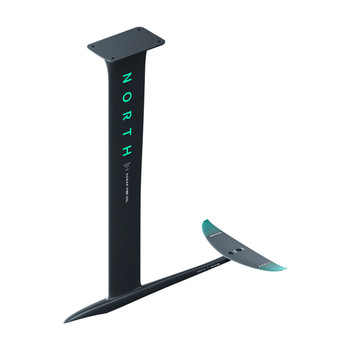
North Sonar CF Carbon
North
$1,149.00 - $1,199.00SONAR CF Carbon Foil Edition Mast Options: CF72 / CF85 Includes: Carbon CF72 or CF85 Mast with cover C700 Fuselage S270 Stabilizer with cover Tool Kit Sonar Fuselage Screw Pack B (M8x35 Screws, M8 Flat Washers) Sonar Stabilizer...$1,149.00 - $1,199.00 -
On Sale


Axis Red ADVANCE Fuselage
Axis
$179.00 - $357.00Axis Red ADVANCE Fuselage Sizes: Short - 675mm / Ultrashort - 620mm / Crazyshort - 580mm If you're into pushing the envelope in Prone, SUP, Wake, Wing or Pump, these will blow your mind. Are you looking to push harder, carve tighter turns and want an...$179.00 - $357.00
Ask most riders what shapes their foiling experience most and they'll talk about wings. Spend enough time on the water and you start to understand that the mast deserves at least as much of that conversation.
A hydrofoil mast is the structural backbone of your entire setup — it connects your board to the foil beneath you, transfers every input you make into movement through the water, and determines how much vertical range you have to work with in any given condition.
Getting the mast right for your discipline, your conditions, and your riding style is one of those decisions that pays back every single session. Getting it wrong is the kind of thing you notice immediately and feel for a long time.
Mast Length: What It Actually Changes on the Water
Mast length is the variable most riders think about first, and for good reason — it has a more direct and immediate effect on how foiling feels than almost any other single spec. Shorter masts in the 60-75cm range keep you closer to the water surface, which translates to more stability, easier recovery from breaches, and a more forgiving overall experience. For riders who are still developing their feel for the foil and learning to manage their height above the water, a shorter mast removes a meaningful amount of consequence from the learning process. Choppier conditions also favor shorter mast lengths — less mast in the water means less leverage for surface chop to work against you.
Longer masts in the 85-95cm range open up the vertical range that more advanced riding disciplines reward. Wave riders benefit from the clearance that lets them stay foiling through larger swell without the board touching down. Pump foilers and downwind riders chase the efficiency that comes from keeping the foil deeper in cleaner, less turbulent water.
Speed-oriented disciplines favor longer masts for the stability at high speeds that shorter masts can't provide at the top of their range. The tradeoff is real — more mast means more consequence when things go wrong, and the learning curve steepens proportionally with length.
Mid-length masts in the 75-85cm range are where a lot of riders land once they've developed enough feel to benefit from the added range without being overwhelmed by it. For wing foiling and kite foiling on the Great Lakes, this range handles the variety of conditions Michigan throws at you better than either extreme — enough clearance for the days when the water is moving, forgiving enough for the sessions when it isn't.
Mast Material: Carbon vs. Aluminum and Why It Matters
Material construction shapes everything about how a mast performs and how long it lasts, and the carbon versus aluminum decision involves real tradeoffs that are worth understanding before you buy.
Carbon fiber masts are lighter, stiffer, and deliver more direct energy transfer between your body and the foil beneath you. That stiffness translates to more precise feedback — you feel what the foil is doing more immediately and your inputs translate more cleanly into foil response. For experienced riders who have developed the sensitivity to use that feedback, carbon masts are genuinely transformative. They're also significantly more expensive and less forgiving of impacts. Carbon doesn't bend visibly under stress the way aluminum does — it can develop internal delamination or stress fractures that aren't always obvious from the outside, which means inspection after significant impacts matters more with carbon than with aluminum.
Aluminum masts are heavier and flex more under load, which dampens feedback but also dampens the consequences of mistakes. They bend visibly under stress rather than failing internally, which makes damage assessment straightforward. They handle impacts significantly better than carbon and carry a price point that makes more sense for riders who are still developing their skills and putting their setup through the learning curve that foiling inevitably involves. For most riders building their first serious foil setup, an aluminum mast is the honest recommendation — the performance difference is real but less meaningful at the stage where board time matters more than optimized feedback.
Some complete foil sets split the difference with carbon wings paired to aluminum masts, which is a combination worth paying attention to. You get the lift and glide benefits of carbon wings where they matter most for performance, with the durability and impact resistance of aluminum where structural stress concentrates. It's a combination that works well across a wider range of riders and conditions than either all-carbon or all-aluminum setups, and it's how a lot of experienced riders set up their everyday quiver boards.
Mast Compatibility: The Question Worth Asking Before You Buy
Mast compatibility is one of the most common sources of frustration in foiling gear purchases, and it's entirely avoidable with the right information upfront. Foil standards aren't universal — base plate dimensions, track systems, and fuselage connection methods vary between brands and sometimes between generations of the same brand. A mast from one manufacturer doesn't automatically fit a board or fuselage from another, and assuming compatibility without confirming it is an expensive assumption to get wrong.
Board track systems are the first compatibility point to confirm. Deep tuttle, plate mount, and various proprietary track systems all have different mast foot configurations, and matching your mast to your board's track system is non-negotiable. Fuselage compatibility is the second point — the connection between your mast and fuselage needs to be confirmed for the specific components you're combining, especially when mixing parts across brands or generations. At MACkite we deal with compatibility questions regularly and we keep current on which components work together across the brands we carry. If you're building a mixed setup or upgrading a single component in an existing configuration, reaching out before you buy saves the frustration of a mismatch after the fact.
How We Look at Masts
We've watched enough riders overlook the mast decision and then come back having figured out the hard way that it mattered more than they expected. It's not the most exciting component in a foil setup — nobody gets stoked talking about mast length the way they do about a new wing — but it's the one that shapes the feel of everything else more quietly and more consistently than most riders realize until they change it.
The masts we carry are ones we've ridden and tested in real Great Lakes conditions — chop, varying wind, the kind of sessions that sort out what actually performs from what looks good in a product listing. Our team has opinions on this stuff that come from time on the water, and we're happy to share them. If you're upgrading a mast, building a new setup, or just trying to figure out whether your current length is holding you back, reach out and we'll give you a straight answer.
Ready to Find Your Mast?
Browse our full selection of hydrofoil masts by length, material, and compatibility and reach out if you want help finding the right fit for your setup. A quick conversation before you buy is worth a lot more than returning something that doesn't work — give us a call, hit the live chat, or send us a message.