
RIIFT vs Foil Drive | The King and the New Kid
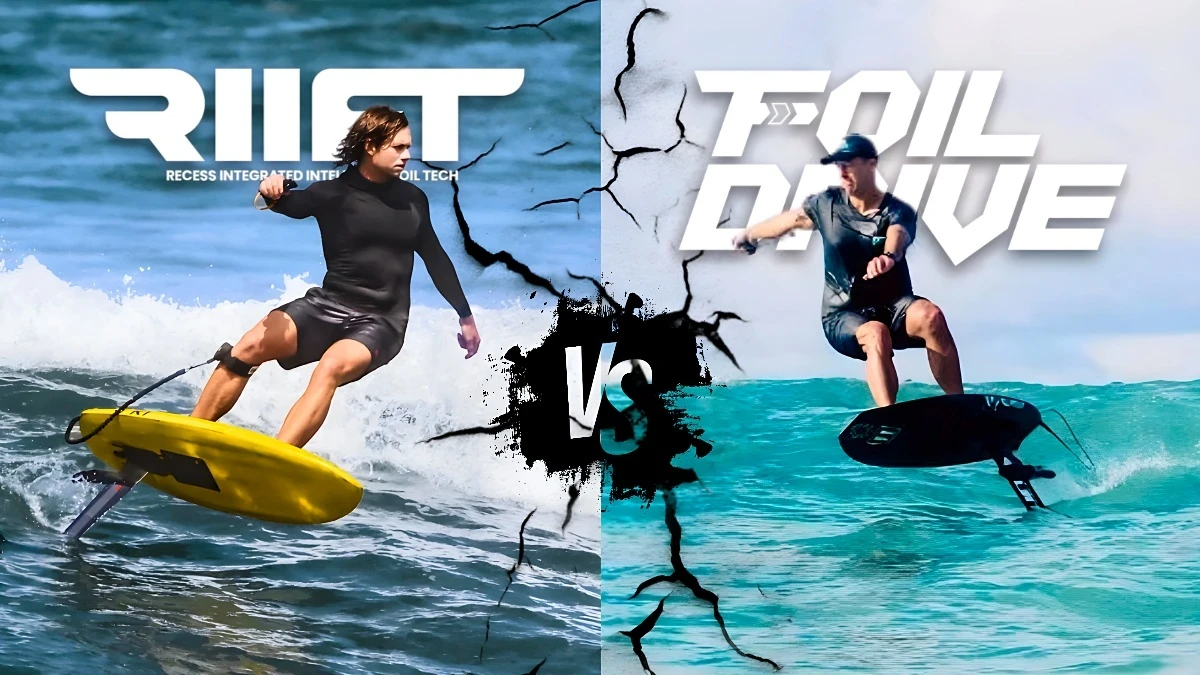
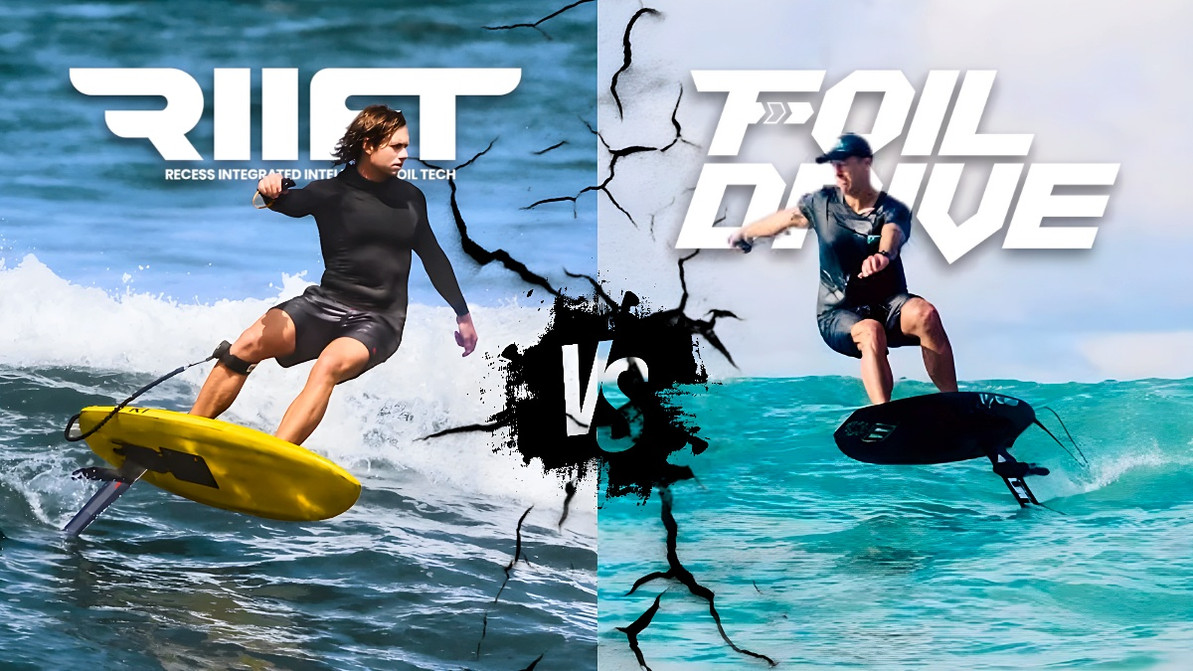
Search "RIIFT vs Foil Drive" and you'll find plenty of riders arguing over which one wins. Here's the thing, though. These two foil assist systems aren't nescessarily fighting for the same rider. They're built on two similar, yet different ideas about how a foil assist should live on your setup, and once you see that, the "which is better" question turns into a much more useful one: which is better for you?
Foil Drive is the established king of foil assist. It has years of sessions behind it, a deep parts ecosystem, and a bolt-on design that works with a massive range of boards and masts. RIIFT is the new kid, a fully integrated system out of Western Australia that fits the battery right into the board.
MACkite carries both, rides both, and has no reason to crown one over the other. So instead of a cage match, this guide breaks down how each system works, where each one shines, and which rider profiles line up best with each.
The Short Version | Two Philosophies, One Goal
Both systems exist to do the same job: get you up on foil with a motor, then let you shut it off and ride like it isn't there. Where they split is how they get there.
- Foil Drive is modular. The battery and electronics live in a housing that mounts between your mast and board, and the motor clamps to your mast. It retrofits to a huge range of existing gear.
- RIIFT is integrated. The Power Module drops into a dedicated track system molded into the board itself. The board, battery, and foil are designed to work together as one package.
Neither approach is "right." Each one makes trade-offs, and those trade-offs are what decide your pick.
How Foil Drive Works | The Bolt-On Benchmark
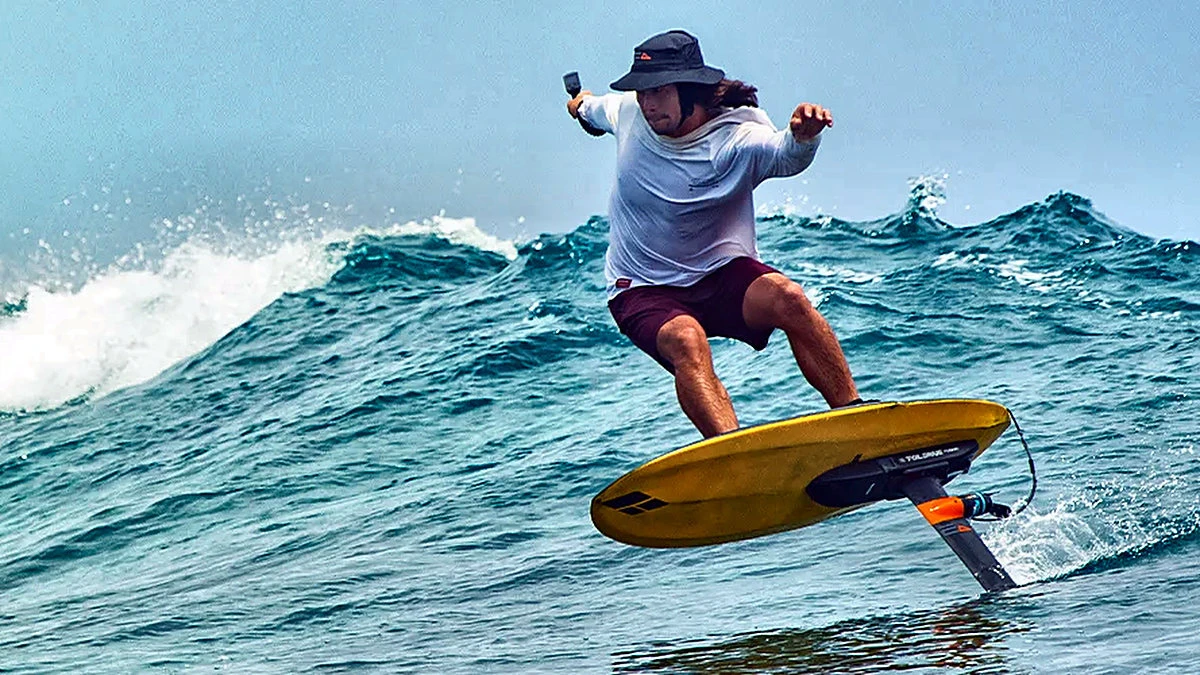
Foil Drive's Gen 2 lineup put everything inside a single housing that sits between your mast and board. The battery is IP68 waterproof, the electronics are sealed, and the motor mounts to the mast with Foil Drive's hardware. At launch, Gen 2 was compatible with 93 different masts, and that number is a big part of why Foil Drive became the default name in foil assist.
The Foil Drive Lineup
- Gen 2 Assist Slim | The smaller, lighter, performance-oriented unit for riders who prioritize feel and low weight
- Gen 2 Assist Max | More power and more runtime, which makes it the pick for most riders
- Foil Drive Fusion | The newest platform in the family, sold as a base kit with battery options
Why Riders Choose Foil Drive
- It works with gear you already own. If you have a foil and mast you love, odds are good Foil Drive can bolt onto them.
- Board freedom. Foil Drive can run on standard boards with the right mounting setup, or on purpose-built trench boards like the Appletree Zapple and Zapple S.
- A mature ecosystem. Multiple battery options, 2-blade and 3-blade props, controller upgrades, high power motor options, and a deep bench of spare parts.
- Years of field data. Foil Drive has been refined through thousands of sessions across prone, wing, SUP, downwind, and wake.
Where Foil Drive Asks for Compromise
- The battery housing sits at the mast, so moving your foil position also moves the battery weight.
- Retrofit setups add hardware to the bottom of the board, which some riders notice in flow and feel.
- With so many batteries, props, and motor options, the decision tree can get deep for first-time buyers.

How RIIFT Works | The Integrated Newcomer
RIIFT stands for "Recess Integrated Intelligent Foil Tech," and the name tells you where the focus is. Rather than mounting hardware under the board, RIIFT licenses its Tracks system to partner shapers who build it directly into the hull. The Power Module drops into the board, and the foil mounts independently.
The RIIFT Lineup
RIIFT offers three PowerPacks, each named by battery size:
- 2P PowerPack | 519 Wh, the lightest and most compact option
- 3P PowerPack | 778 Wh, the middle ground on runtime and weight
- 4P PowerPack | 1,037 Wh, the longest-running option
All three use the same 49 mm, 2,500 W motor with a three-blade hub and deliver the same static thrust. The difference between them is battery capacity, runtime, and weight.
The Board Side
RIIFT doesn't build boards. Instead, a growing list of shapers builds RIIFT-enabled boards, including KT, Axis, SPG, Sunova, Appletree, Amos Shapes, Kalama, Amundson, and Halley. One of the first to hit the market is the Appletree Zapple S RIIFT.
Why Riders Choose RIIFT
- Battery weight is centered between your feet. The Power Module sits inside the board, not hanging off the mast.
- The foil moves independently of the battery. Slide your foil forward or back to dial in trim without shifting the battery weight. That's a meaningful tuning advantage for riders who obsess over balance.
- A clean hull. With no external pod under the board, water flow along the bottom is smoother.
- Tool-free module swaps. Pulling and dropping in a Power Module is quick.
- One board, multiple roles. Pop in the blanking insert and the same board rides as a standard prone, wing, or parawing board.
Where RIIFT Asks for Compromise
- It requires a RIIFT board. RIIFT cannot be retrofitted to an existing board. If you have a quiver you love, you're adding a new board to the equation.
- It's new. Early production means a shorter track record and a parts network that's still growing.
- Board Tracks versions matter. Some RIIFT boards use a thinner, 2P-only Tracks setup, while others use a universal Tracks setup that fits all three PowerPacks. Pick carefully if you think you'll want a bigger battery later.
Side by Side | How They Stack Up
This isn't a scorecard. It's a quick reference for the differences that matter most when matching a system to a rider.
| Category | Foil Drive | RIIFT |
|---|---|---|
| Design approach | Modular bolt-on | Integrated into the board |
| Battery location | Housing between mast and board | Inside the board, between your feet |
| Foil position vs battery | Move together | Move independently |
| Board requirement | Works with many existing boards | Requires a RIIFT Tracks board |
| Mast compatibility | Wide range via adapters | Uses your foil on a RIIFT board |
| Ride without the assist | Remove the unit | Swap in the blanking insert |
| Track record | Years of proven sessions | New for 2026 |
| Ecosystem | Deep, with many batteries, props, and parts | Three PowerPacks, growing board list |
What It Costs | The Budget Picture
Pricing is where these two get closer than most people expect, especially at the entry level. All prices below are MACkite U.S. retail at the time of writing and can change, so always check the product pages for current numbers.
Foil Drive
- Gen 2 Assist Slim | $4,629.90 to $5,258, depending on configuration
- Gen 2 Assist Max | $5,161 to $6,451.50, depending on battery
RIIFT
- 2P PowerPack | $4,999
- 3P PowerPack | $5,999
- 4P PowerPack | $6,999
- Appletree Zapple S RIIFT board | $2,295
The Math That Matters
- If you already own a board that works with Foil Drive, the unit price is close to your total cost.
- RIIFT always includes a board in the equation, so a 2P PowerPack plus a Zapple S lands around $7,294 before mast and foil.
- If you were buying a new dedicated assist board either way, the gap shrinks, and a RIIFT 2P build sits right in the range of a Foil Drive Assist Max and trench board combo.
For a full line-item breakdown, including spare Power Modules and battery math, check out MACkite's RIIFT Foil Assist Cost | Full 2026 U.S. Price Breakdown.

Who Should Ride Foil Drive | Rider Profiles
Foil Drive tends to be the cleaner fit for riders who want flexibility and proven hardware.
The Quiver Owner
- Already has a foil, mast, and board dialed in
- Wants to add assist without rebuilding the setup from scratch
- Values running the same unit across more than one board
The Multi-Discipline Rider
- Splits time between prone, wing, SUP, downwind, and wake
- Wants one assist that bolts onto several setups
- Appreciates the deep menu of batteries and props for different conditions
The Proven-Gear Buyer
- Prefers hardware with years of field testing behind it
- Wants easy access to spare parts and accessories
- Doesn't want to be an early adopter on a big-ticket purchase

Who Should Ride RIIFT | Rider Profiles
RIIFT lines up well with riders chasing a specific feel who don't mind committing to a dedicated board.
The Prone Purist
- Loves the pure feel of prone foiling and worries an assist will dull it
- Wants battery weight centered under the body, not out at the mast
- Wants to tune foil position without throwing off balance
KT designer Kane De Wilde admitted he wasn't sold on foil assist until he tried RIIFT, and one short run changed his mind. That's the exact rider RIIFT is built for.
The New-Board Shopper
- Already planning to buy a dedicated assist board
- Wants the board, battery, and foil to work as one integrated system
- Likes the idea of one board that doubles as a non-assist prone, wing, or parawing board
The Gear Analyst
- Judges setups by balance, trim, and responsiveness more than spec sheets
- Interested in clean hull flow and integrated design
- Comfortable being early on a new platform
Why MACkite Carries Both
Plenty of retailers pick a side. MACkite doesn't, because the riders who walk through the door (and the much bigger crowd that shops online) aren't all chasing the same thing. A rider with three boards and a favorite foil has a very different need than someone starting fresh who wants the most integrated feel possible.
Foil Drive earned its crown by making foil assist accessible to almost any setup. RIIFT is pushing the category forward by rethinking where the battery belongs. Both are excellent, and the foil assist world is better with both of them on the water.
If you're on the fence, the best move is to talk it through with someone who has ridden both. That's exactly what the MACkite crew is here for.
Key Takeaways
- RIIFT vs Foil Drive isn't a winner-take-all matchup. They take different approaches and fit different riders.
- Foil Drive is modular. It bolts onto a wide range of existing boards and masts, with a deep, proven ecosystem.
- RIIFT is integrated. The Power Module lives inside a dedicated board, centered between your feet, with the foil free to move independently.
- Your current quiver matters most. Own a setup you love? Foil Drive likely fits. Buying a new assist board anyway? RIIFT deserves a hard look.
- Pricing is closer than it looks. At the entry level, a RIIFT 2P build lands in the same range as a Foil Drive Assist Max and trench board combo.
- New vs proven is a fair trade-off. RIIFT offers fresh integration ideas, while Foil Drive offers years of refinement and parts support.
FAQ | RIIFT vs Foil Drive
Is RIIFT better than Foil Drive?
Neither is objectively better. Foil Drive is the stronger fit for riders who want to retrofit existing gear and value a proven ecosystem. RIIFT is a better fit for riders who want a fully integrated board-and-battery system with weight centered between the feet.
Can I put RIIFT on my current foil board?
No. RIIFT requires a board built with RIIFT Tracks by a licensed shaper. It cannot be retrofitted to a standard board.
Can I use my own foil and mast with RIIFT?
RIIFT mounts the foil to the board independently of the Power Module, so you can run a foil you already know on a RIIFT-enabled board. Starting with a familiar mast and foil makes it easier to judge how the assist feels.
Can I use Foil Drive on my existing board?
In many cases, yes. Foil Drive is designed as a bolt-on system with broad mast compatibility. Your board and mast combination will determine which mounting hardware you need, and dedicated trench boards are also available.
What's the main difference in how they ride?
The biggest difference is weight placement. Foil Drive's battery housing sits at the mast, so it moves with your foil position. RIIFT's Power Module sits inside the board between your feet, so you can reposition the foil without moving the battery.
Which is cheaper, RIIFT or Foil Drive?
If you already own a compatible board, Foil Drive is usually the lower total cost. If you're buying a new dedicated assist board either way, the gap narrows considerably, and entry-level builds land in a similar range.
Can I ride a RIIFT board without the assist?
Yes. Swap in the blanking insert and the board rides as a standard prone, wing, or parawing board.
Which RIIFT PowerPack should I choose?
The 2P, 3P, and 4P all share the same motor and thrust. The difference is battery capacity, runtime, and weight. Lighter riders and short-session riders often lean toward 2P, while riders who want longer runs lean toward 3P or 4P. Just make sure your board uses the universal Tracks setup if you want the option to run larger PowerPacks.
Related Reading
- RIIFT Foil Assist Cost | Full 2026 U.S. Price Breakdown | Every line item, battery math, and how RIIFT prices out against the field
- RIIFT Foil Assist | Prone Foil Feel With Power on Demand | Kane De Wilde on why RIIFT won over a foil assist skeptic
- Appletree Zapple S RIIFT Foil Assist Board Overview | A close look at one of the first RIIFT-specific boards
- Foil Drive Gen2 | Announcing Assist MAX and Assist Slim | How the Gen 2 platform works and how the Slim and Max differ
- Why I Chose the Foil Drive Gen 2 Assist Max for Prone Foiling | A rider's take on setting up Foil Drive for prone
Still Deciding? | Let's Talk Foil Assist
Choosing between RIIFT and Foil Drive comes down to your current gear, how you ride, and the feel you're chasing. The MACkite crew rides both and is always stoked to help you sort out which one fits your sessions best.
Drop us a line at Kiteboarder@MACkite.com and tell us about your setup. You can also browse the full lineup of foil assist units or dig into the Foil Assist Knowledge Center.

Recent Posts
-
RIIFT vs Foil Drive | The King and the New Kid
Search "RIIFT vs Foil Drive" and you'll find plenty of riders arguing over which one wins. Here's t …23rd Nov 2026 -

Duotone Rebel D/LAB vs. F-One Trigger V3 Kite Review
The Brazilian Brothers are back for a direct kite comparison, a one-on-one between the F-One Trigg …19th Nov 2026 -

RIIFT Foil Assist and Code Foils S Series Session
In this chill drone session, Ryan Hooker takes to the water to demonstrate the RIIFT Foil Assist 2 …18th Nov 2026