
Appletree Zapple S RIIFT Foil Assist Board Overview
Appletree's New RIIFT-Specific Foil Assist Boards
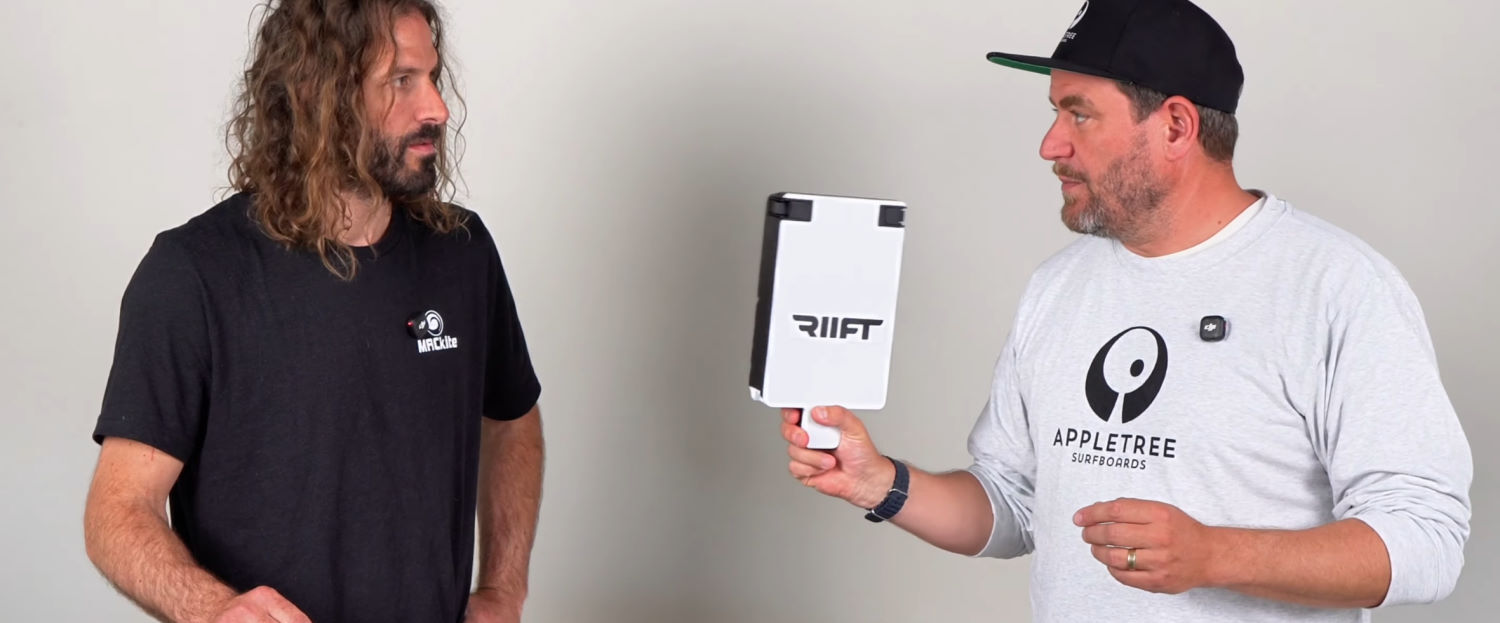
Tucker is joined by Wieger from Appletree Surfboards take a look at the fresh, brand-new Appletree boards designed specifically for the highly anticipated RIIFT foil assist system. While Appletree isn't part of the RIIFT brand itself, the RIIFT system requires a dedicated foil assist board with special tracks to function. RIIFT approached Appletree about six or seven months ago to collaborate. Currently, Appletree is the only larger factory brand producing these, along with smaller local shapers. They have worked closely with their team rider Hugh Mitchell from Western Australia, who was heavily involved in dialing in the development, balancing, and foiling of the system.
The Zapple S Shape and Integrated Design
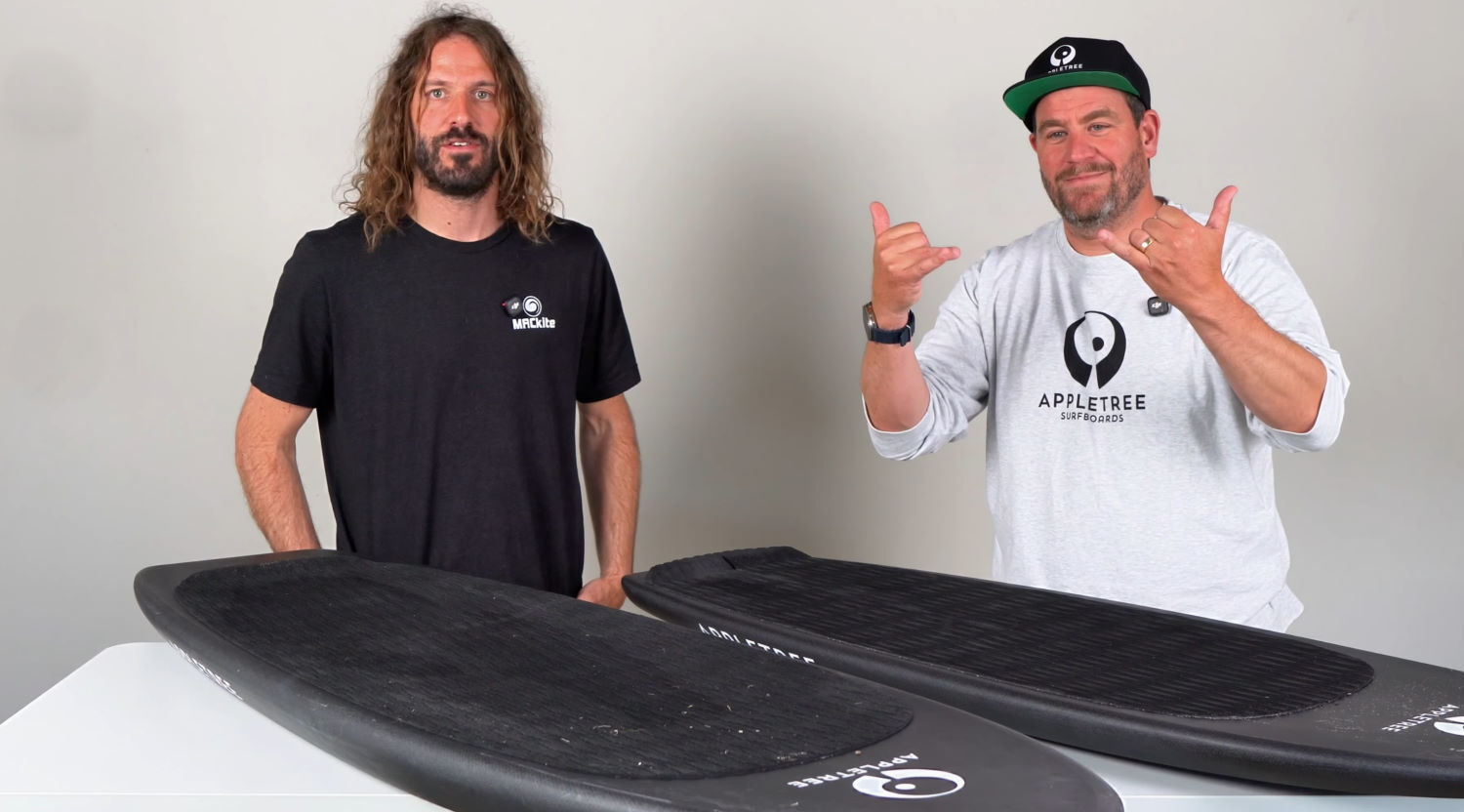
The shape of these new boards is based on the Zapple S, which is the high-performance version of Appletree's original Zapple (the original trench board design), launched about a year ago. Appletree also manufactures a big Zapple (in 60, 70, and 80-liter sizes) that will eventually be geared toward pure eFoiling with massive batteries, but for now, they are focusing strictly on the high-performance market.
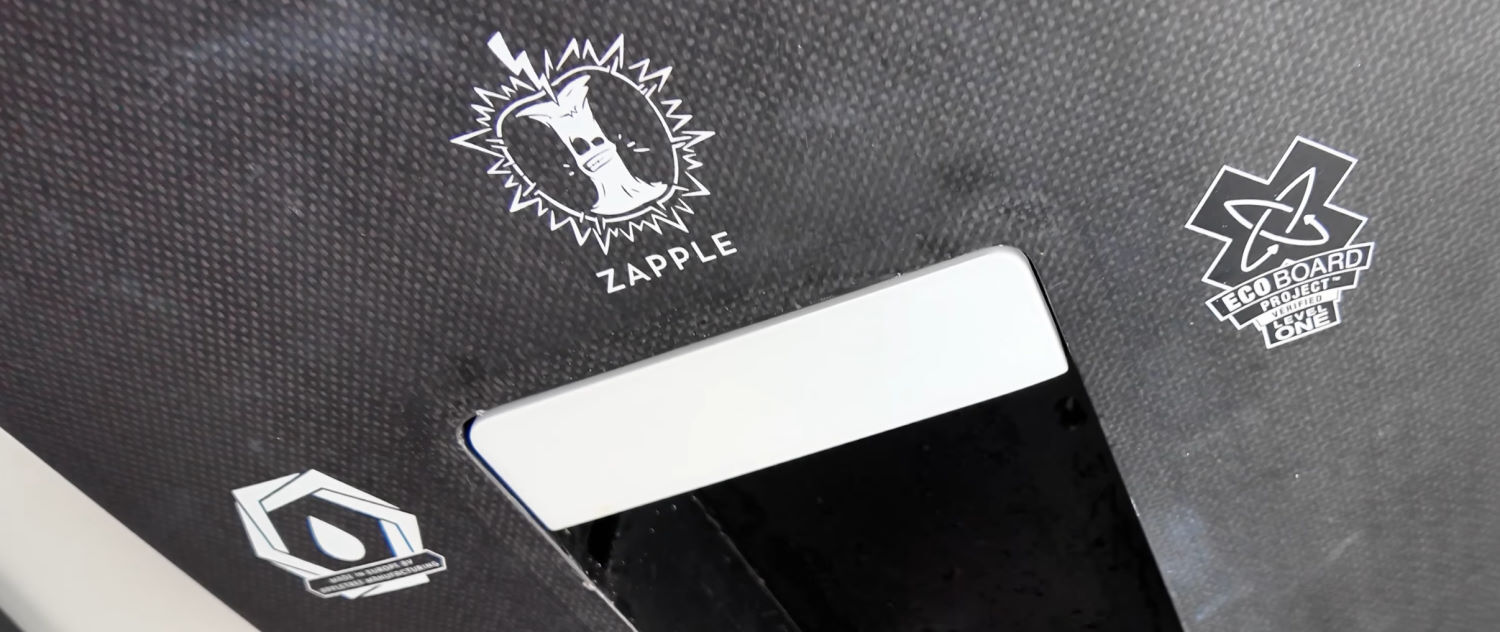
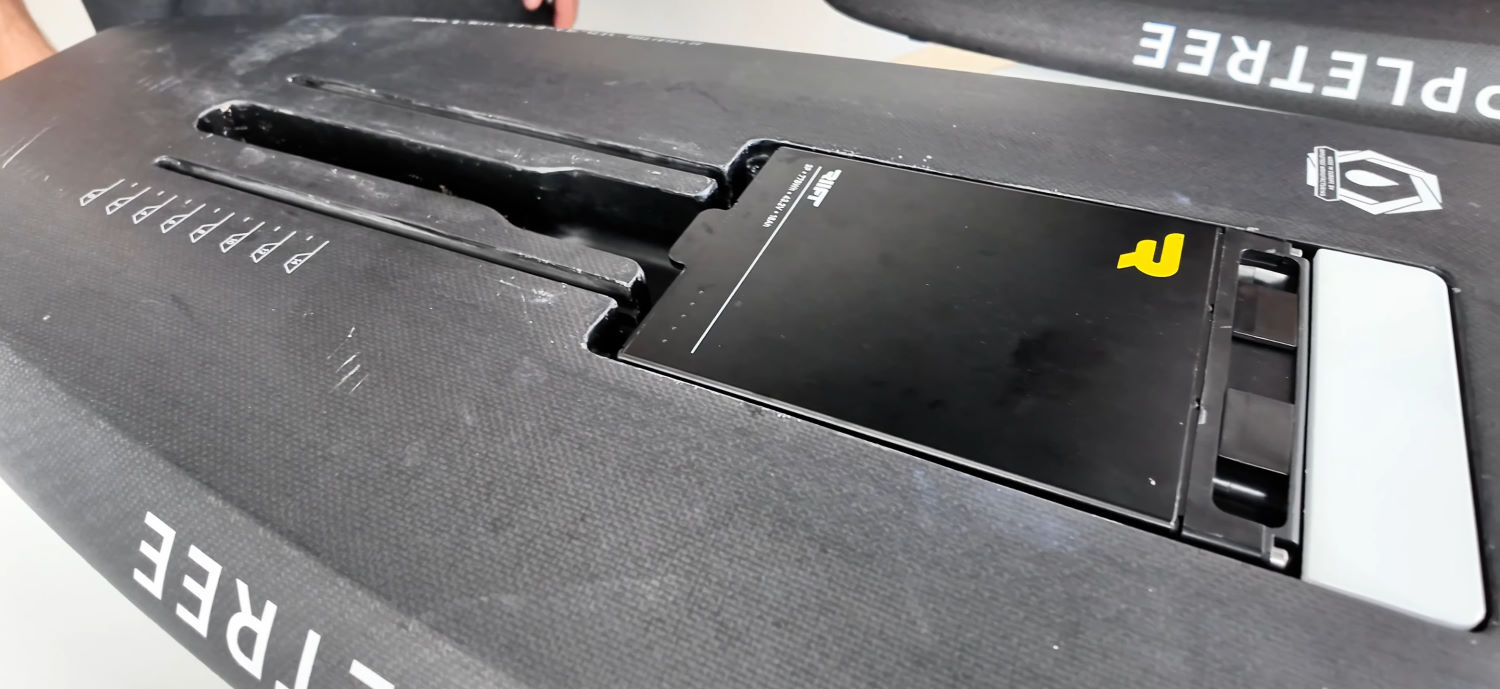
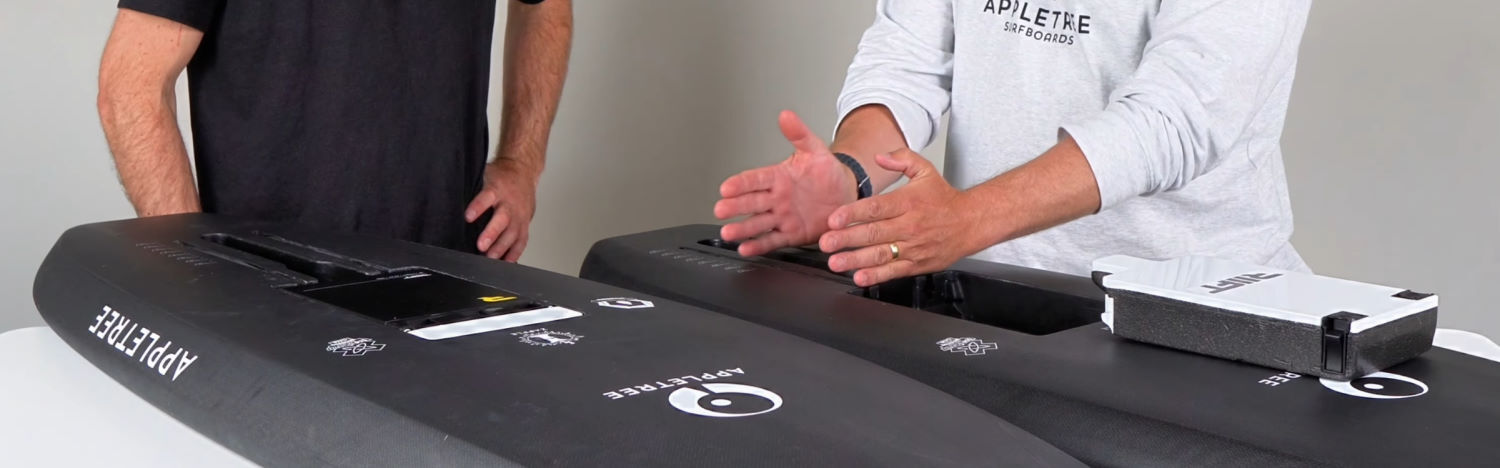
The biggest structural difference with the RIIFT system is that it's built completely into the board. This creates a far smoother water flow compared to the Foil Drive Gen 2 trench boards. The trench boards have a hole in the front and back of the unit that creates a lot of turbulence. On the RIIFT board, there is a completely flat lifting surface behind the foil. A good part of a board's lifting capability happens in that tail area, and the RIIFT design allows for that to stay flat.
Riding Unpowered: The Blank Insert
A huge selling point for crossover riders is that you can drop a blank filler piece directly into the battery slot. Weighing in at just under 7 pounds with the blank installed, the board functions exactly like a normal prone board. With a trench board, prone surfing without the unit is frustrating because the trench makes the board stick to the water when you try to lift off. The Appletree RIIFT board avoids this entirely. The filler piece comes included with the Appletree board, rather than the RIIFT unit.
Battery Sizes and Board Form Factors
The RIIFT system offers three battery sizes, and Appletree is building boards to accommodate each one:
- The 2P Board: Designed for the smaller 500+ Wh battery. Because this battery is so shallow, Appletree was able to make the 2P board much thinner than standard trench boards. You get an incredibly connected feel, standing right on top of the battery with only the layers of carbon in between. Wieger is excited about this because, at his weight, he normally couldn't even paddle a 4'6", 26-liter prone board. But with the assist, he gets the advantage of riding a tiny board and absolutely ripping on a size he'd never be able to use otherwise. And thanks to the light weight, you can also use it to pump more and save the motor for when you really need it.
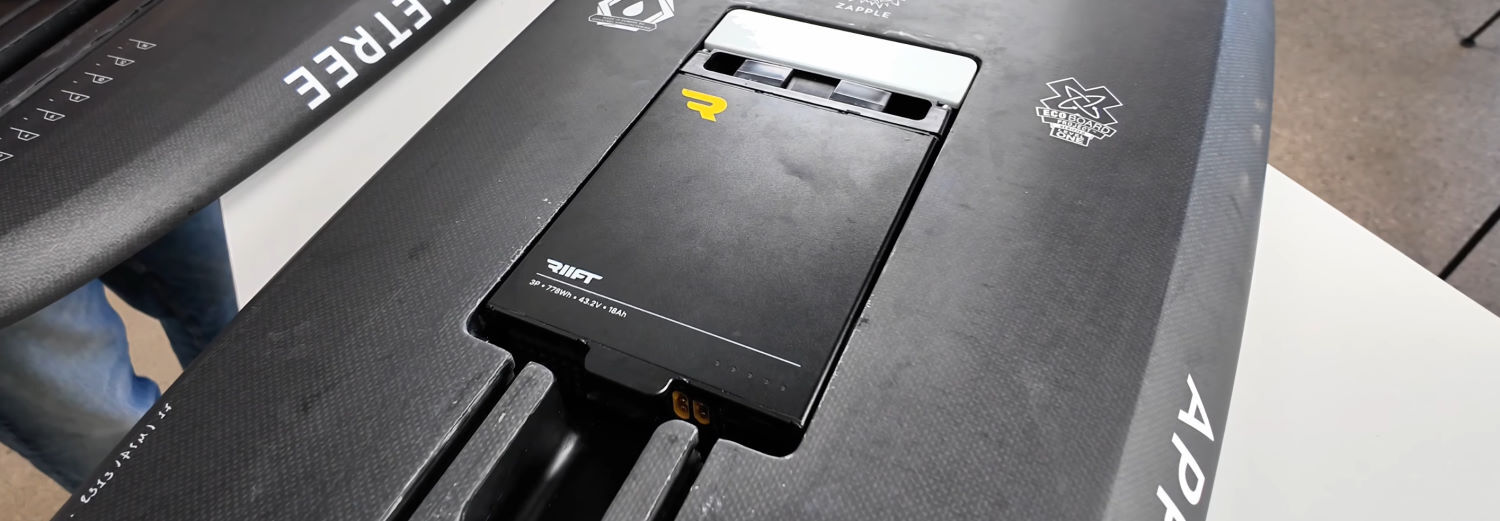
- The 3P Board: Built to house the medium 793Wh battery, which is not quite 3 inches thick, the 3P is the sweet spot for most riders, offering a ton of runtime without a huge weight penalty.
- The 4P Battery: The massive 1000Wh battery. This is essentially an eFoil setup, making it ideal for 40-mile downwinders, trigger-happy riders, or navigating heavy headwinds.
Independent Foil Placement and Weight Distribution
Keeping weight close to your feet is critical in foil sports; the further the weight gets from your feet, the less responsive the board becomes. With the Appletree RIIFT boards, you stand directly over the battery. Even with a larger battery installed, it doesn't feel drastically different or less lively than a normal board.
During testing, Appletree noticed they were setting the foil much further forward. Unlike other assist systems where the unit and the foil move together as a single balance point, the RIIFT system allows you to move the foil completely independently of the battery weight. This is a massive advantage. You can align the center of lift of your specific foil (usually the apex of the foil curve) straight over the weight of the battery. Because of this, the transition from motoring to unpowered gliding is incredibly smooth and seamless.
Signal Window and Duck Diving
Located at the top of the board is a dedicated signal window. Appletree has worked closely with assist companies the past couple years to perfect the signal transmission right through the board. The connection is flawless. This allows you to literally duck dive straight through waves while the motor pushes you through, all without ever breaking the remote connection—a lovely extra feature when dealing with larger surf.
Why Are There No Strap Inserts?
These first-generation boards do not feature strap inserts. The position of the battery box makes it impossible to put inserts in the standard locations. While custom front inserts could theoretically be added, very few riders are doing heavy jumping on a prone assist board anyway due to the extra weight. For riders who absolutely need straps, stick-on inserts are the perfect alternative. They are lighter weight than standard inserts, save your ankles, and are incredibly easy to replace if needed.

The Ultimate One-Board Quiver and Rapid Progression
Tucker and Wieger see this setup as the ultimate potential one-board quiver. It shines for light wind parawing, winging, prone, assist riding, and downwind riding.
Above all, this system acts as a cheat code for rapid progression. The hardest part of foiling is getting up. With the assist, if you fall, you are back up and riding in seconds. You can take more risks, push your turns harder, and easily triple your session count. If conditions are totally flat, you can cruise your local lakes, canals, or rivers, or even commute if you live near the water. The ability to get more repetitions translates directly to rapid improvement, much like practicing surfing on artificial waves.
When Can I Get One?
Appletree is ramping up production on these boards, and they should start becoming available around November, 2026 alongside the RIIFT launch.
MACkite Subscription Links:
YouTube | Instagram | Spotify Oddcasts
Contact MACkite Below:
800.622.4655 | Kiteboarder@MACkite.com | LIVE Chat Messenger

Recent Posts
-
Manera Pocket Wing Belt Overview
Jeff met up with Billy Ackerman from F-One on the beach at the KoGL Test Fest to take a look at th …9th Oct 2026 -

Parawing Redeploy Tip: The Simple Trick for Clean Launches
Jeff caught up with Billy Ackerman from F-One on the beach, where they chatted about parawings. Wh …9th Oct 2026 -

Appletree Zapple S RIIFT Foil Assist Board Overview
Appletree's New RIIFT-Specific Foil Assist Boards Tucker is joined by Wieger from Appletree Surfbo …8th Oct 2026