
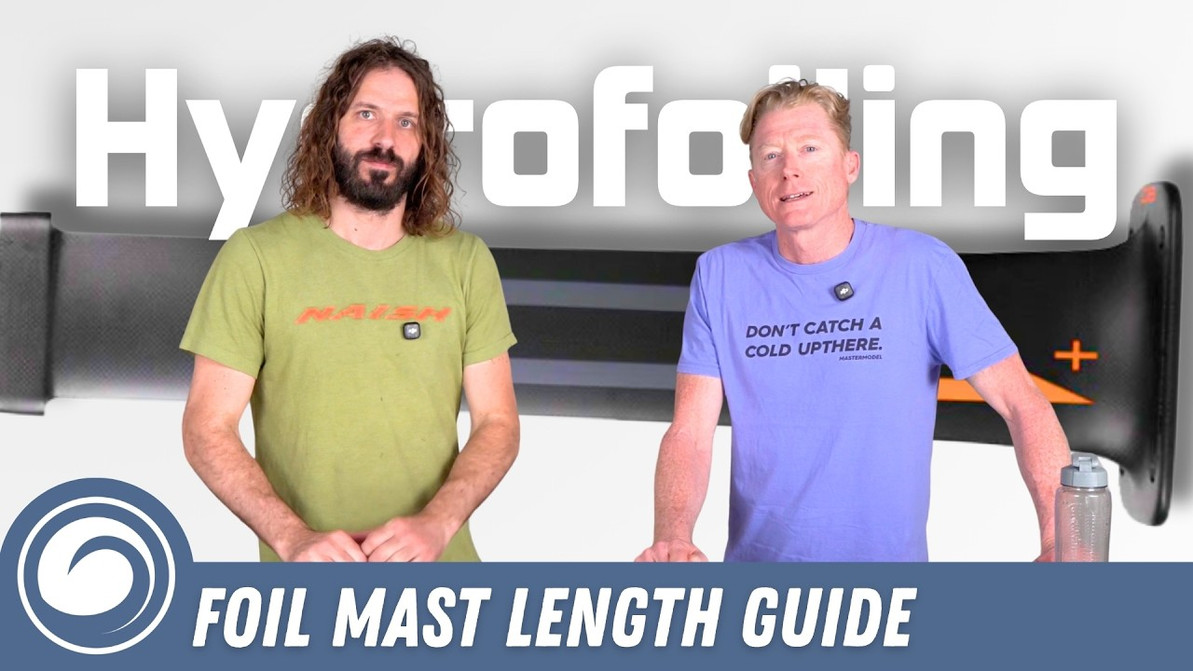
How to Choose the Right Foil Mast Length
Jeff and Tucker dive into a majorly important part of the foil setup: the mast. With foiling experience dating back to 2013 and 2016, their thought processes on mast length have evolved significantly over time. As foil designs have improved, the way riders approach mast length across windsurfing, wing boards, kite boards, and wake foils has completely shifted.
If you're thinking about length, why there are so many different sizes, and what you're trying to get out of your foil, this breakdown covers exactly how to choose the right setup.
Riding Style Dictates Your Mast Length
Until you really get a feeling for what you like and why, choosing a mast length comes down to your riding style. If you're kite foiling or tow foiling, you're generally riding really fast. Kite foiling especially requires you to lean and keel over significantly to counter all that power from the kite, so having a longer mast really helps with that clearance. You also tend to ride smaller, faster foils in those disciplines. Because you can't easily rise and fall with the swell and chop, you have to cut right through it. Naturally, a longer mast works really well for that.
Debunking the "Shorter is Easier" Myth
There's a common myth in the industry that shorter foils are easier to learn on than longer foils. Tucker puts a disapproved stamp on that statement for general progression. A tiny 20-inch mast might be helpful for your very first day. Because you don't need to balance high up, and if you breach, the board just drops back to the water, but you outgrow it almost immediately. The board simply isn't long enough to recover from a breach drop, and you end up spearing the nose over the handlebars.
Jeff agrees, noting that falling on a shorter mast isn't necessarily safer. A longer mast actually gives you more forgiveness and a larger margin for error. When you do fall on a longer mast (assuming you fall in the same direction as the board) your body is placed further away from where the foil is. It's highly recommended to put a new rider on a mast they can actually progress into, rather than one they'll progress out of immediately.
The 75cm to 85cm Sweet Spot
If you want to skip the tiny beginner masts, the 75cm to 85cm range is the absolute sweet spot for most riders. If your local riding location is a bit shallow and you don't want to wade out a mile just to launch, a 75cm mast offers plenty of forgiveness and stability. But looking at the median across the industry, 80cm is where most riders find their happy place.
Why Winging Demands More Length
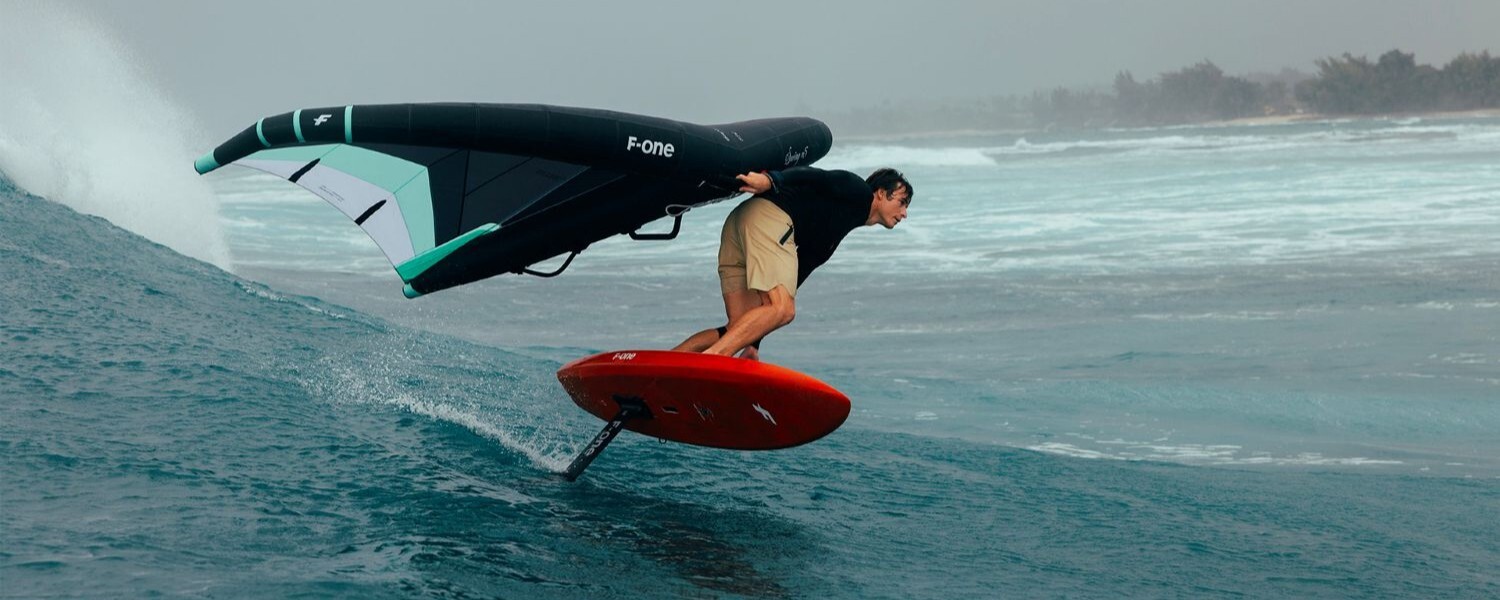
When you start talking about winging, you're dealing with much larger, wider foils and wider boards. Because of that extra width, when you tip that big monster over into a turn, you have less margin for error — you're either going to breach a wingtip or touch the board down on the water. Having a little more distance between the board and the foil lets you roll over and execute a proper turn while maintaining your ride height.
The longer your mast is, the more stability you have on the board. When you're on the water, the mast acts as your greatest source of ballast and directional stability, essentially working like a fin on a surfboard. The faster you go, the more that directional stability matters.
Discipline-Specific Sizing Breakdown
As you progress into multiple disciplines, your mast needs might shift based on what you're trying to achieve on the water:
- Kite Foiling: Historically, kite foilers have preferred the longest sizes, often riding in the 90cm to 105cm range to accommodate extreme lean angles and high speeds.
- Winging: The 75cm to 85cm range is where the vast majority of wingers live, with 80cm being the perfect median.
- Parawing / Downwind: If you're primarily a downwind rider just gliding for miles and pumping, you aren't making critical in-the-pocket turns. Going a little shorter (around 75cm) gives you more pumpability, more glide, and less drag. If you want to carve waves, though, you might want a bit more length.
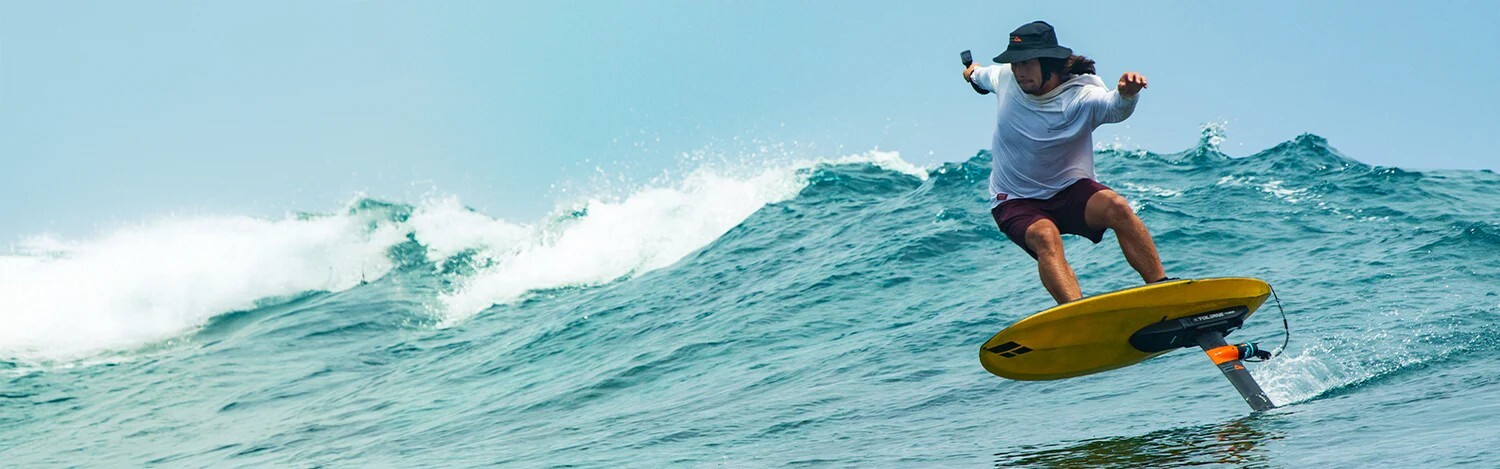
- Prone / Surf: The 75cm to 80cm range is ideal. You need agility, but you also need enough length to manage the chop.
- Wake Foiling: If you want your wings in the wake, an 80cm mast is a fantastic all-around size.
Foil Drive and Motorized Setups
When you introduce a Foil Drive or an eFoil assist into the mix, things get interesting. Tucker notes that he generally doesn't change his mast size for a Foil Drive — he sticks to his preferred 80cm to 85cm range. You do have to consider the drag of the motor, though.
If you want to transfer energy efficiently and keep the motor completely out of the water while you ride, you need a longer mast to give yourself the real estate to ride high. If you're riding a trench board (where the battery is integrated into the board), you actually lose a bit of effective mast height, which makes having a slightly longer mast even more important to maintain your clearance.
Modern Foil Design Changes Everything
One major factor that allows riders to go slightly shorter today than they did years ago is the progression of foil design. Older foils had big, thick tips that weren't designed to breach. If you breached a tip back in the day, you were going down instantly.
Nowadays, almost every modern, higher-aspect foil is designed to breach a few inches and still feel completely stable. Because the foils are so much friendlier and more forgiving in the breach, you can get away with a shorter mast without the constant fear of crashing.
The Ultimate One-Mast Quiver
If you're looking to build a quiver and only want to buy one single mast to do absolutely everything — kite, wing, parawing, prone, wake, and Foil Drive — Jeff and Tucker are in complete agreement. The 80cm to 82cm mast is the undisputed champion. It's the perfect compromise that offers enough length for hard carves and chop clearance while remaining short enough to minimize drag and maximize pumpability across every single foiling discipline.

The MACkite Take
Mast length is one of the most overthought decisions in foiling, but the answer for most riders is genuinely simple. Jeff and Tucker have been at this since 2013 and 2016 respectively, and their conclusion after all that time is that 80cm to 82cm does 90% of the work for 90% of riders across every discipline. Here's why, and where the exceptions live.
- Buy the 80cm to 82cm if you're building a one-mast quiver. It's the undisputed champion for anyone riding across kite, wing, parawing, prone, wake, and Foil Drive. Long enough for hard carves and chop clearance, short enough to keep drag and pumpability in check.
- Skip the tiny beginner masts—longer masts are more forgiving, not less. The "shorter is safer to learn on" idea is a myth. A longer mast puts your body further from the foil when you fall, gives you more margin for error, and you won't outgrow it in a week. A 20-inch mast is a one-day tool that leaves new riders spearing the nose over the handlebars on breach drops.
- Discipline tweaks worth knowing: kite foiling and towing want 90 to 105cm for lean angles and high speed. Winging and wake foiling live in the 75 to 85cm range with 80 as the sweet spot. Prone/surf runs 75 to 80cm for agility with enough length to handle chop. Downwind parawing can go shorter (around 75cm) for glide and pumpability, or add length if you want to carve waves.
- Foil Drive tips slightly longer. Tucker doesn't change his 80 to 85cm preference for Foil Drive, but the motor drag makes staying high on the mast matter more. Trench boards (with the battery integrated into the board) eat some effective mast height, which is another reason to lean toward the longer end of the range.
- Modern foils changed the math. Older thick-tipped foils crashed instantly on breach. Today's higher-aspect foils tolerate a few inches of breach without dropping, which is exactly why riders can now confidently ride shorter masts than they could five years ago. The equipment gave everyone permission to go slightly shorter but "slightly" is the key word.
MACkite Subscription Links:
YouTube | Instagram | Spotify Oddcasts
Contact MACkite Below:
800.622.4655 | Kiteboarder@MACkite.com | LIVE Chat Messenger

Recent Posts
-

2026 Duotone Rebel D/LAB Review: 30-Knot Test
The Brazilian Brothers are ready to provide honest feedback on the 2026 Rebel D/LAB by Duotone. Th …13th Oct 2026 -

2026 Duotone Jaime SLS Kiteboard Review
The Brazilian Brothers are back to bring you another product review. Today, their focus is on the …13th Oct 2026 -
Manera Pocket Wing Belt Overview
Jeff met up with Billy Ackerman from F-One on the beach at the KoGL Test Fest to take a look at th …9th Oct 2026