

F-One Frigate V2 Parawing Review
Tucker brings a fresh review on the highly anticipated F-One Frigate V2 parawing after putting it through its paces for about a month. This isn't just a version one Frigate with a new bar or some different colors thrown on it. The Frigate V2 has been designed from the ground up. It's a completely different wing, but it maintains the same soul and intention as the original: riding fast and riding powered.
The Included Downwind Bag
F-One includes a really nice backpack-style downwind bag with the Frigate V2. It features a chest strap, venting along the sides, and a drawstring top. There's also an internal pouch for separate items that's larger than what you typically see from other manufacturers. It's perfect for a hydration pack, downwind rescue tools, or even spare wings.
The bag is definitely large enough to pack the wing up on the fly with a messy stow while you're out on the water. If you pack them nicely in individual dry pouches, you can even fit two wings inside. It's a great inclusion rather than just a basic stuff sack, though it isn't the absolute perfect downwind pack. The pads absorb water, and the drawstring top leaves a little something to be desired, but the added internal pouch is a fantastic touch. F-One also printed handy instructions on the inside of the bag covering bridle connections, safety preparations, line connections, and drying.
The Bar and Harness Line
If you're familiar with the F-One Quest, you'll be familiar with this bar. It's an awesome, proven bar, so there was no reason to change it. It includes an F-One loop-style harness line that sits at about 27 centimeters when stretched out. It stays wide open, making it incredibly easy to hook up one-handed without even looking. It's adjustable, and compared to earlier versions, this one is a little thinner so it doesn't interrupt your grip quite as much.
Tucker's favorite part of this bar is the nub/kink in the center with a soft bumper. When you're riding powered up and splitting the front lines, or just walking around with the wing in the air while staging, that little kink provides a nice spot for your thumb. It gives you extra leverage over the depower and helps the wing's bridles shed off if they get snagged on the front. There's also a plastic finger splitter in the front so your hands don't rub, chafe, or kink the lines.
Bridle System and Lines
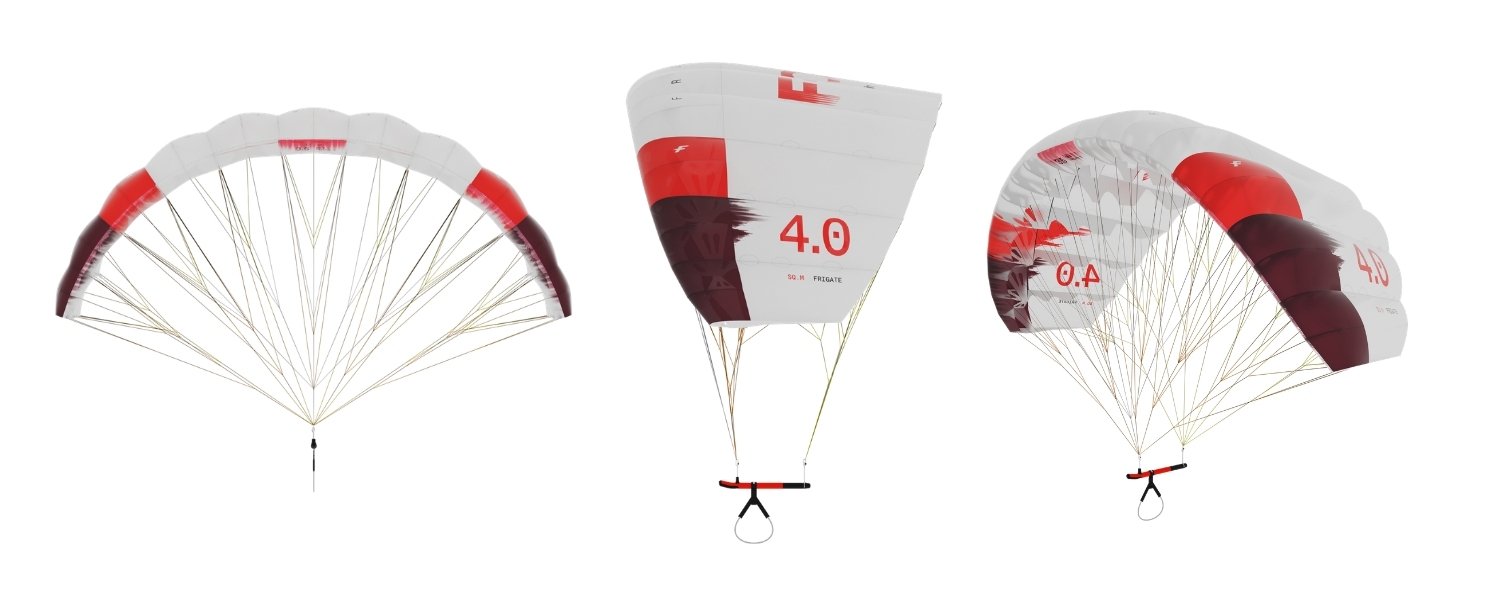
This is where things deviate from the Quest quite a bit. The Frigate V2 features just two stages of lines. You have a front set of A-lines marked in white, a second set of A-lines in orange, and then your B-lines (the brake/rear lines) in yellow. Many wings today use three, four, or even five stages over a yoke system. F-One got rid of the yoke altogether.
You can run your hand all the way down with no connection. The A and B lines are separated off the A's for easy stowing off the fronts using the white lines. The front A-lines have a smoother, thicker texture than the rest. The line terminations are cleaner and woven back in, making them very smooth on your hands. They're more resistant to wear and won't chew up your hands with nasty hard ends like you get with narrower, non-spliced lines. This A and B system provides a very unique, automatic, locked-in feel.
Canopy Design and Materials
Looking at the leading edge, F-One implemented bigger, stiffer battens. They're very formed and won't deform easily, which creates a highly efficient profile. There are lots of laser-cut cells—it almost looks like spaghetti. The individual cells are very limited and skeletonized to allow for a lightweight, compact pack job, but they still provide the proper support in the leading edge where it really matters to form the shape, generate power, and provide forward drive.
Moving to the trailing edge, things get much more lightweight and simple. There's less going on back there to keep it super lightweight and packable. It packs down to the size of a grocery bag. The violet and white canopy material is super light, very hydrophobic, soft, and highly packable. F-One spent a lot of time making sure this wing could be packed as small as possible while maintaining quality in the build, reinforcing the line connections without skimping.
Who Is the Frigate V2 For?
It's important to realize that the F-One Frigate V2 is designed for a very distinct group of riders. This is not your everyman wing. It's aimed at high-speed, high-performance riders who want to ride small foils and push the limits on top-end speed. It's built for people who want to ride with more power, stow the wing down tight to rip waves, and throw it back out consistently.
This wing isn't beginner-friendly. It doesn't have a lot of low-end grunt. It likes to be flown a particular way and it rewards good technique. If you're a beginner, or a rider who prefers to ride slow and underpowered, this isn't the wing for you. You'll be much happier looking at the F-One Quest or a similar wing dedicated to ease of use and low-end pull.
Performance and Sizing Recommendations
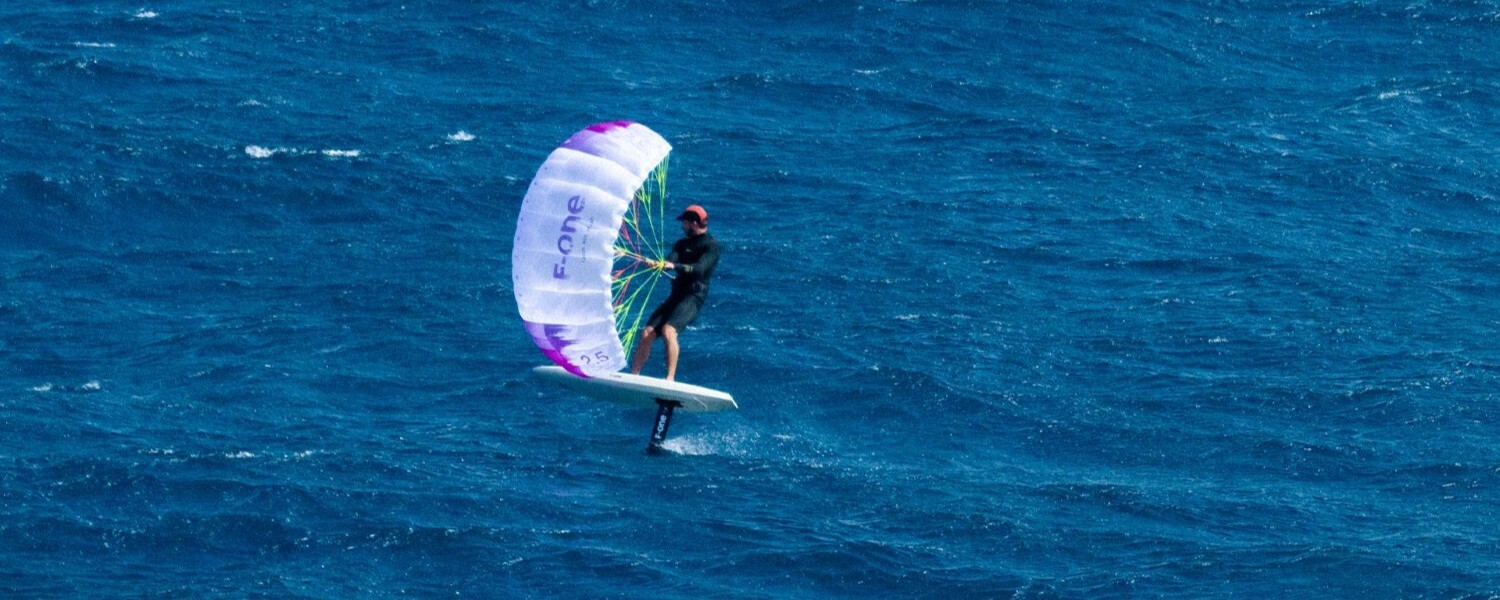
Tucker tested the Frigate V2 as an intermediate parawinger, riding waves in all wind conditions on high-aspect foils down to 600cm. During his first few sessions, he was riding in 17 to 18 knots on the 4-meter. Normally, he rides a 4m in those conditions, but he found himself pretty underpowered and struggling to make it work.
The Frigate V2 has a very specific sail angle that it likes. It wants to drive forward and carry speed and power. Because of this, it needs more wind and power than other 4-meter wings. Tucker highly recommends sizing up a half-meter to a full meter. If you normally ride a 4m, you'll likely want a 4.5m or a 5m in the Frigate V2 to get the performance you're looking for.
F-One Frigate V2 vs. Ozone Afterburner
When looking at the highest performance wings on the market, there will naturally be comparisons to the Ozone Afterburner. The top-end on the Frigate V2 is phenomenal and competes directly with the Afterburner.
The Afterburner has better upwind ability, a better top-end range, and a better total range because it has more low-end grunt. It also offers more depower at the bar due to its multi-stage yoke system. The Afterburner doesn't pack down as nicely or as easily as the Frigate V2, though. It has shorter bridles, is harder to stow and redeploy, and is bulkier when packed.
If you're doing quick 20-second surf runs where you need to stow and throw constantly, the Frigate V2 is the better choice. If you're driving hard upwind for long distances and doing massive downwinders where you need maximum range and depower, the Afterburner takes the edge.
Stowing and Redeploying
The Frigate V2 has fairly short bridles for a 4-meter wing. Because of how well it packs and the limited bridle system, it goes into a package incredibly well. When you're surfing, you just pull it in, grab the white A-lines, and the wing automatically wads into your hand. You can concertina fold the leading edge, wrap the harness line around it, and create a tiny cradle for your wing. It's effortless, leaves nothing flapping around, and redeploys instantly when you need it.
The MACkite Take
The F-One Frigate V2 is a purpose-built performance parawing that gets one specific mission right: high-speed riding paired with best-in-class stow-and-redeploy for surf sessions. It's not an everyman wing, and understanding what it is (and isn't) is the whole game for shoppers.
- This is a specialized wing, not a first parawing. It's built for high-speed riders on small foils who want top-end speed and constant stow/redeploy cycles in surf. If you want low-end grunt or an easy pull-and-go, F-One's own Quest is the better call.
- Two-stage line system, no yoke. That's the design story. Most modern parawings use 3–5 stages over a yoke; F-One eliminated the yoke entirely. Cleaner packing, automatic wadding into your hand, and a more locked-in feel — the trade-off is less nuanced depower control than a multi-stage system offers.
- Size up 0.5m to 1m compared to other parawings. Tucker was underpowered on the 4m in 17–18 knots (his normal 4m conditions on other wings). The Frigate V2 has a specific sail angle that likes to drive forward and carry speed, so if you ride a 4m elsewhere, you likely want a 4.5m or 5m here.
- Packs down to the size of a grocery bag. Best-in-class stow performance thanks to short bridles, skeletonized leading-edge cells, minimal trailing edge, and hydrophobic canopy material. Concertina fold the LE, wrap the harness line, and you have a tiny cradle for 20-second surf runs.
- Frigate V2 vs. Ozone Afterburner decision framework: Afterburner wins on upwind, top-end range, total wind range, and depower control (multi-stage yoke). Frigate V2 wins decisively on pack size, stow/redeploy speed, and quick surf-cycle riding. Pick by whether you spend more time long-distance driving or short-burst wave riding.
MACkite Subscription Links:
YouTube | Instagram | Spotify Oddcasts
Contact MACkite Below:
800.622.4655 | Kiteboarder@MACkite.com | LIVE Chat Messenger
Recent Posts
-

Ride Engine Air Box Mini Review
The Brazilian Brothers are back to bring you a review of the brand new Ride Engine Air Box Mini. T …30th Sep 2026 -

Foil Drive MAX+ Review
Ryan and Hunter have been testing the all-new Foil Drive MAX+. This new unit is officially replaci …24th Sep 2026 -
Foil Drive MAX+ Overview: 650Wh Battery and V3 Remote
Ryan has an exciting delivery from Foil Drive: the all-new Foil Drive Assist MAX+. He is unboxing …23rd Sep 2026