

Airush Ultra Team V5 Kite Review
The Ultra Team V5 from Airush takes the concept of kite foiling efficiency further, introducing a design change that directly targets airflow, stability, and drive.
Jeff spent some time with Will during MACkite's King of the Great Lakes festival, which had pretty marginal conditions. Based on what Jeff saw, it's clear the way this kite flies is noticeably different.
A Double Surface Design That Changes Airflow
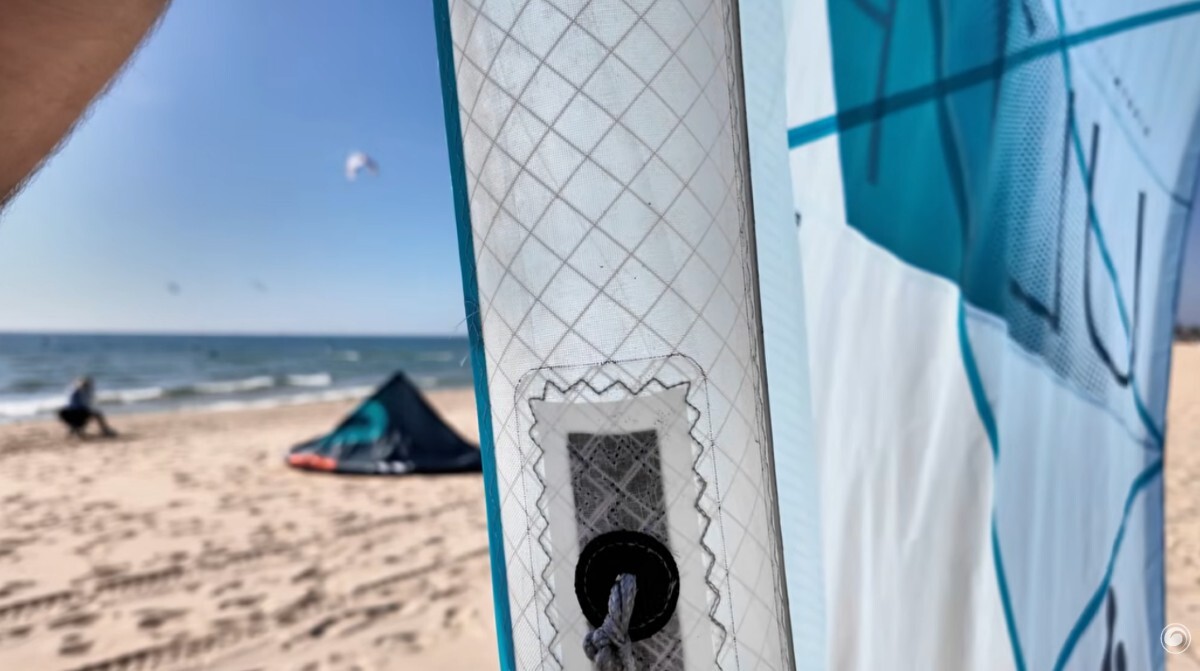
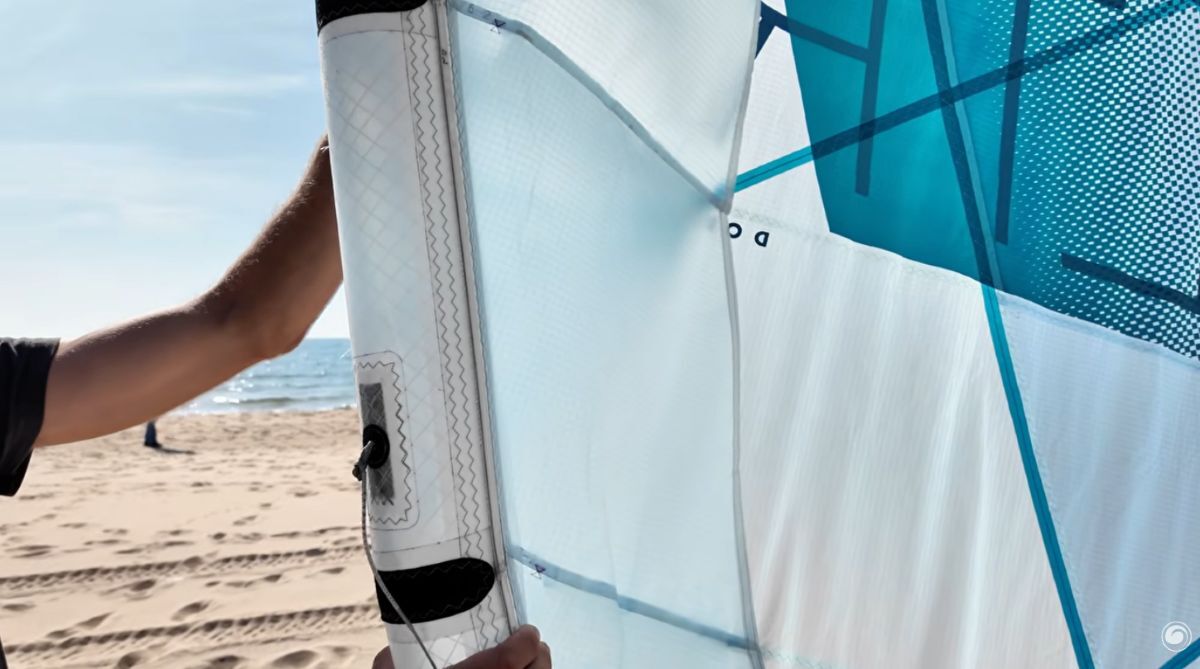
The defining feature of the Ultra Team V5 is its double surface leading edge.
Airush added an internal secondary skin just behind the leading edge tube. The goal is straightforward. Clean up airflow across the front of the kite and reduce the turbulence that typically forms when the canopy deforms under load.
In a traditional single-surface design, that area behind the leading edge can create drag as air separates and cycles. With the Ultra Team:
- Airflow stays attached longer across the canopy
- Turbulence is reduced in the critical front section
- Additional airflow is captured along the inner surface
What that means for you on the water:
- The kite wants to fly forward instead of hanging back
- You generate power through movement, not just pull
- You get a more efficient, lighter feel in your hands
Efficiency That Lets You Downsize
One of the clearest outcomes of that improved airflow is increased efficiency.
In real conditions, a 9m Ultra Team was comfortably replacing what would normally be a 10m Ultra. Even in very light wind, it was possible to get on foil and stay moving.
For foil riders, this opens up the option to ride smaller kites without giving up usable power. Smaller kites mean quicker response, lighter handling, and less swing weight once you’re on foil.
Light Wind Stability and Hang
Another key focus in the Ultra Team design is stability when the kite is parked.
Airush aimed to reduce the deformation that typically happens when you sheet out or ride underpowered. The result is a kite that stays composed overhead, even in barely-there wind.
Instead of drifting back or fluttering, it holds its shape and position:
- More predictable power delivery
- Less tendency to stall
- Confidence when working through light wind starts
That steady “hang” overhead is especially noticeable when you’re trying to get onto foil in marginal conditions.
Designed With Relaunch in Mind
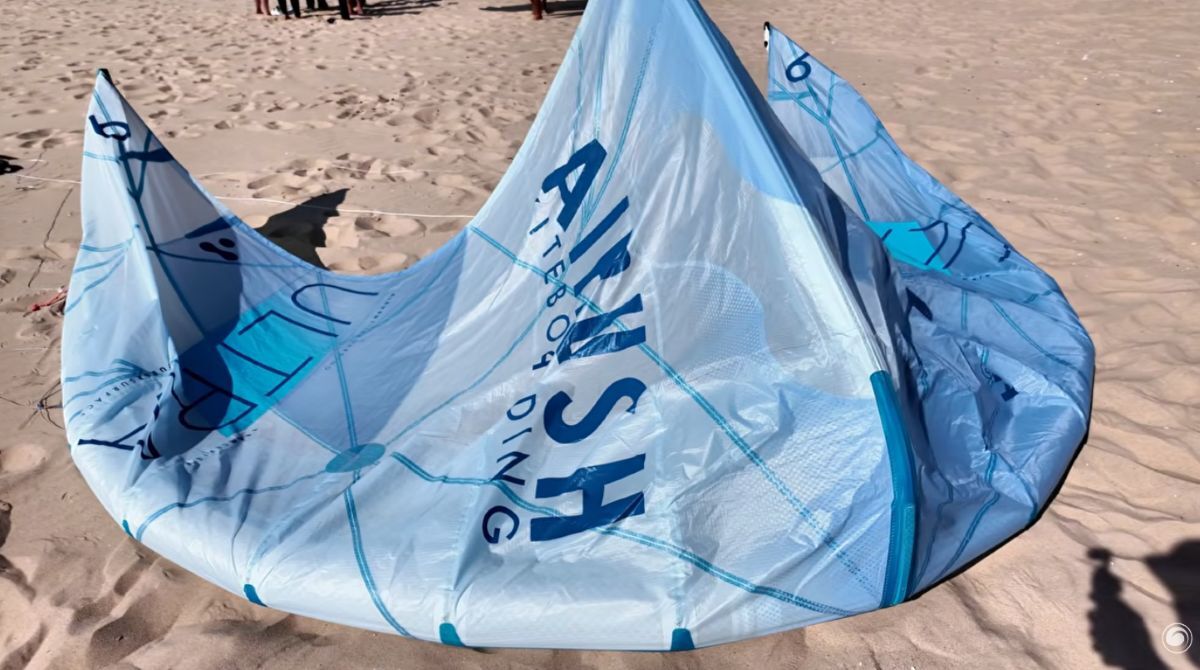
Adding structure inside a kite always raises questions about water handling, and Airush addressed that directly in the design.
The internal surface helps limit how much water can flood into the canopy during a crash. At the same time, drainage points along the structure allow any water that does enter to exit quickly.
In practice:
- The kite remains manageable after a leading-edge-down crash
- Reverse relaunch is still achievable
- Water does not get trapped inside the structure
It’s a performance feature that also ends up improving real-world usability.
H2 Material and Refined Construction
The Ultra Team V5 is built with Airush’s H2 material, which plays a major role in how the kite feels in the air.
This woven composite material is designed to balance weight, stiffness, and durability:
- Higher pressure capability for a more rigid frame
- Reduced weight compared to traditional materials
- Improved tear resistance due to the woven structure
Construction is primarily welded, with stitching used as reinforcement. The result is a clean, stiff airframe that holds its shape under load and supports the kite’s forward-driving characteristics.
Tuning Options for Fine Control
The Ultra Team includes multiple adjustment points to fine-tune performance:
- Wingtip settings to adjust handling and bar feel
- Three front line connection points to control power delivery
These adjustments allow let you tailor the kite depending on conditions and personal preference. Small changes can have a noticeable impact, especially given how efficiently the kite moves through the window.
Who the Ultra Team V5 Is Built For
It’s a strong fit if:
- You’re focused on kite foiling and want maximum efficiency
- You want to shrink your kite size without losing usable power
- You spend a lot of time riding in light or inconsistent wind
- You care more about glide and upwind travel than boosting
With the Ultra Team V5, Airush has taken a different approach to improving foil kite performance. Instead of only refining materials or shape, they’ve addressed airflow at the leading edge in a way that directly impacts how the kite flies.
This shows up as better efficiency, smoother power delivery, and a kite that wants to move forward and climb upwind.
If you’re pushing light wind sessions or looking to simplify your foil quiver, this is a design worth getting on the water.
MACkite Subscription Links:
YouTube | Instagram | Spotify Oddcasts
Contact MACkite Below:
800.622.4655 | Kiteboarder@MACkite.com | LIVE Chat Messenger
Recent Posts
-

Foil Drive's New Props Explained
For a long time, the black prop was just the prop. It came in the kit, it worked, and you rode it. …9th Apr 2026 -

Reedin SuperModel V6 Overview: Lightweight Aerolite Frame Upgrade on a Kite for Anyone
After more than five years on the market, the SuperModel has become the foundation of Reedin's lin …9th Apr 2026 -

Reedin SuperNatural V5 Overview: Lighter Weight, Boom Control, and Next-Level Efficiency
The Reedin SuperNatural has been a rider favorite for a while now, and for good reason. It's one o …9th Apr 2026