

Vayu Pyro 4M Parawing Review
Tucker has been testing the 4-meter Vayu Pyro — one of the most asked-about parawings on the market this year. Positioned as Vayu's answer to the parawing category, the Pyro is ultra-light, single-skin, and built around short bridles for fast stash-and-redeploys, with a manufacturer-listed 15 to 25 knot wind range at the 4.0m size. Developed and tested in the Columbia River Gorge, Fuerteventura, and Hawaii, it's marketed toward riders who want less gear in the way and more connection to the ocean. After quite a few sessions, here's the full breakdown of the dirty details and on-water performance to see if it lives up to the hype.
Bar and Bridle Details
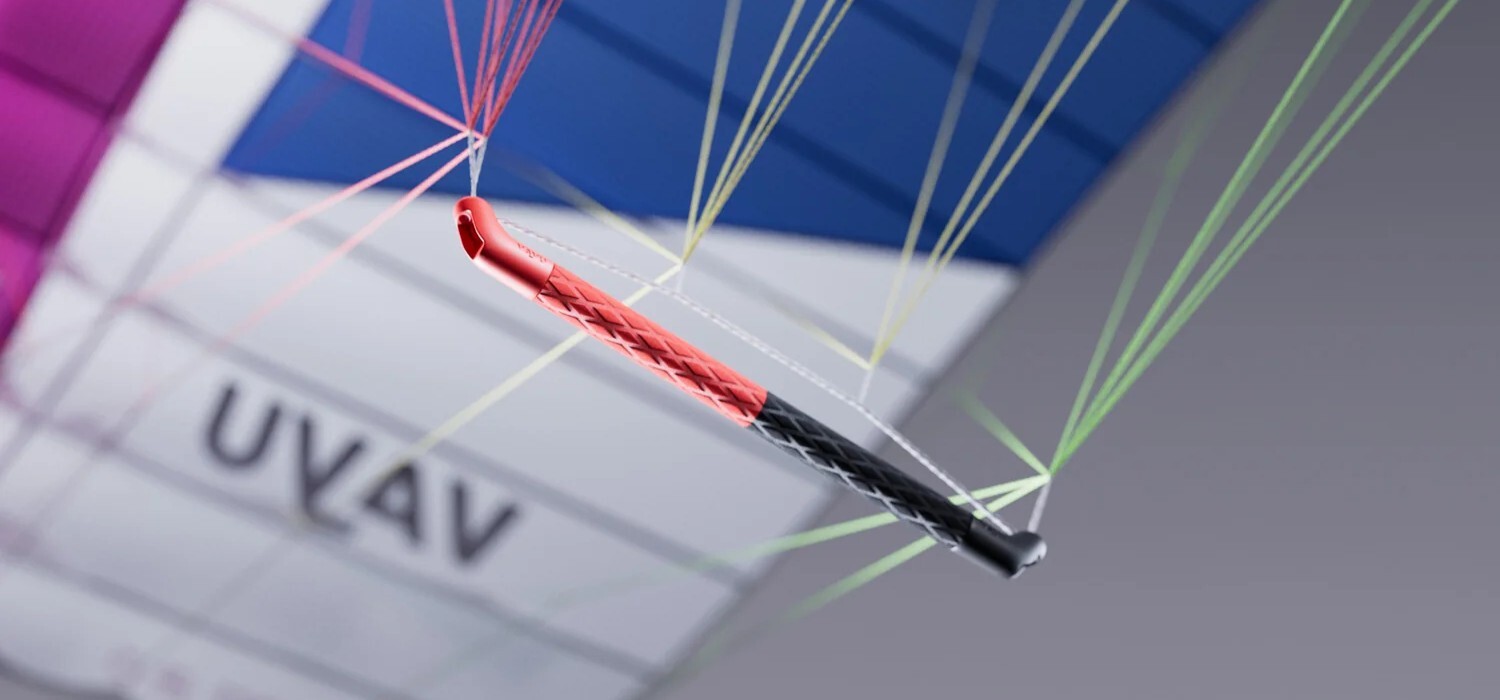
The harness line isn't included, but the Pyro works great with a fixed loop. The Bridge Bar features nice color-coding and is a basic straight bar with a little kink at the end to help the bridles fall off if needed. The little terminations are a bit worrisome — you could get hooked on them — but it's an average-length bar (Vayu lists 350mm for the 4.0m size).
Vayu's Bridge Bar system uses a clean A/B/C/D layout with dedicated brake (Br) risers. Each rib group has its own leader on the bridge, so line tension increases smoothly and sequentially as you sheet in — no pulleys, sliders, or uneven loads.
On the 4m:
- Front lines are light red, red, and yellow
- Middle is yellow
- Back trailing edge steering lines are yellow and dark green
It's fairly clean at the bar with no third B-line attachment point cluttering the hand area, which lets you slide and reposition your hands anywhere along the bar without hitting a stopper.
The lines themselves are quite fine: a little thinner and more abrasive than some other manufacturers, especially compared to their second-generation wings. They're a bit sloppy and limp, but haven't caused any major disasters. Closer to the leading edge, the bridles get even finer and more abrasive, and the terminations are a little rough on the hands when wadding them up under power.
A-Lines and Packing Techniques
Vayu splits the center A's from the outer A's, which is unusual and worth understanding before you head out. There's a double A-line stage: one goes to the very front leading edge along the inside of the double skin, and the second coarser line goes to the deeper ones in the wingtips. You have two separate pigtails going to those to separate them, and they fly close to each other. The front ones are softer and more compact — those are the ones you want to use to concertina your wing.
The concertina technique works really well, bunching the wing up into a tight wad and leaving the wingtips loose so you aren't pulling them in. You then have something to wrap your bridles around as you pack. However, it's a bit difficult to find that correct A-line — you can't just do a blind grab. You have to look at them and separate them to grab the correct ones for a quick collapse.
Trailing Edge Collapse
Grabbing them all off the trailing edge works quite well too, and Tucker almost prefers it this way. The only gripe is that it creates an air pocket, and if you don't quick-wad it up tight, it can catch air. It takes a little technique and practice to find those A-lines off the front or do the full collapse from the trailing edge.
When you bunch it, you normally have to go up the A-lines to sort and shake it out before redeploying. For a short run, grab the front A-lines, leave it limp, and you can quickly shake it out and throw it back easily — without twisting or rerunning lines.
Canopy, Leading Edge, and Wingtips
Those A-lines give you a really nice deep profile in the front. There are no issues with the leading edge collapsing. The battens are quite stiff, holding their shape well, which helps with VMG, top-end range, and upwind ability.
The ribs are adequate but not complex. They're certainly minimalist compared to most wings out there. It seems to be working, and they've done a good job reinforcing it, though time will tell if they need more structure to last a long time into the future.
The wingtips are shaped uniquely. There's a full tip that drops off into scalloped areas, and then almost into nothing at the wingtip. It works great and flies really smoothly, especially when overpowered and lit up.
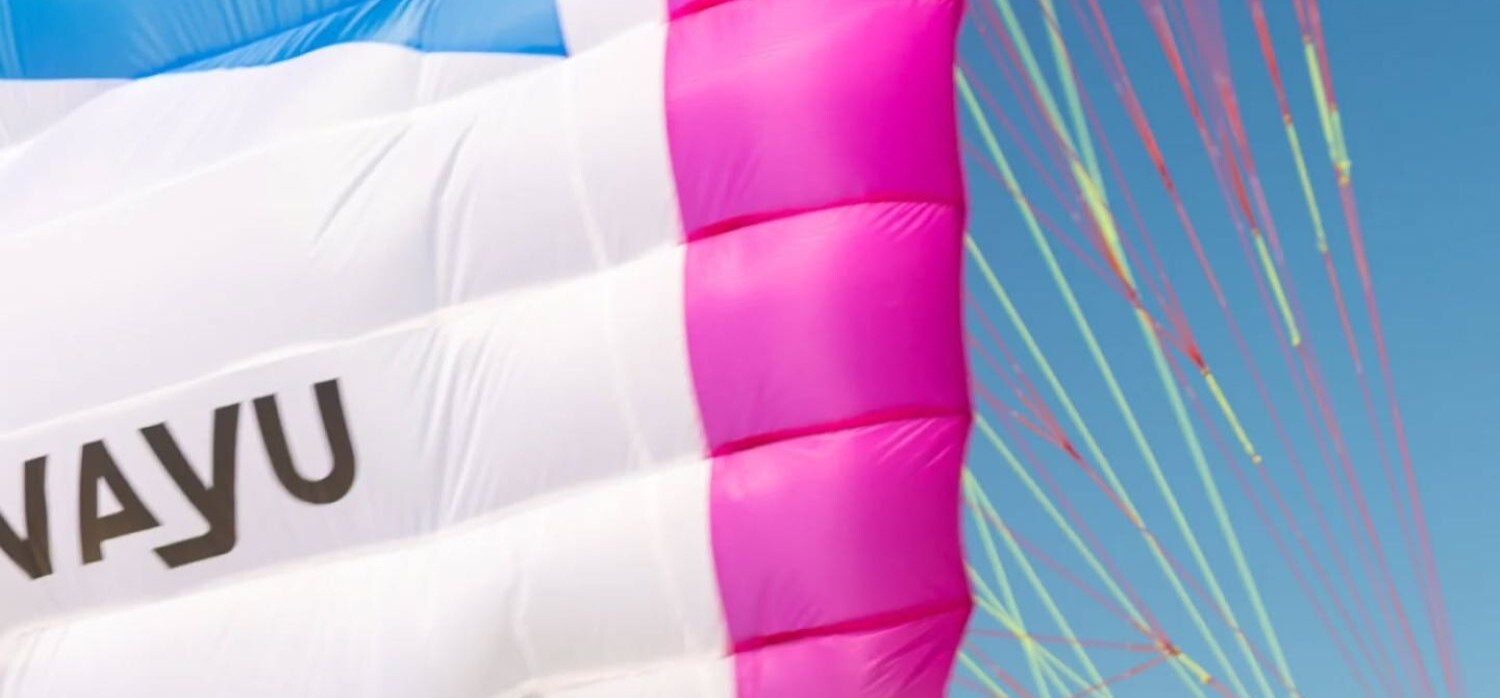
Further back into the canopy, it becomes much simpler. There's a huge space with nothing going on, no bridles or ribs, which keeps it lightweight and easy to pack. The lightweight, waterproof, and hydrophobic parawing material aids in this and holds its composure under serious stress when riding overpowered. For finding the center, there's a white square and a purple color that's easy to spot, along with red lines indicating the leading edge.
Included Downwind Backpack
A nice added value is the included downwind-style backpack. It acts like a normal stuff sack with vents on the back and corners to help the wing breathe and drop sand. If you're using this on the water, note that the opening isn't very large, so getting the wing in there requires wadding it up really nicely and getting a tight pack.
It features a drybag closure with a secondary lip that rolls over and clips to seal it off. There's also a secondary Velcro pouch for other accessories or a hydration pack. The back has some straps, though Tucker isn't entirely sure what they'd be used for — maybe cinching a wingfoil wing, but it might fall apart. It has a chest buckle and robust straps.
While it might not compete with a dedicated downwind pack like the Ozone Mission pack, it's included with the wing and works great as a spare wing or downwind bag. Just make sure to dry your wing out before storing it, as the back pouch and straps hold a lot of water and could cause premature wear.
On-Water Performance and Comparisons
Tucker was quite impressed with the Pyro, especially in powered conditions. You almost want to treat the 4-meter like a 3.5-meter. This wing likes to ride powered and doesn't have a ton of low-end grunt. You can certainly get going with the right technique and an efficient board and foil, but it's not a wing that pulls you straight onto the foil. Because of that, it's not recommended for new riders unless they have an efficient setup that rises without needing grunt.
Vayu wants to create power through speed, apparent wind, and VMG. It's a blast for powered conditions, offering great upwind ability and top-end range, and it's exceptionally well-behaved when overpowered. Even when it's getting really physical to fly, the wing itself is still flying smoothly and holding its composure without getting jumbly or collapsing.
Sizing and Comparisons
You may need to size up, especially if you're coming from a quiver of more powerful wings.
- Flysurfer POW: Compared to the POW2 (which is very grunty), you'd compare the Vayu 4.0 to a Flysurfer 3.0.
- Pocket Rocket V2: This is the most apt comparison. The Vayu has a little more low-end than the Pocket Rocket V2 and gains a little top-end as well. The 4.3 Pocket Rocket and the 4.0 Vayu are very comparable in total range, feel, and performance. They're almost interchangeable. ucker might prefers the Pocket Rocket V2 for its lines, stashing, and redeploying, but that's a personal subjective preference. You might like the Vayu for a higher top end but you will sacrifice some low end as well. You might like the Pocket Rocket V2 better for the way it stashes and redeploys.
Ultimately, the Vayu Pyro is a high-performance, no-compromise, ride-fast wing. These have been exceedingly hard to find, selling out before they even arrive. Give the company some grace on production as they work to meet the massive demand and build out capacity to get more of these on the shelves.
The MACkite Take
The Vayu Pyro 4M lives up to its hype as a high-performance, powered-riding parawing, but only if you buy it for what it actually is. Vayu positions the Pyro as "ultra-light, clean, and built to be stashed and redeployed again and again," and Tucker's takeaway matches: this is a wing that rewards technique, speed, and apparent wind, not one that yanks you onto the foil.
- Treat the 4.0m like a 3.5m when sizing. The Pyro is a powered-riding wing without much low-end grunt. Vayu lists a 15 to 25 knot range for the 4.0m, but riders coming from grunty wings like the Flysurfer PRO2 will want to size up. The Vayu 4.0 comparable in feel to a Flysurfer 3.0.
- The Pocket Rocket V2 is the closest cross-brand comparison. The 4.3m Pocket Rocket V2 and the 4.0m Pyro are almost interchangeable in total range, feel, and performance. Tucker leans Pyro for the lines, stashing, and redeploy, but that's personal preference — both are excellent.
- The Bridge Bar is the star of the control system. A clean A/B/C/D layout with brake risers, no center hardware in the hand area, and each rib group getting its own leader means line tension builds smoothly as you sheet in with no pulleys or uneven loads. The bar is short and size-tuned (350mm on the 4.0m) for easier on-foil stashing.
- Two ways to collapse the wing, both with a small learning curve. Front-A concertina makes the tightest wad and lets the wingtips flag loose, but the double A-line stage means you can't blind-grab — you have to look and separate. Trailing-edge collapse is Tucker's near-preference, but it can catch air if you don't quick-wad it tight. Either way, a short-run redeploy from front A's is fast: grab, shake, throw.
- Not a beginner wing, and not the answer for underpowered days. It's a "no-compromise, ride-fast" wing that rewards efficient boards, efficient foils, and technique. If you want a parawing to pull you onto the foil in soft wind, look elsewhere. If you want a wing that stays composed when it's getting physical, upwinds hard, and packs down tiny, this is one of the best on the market.
MACkite Subscription Links:
YouTube | Instagram | Spotify Oddcasts
Contact MACkite Below:
800.622.4655 | Kiteboarder@MACkite.com | LIVE Chat Messenger

Recent Posts
-

2026 Duotone Rebel D/LAB Review: 30-Knot Test
The Brazilian Brothers are ready to provide honest feedback on the 2026 Rebel D/LAB by Duotone. Th …13th Oct 2026 -

2026 Duotone Jaime SLS Kiteboard Review
The Brazilian Brothers are back to bring you another product review. Today, their focus is on the …13th Oct 2026 -
Manera Pocket Wing Belt Overview
Jeff met up with Billy Ackerman from F-One on the beach at the KoGL Test Fest to take a look at th …9th Oct 2026