
Setting Your Bar & Fins for Big Air and Freestyle w/ Ewan Jaspan
These past 9 months, Kristen and I have had the opportunity to travel to kite spots while living out of an RV. In the spring we linked up with some old friends, and made some new ones along the way. We went hard filming and making fresh content. Best of all, we were able to learn and share more insights from the top riders in the sport. Few have the experience in so many disciplines from big air, freestyle & park to surf and foil as Ewan Jaspan of Naish kiteboarding. We sat down for an extensive interview to talk about his gear picks for each discipline. This segment of the interview focused on a topic kiteboarders are always asking about: line lengths and fin size.
Ewan's setup changes depending on the discipline. Let's break it down that way.
Freestyle
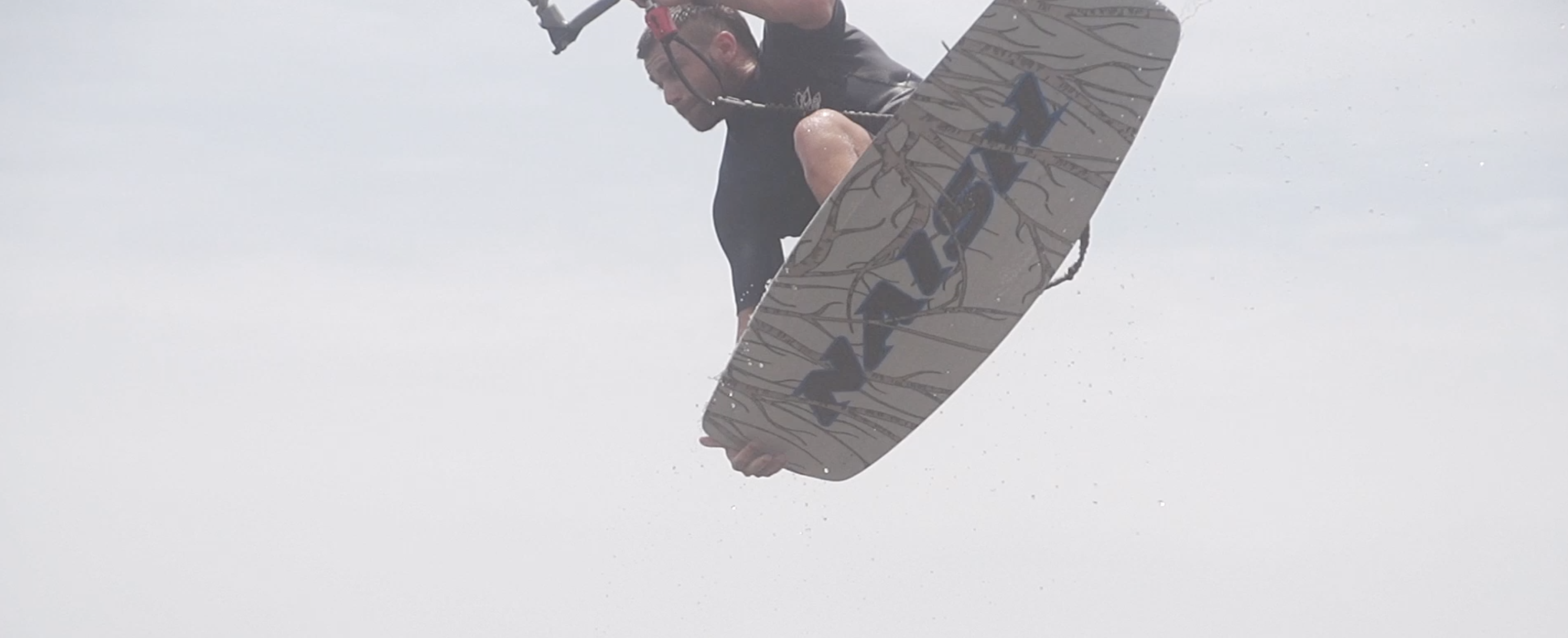
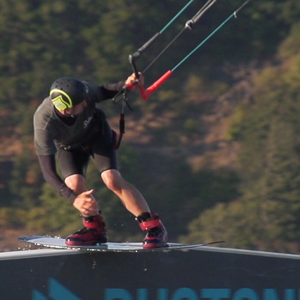
Ewan will use a Naish Torch, a 5-line C shape kite designed specifically to make unhooked freestyle much easier than a bridled kite. He uses 24 m lines. This is standard among all the riders I've met who are proficient. He uses a 150 Naish Traverse with no fins or small fins, depending on whether he will be grinding anything.
Big air and kiteloops
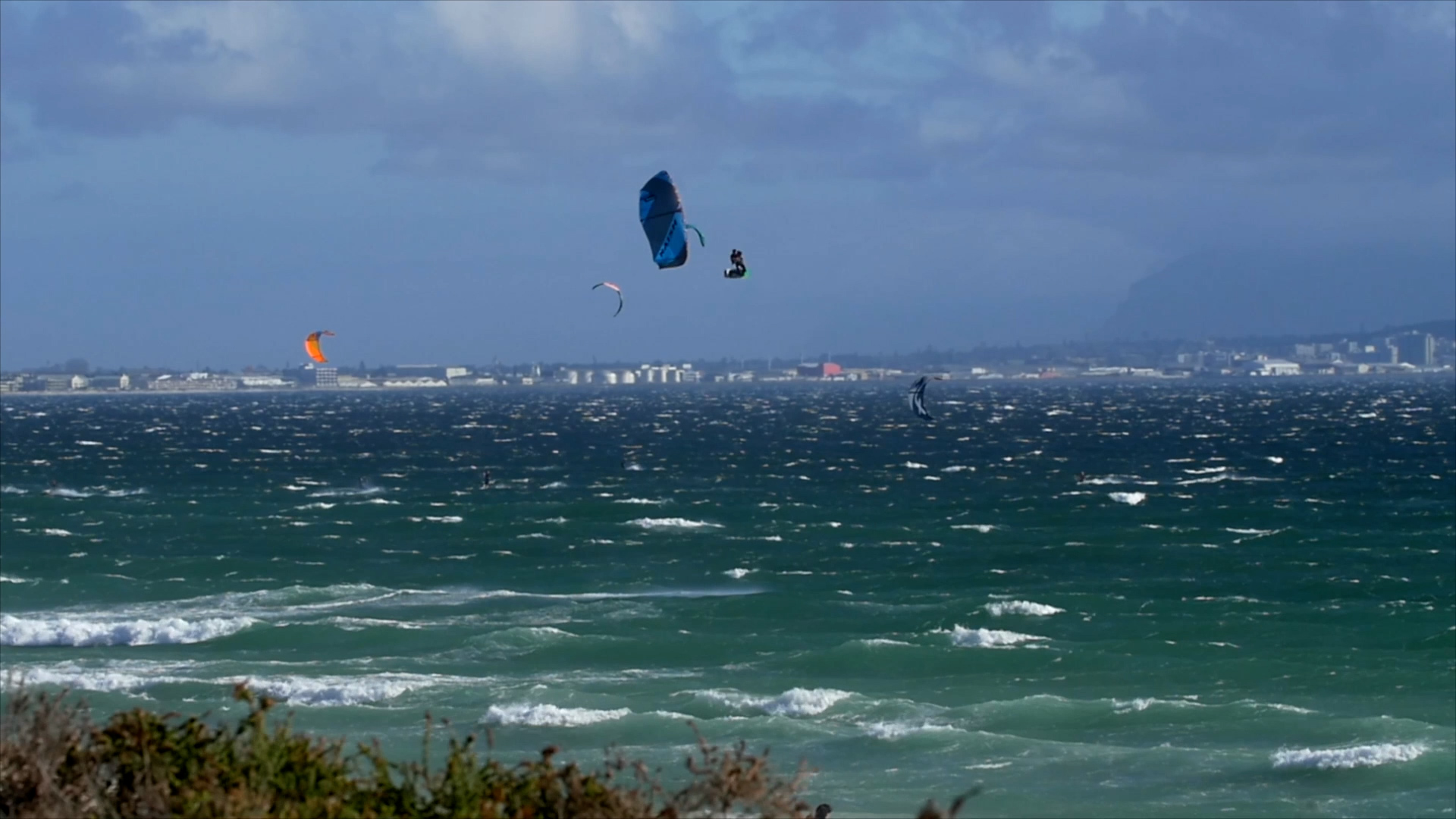
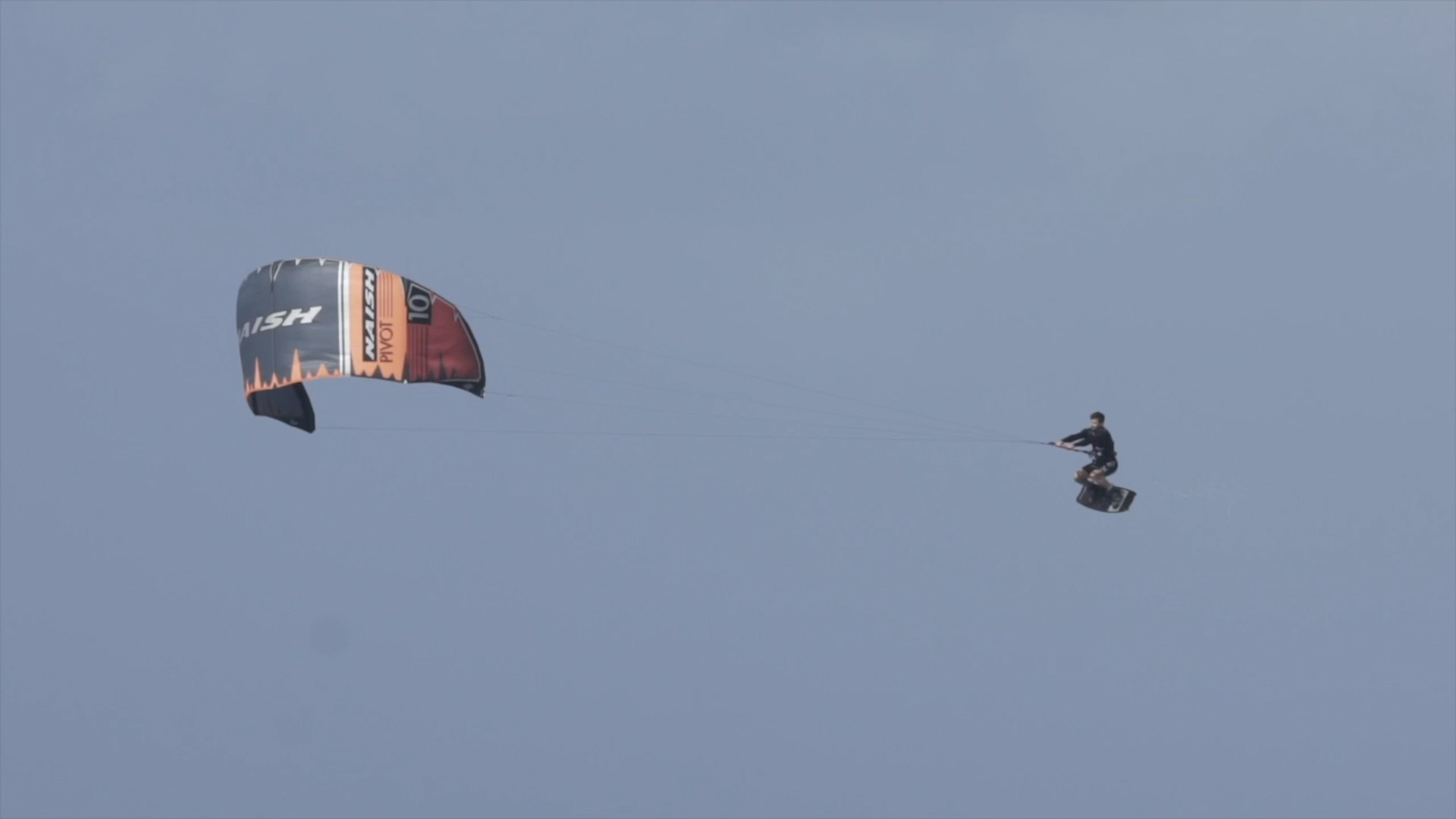
For this, Ewan will size his board down to a 138 and swap his Torch for a Naish Pivot with a bridle. The kite's more forgiving for loops, and range and is better suited for this style. He will use 22 or even 20m lines.
22m lines
Theses are a great compromise as they will loop well by making the kite go lower, react faster and catch you better.
This is probably the best option for most loop enthusiasts, as it's also easier to get more air with 24 or 22m lines.
Short lines are amazing for loops
20m lines
This is extremely fun for loops. I often used to run this length myself. You sacrifice height on your jumps, but the kite is just begging to loop and goes so low. Some riders will go even shorter for wild loops or foil performance. I have also found that some kites will backstall more once you go shorter than this; I'm not sure why, but it's something to be mindful of.
Fins
For fins, Ewan recommends riding finless on a regular basis to improve your skills. When doing big air, he will stick with smaller fins instead of the standard 2.5 inch fins that come with most boards. You do give up some edge for a playful feel here, but the tradeoff is worth it. Large fins are standard for big air, but they foster a track-like, stiff, uninspiring feel on the water, in both our opinions.
 Ryan (Rygo) Goloversic
Many people dream of quitting their job, traveling the world and pursuing their passions. Rygo is one of those people who pulled the trigger. A few years into his career, he decided to change everything and travel as a kiteboarder, freelance videographer & writer. His mission is to share the stoke & help people put the boarding into their kiteboarding. Get outside and kite!
Producer of: Ride with Blake I Sessions I Versus I Destinations I Foil Fridays
Recent Posts
-

King of the Air 2025: Inside Slingshot’s Wild Ride
A story of nerves, resilience, progression, and the mindset required to perform on kiteboarding’s bi …30th Dec 2025 -

How the F-One Bandit Redefined Freeride Kiteboarding
Banditry is not just a slogan at F-One—it is a state of mind. From the very beginning, the F-One B …29th Dec 2025 -

Alex Pastor Named CEO of Airush Kiteboarding
Airush Kiteboarding is entering a defining new era, one shaped by deep roots, proven performance, …26th Dec 2025