
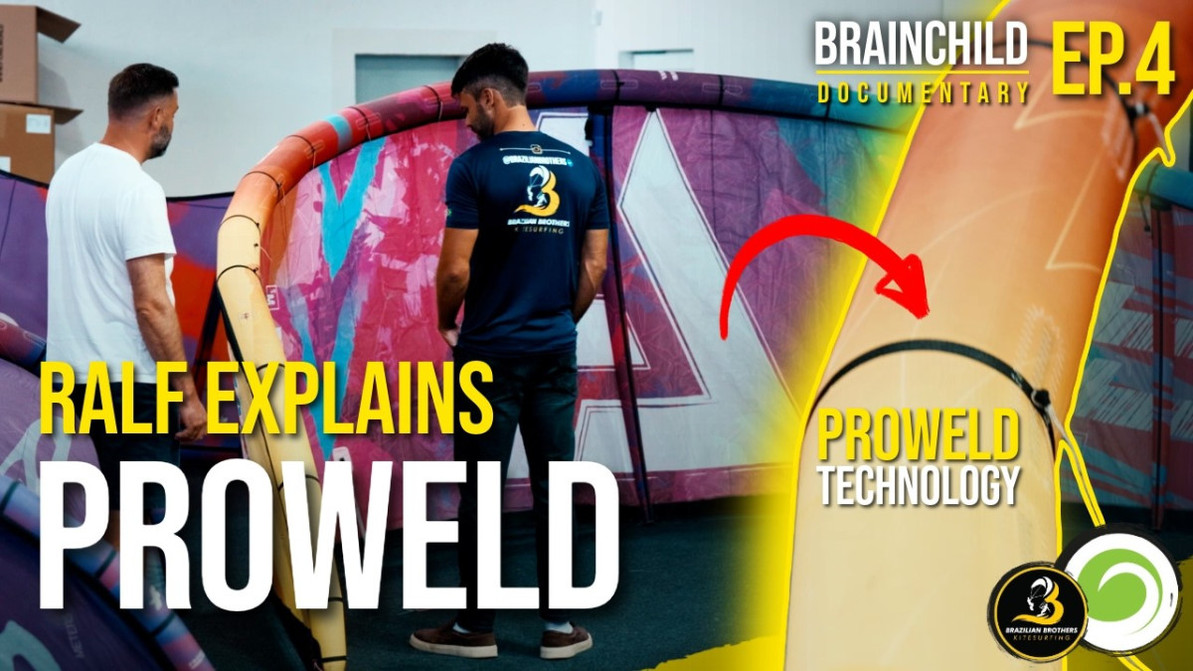
Inside Brainchild Production: ProWeld Kite Technology
The Brazilian Brothers previously went through the digital printing process with Ralf Groesel, and now they're diving into another benchmark Brainchild has brought to the market: ProWeld technology. Looking at kites in the factory like the Harlem Thrive V2 and the F-One Trigger V3, it's clear that Brainchild is applying this tech not just to one kite, but across multiple different brands.
What is ProWeld Technology?
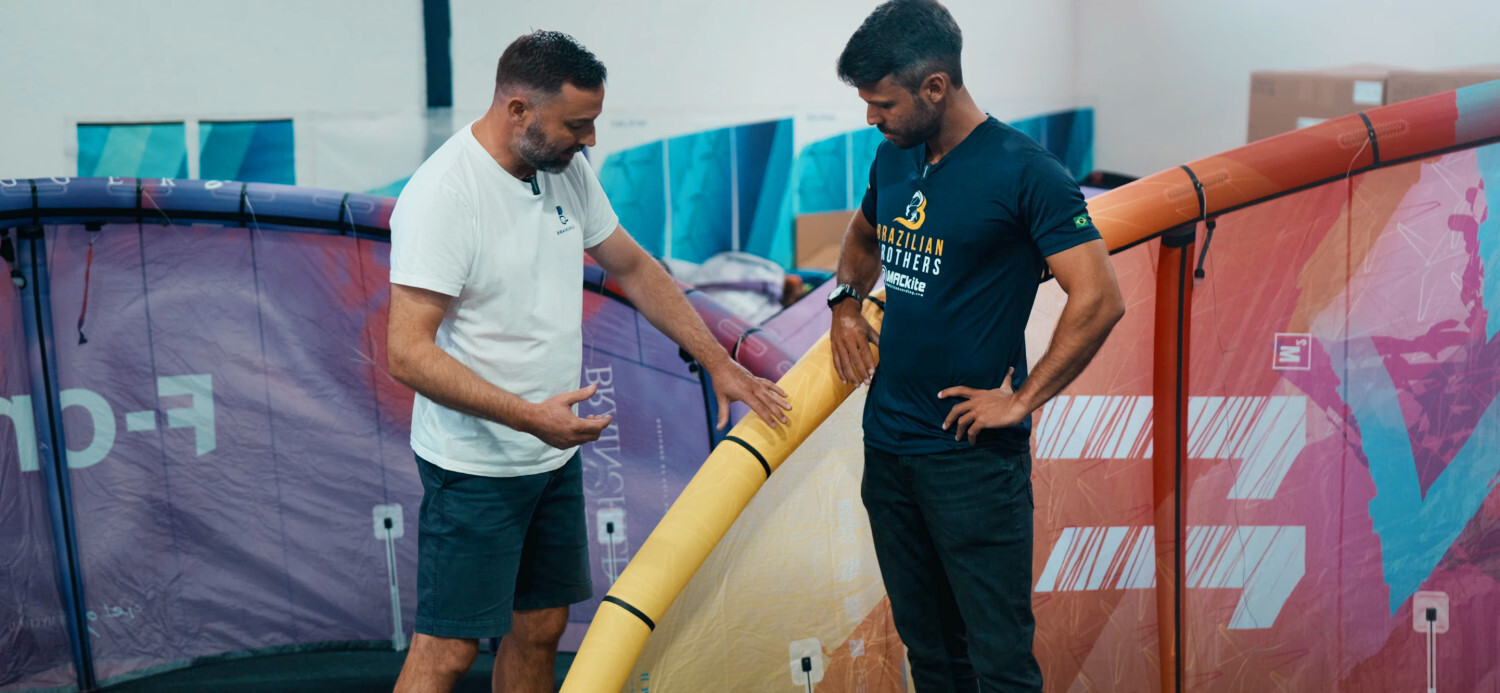
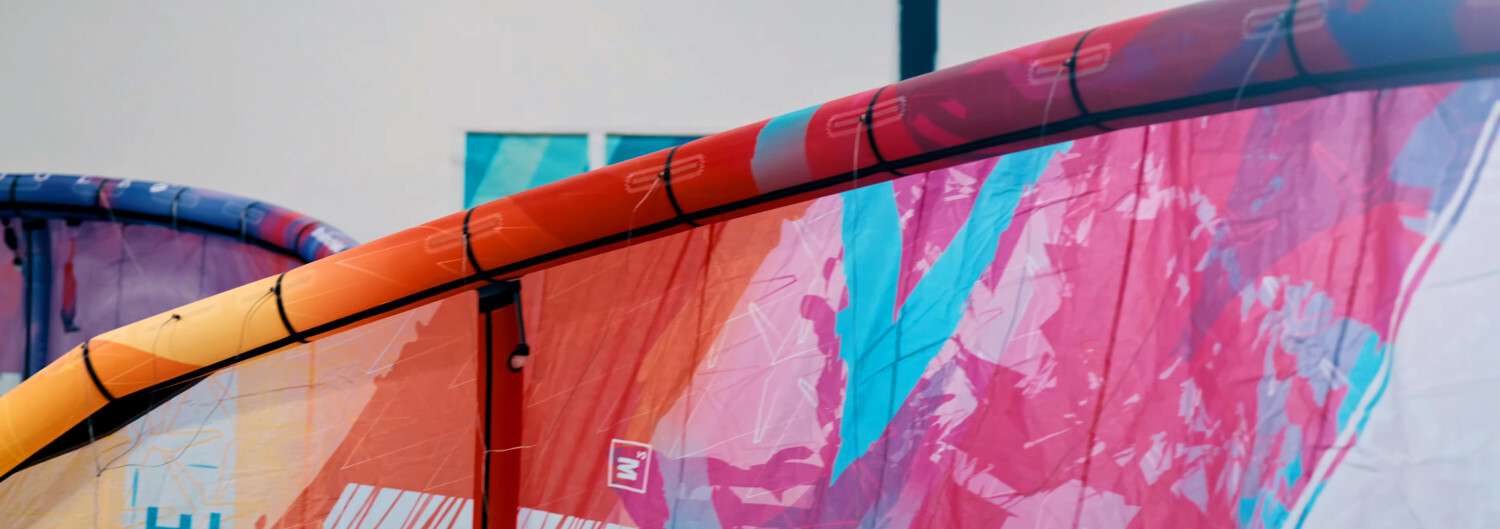
Ralf explains that ProWeld is offered to all their customers and is fairly simple to understand. A kite contains different leading edge segments. With ProWeld, each segment is welded together with an ultrasonic seam, meaning the edges of the panels are essentially glued together. Inside, a layer of glued fabric acts as a bridge to stabilize everything from one end to the other. To protect the outside of the seam and add longevity, a webbing is stitched over it.
The Performance Advantages
The main advantage of gluing and welding these panels together is that they act as one single entity. While the pieces are segmented, the forces run straight through each panel, creating a stiffer frame without adding weight. It's the perfect combination of having a stiff frame for performance, but using a material that is flexible enough to create a very fast-turning and intuitive kite.
Ralf feels this has become the benchmark in the industry when it comes to price-to-value. They can create the lightest kites on the market with fairly basic materials like Dacron. Laminates are much more complicated and expensive, yet the result is the same, making the price-to-value at Brainchild absolutely unmatched.
Longevity and Reliability
For riders who might be skeptical about the longevity of ProWeld, Ralf breaks down the actual stress points of a kite. A kite generally has weak spots, and inflating a structure creates a certain amount of stress. However, the real stress on an inflatable leading edge isn't between the segments; it is always at the closing seam that runs the length of the leading edge. The forces running through the segments are significantly lower than the stresses running through the leading edge.
With all the reinforcing steps, ProWeld actually yields a higher breaking strength than a stitched seam. When a problem does occur, regardless of what kind of material you are using, it's always that leading edge closing seam. Over the last year, Brainchild has improved this significantly by better understanding exactly what kind of yarn, needles, and reinforcements need to be applied.
Inflation Pressures and Leading Edge Diameters
This construction adapts from generation to generation because there's a trend in the industry to pump kites up with more pressure. For example, the recommended pressure for the smaller sizes of the new Harlem Thrive V2 is 10 PSI. Ralf recalls that when he first thought about leading edge inflation pressure at Duotone, they questioned if 6 PSI was too much. Now, they are at 10 PSI. It's a constant progression of figuring out what the design requires, what the market requires, and how to adapt the construction behind it to fulfill those needs.
ProWeld doesn't just sustain higher forces and pressures; it also allows for a decrease in the diameter of the leading edge. Increasing structural stiffness only works if you either increase the diameter with the same pressure, or increase the pressure and decrease the diameter, which is the path the industry is on right now.
Aerodynamic Limits and The Future
While diameters are shrinking, Ralf points out there is an aerodynamic limit. We will never see leading edge diameters cut in half because it creates too much aerodynamic instability. You need a certain diameter to have an effective airfoil with a comfortable range of angles of attack where the profile still wants to rotate and pitch forward. If you reduce the leading edge diameter too much, you'll flatten the airflow and reduce lift, making the kite prone to stalling.
Looking ahead to future products, Brainchild is working on the next generation of materials that are also ProWeldable, like laminates where the forces you can apply are even higher.

MACkite Subscription Links:
YouTube | Instagram | Spotify Oddcasts
Contact MACkite Below:
800.622.4655 | Kiteboarder@MACkite.com | LIVE Chat Messenger
Recent Posts
-

2026 Cabrinha Unify Control Bar Review
The Brazilian Brothers are in windy Brazil to provide a thorough review of the brand-new 2026 Cabr …23rd Oct 2026 -

Naish Hatch V2 Parawing Overview
Jeff takes a few minutes out from the KoGL event to chat with Adam Carr from Naish about the Hatch …22nd Oct 2026 -

Flysurfer Soul 4 vs Sonic 5: Which Kite is for You?
Jeff is on the beach at KoGL with Marie-Eve from Flysurfer to discuss the growing excitement surro …20th Oct 2026