

Duotone Paradox SLS Mid-Length Board Review
Tucker has spent some time testing the Duotone Paradox SLS: Duotone's latest mid-length offering. It's most pointed at parawing, but it also serves as a highly efficient winging option. If you're looking for a more efficient board for light wind, faster takeoffs on fast foils, or just a one-board quiver, this shape has a lot of application. You could even throw a Foil Drive or a prone setup on it if you want something stretched out and speedy. Primarily, though, it's designed for the crossover between winging and — specifically — parawing.
Specs and Dimensions
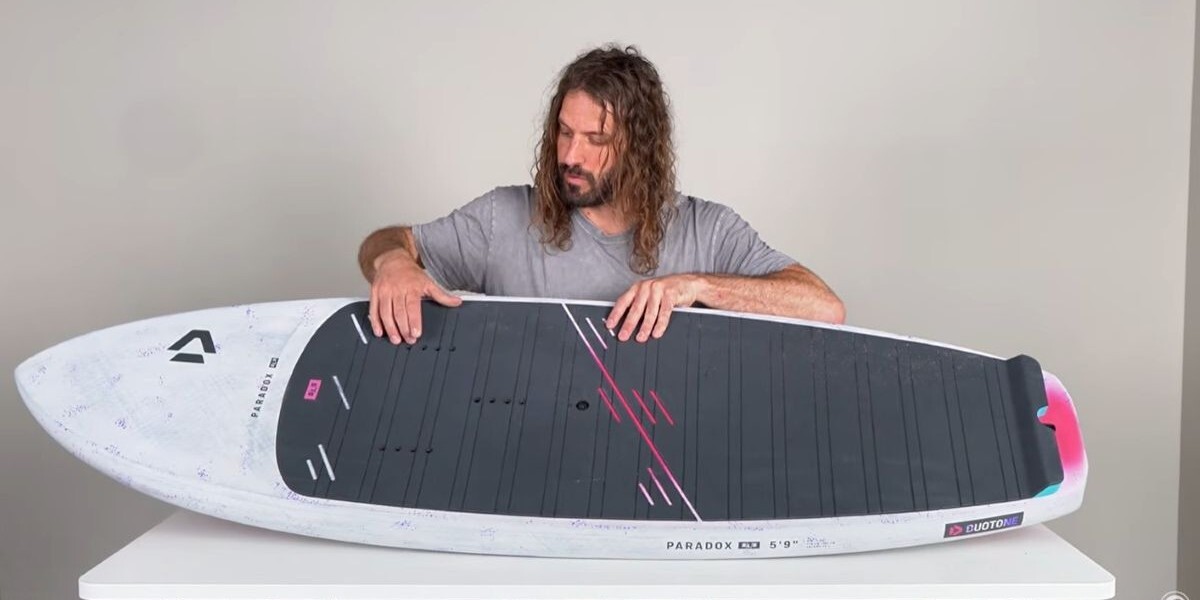
The model Tucker tested is the 5'9" x 20" (75L). Duotone doesn't list a specific thickness dimension, but it's rather thick, having a big belly that gives you more volume and the ability to stay on the surface.
Performance on the Water
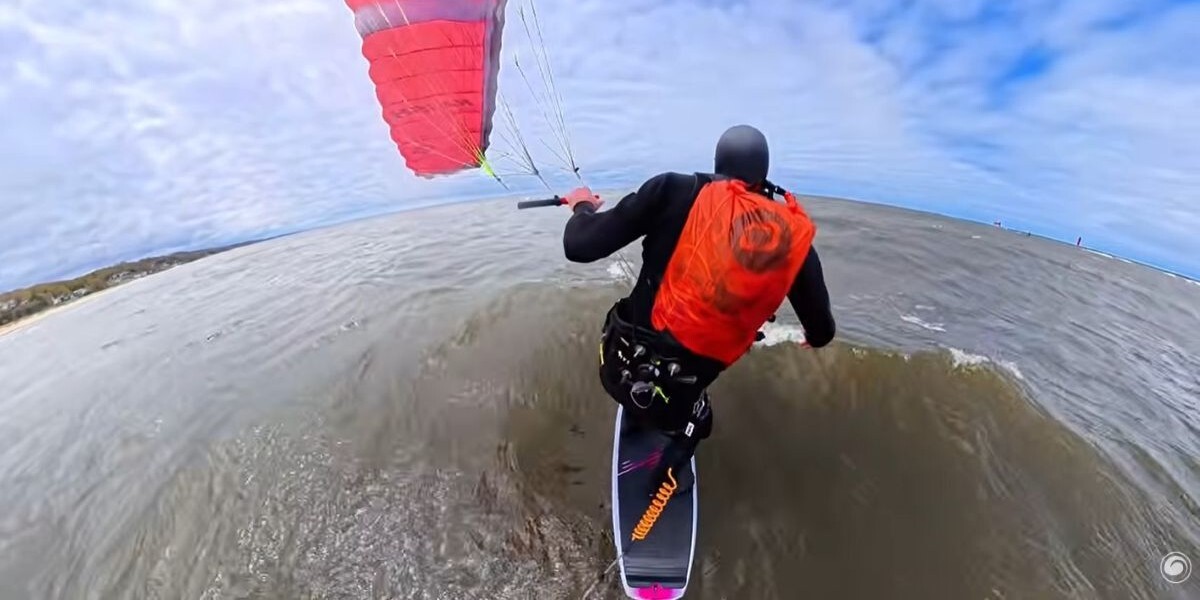
Tucker has had the Paradox SLS out for a few sessions and has really enjoyed it. He's primarily used it for parawing, but also took it out winging in light wind to test it, and it performed admirably. It's a longer, narrower board than the average wing board, but fairly normal for parawing dimensions. That gives you great efficiency on the water, easy liftoff, and good pumpability off the water with limited stickiness and surface tension.
The board is very good at building speed on the water, which is especially important for parawing. A parawing doesn't have a lot of upward lift — it has a lot of drive and forward pull — so you need to generate lift on the foil from board speed rather than just letting the wing lift your body weight off the foil. Because of its speed, the Paradox SLS fulfills this need quite well.
SLS Carbon Construction
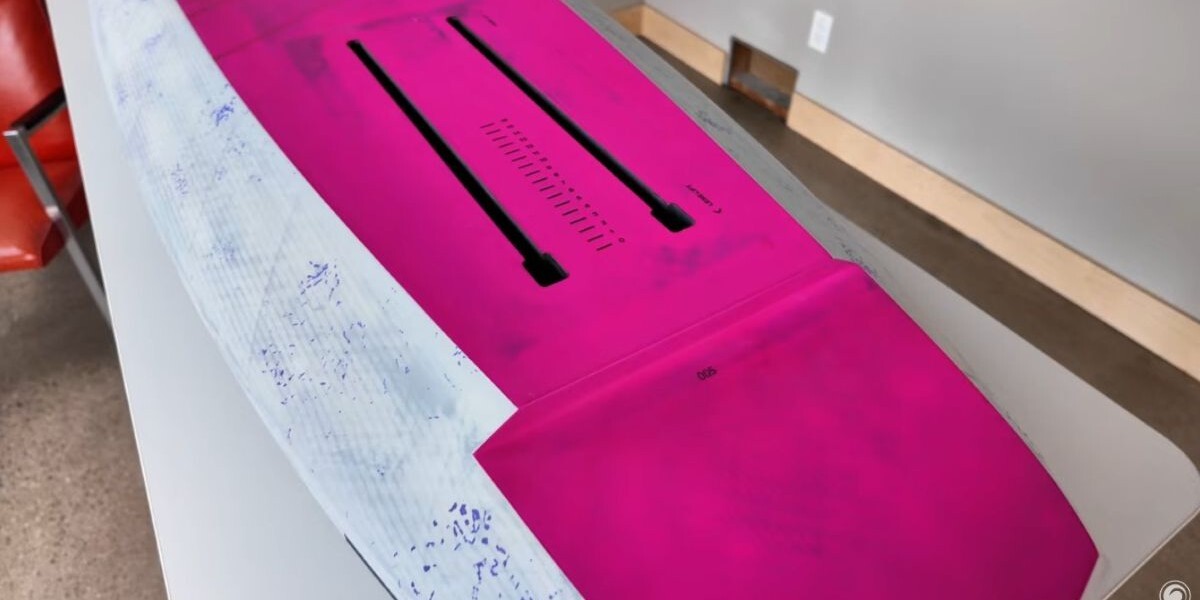
This board is built in SLS Carbon construction, which makes it super solid, avoiding a hollow-type construction and represents Duotone's higher level of board build. For this particular model, SLS is the only construction available at this time, and it features a highly visible pink bottom.
Bottom Shape and Features
Duotone really nailed the parameters for what this board is supposed to do. Here's a breakdown of the bottom features:
- Foil Tracks: Rear drop-in style tracks that are nice and long, so you can fit just about any foil in here.
- Chop Tail: The tail has a chop tail or kick tail design. It isn't an angled kick tail — it just changes elevation like a little cliff. This helps release off the tail once you're moving faster. When you're moving slower, you have a bit more tail volume to create lift, so the tail isn't sinking and you aren't wheelieing up.
- Chines: The chines along the rail start round and angular at the front, then get flatter and wider as they move back. These create good lift without adding to the surface tension or stickiness of the board. When you touch down, it rebounds and releases off the water quite easily.
- Double Concave to Flat Bottom: Up front in the middle, there's a double concave blending into a flat bottom right in the "meat and potatoes" section of the board. This creates good planability and directs water flow down the flatter section, rather than just squirting it all out the sides like a displacement hull. It acts almost like a tri-hull design at the front, funneling water down the flat section for maximum planability — a displacement hull at slow speeds, but once it gets up to speed, it planes up quite easily.
- Rocker Line: The rocker line is quite flat underneath your feet, which helps that section plane well. There's some good flip in the nose, though. Compared to a lot of other parawing-specific boards, this is going to push a little more water initially and won't cut through quite as cleanly at first. Once you get up to speed, that extra aggressive nose gets off the water, and then you're in the section where the board takes off and accelerates quickly. Tucker notes this makes it quite easy for new riders to get up and off the water with average-sized parawing foils.
Deck and Traction Pad
Moving to the deck, there's a little extra nose bump up front to give you some extra volume, and then it sinks down into the cockpit where the deck pad is located. The deck is predominantly flat in both directions, but once you get up near the rail, there's a little concave you can feel. That gives you leverage if your feet are out wide to put some gas into a turn, and it lets you know where you are on the board without having to look down.
The marks on the traction pad are nice. There's a pink area in the middle that sits right about where the center of your stance is while riding. The front foot traction pad area, where the foot straps mount, is a nice place to put your knees when you're starting.
Strap Options and Air Vent
For foot straps, there's a V-strap area up front, allowing you to set up either a single strap or a V-strap. There are no strap options in the back. Tucker points out that this is a trend in parawing right now: people aren't jumping very high, so it's easy to get by with just a single front strap. That cuts down on weight, and predominantly, riders aren't using rear straps for parawing anyway.
In the middle of the board, there's a Gore-Tex automatic air vent. You don't need to do anything with it unless it becomes damaged and needs replacing. It automatically vents extra pressure without letting water in.
Sizing and Who It's For
Tucker's experience on this board has been very positive. He weighs around 90 kilograms (kg), and the 75-liter size works phenomenally for him as an intermediate-to-advanced parawinger in most conditions. He'd definitely size up for winds under 15 knots, as he can still sink this board underwater under his weight if he isn't moving. Heavier riders or beginners should size up, while lighter riders or more aggressive riders can size down.
Tucker generally isn't a fan of thicker boards — and the Paradox SLS is close to 5 inches thick or more — because he doesn't like being removed from the foil that much. That said, this board does it quite well, and he didn't notice the thickness as much as he normally would. It's nice to have a little more volume on those lighter days, or if you're riding a really small foil in the 700 range and need a bit more board speed to help the foil take off.
Comparisons and Critiques
Because of the board's design, you typically aren't ripping ultra-high-performance surf turns like you would on a prone board or a really small wave wing board. This is more about glide and cruise, and you have to nurse your turns a little more with the foils you ride for parawing.
One critique Tucker has is that he wishes the traction pad extended all the way to the hard angle on the rail. That hard edge is a point of vulnerability in the construction: if you hit it with your harness, your bar, or your elbow, it's going to get beat up and need repair more easily than a blunt edge. Extending the pad would offer some extra protection on that hard edge, as well as more playground for your feet if you need it in a hard turn.
When comparing the Paradox SLS to the KT Arc (which has been a favorite for parawing), Tucker notes that the Arc is a bit bigger per volume in terms of length and width and features more of a scooped deck. The Paradox SLS, on the other hand, is a more compact board with more volume packed into a smaller footprint.
MACkite Subscription Links:
YouTube | Instagram | Spotify Oddcasts
Contact MACkite Below:
800.622.4655 | Kiteboarder@MACkite.com | LIVE Chat Messenger
Recent Posts
-

2026 Cabrinha Unify Control Bar Review
The Brazilian Brothers are in windy Brazil to provide a thorough review of the brand-new 2026 Cabr …23rd Oct 2026 -
Naish Hatch V2 Parawing Overview
Jeff takes a few minutes out from the KoGL event to chat with Adam Carr from Naish about the Hatch …22nd Oct 2026 -
Flysurfer Soul 4 vs Sonic 5: Which Kite is for You?
Jeff is on the beach at KoGL with Marie-Eve from Flysurfer to discuss the growing excitement surro …20th Oct 2026