
Buying Your Next Wing: Top Questions Answered
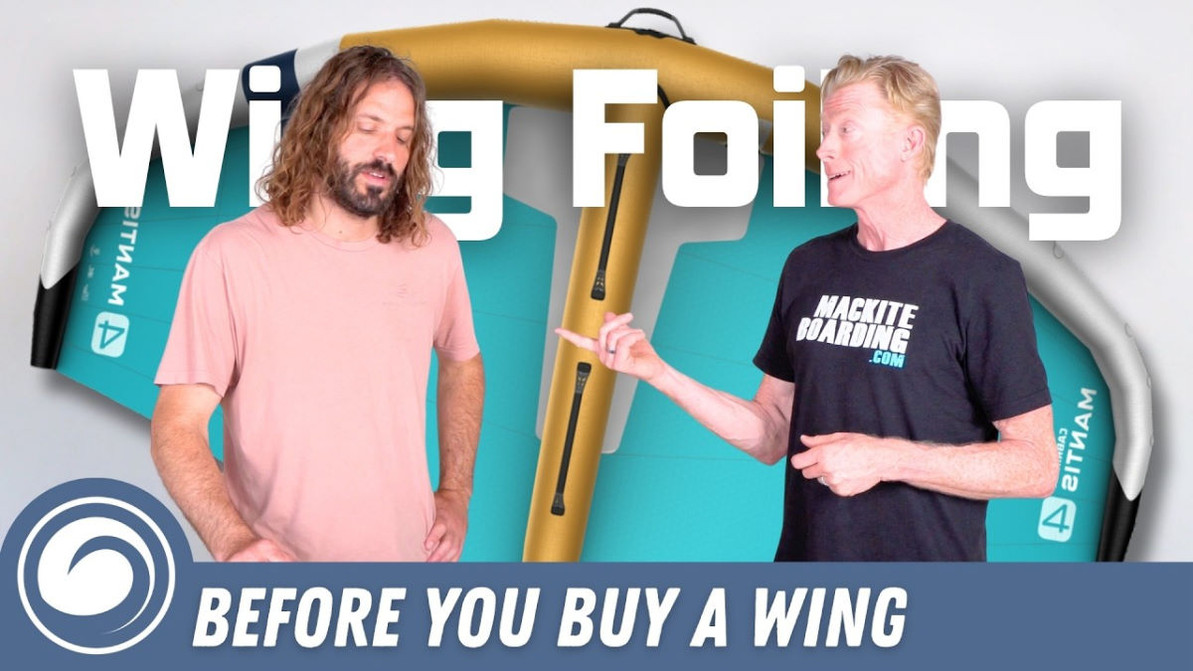
Jeff and Tucker from MACkite dive into the questions they get asked every single day by riders looking to buy a new wing. There's so much on the market right now... countless brands, and often up to three or more different models per brand, and it can get overwhelming. To help you make the right decision on your next wing, they break down exactly what is important to consider.
What Information to Bring to the Table
You could walk up to a pro or someone at the shop and simply ask, "What wing should I buy?" but they will need more information than that to give you a good answer. What's best for others isn't necessarily what is best for you, your conditions, your riding style, or your quiver.
It's also important to be careful with the YouTube echo chamber. When you get interested in something, it's easy to watch videos and hear people say, "This thing is really good!" But who is it good for? It might not be right for you, even if it's the best wing on the planet for somebody else. The word "best" is relative. All wings have gotten better, but there isn't a single greatest wing out there. It really comes down to trade-offs. Certain wings excel in specific areas, and depending on your situation and skill set, you'll have a lot of great options to choose from.
How Do I Choose the Right Size Wing?
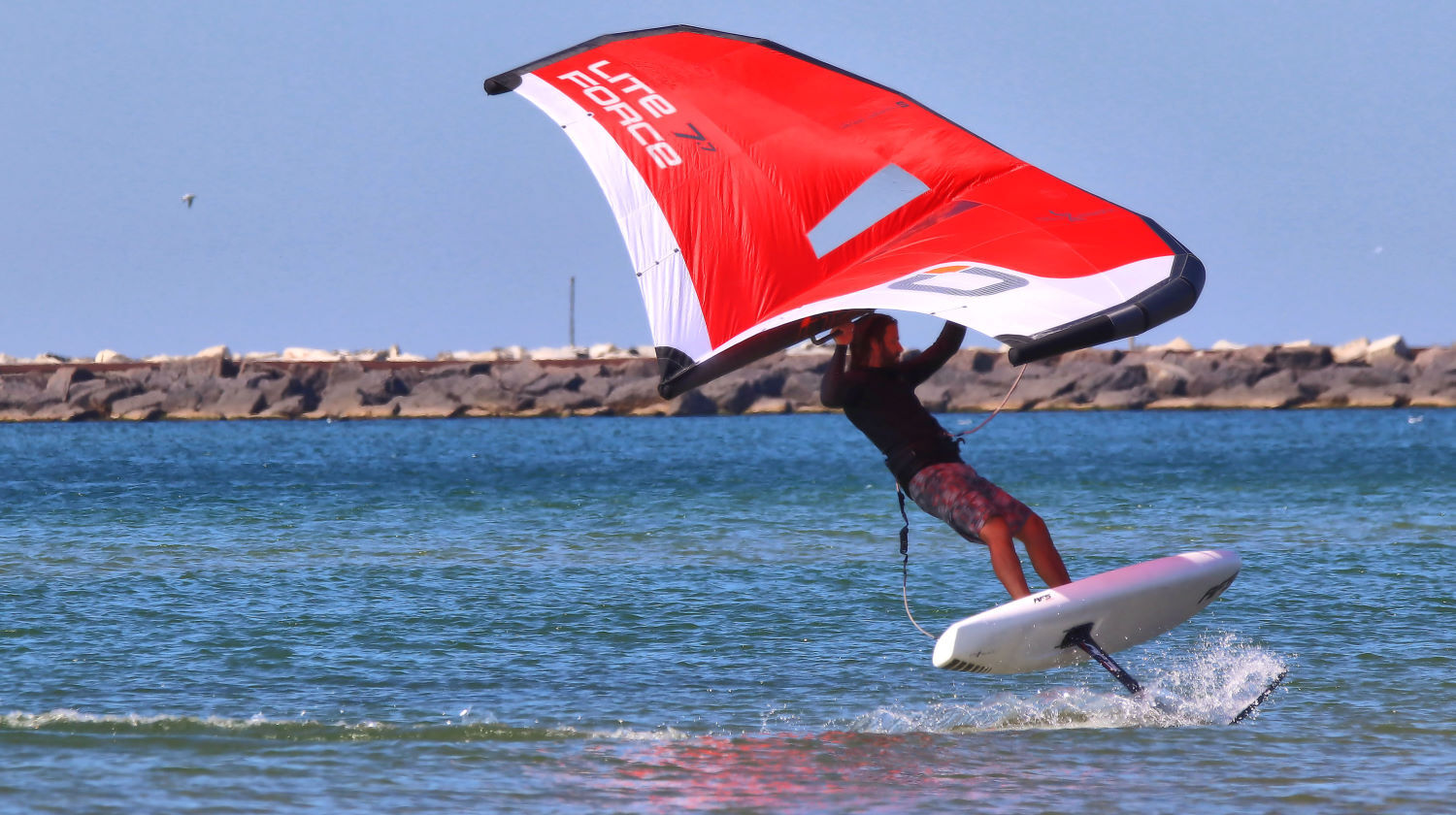
Size is a great place to start. Some wings have a limited offering and might not even be made in certain sizes. For example, dedicated light wind wings usually start at 6m and go up to 7m, 8m, or even 9m. Budget and limited stock can also dictate what sizes are available to you.
Knowing what size to look for begins with a calculation of your weight and your intended riding conditions. Your average conditions might be great for a 5m, but if you already own a 5m, you'll want something else. Your riding style plays into this as well.
What's the Best Wing to Add to My Current Quiver?
It's crucial to know what wings you already have and how a new one will fit into your quiver. Sometimes this is the magic piece to the puzzle that answers the question for you. If you are debating between a 5m or a 6m, but you already own a 4.5m, you probably shouldn't get a 5m. A 5.5m or a 6m makes much more sense. Knowing the full picture of your quiver helps clarify exactly how that next wing will fit in.
Should I Get Handles or a Boom?
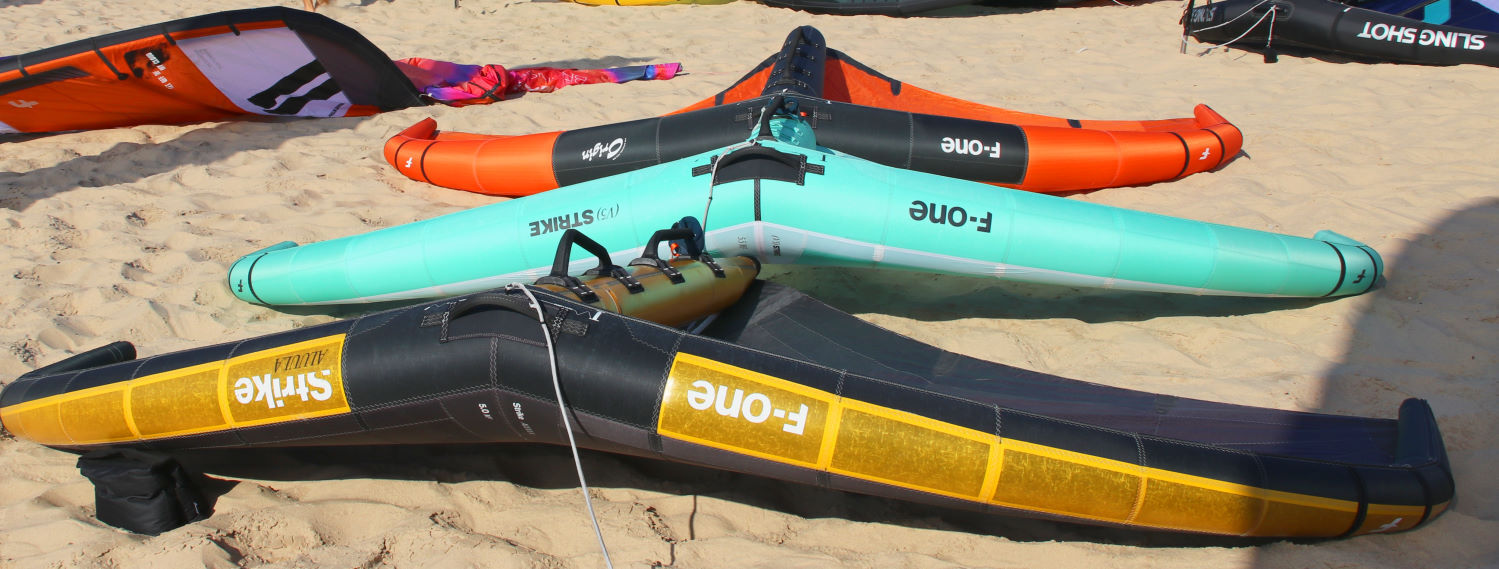
The market is currently trending toward booms, but there are pros and cons to consider. Are you already a handle rider who wants to stick with handles? Or are you a boom rider who wants to stick with a boom? If you are indifferent and don't really have an opinion, you can focus more on the performance, build, and range of the wing.
Tucker and Jeff are both cool with handles or booms and can adjust to ride either one pretty much the same, so that's not a major factor in choosing a wing for themselves. However, if you are traveling a lot, you will probably want something with handles or at least a removable boom. If you aren't traveling and just throw your gear in the back of the truck, it doesn't matter too much. Both handles and booms are light, they transfer feedback well, and they do their job. As a broad picture, they both perform well, and a lot of it comes down to personal preference.
Should I Stick to One Brand or Even Model of Wing?
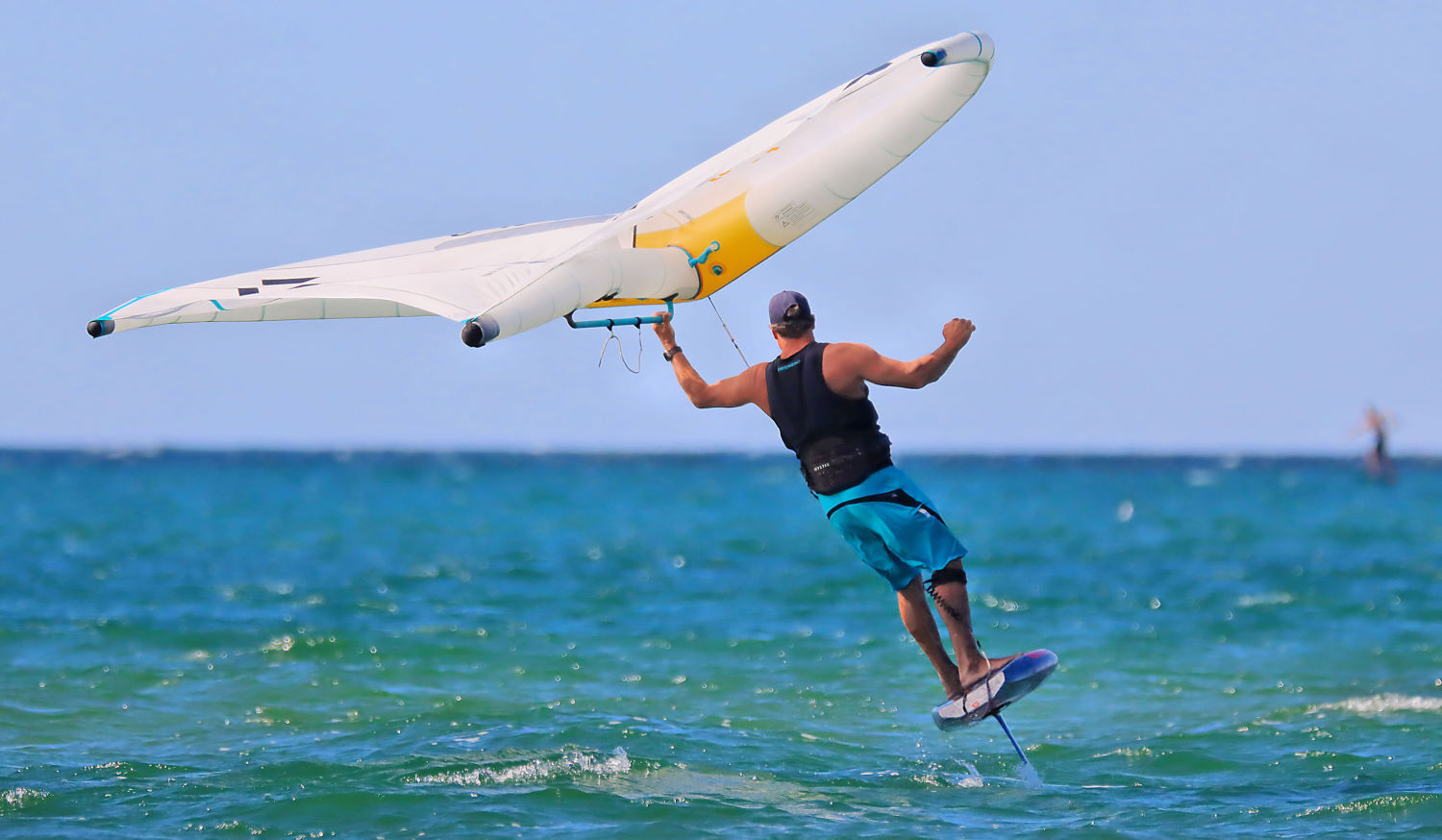
Some riders get brand loyal, or even model loyal. They might love a certain wing and decide to buy a whole quiver of it, like a 3m, 4m, 5m, and 6m, just because they are familiar with it and don't want to readjust. Generally speaking, that works pretty well.
However, there are specific wings on the market for different conditions, like wave riding or light wind riding. If you are brand loyal, you might want to look at another model they offer in a different size that might be a better fit for those specific conditions. When you get into the smaller wing sizes, you need more wind, which changes the water surface. You start getting wind-driven swell and waves. Different models are going to handle and react to that differently, so choose the model that will be happiest in those conditions.
Your riding style also changes as the wind changes. What you pick for 40 knots is going to be different than what you pick for 10 knots. Light wind tends to be pretty smooth, but as it gets windier, it gets more gusty and punchy. In higher winds, it's nice to have something with more range where you don't need a lot of grunt, because there is plenty of grunt to be had in the wind itself. Having a wing with more range allows you to apply it more broadly and handle those high-wind gusts.
Which Materials Should I Look For?
Even different constructions of the same model have a purpose. Looking at Duotone, for instance, you have the Standard, the SLS, and the D/LAB. Those all have a purpose depending on your intention for the wing.
With materials like Aluula, it's really nice in the bigger sizes for riders who want a lighter wing that feels more nimble. On the flip side, Aluula is also great for smaller wings in higher winds because it holds its shape better. You are dealing with a narrower bladder and more pressure going into the canopy, which needs to handle all that power, especially if you are riding powered up on smaller foils to handle bigger waves. That construction allows the wing to maintain its composure.
Do I Need Windows in My Wing?
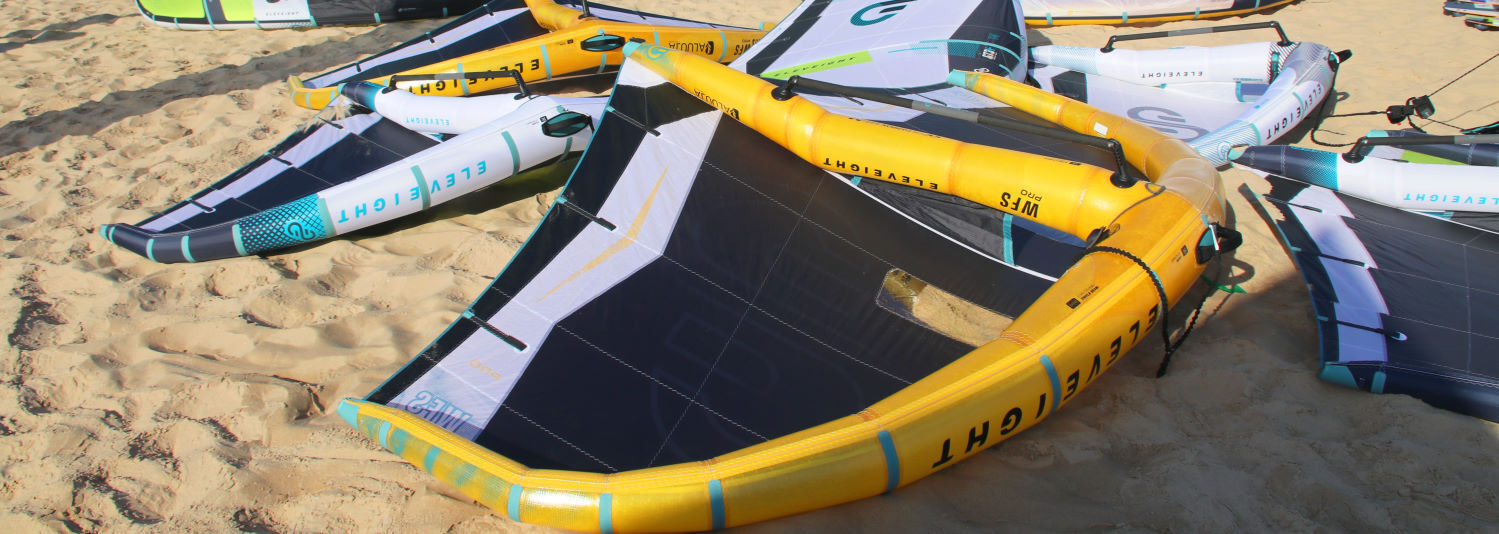
Some wings come with windows, and some do not. Jeff and Tucker are both indifferent; they are skilled enough to ride with or without a window and simply compensate by moving the wing and looking around. However, there are people who ride in very congested areas where windows are extremely important to let you see through your wing at all times. If you have a strong opinion on this, it helps refine your decision-making process.
How Many Wings Do I Need in My Quiver?
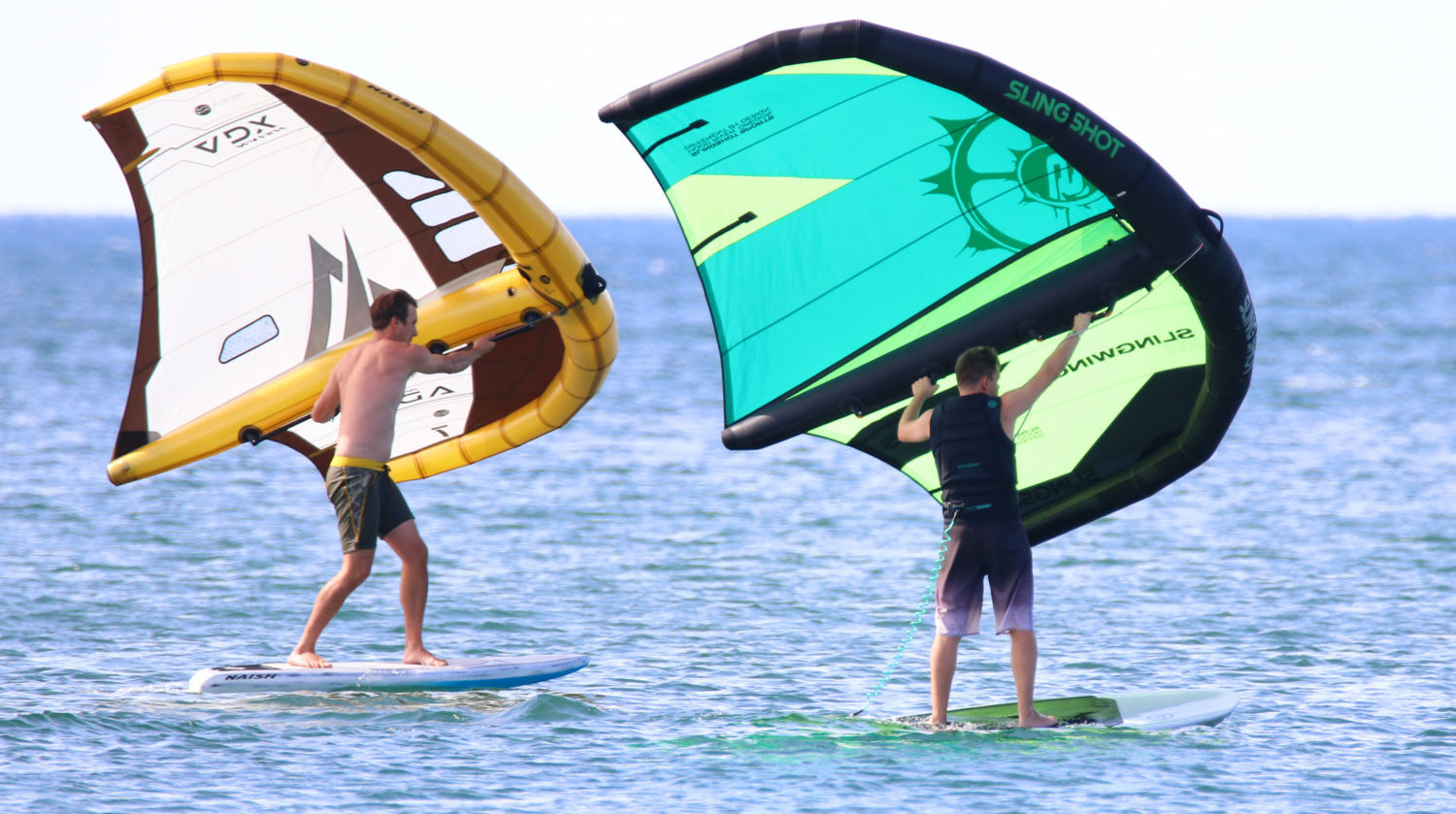
Depending on a few factors, you might be able to get away with sizes spaced a meter-and-a-half apart rather than getting every size that's offered. Look at things like your wind conditions, the foil you're riding, your board, and your skill set. If you've decided to optimize your quiver with different models of wings for different riding styles, then you really can't go by the numbers since the same size can have a different wind range from model to model. This makes it even more important to talk to someone who's familiar with those wings so you get all the sizes you need without overlapping and buying too many.
How Much Do I Need to Spend on My Quiver?
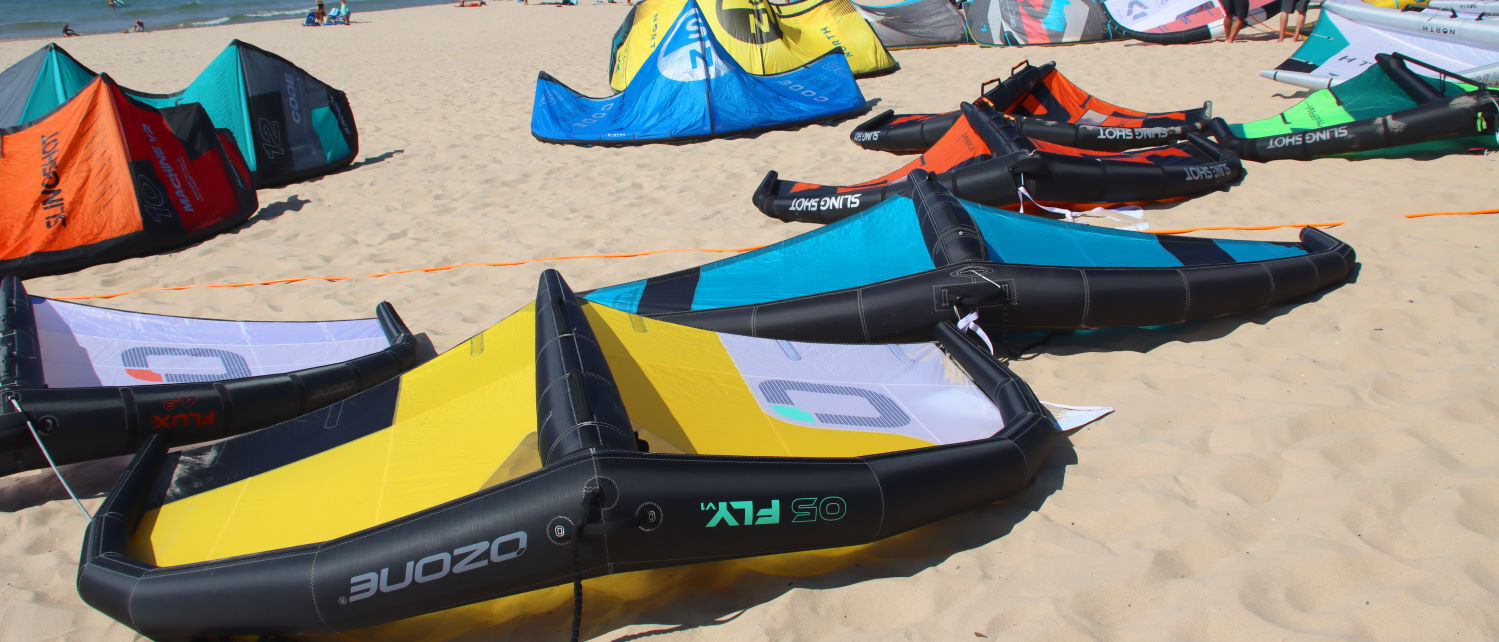
Most people are on a budget, and we're very good at putting together affordable packages that won't force the average rider to make compromises. If performance is more important, we can help you narrow down your options based primarily on your riding goals.
Final Thoughts
The good news is that wing technology has come along very quickly in a short amount of time. Over the last five years, the performance gap has narrowed. Every brand and every model has been refined using years of sailing, kiteboarding, and windsurfing technology, which has really expedited wing development.
If you are getting an A-level wing that is meant for your style of riding and you pick the right size, it's probably going to be a good decision. It has almost become harder to choose your wing because there are no truly bad options anymore. It's just about finding one that is optimized for you and your situation.
MACkite Subscription Links:
YouTube | Instagram | Spotify Oddcasts
Contact MACkite Below:
800.622.4655 | Kiteboarder@MACkite.com | LIVE Chat Messenger


Recent Posts
-

Flysurfer Soul 4 vs Sonic 5: Which Kite is for You?
Jeff is on the beach at KoGL with Marie-Eve from Flysurfer to discuss the growing excitement surro …20th Oct 2026 -

2026 Duotone Rebel D/LAB Review: 30-Knot Test
The Brazilian Brothers are ready to provide honest feedback on the 2026 Rebel D/LAB by Duotone. Th …13th Oct 2026 -

2026 Duotone Jaime SLS Kiteboard Review
The Brazilian Brothers are back to bring you another product review. Today, their focus is on the …13th Oct 2026