
Slingshot Project Drag Board Review
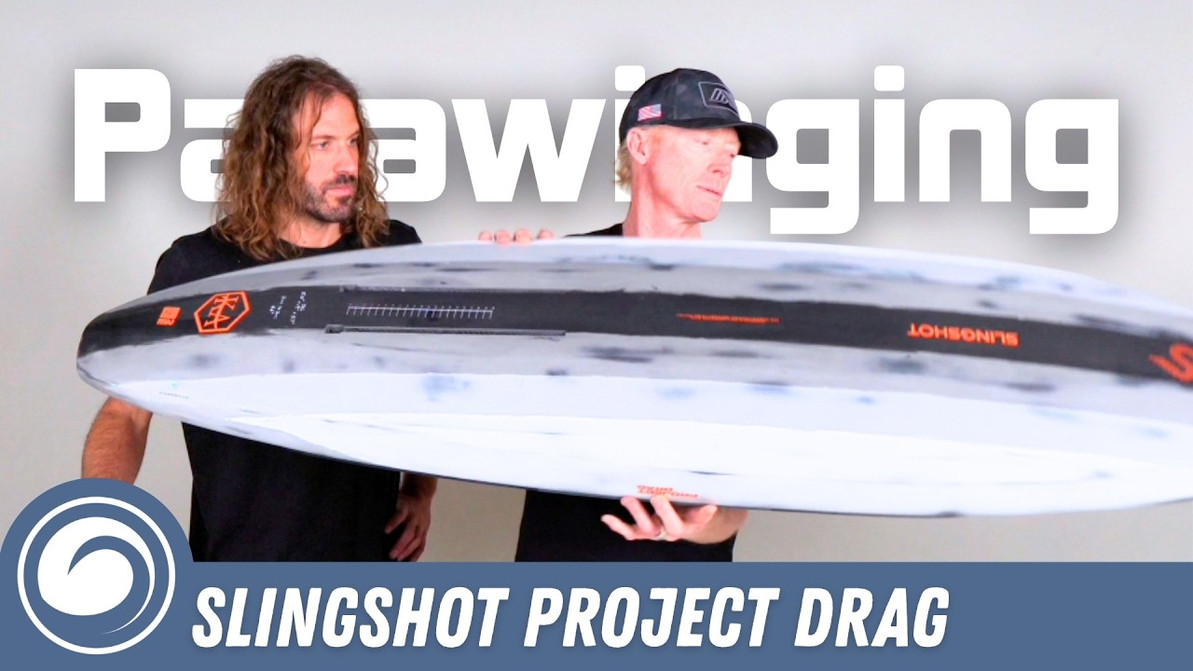
Jeff and Tucker got their hands on the highly anticipated Slingshot Project Drag board, bringing a little Christmas in August to the shop. The designers, including Ken Adgate, have been working on this shape for a few years. We've seen this board under Ken's feet in a custom capacity for a long time, and it's great to finally see it available in a production model with a palatable price and durable construction.
The first thing the rest of the industry needs to take note of is the bag. The Project Drag comes with a custom day bag with a good sidewall build. Every customer loves a good board bag, and this is about the only way you can get an affordable bag that fits your board perfectly.
Pulling the board out of the bag gives a bit of a Holy Grail effect. It features classic Slingshot black and orange colors, but it's a visual paradox — when you look at it, it looks like all concaves. It's also very lightweight right out of the bag. Slingshot really stepped up the construction and design from their average run-of-the-mill boards.
Deck Pad and Strap Options
The padding goes all the way over the edges of the board. There are mounts for a front foot strap only, with no rear foot strap option. Tucker is a strapless rider, but those who want to ride with a strap have that front option available.
Who Is It For?
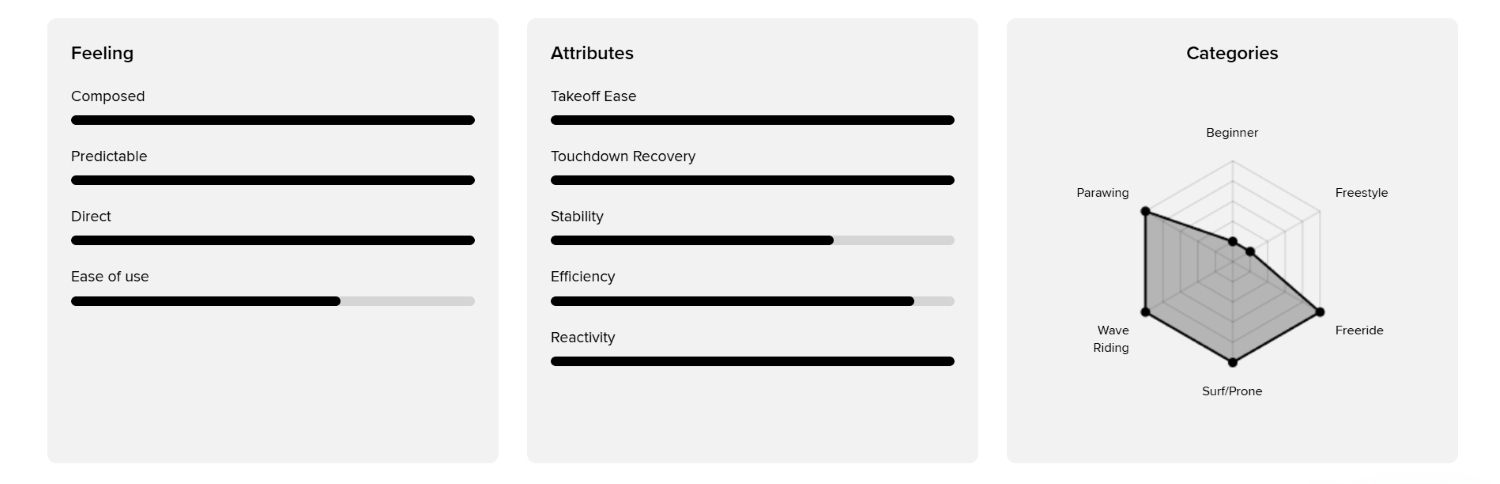
The intention for this design was to make a high-performance parawing and wing board. The name "Project Drag" indicates a reduction in drag, primarily at touchdown at speed — not induced drag for taking off in light wind. It's more about redirecting the board off the water while you're already moving and foiling. If you touch down or touch a rail during a turn, that's the kind of high-performance drag reduction this board is built for. It's meant for downwinding, turning, surfing, riding waves, and riding fast.
Shape and Rocker Profile
Tucker tested the 72-liter model, which measures 5'10" x 19" x 5.7" thick. That sounds really thick, but it's hiding the volume with the inset cockpit. The track-to-foot distance is about 4.5 inches, and the deck-to-box is 4.6 inches.
The shape is very gunny: narrow in the tail and tapering to the front. It features a continuous rocker without a big flip, dropping off on both ends. It's flat through the middle with wide chines acting more like a hull. You get some planing off the flatter chines, and steeper chines at the edge for touchdowns and hard turns. It also features increased rocker all the way out the tail.
Water Release and the Seesaw Effect
This board loves to come off the water. It wants to rock, lift off, and pull the water right off the board. Unlike flatter, longer, narrower boards that plane quickly but have suction and drag when the tail touches at a weird angle, this board is the exact opposite. It's meant to pump onto foil or glance off the water without losing speed.
It's a very efficient pull-and-go board. You just pump it, and the water displacement releases without feeling sticky or tacky. The bottom shape acts like a seesaw, wanting to rock on the water and lift off even before you leave the surface. There are no sticky surface tension areas and no straight rocker out the tail to drag as you lift up. It's like a banana on the water — it just wants to lift off and rock up. On touchdowns, it acts like a greasy spoon; it doesn't stick, jab, or put the brakes on. It's incredibly forgiving at high speeds and in hard turns, making you a better rider by how it transfers energy and swings around.
Sizing Recommendations
When it comes to sizing, Tucker normally rides 60 to 75-liter mid-length boards and found that you can size up on the Project Drag without missing out on performance. The 84-liter felt more like a 75-liter in terms of light wind ability and stability. Because it has a smaller surface area and hides its volume well, you want to size up to retain that light wind ability. The weight likes to be pumped up (you don't want it under the surface when trying to get going).
The 84-liter worked great for Tucker, crossing over well into parawing in light winds (using a 7m parawing in 8 to 9 knots). If you already have a larger board in your quiver for light wind, you could pick the 72-liter, but sizing up doesn't feel like a penalty once you're up on foil. It feels very light, well-balanced, and doesn't get stuck when carving hard into a wave.
Deck and Cockpit Details
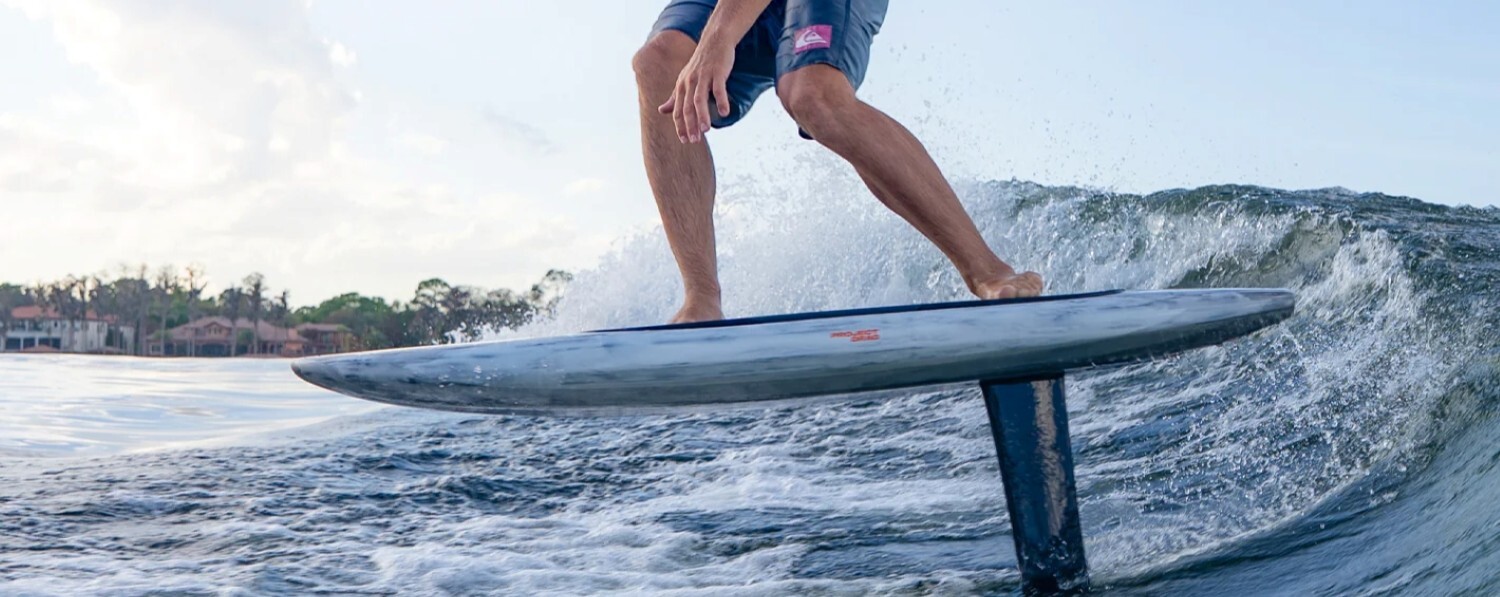
The board features a concave deck with a real inset cockpit, getting you closer to the foil for more leverage and keeping you in tune with what the foil is doing. It also has convex areas that add volume and shed water. If you punch through a wave, the water sheds off the side instead of running down the length of the board into the cockpit.
The Infinity Pad
The pad goes over the side like an infinity pool. It's thin and lightweight but soft, almost like memory foam. Once you find your spot, your feet sink into it, giving you almost direct contact with the carbon. It provides a great sense of how the foil is flying and immediate response to any adjustments you make.
Minor Critiques
Tucker noted a few minor nitpicks. Because the pad extends over the rolled rail, your feet can occasionally wander to the edge, making you feel like you need to bring them back down. The aggressive concave deck means your feet might be more centered than normal, giving you great control over the centerline without needing to be as offset in your stance. The rolled rail could have been wider, but it does a good job of letting you know when you're at the edge. The pad also protects the top edge of the rail, which is great if you're using a parawing bar or harness hook that might hit the board, preventing damage and saving you from board rash.
Release Dates and Options
There will be two versions of this board. The track version is expected to arrive in September, and a Tuttle version is coming in October. The Tuttle version features a super technical Tuttle box developed by Slingshot that allows for fore/aft and rake adjustments.
These boards will be extremely limited production, so getting on the pre-book list is highly recommended, since they'll likely sell out before they arrive. Considering it includes the custom day bag (a solid $150 value), the overall price is very good for a board with this level of R&D and top-echelon design.
The MACkite Take
The Slingshot Project Drag is a specialized, high-performance board that finally brings Ken Adgate's years-long custom shape into production. It's built around a specific philosophy: reducing drag at speed, not at takeoff, which changes how you think about buying and sizing this thing.
- The "Project Drag" name is about touchdown-at-speed, not takeoff drag. This board is engineered for what happens when you're already foiling and glance off the water in a turn or touchdown. It's a downwind/wave/parawing performance tool, not a light-wind starter board.
- The seesaw bottom shape is the sleeper design feature. Flat middle with wide chines that plane, steeper chines at the edge for turns, and increased rocker at the tail. The board wants to rock and lift off before you even pump it — no sticky surface tension, no tail drag on release.
- Size up on this board without penalty. Tucker (a 60–75L mid-length rider) found the 84L felt like a 75L thanks to the inset cockpit hiding volume and the light on-foil feel. He successfully parawinged the 84L in 8 to 9 knots on a 7m wing. If you already own a dedicated light-wind board, the 72L (5'10" x 19" x 5.7") makes more sense.
- The infinity pad plus concave cockpit is a real leverage upgrade. Foot sink is memory-foam-soft with near-direct carbon contact underneath, keeping you close to the foil and in tune with what it's doing. The pad also protects the rail from parawing bar or harness hook contact.
- Two versions coming, both extremely limited production. Track version lands in September, Tuttle version in October with Slingshot's technical box that allows fore/aft and rake adjustments. Pre-book if you want one: they'll sell out before they arrive. Included custom day bag is a real $150 value baked into the price.
MACkite Subscription Links:
YouTube | Instagram | Spotify Oddcasts
Contact MACkite Below:
800.622.4655 | Kiteboarder@MACkite.com | LIVE Chat Messenger

Recent Posts
-

2026 Duotone Rebel D/LAB Review: 30-Knot Test
The Brazilian Brothers are ready to provide honest feedback on the 2026 Rebel D/LAB by Duotone. Th …13th Oct 2026 -

2026 Duotone Jaime SLS Kiteboard Review
The Brazilian Brothers are back to bring you another product review. Today, their focus is on the …13th Oct 2026 -

Manera Pocket Wing Belt Overview
Jeff met up with Billy Ackerman from F-One on the beach at the KoGL Test Fest to take a look at th …9th Oct 2026