
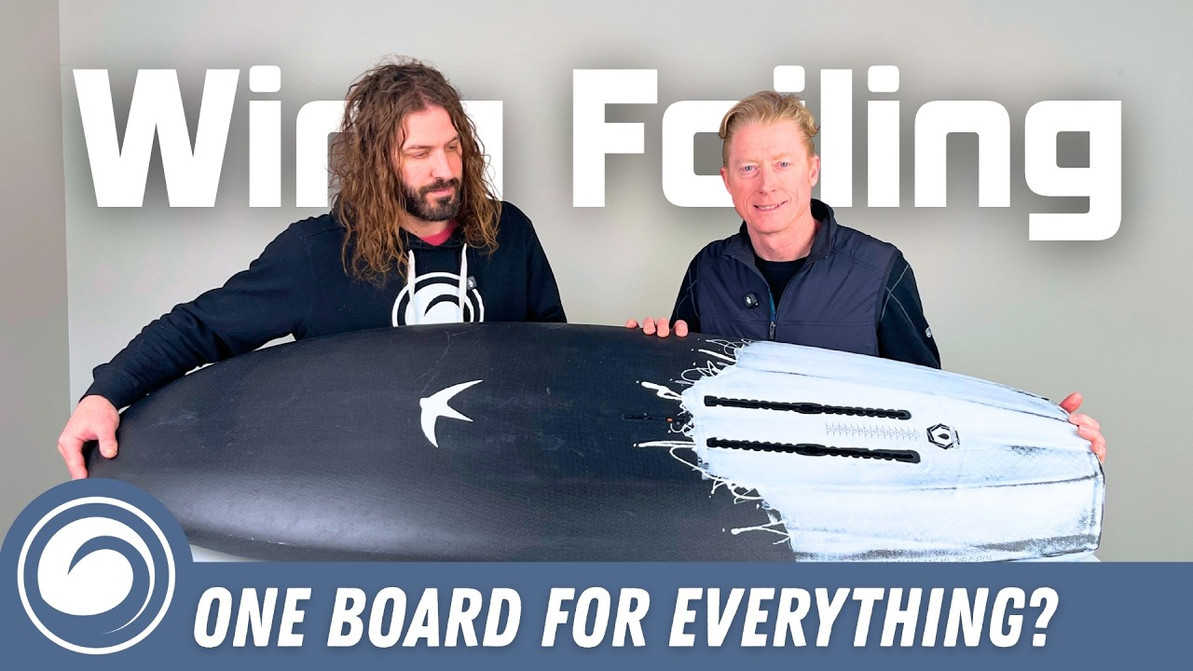
Omen Flux V2 Review: The True One-Board Quiver Killer
If you've spent any time around the shop listening to the crew or watching our videos, you already know how much time Jeff and Tucker have logged on the Flux platform. The original was a go-to for years. The kind of board you grab without thinking because you know it's going to work.
With the Flux V2, the vibe is pretty simple: same DNA, but now it gets up easier, rides smaller, and feels even more dialed once you’re flying. And after hearing Jeff come back from La Ventana and getting time on it ourselves here on Lake Michigan, the stoke is real.
First Impressions: “This Board Is Money”
Jeff didn’t hesitate on this one. Coming off a season where he leaned heavily on the Emissary, it didn’t take long before the Flux V2 pulled him right back in.
The big surprise wasn’t just that it rides well. It’s how early it gets going for its size.
On the 60L, Jeff was consistently getting up in that 13–14 knot range, which is not something you expect when you’re standing on a board that small. And it’s not sketchy getting there either. It’s smooth, predictable, and fast to accelerate.
Once you’re up, Tucker summed it up perfectly. The board just kind of disappears under you. You’re not fighting it, you’re not managing it, you’re just riding the foil.
The Nose Redesign: Small Change, Big Difference
This is the first thing both of them kept coming back to.
There’s more volume in the nose, but it’s not about float in the traditional sense. It’s about getting that nose to break free and start planing sooner. You just need that nose to pop up a bit, and suddenly the board releases and starts building speed. From there, everything clicks.
And when things get messy, which they always do on the Great Lakes, that same volume helps the board recover instead of stuffing and slowing you down.
As a result, you're getting:
- Earlier takeoff without working harder
- Way smoother transition from knees to feet
- Less penalty when you pearl the nose
Standing Closer to the Foil Changes Everything
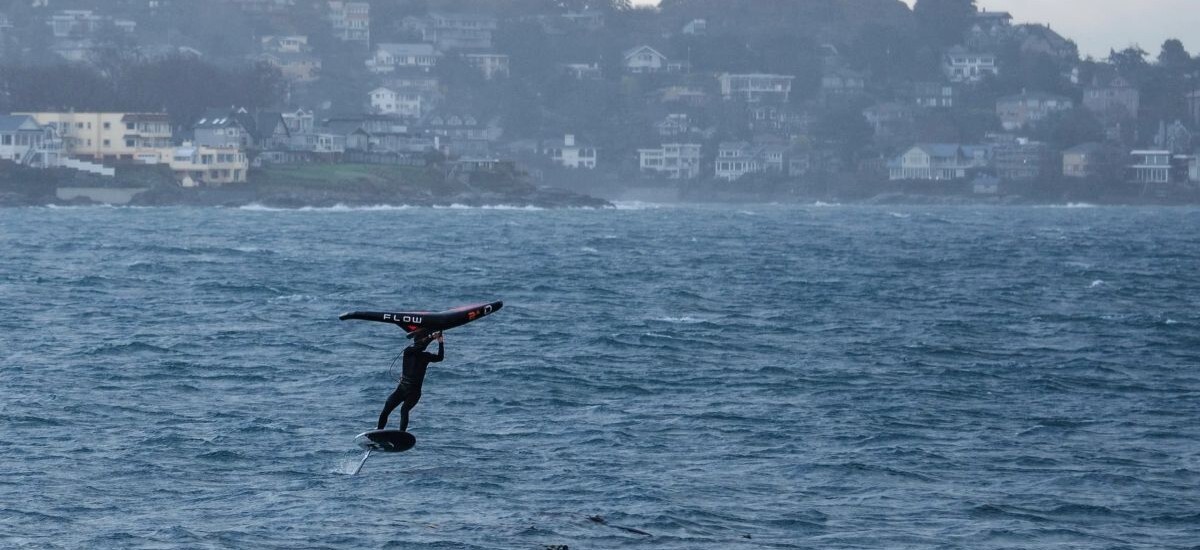
Because of the lowered cockpit, you're standing closer to the foil, giving the board a more "prone-like" feel. That means more control, quicker response, and less swing weight when you're carving or correcting.
It also makes a difference when you start pairing it with bigger span foils. Instead of feeling like you’re trying to control something wide and sluggish, you actually have leverage.
In Tucker and Jeff's opinions, you can really push this board. It reacts the way you want it to, without the lag.
Real Deck Space You Can Actually Use
The board isn’t just wide on paper. The deck pad and cockpit extend out toward the rails, so you can actually stand across the full width.
As a result, you're getting:
- Better balance when you're getting up
- More control over larger foils
- Confidence when things get powered or choppy
It's subtle, but it's the difference between feeling planted and feeling like you're balancing on a strip.
Bottom Shape That Helps You Get Flying Faster
The board accelerates quickly. It doesn’t feel sticky or like it needs to be forced onto foil.
That comes from the chine design. They help the board plane early, then cleanly release once you’re up to speed. So you get help when you need it, and no drag when you don’t.
It means faster buildup to takeoff speed, easier lift with smaller foils, and a smooth, predictable release.
You Can Size Down More Than You Think
This was a big point both Jeff and Tucker agreed on.
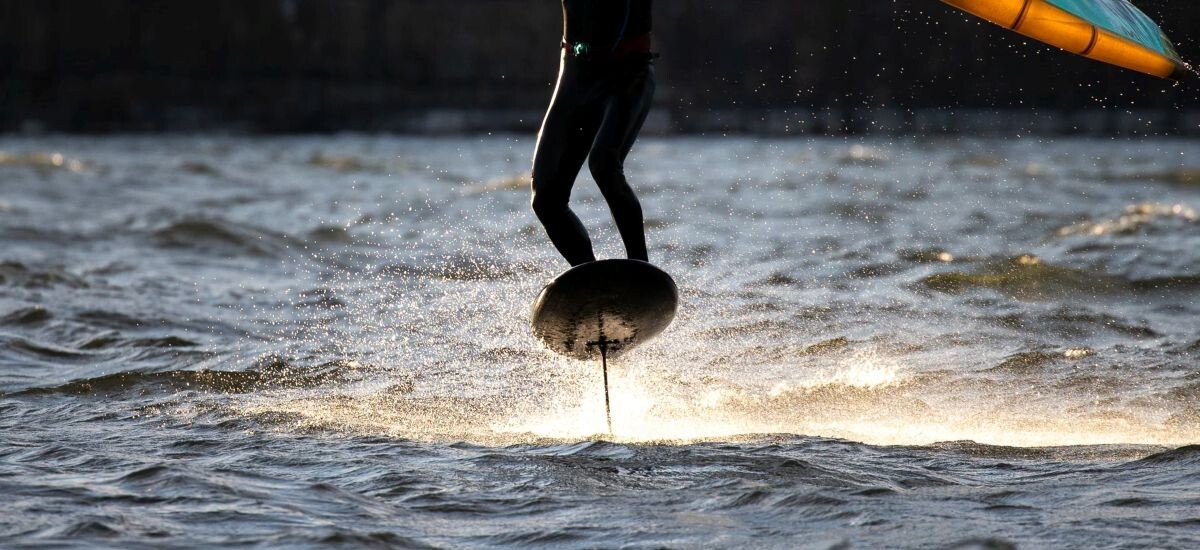
Because of how the volume is distributed and how efficiently the board planes, you can comfortably drop 10 to 15 liters compared to what you might normally ride.
Jeff at around 175–190 lbs was fully comfortable on the 60L in lighter wind than expected. That says a lot.
If you want more performance and a smaller feel under your feet, this board gives you that option without sacrificing your low end.
One Board That Actually Covers Everything
This is where the Flux has always stood out, and the V2 just sharpens that edge.
We've been riding it with:
- Surf foils in the 700–800 range
- Larger downwind foils in the 800–900+ range
And it handled all of it without feeling out of place.
From winging to parawing, prone, or even Foil Drive, it just works. That’s why the “one-board quiver” claim actually holds up here.
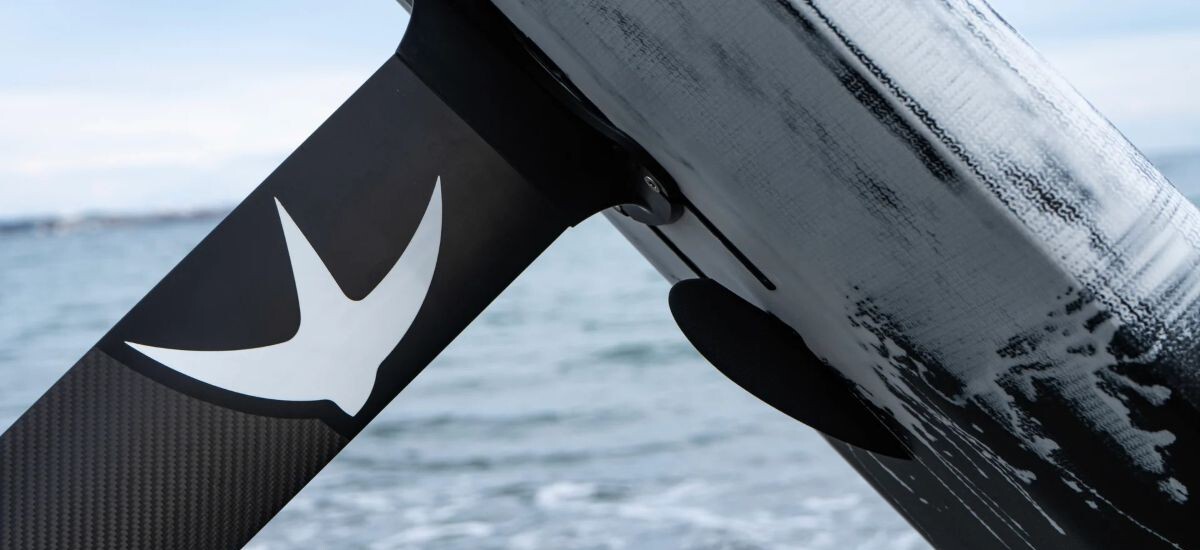
The FCS2 Fin: Small Add-On, Real Benefit
Most people won’t run the fin all the time. But in lighter wind, it adds just enough tracking to help you build speed and hold direction.
It’s one of those things where you might ignore it at first, then try it on a marginal day and realize it actually makes your life easier.
A Few Notes
Keeping it real, like we always do:
- The all-black deck can make foot placement less obvious at first
- If you like a V-strap setup, the front inserts don’t support it
- It’s built so well you won’t have an excuse to replace it anytime soon
None of these take away from what the board does, but they’re worth knowing before making your decision.
Final Take from the Shop
From our side, this is one of those boards that makes sessions easier across the board. Earlier takeoffs, better control, and a more connected feel once you’re up.
If you want one board that can handle a wide range of conditions without feeling like a compromise, the Flux V2 is about as close as it gets right now. And yeah, the stoke is justified.
MACkite Subscription Links:
YouTube | Instagram | Spotify Oddcasts
Contact MACkite Below:
800.622.4655 | Kiteboarder@MACkite.com | LIVE Chat Messenger
Recent Posts
-
How to Fix a Sticky Waydoo EVO Remote Trigger
If your Waydoo EVO remote trigger starts sticking or losing responsiveness, it’s usually not a maj …31st Mar 2026 -

Omen Flux V2 Review: The True One-Board Quiver Killer
If you've spent any time around the shop listening to the crew or watching our videos, you already …31st Mar 2026 -

Le Poisson - A Cabrinha Films Production
Video Synopsis Theo Demanez was born and raised in St.Marten, an island in the Caribbean. At an ea …31st Mar 2026