
Let's Chat: Different Sports for Hydrofoiling
Differences in Hydrofoil Sports
Foilboarding has recently exploded in popularity within the kiteboarding community. With a remarkably efficient design, hydrofoils allow riders to cross into that sub-10 knot threshold while still having a ton of fun. The same logic has been applied to surfing, SUP, windsurfing, and wakesurfing. Riding above the surface of the water, a foilboard gives you the illusion of what can only be described as floating. For kiteboarders in light wind areas, or other wave riders looking to better maximize marginal conditions or simply experience something completely new, the foil is the perfect solution.
However, before you jump in it’s important to understand the differences among the various board types. One size does not fit all sports, or even all riders. From board size, to mast, fuselage and wing size, each foilboard is customized to its sport, and then to its individual rider’s size and style.
So, what are the differences in these hydrofoils?
KITEBOARDING HYDROFOILS AND FOILBOARDS
- Long mast (30-40") to handle waves and chop
- Short fuselage for tight turns and quick pitch adjustment
- Full range of wing sizes to adapt for speed, conditions, and riding style (90-280 sq in)
- Track box is the most popular type of board connection
- Most boards range in size from 3'6-5'
- Most boards have the option to mount footstraps or hooks
SURFING HYDROFOILS AND FOIL SURFBOARDS
- Shorter masts (20-30") to allow for small wave riding without hitting the bottom
- Short fuselage for tight turns and quick pitch adjustment
- Wing sizes range from large to very large (150-230 sq in)
- Both track boxes and tuttle style boxes are common
- Most boards range in size from 4'5"-7'6"
- Added volume aids in early paddle entry on smaller boards
- No footstrap mounting options for most
SUP HYDROFOILS AND SUP FOILBOARDS
- Shorter masts (20-30") to allow for small wave riding without hitting the bottom
- Short fuselage for tight turns and quick pitch adjustment
- Wing sizes range from large to very large (150-280 sq in)
- Both track boxes and tuttle style boxes are common
- Most boards range in size from 6'-10'
- Added volume aids in early paddle entry on smaller boards and additional stability when paddling
- Footstrap mounting options are available on some custom boards
WAKEFOILS AND WAKEFOIL BOARDS
- Short masts (15"-30") to handle chop and steep wakes
- Short fuselage for tight turns and quick pitch adjustment
- Full range of wing sizes to adapt for speed, rope-less riding, wake size, and riding style (90-210 sq in)
- Track box is the most popular type of board connection
- Most boards range in size from 3'6-5'
- Most boards have the option to mount footstraps or hooks
WINDSURF FOILS AND WINDSURF FOILBOARDS
- Long mast (30-40") to handle waves and chop
- Long fuselage for stability and pitch stability
- Full range of wing sizes to adapt for speed, conditions, and riding style. (90-280 sq in)
- Tuttle is the most popular type of board connection
- Most boards range in size from 6'-8' with some models as long as 12'
- Most boards have the option to mount footstraps or hooks
There is a correct choice for each person, but we understand that there are a lot of options. If you’re at all confused, please feel free to contact us via email, live chat, or 800-622-4655 for an honest, personalized recommendation.
Hydrofoiling Categories & Connections
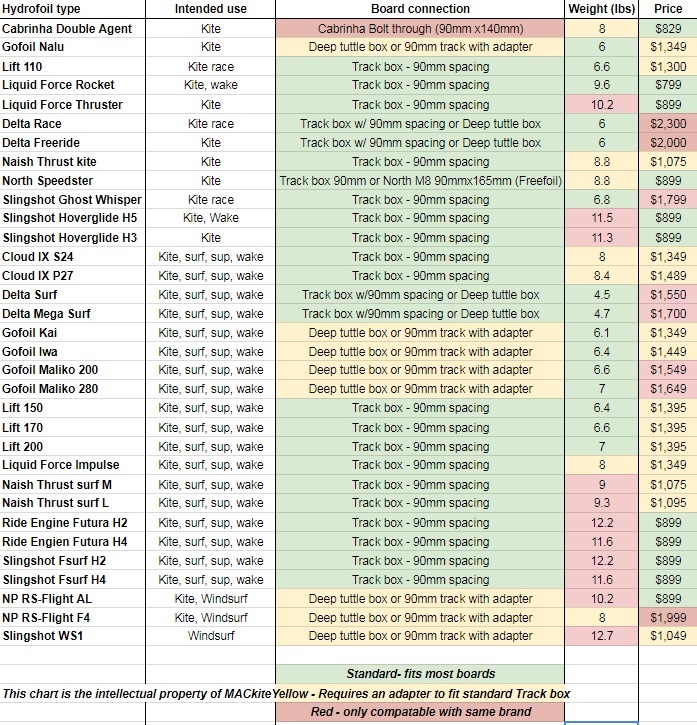
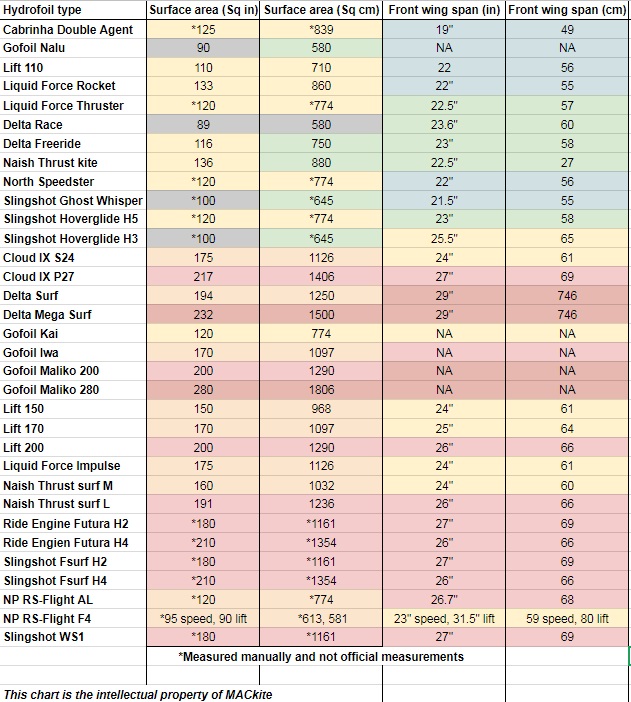
Hydrofoil Specifications
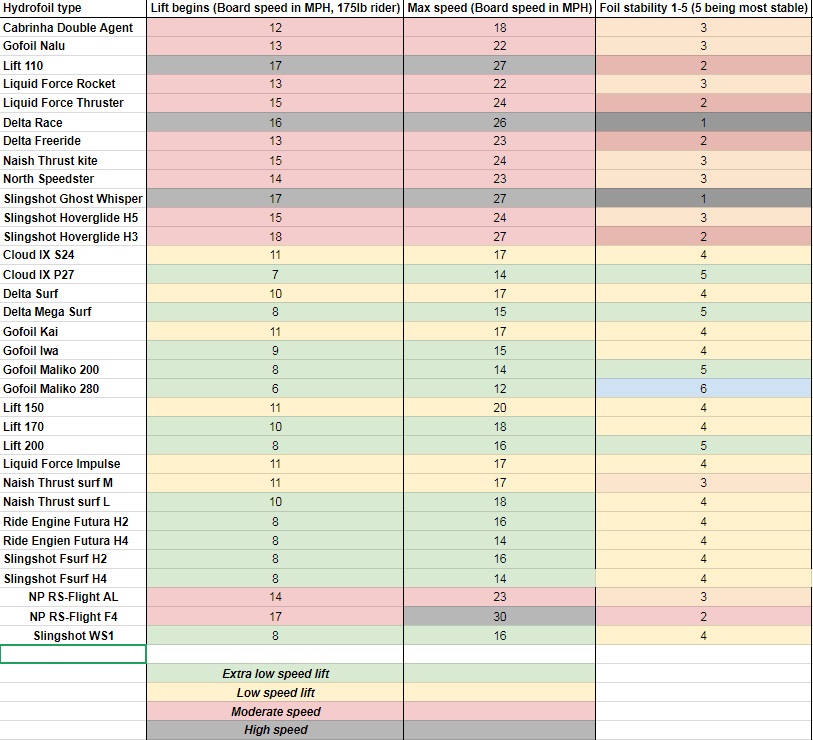
Hydrofoil Lift Speeds
Recent Posts
-
How to Fix a Sticky Waydoo EVO Remote Trigger
If your Waydoo EVO remote trigger starts sticking or losing responsiveness, it’s usually not a maj …31st Mar 2026 -

Omen Flux V2 Review: The True One-Board Quiver Killer
If you've spent any time around the shop listening to the crew or watching our videos, you already …31st Mar 2026 -

Le Poisson - A Cabrinha Films Production
Video Synopsis Theo Demanez was born and raised in St.Marten, an island in the Caribbean. At an ea …31st Mar 2026