

Foil Drive | Scoring Clear, Glassy Swells in the Outer Banks
When you get a chance to visit the Outer Banks, you go, no matter the conditions. Ryan from MACkite caught up with waterman and foiler Hunter Lukes to talk about his background, what drew him to foiling, and how the Foil Drive turned a flat week on the Outer Banks into one packed with fun rides in the glassy swell. Hunter shares how the right setup and a little extra propulsion can open up whole new stretches of coastline.
Ryan: Hey guys, Ryan from MACkite here. Today I've got Hunter Lukes with me. Hunter's been riding the Foil Drive quite a bit, and we're going to talk about his background in water sports, what drew him to the Foil Drive, and a bit about his recent trip to the Outer Banks.
So Hunter, what's your history with water sports leading up to Foil Drive, and how long have you been on it now?
Hunter's Water Sports Background
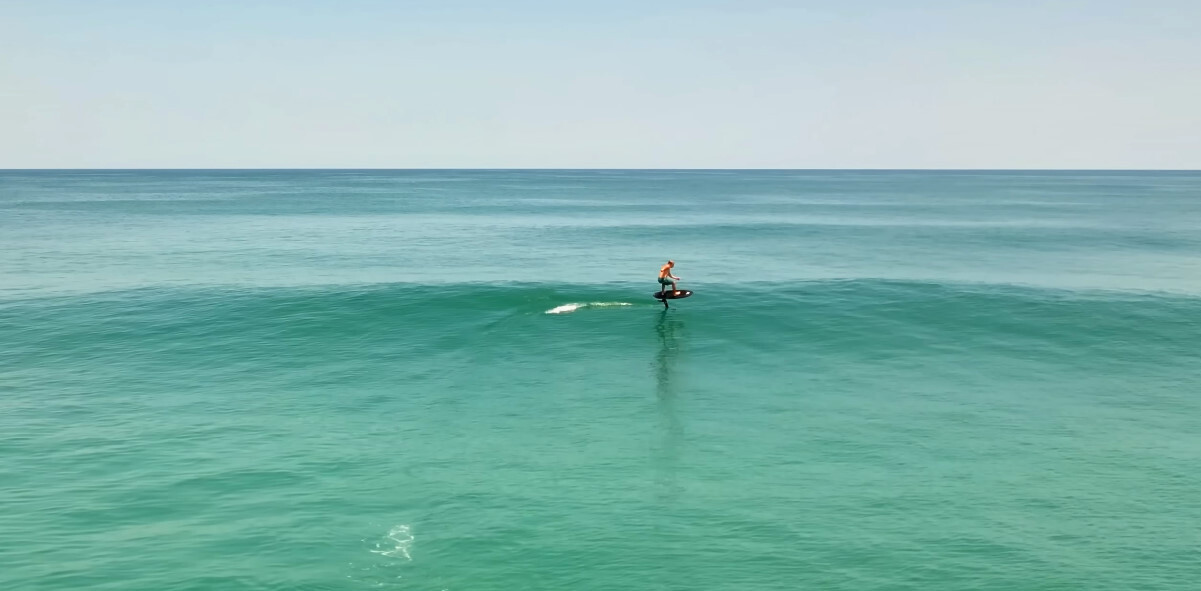
Hunter: I grew up on a lake, so I was always out boating. I started off wakeboarding, water skiing--pretty much anything behind a boat. Then one day I saw foiling on Facebook and decided to give it a shot, probably around 2020. I learned to foil behind the boat first, and after moving over to the west side of the state--where there are more waves--I got interested in riding swell instead of just the boat wake.
That's when I started prone foiling, but I wanted to catch even more waves. So I picked up a Foil Drive to maximize my sessions and get as many rides as possible.
From Boat Foiling to the Foil Drive
Ryan: Cool. So how long were you boat foiling before jumping over to the Foil Drive, and what was that transition like?
Hunter: I probably foiled behind the boat for about four years. I've been on the Foil Drive for about a year now--started last summer, around this same time. My first time prone foiling was actually in North Carolina a couple of years ago. I tried taking my boat foil into the ocean. It definitely wasn't the right gear for that, but it got me hooked on the idea of foiling in ocean conditions.
Outer Banks Foil Drive Adventure
Ryan: Nice. You just came back from the Outer Banks recently--your first time there with the Foil Drive, right?
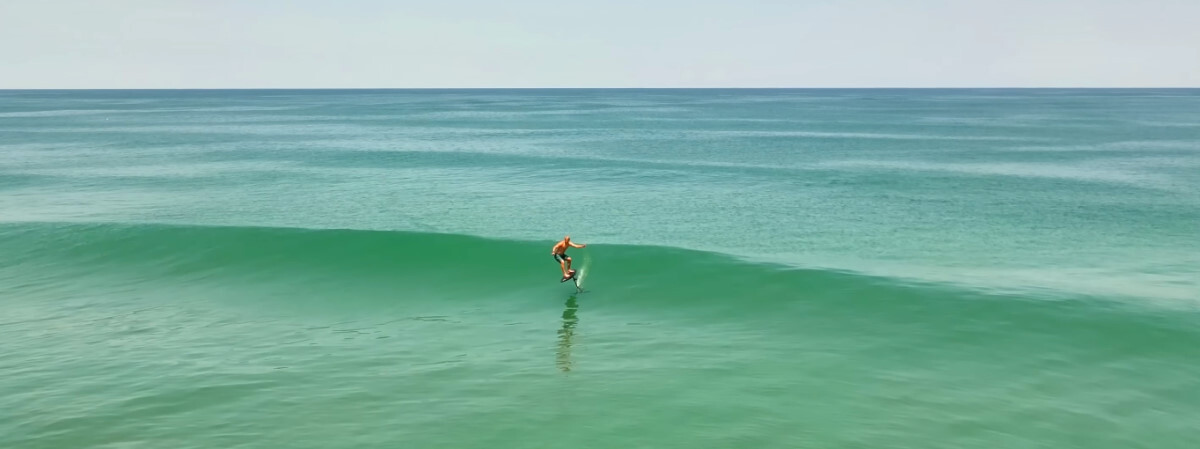
Hunter: Yep, first time with the Foil Drive. I've gone to the Outer Banks every year with my family, but it's kind of turned into a surf trip for me. This year was the calmest I've ever seen it--glassy and crystal clear--but super flat most of the time.
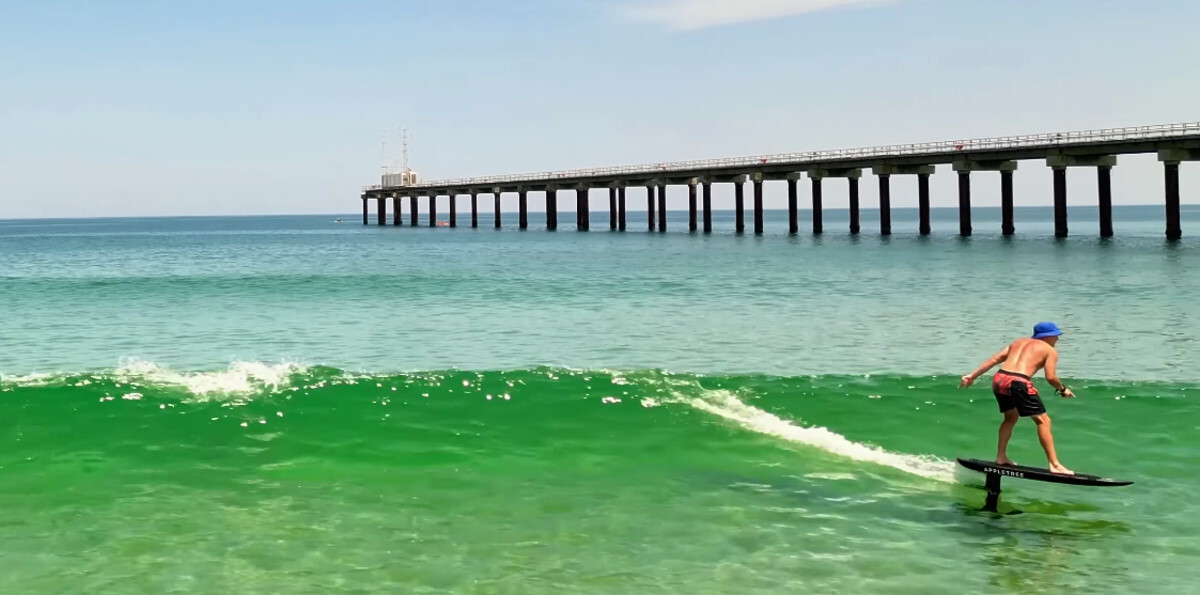
Right out front where we stayed, it was so calm you could've gone barefoot water skiing. The only waves were about a mile down the beach near a pier, and you couldn't really park close to it. Normally, you'd have to paddle that mile, which would've been brutal. But the Foil Drive made it easy--I just motored down, rode for 40 minutes, and cruised back with battery to spare.
That opened up that whole area for me, which I never could've done paddling a prone board. Then, on the last day, the waves finally turned on, and we got some really fun sessions right out front.
Outpacing the Longboards
Ryan: Awesome. I saw in the clips you were riding around your friends on longboards. How did your wave count compare to theirs with the Foil Drive?
Hunter: (laughs) Yeah, so full disclosure--those guys are my friends. We were all having fun; they knew I was coming. I wasn't disturbing anyone's lineup.
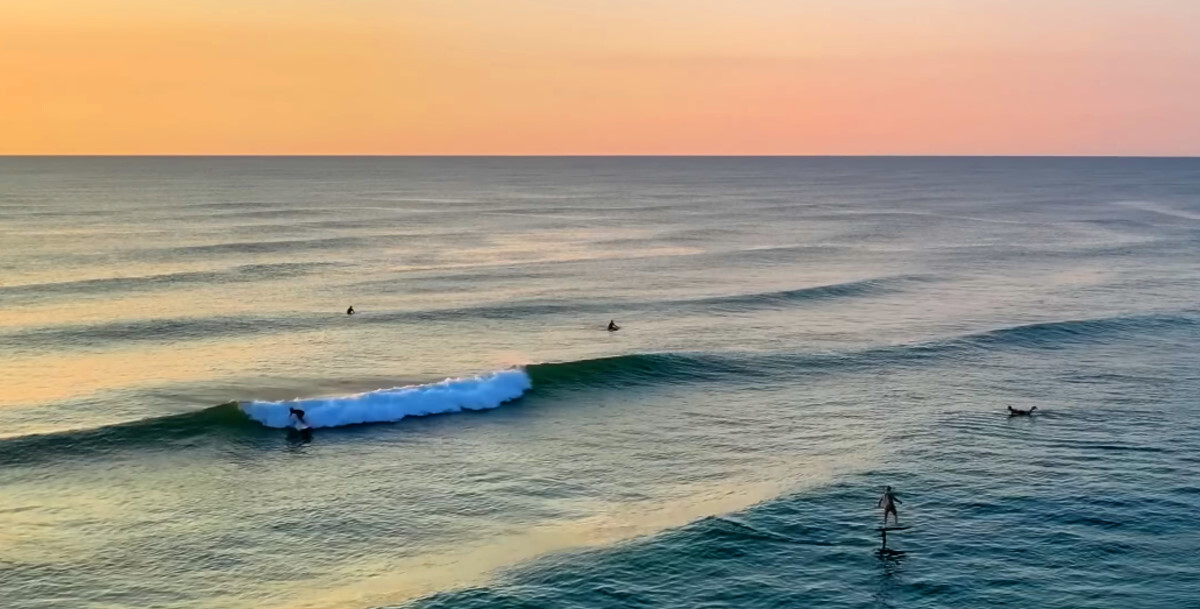
The waves were small and mushy--perfect for foiling--but they'd break fast and then just kind of roll. On their longboards, they'd get maybe a five-second ride before it fizzled out. With the Foil Drive, I could get in early and ride it all the way in.
They'd get maybe six or seven waves in a session, and I'd get around 40 because I was nonstop for 45 minutes, just going back and forth and getting everything I could.
Gear Breakdown: Boards and Foils
Ryan: That's a big difference! Walk us through the gear you were using. I know you had an Axis setup out there. Were you mainly on the Foil Drive Max or the Slim?
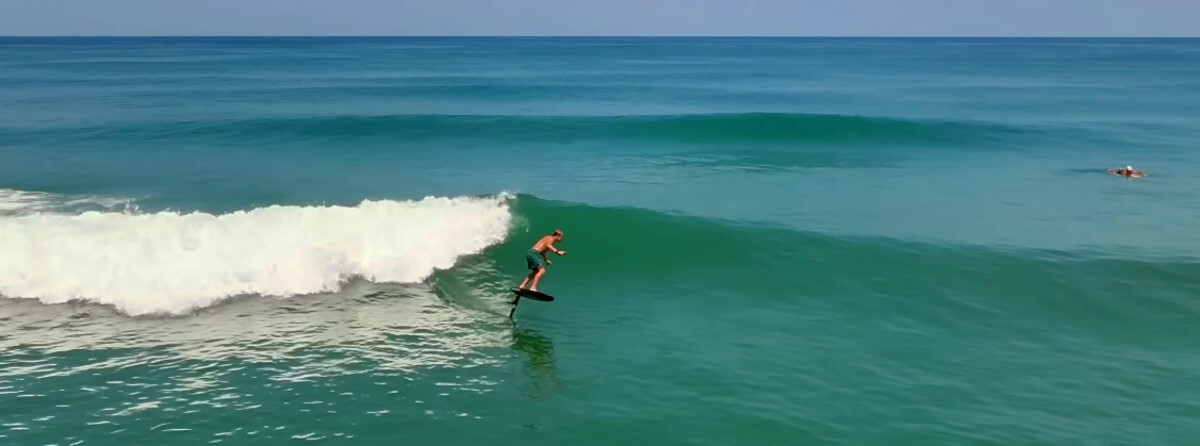
Hunter: Mainly the Max. My setup from top to bottom was a Zapple 5'0" 38L trench board. I love that board--it's super easy to get up on, and the trench design helps with touchdowns since the Foil Drive unit sits recessed. You hardly feel it.
I use a Cedrus mast so I can swap foils easily. For most of the trip, I was riding the Axis ART V2 999 cm2. It's great for smaller, less powerful days--really easy to ride and made the mellow days a lot of fun.
On the last day, when the waves picked up, I switched to the Axis Spitfire 780 cm2. That was actually my first time on that wing, and I was really impressed. I could pump and connect waves easily--at one point I linked three in one go without using the motor. I was stoked on that.
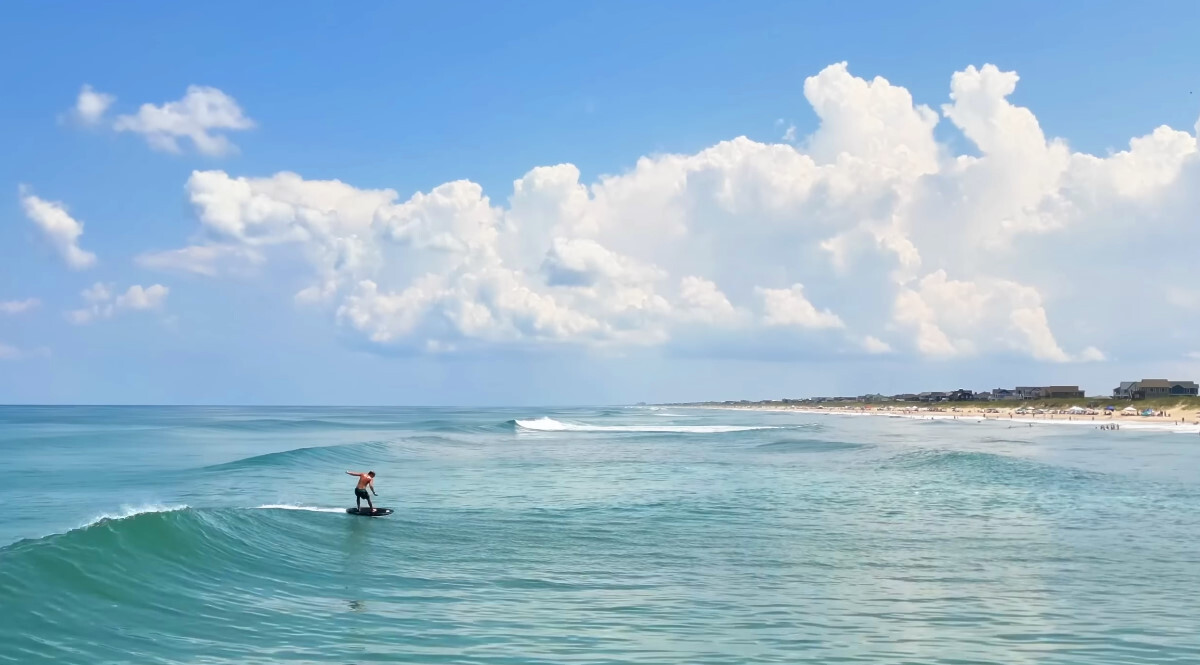
Ryan: Nice! Yeah, the Spitfire's super playful and easy to carve--great when there's more power. The ART is an awesome glider, perfect for small, mushy days like we get here. You're not going to carve it quite as hard, but it handles those weak conditions really well.
Hunter: Right. I paired the ART with a smaller tail and shifted my back foot back a bit to get more pivot. Even with its longer wingspan, I could still get the wingtips out, so it actually feels really versatile. People might be surprised how well it turns.
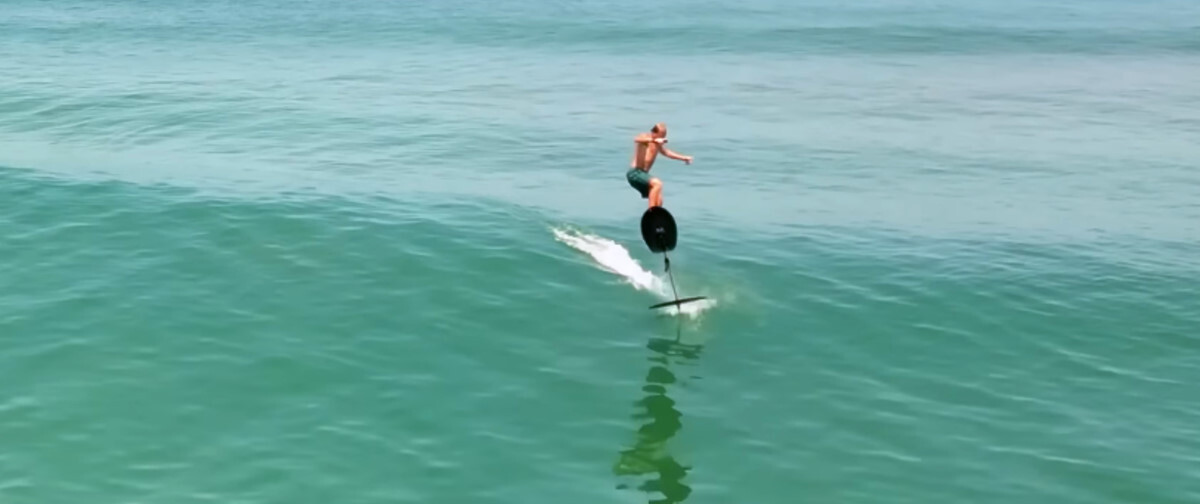
Ryan: For sure. Axis has a great lineup--swapping stabilizers or fuselage lengths can really change the feel. With the ART especially, you can tweak it for more glide or more maneuverability depending on what you're after.
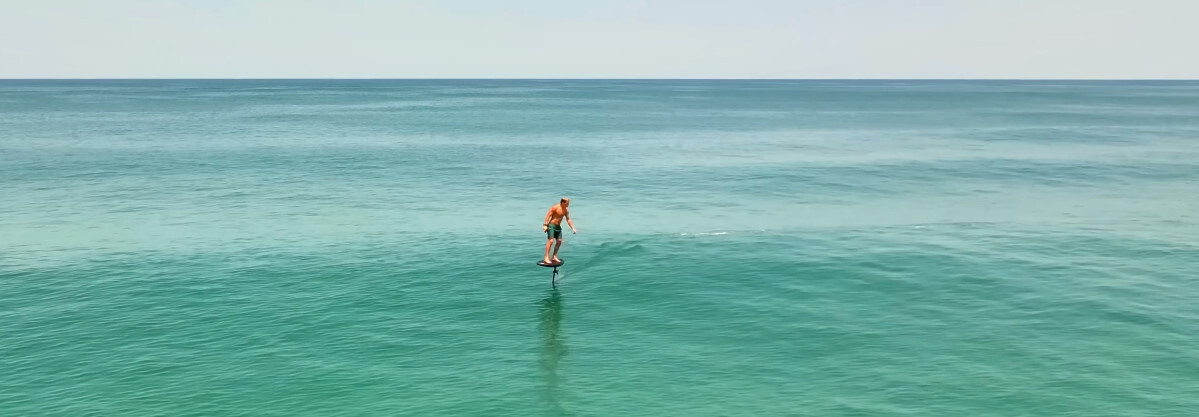
From what I saw in your clips, the waves looked perfect for Foil Drive--unbroken swells with just a little whitewater.
Hunter: Yeah, it was awesome. There were rides where I could catch waves way out, long before they broke, and ride them forever. There's no way I could've proned into those without the Foil Drive. That last day especially--so good. I'm glad we got those waves when we did.
Tips for Traveling with the Foil Drive
Ryan: For sure. So to wrap up--any advice for someone planning a trip with their Foil Drive?
Hunter: Yeah, I'd say bring a one-two foil combo: a bigger wing for smaller or flatter days, and a smaller, punchier one for when the waves show up. That way you're covered either way.
And for boards, that Zapple 5'0" was a great all-rounder--big enough to prone if I wanted, but still compact. It's a perfect one-board quiver for travel.
Ryan: Nice. So one board, two foils so you can take advantage of both good conditions and so-so conditions. Easy to travel with and ready for anything.
All right, this has been Ryan with MACkite and Hunter Lukes. We'll see you guys on the water!
MACkite Subscription Links:
YouTube | Instagram | Spotify Oddcasts
Contact MACkite Below:
800.622.4655 | Kiteboarder@MACkite.com | LIVE Chat Messenger

Recent Posts
-
Wing Foiling Footwork: When (and Why) to Switch Stance for Better Riding
Your board stance can affect a lot of things when you're out on a wing and foil. Tucker and Jeff w …10th Apr 2026 -
Reedin Wing Foil Package Overview: Built to Learn, Designed to Progress
A Carefully-Crafted Entry Into Wing Foiling If you've been eyeing wing foiling but feel overwhelme …9th Apr 2026 -

Foil Drive's New Props Explained
For a long time, the black prop was just the prop. It came in the kit, it worked, and you rode it. …9th Apr 2026