
Kiteboards
Did you know we have more than 150 years of experience with kiteboards? Okay, that's not exactly true. (It's probably close to 60ish.) Either way, our crew has logged plenty of hours on these shapes and styles, so we can tell you exactly how they behave when the wind turns on. If you want help choosing the right size or style, just give us a shout.
-
On Sale2024
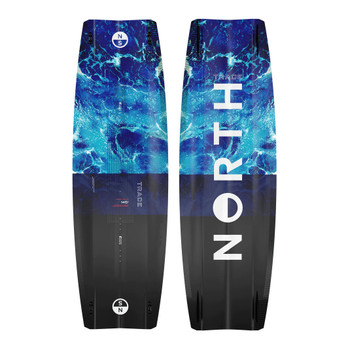

2024 North Trace Twintip Kiteboard
North
Now: $561.75Was: $749.00Board Style: Freeride Lightwind Sizes: 145x45 / 155x46cm Length (cm) Width (cm) Rider (kg) Fins (mm) 145 45 <80 40 155 46 80-120 40 Description: Light wind? No problem. The Trace has a progressive straight, square outline and large surface...Now: $561.75Was: $749.00 -

Litewave Wing Carbon Twintip Kiteboard
Litewave
$969.00Litewave Wing Carbon Twintip Kiteboard Sizes: 155 / 165cm The Litewave CarbonWING board has been a real game changer for many kiters, and Litewave has answered the call for a carbon fiber version. It's the same classic Wing shape, but with the added...$969.00 -

Litewave Wing Twintip Kiteboard
Litewave
$769.00Litewave Wing Twintip kiteboard Sizes: 155 / 165cm The 2022 Litewave Wing has evolved into the strongest, lightest, and fastest all-wind BOSS. Riding in any wind speed has never been easier, even for the big guys. Tips are very thin and flexy with...$769.00 -


2025 North Trace Twintip Kiteboard
North
$819.00Light wind? No problem. The Trace has a progressive straight, square outline and large surface area for early planing and upwind performance in the lightest winds. A center-V spine and longitudinal quad channels provide balanced torsional stiffness,...$819.00
How to Better Your Board Offs
Learn how to tic-tac your kiteboard.
Kiteboard FAQs
Not quite. Kiteboarding usually means riding a twin-tip board. It's great for freeride, freestyle, and learning. Kitesurfing refers to riding waves on a surf-style board. The kites are similar, but the boards (and riding styles) are different.
Go big and simple. A larger, more forgiving twin-tip makes it easier to waterstart, ride upwind, and stick landings. Once you progress, you can upgrade to something lighter, stiffer, or more specialized.
You can, but it depends on your goals. Oversized beginner boards are easiest for learning, while a more advanced board can last longer in your quiver. If you’re unsure, start basic and resell later, or grab a used board to minimize cost.
Large boards have more surface area, making it easier to plane in light winds and stick landings. Small boards are lighter and better for strong winds or aggressive riding. Most new riders benefit from starting with a bigger board.
Board size depends on rider weight, wind conditions, and riding style. As a general rule, heavier riders and light-wind locations need bigger boards, while lighter riders or loop-hungry freestylers can size down.
Not necessarily! Women’s boards are often the same designs as men’s, just with different graphics. What matters most is the right size and flex for your weight and riding style. Many female riders prefer slightly bigger boards for smoother sessions and softer landings.