
Triple Seven
2026 Triple Seven P.T. Parawing

- Minimum Purchase:
- 1 unit
- Shipping:
- Calculated at Checkout





Description
P.T. Parawing
Finally! You can go places!
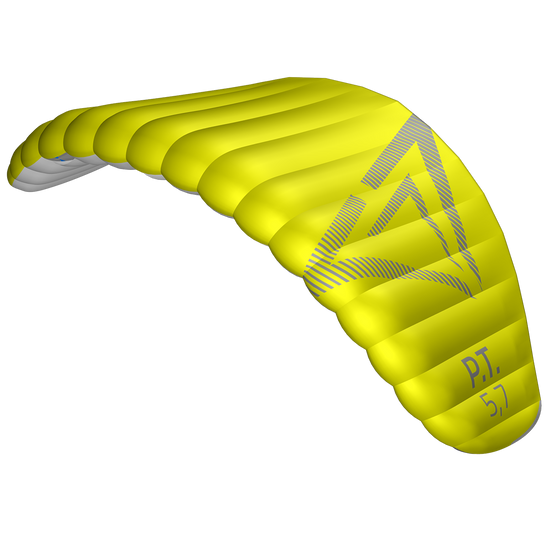
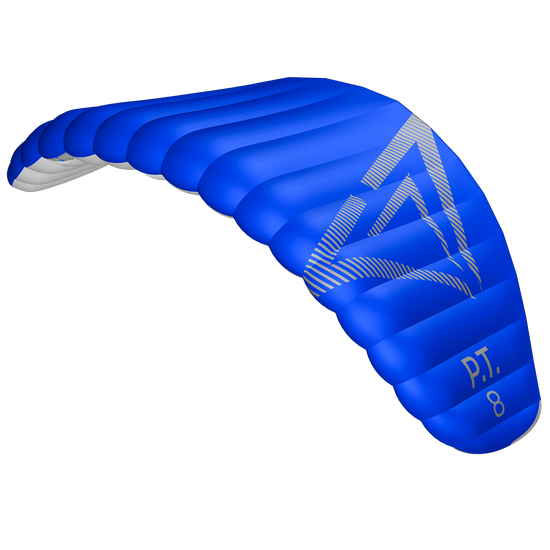
Sizes: 3m / 4.2m / 5.7m / 8m
What Triple Seven has to say:
The P.T. (ParaTow Wing) is the first RAM-air wing available on the market, designed to redefine your experience either on water or land. Drawing on our extensive expertise in wing design, we’ve addressed every detail to ensure maximum rider enjoyment.
- SC bar Innovation: This groundbreaking feature in the para wing segment guarantees a smooth and efficient ride, setting a new standard in performance.
- Superior Drainage System: Experience unmatched confidence in any condition with a highly effective drainage system, ensuring effortless wing reinflation.
- Optimized Design for Efficiency: Strategically placed openings and refined line consumption enable quick and easy packing, allowing you to start higher and faster than ever before.
The P.T. is engineered to deliver new sensations in this emerging sport. Whether you’re into freeriding, chasing speed records, or downwinding, the P.T. has you covered!
Designer's Note:
Living near the sea, I have always been drawn to wind-dependent sports. When testing our paragliding wings isn’t possible, I enjoy exploring the technical coastline near my home—the very place where the idea for the first RAM-air ParaWing P.T. was born. I was immediately captivated by the freedom a para wing provides, yet I felt that the current single-skin wings lacked needed performance. With a background in airfoil design, I spent a long time experimenting with different prototypes. Now, I believe we are offering the market something truly unique—something that will bring new sensations to this emerging sport. Designing this para wing has been an exciting journey, and I hope riders will experience and confirm the ideas I brought to life through their own adventures. I can’t wait to see how this sport evolves from here.
Who It's For:
The P.T. excels for riders who use the para wing in more technical areas, where high upwind performance is essential to reach the best spots for catching downwind lines or simply free ride and covering ground or sea with lots of power and performance. While the wing is designed with foiling in mind, it is highly versatile and performs just as well on snow, ice, or land. Its potential is limited only by the rider’s imagination. The inflated airfoil enhances the rider’s comfort, maintaining a stable and predictable profile at any angle of attack. This is made possible by the innovative Servo Chamber Bar, which ensures smooth and responsive handling. P.T. stands for “Performance Wing”—a design crafted to take you to places easier and faster than ever before.
Auto Power Management / Servo Camber Bar
Our cutting-edge Servo system redefines parawing flight dynamics by functioning as a precision-engineered power steering mechanism. It ensures consistent, neutral bar forces across all flight regimes—from high to low angles of attack. This innovation delivers unparalleled control, making every flight smoother, safer, and more responsive, no matter the conditions.
Takeoff Phase (High Angle of Attack / High Lift Mode): When slowing down the parawing during takeoff or low-end conditions, the bar is pulled back. This action causes the B-lines to slide on a special slider, reducing the power to maintain this setting. When the bar is pulled back, the mixer progressively shortens the brake lines, curving the airfoil’s camber more to generate additional lift helping you to pump that start more efficiently.
Neutral Position (Best L/D): This configuration optimizes the lift-to-drag ratio, ensuring efficient and stable flight performance. With its automatic adaptation to the desired angle of attack, the P.T. optimizes the lift-to-drag ratio, delivering efficient and stable flight. This innovative design stands out for offering a highly performant yet remarkably simple and intuitive ride.
Cruising or Upwind Phase (Low Angle of Attack / Speed Mode): When accelerating or achieving the best speed or upwind angle, more pressure is applied to the front of the bar, causing the B-lines to slide back and compensate for front pressure. In this phase, the mixer fully releases the brake lines, making the profile camber more aerodynamically stable, reducing lift and minimizing the risk of overpowering.
Specifications
| Size | Number of cells | Flat aspect ratio | Line consumption (meter) | Wind (80kg rider) |
|---|---|---|---|---|
| 3 | 18 | 3.3 | 40 | 24+ kt |
| 4.2 | 18 | 3.3 | 48 | 17+ kt |
| 5.7 | 18 | 3.3 | 57 | 13+ kt |
| 8 | 18 | 3.3 | 65 | 11+ kt |