
Riding Conditions
Kiteboarding Riding Conditions
How much wind do I need to go kiteboarding?
Generally speaking, the average kiteboarder needs about 12mph of wind to get up and ride. Lighter riders can stay upwind and ride in less wind, while heavier riders (over 200lbs) may need 15mph. Modern race boards and race kites can get a skilled rider ripping in under 10mph, but this is the exception, not the rule.
When is it too windy to head out kiteboarding?
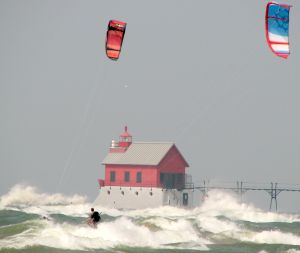
The first part of this question is based on your riding skills. Many pros can go out in winds over 40mph with a small kite and loads of experience. The average rider will start with a kite in the 10-12 meter size range and be able to comfortably kite from about 12-20 mph. Kiteboarding kites changed radically in 2006 when Cabrinha began to push bridled bow kites. Today most kites will allow a skilled rider to push their 10 - 12m kiteboarding kites into the low 20mph wind range. As you progress and own smaller kites, most riders can begin to push the 25-30mph wind range. An important thing to remember is that everything happens twice as fast and twice as hard at 25 versus 17mph. Wind power increases exponentially. Always remember that smaller kites in high winds move much faster than larger kites in light winds. One more thing to consider is your riding area - in many areas the waves grow and become much more powerful as the wind increases.
What other things should I consider in deciding if I can go kiteboarding?
Wind direction - always ride side shore or side-on shore. Offshore wind can blow you out to sea, never to be seen again. Direct onshore winds can lead to serious accidents if something goes wrong.
Wind quality - steady is the key word for new kiteboarders. Strong, gusty winds are not your friends unless you have a high level of experience. In the spring, fall and winter when the air is cold, you will need less wind to ride since air density is increased. Keep this in mind during seasonal weather changes.Waves - New riders are best suited with flat water or waves under 2'. Once you are up and riding, smaller waves are a great new challenge and really fun to play with. Once the waves move over 3-4' you will need to raise your kiteboarding skills to have fun and not trash your gear.
Preferred Wind Directions:
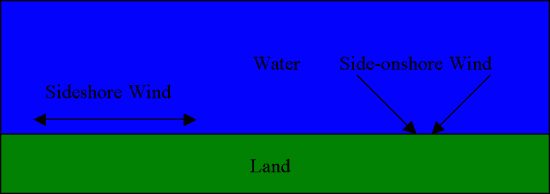
- Side-onshore winds are the best bet for new riders. They allow you to travel away from shore on your outbound tack and they make it very easy to get back to shore if your kite drops into the water and you can't re-launch.
- Sideshore winds run parallel to the shoreline. These are great winds for new riders because they often keep wave action small and still allow for easy outbound and inbound riding.
What conditions should I avoid while kiteboarding?
Strong weather systems consisting of thunderstorms, large black clouds and strong gusty winds. These are the conditions when most kiteboarding accidents happen. Always keep your eye to the sky when riding in frontal driven winds. Lighting can travel 40 miles and your kiteboarding kite is the highest object in the sky.
On-shore or off-shore winds are another serious threat to new riders. If you can't easily ride upwind, then on-shore riding is not an option. Off-shore winds can only be ridden if you have a chase boat available to come and get you from Jamaica.
Busy beaches are a huge hazard to kiteboarding. I am not talking about a hazard to you as a kiteboarder, so much as the sport of kiteboarding. If your lines cut off the ear of a cute little 5-year-old girl, beach access will be cut off from kiteboarders in no time. We have a saying about riding and our beaches. "It's okay if you want to kill yourself - but if you get our beach banned, we are going to kill you". It may sound harsh, but the reality is that many beaches are banned and many kiting areas have to work extremely hard to keep their beaches open.
Cold water is another concern, especially for new riders. The rule of thumb is to dress for the swim in, not for the ride. Water temperatures under 60 can make you get the first stages of hypothermia in less than 20 minutes. New riders can easily be focused on re-launching their kites for 10-15 minutes before they realize they are in trouble. Always have a buddy when riding in cold water.
Wind Directions to avoid: (arrow designates direction wind is blowing towards)
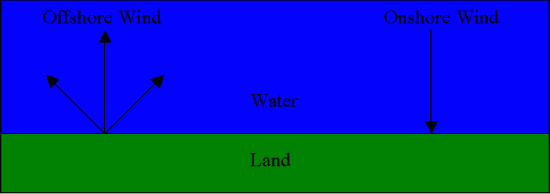
- Offshore winds blow out to sea. NEVER kitesurf in offshore winds regardless of your level of experience. The only exception is with a chase boat.
- Onshore winds blow directly onto the shore. Only riders who can go upwind instantly should attempt onshore wind riding. It only takes 5 seconds to get your board stuck in the sand and get pulled onto your face and have your kite out of control.
How many days of the year can I kiteboard?
This is a tricky question since everyone lives in different places. If you live in the Outer Banks of North Carolina and are seriously hard core, you may get in over 275 days of riding. For most people who ride on a regular basis and have a good access to water, you are looking at somewhere between 35-100 days a year. Even in cold Lake Michigan guys are consistently hitting 70 plus days.
To maximize your time on the water you need 3 main things:
- Flexibility with your time. Make sure you put the 15mph rule in your contract with your new boss. Explain how much more productive you will be.
- A solid quiver of gear: 2-3 kites, 2 boards and appropriate wetsuits and water gear. This may sound like a lot of gear, but for top-of-the-line kites, boards and water wear you are looking at about a $5,000 investment. When you start kiteboarding, get the best all-around kite for your weight and area.
- Become a weather guru. Ask any kiteboarder and they can tell you the forecast for the next week. They can also explain how thermals and local weather patterns affect their local beaches. Learn the weather and double your time on the water.
Continue to 'Where Can I Kiteboard?'
Return to the Kiteboarding Knowledge Center